
35.7 mi / 12.2 mph / 142 ft. climbing
Home: Eduardo’s AirBNB
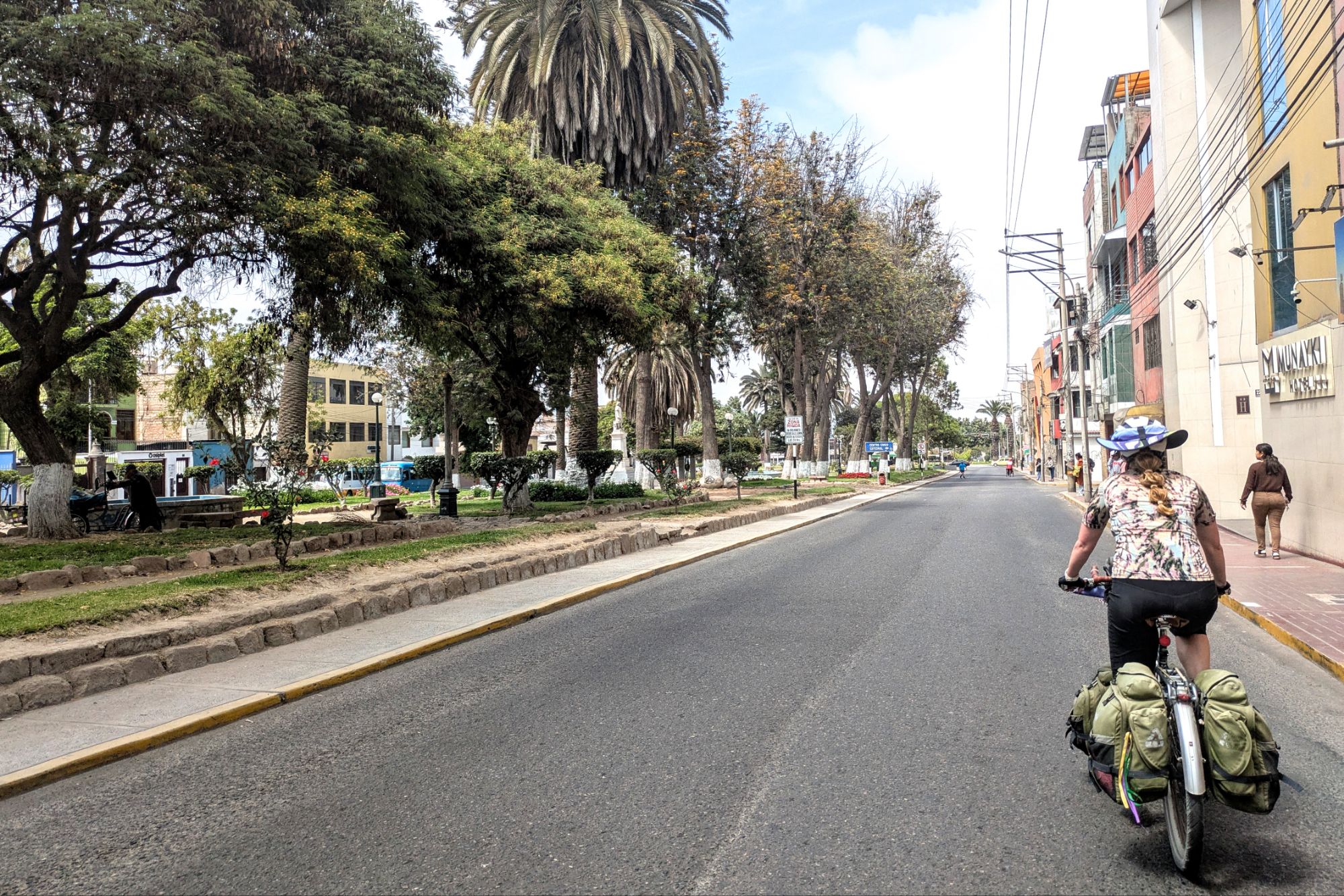
In many ways it felt like we had already left Peru, sometime during our 10,000 ft. descent from the Andes down into the desert on our ride into Tacna. But today we would officially cross the border into Chile. (Tacna’s modern un-Peruvianness may have some roots in history: for 50 years it was actually part of Chile, returning to Peru less than a century ago, presumably because Chile admitted “ok, our country is already ridiculously long, we honestly don’t need this northern extension, you can have it back, Peru”.)
Despite that 10,000 ft. descent (and a 5,000 foot descent the ride before that), Tacna is still somehow 1900 feet above the Pacific Ocean, and oddly some 25 miles distant from it. So that meant we still were able to get a gravitational assist for most of the ride.
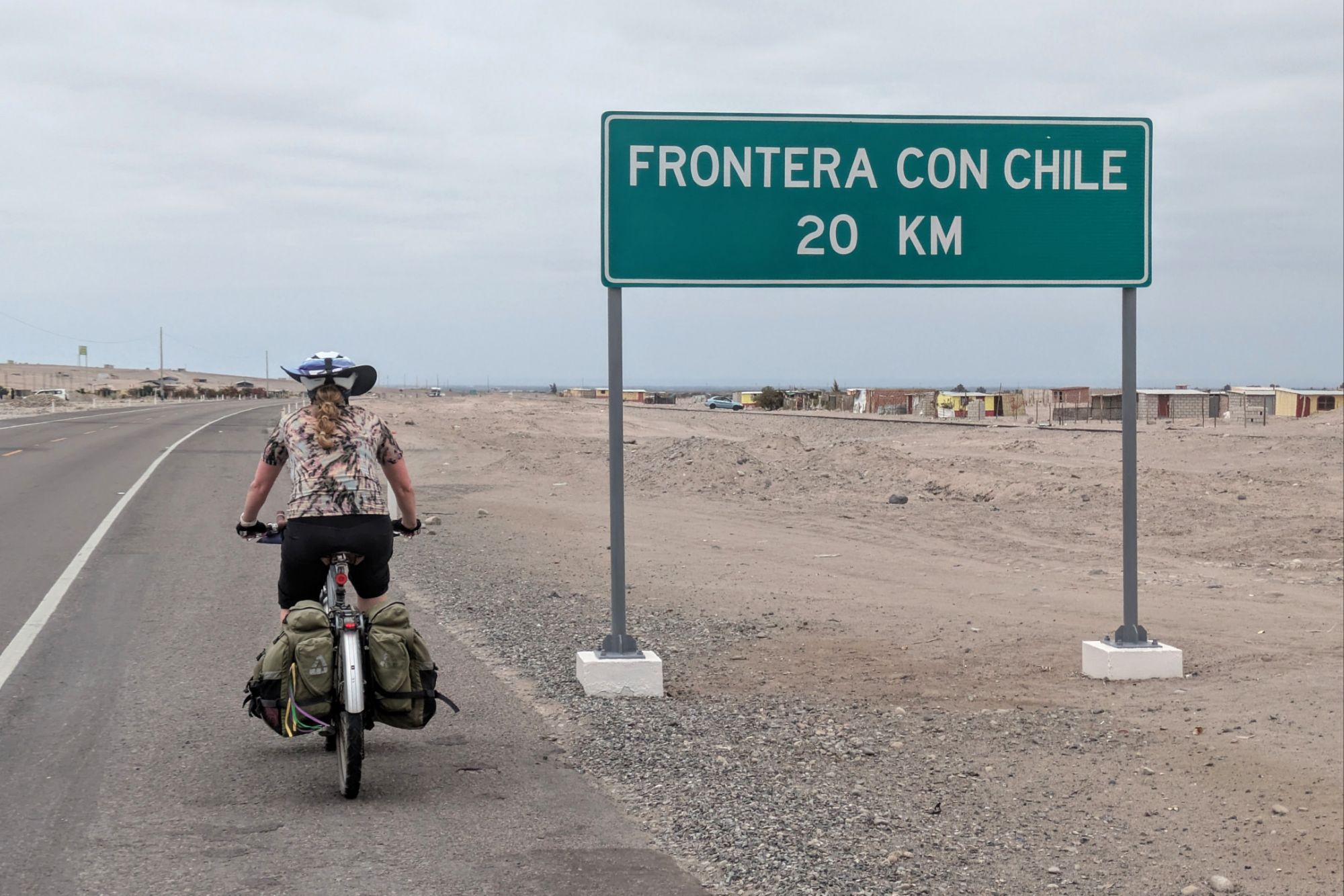
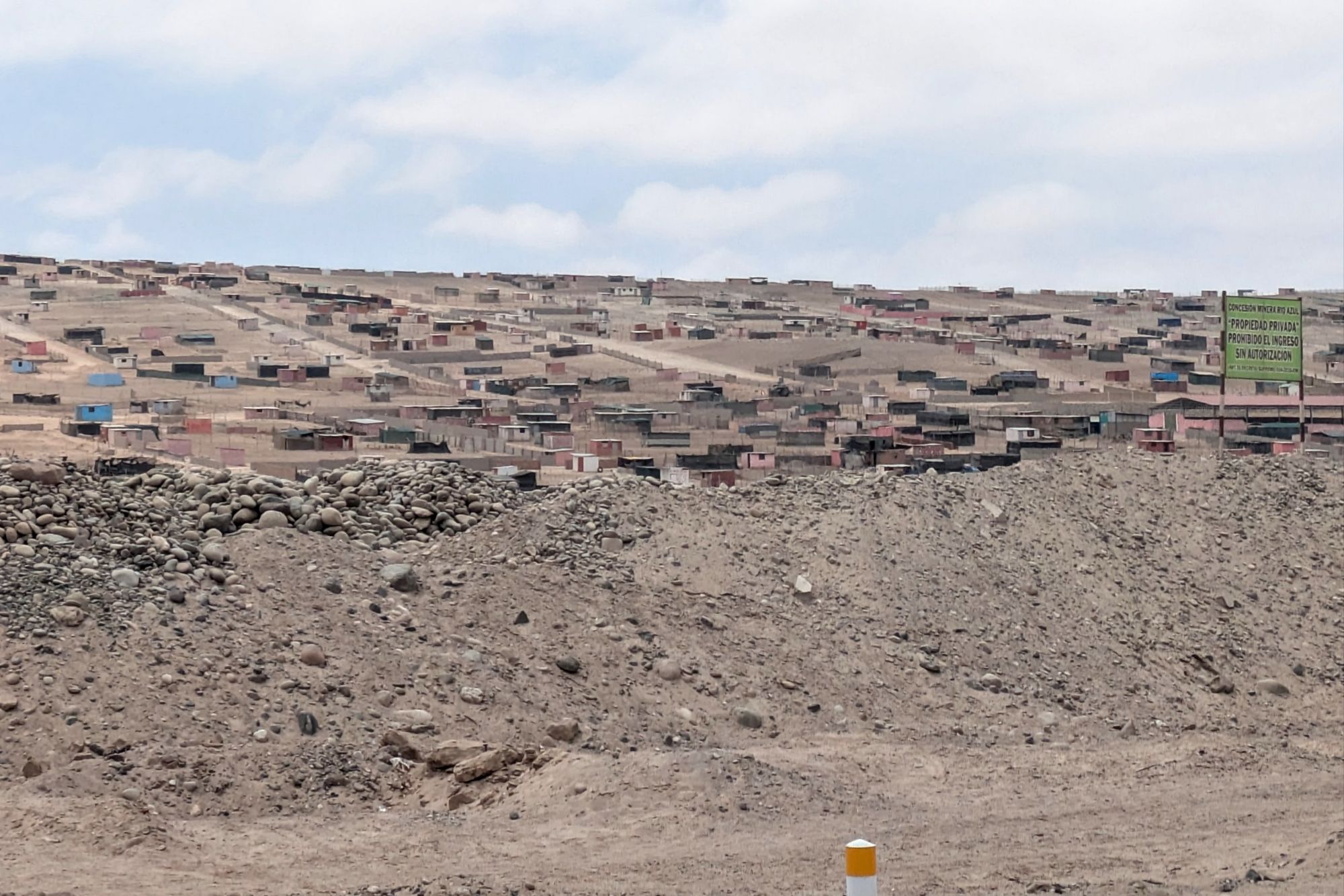
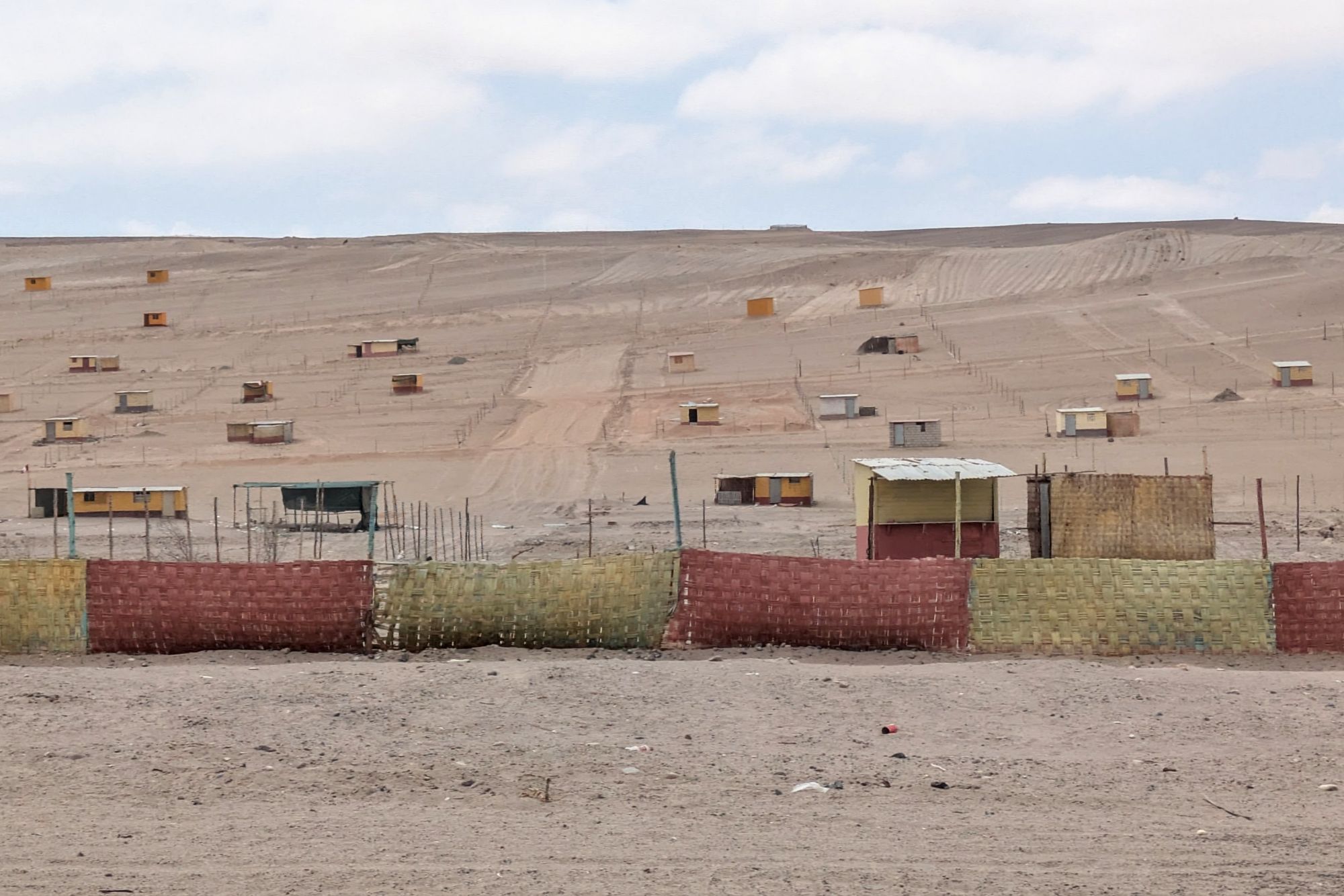
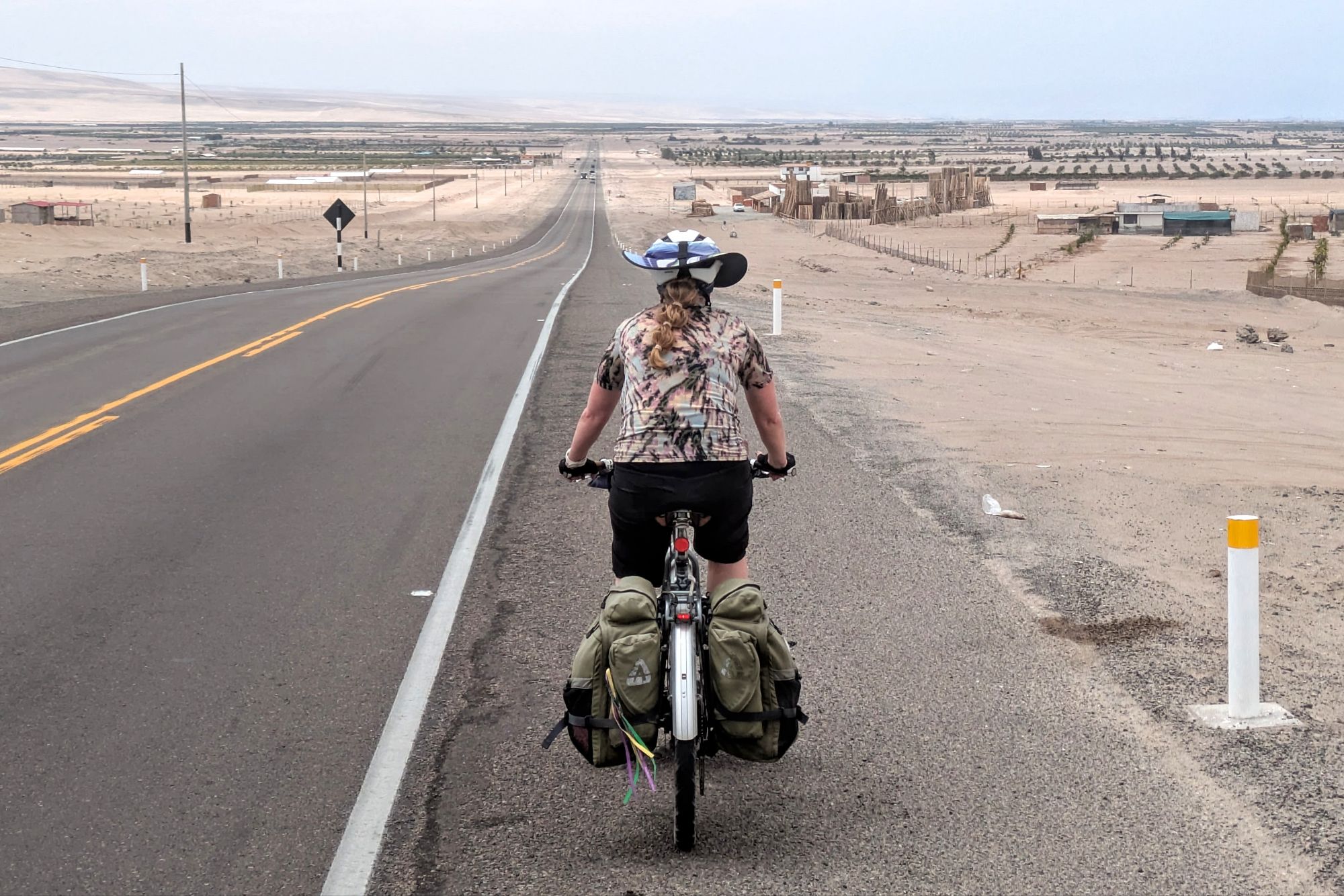
When we were up riding along Lake Titicaca, quite close to the border with Bolivia, something about that felt strange to me. I realized it’s because in our 4 years of riding, we’ve never been near a national border that we wouldn’t be crossing. Up until now we’d only been in countries adjacent to the United States (Mexico, Canada), or on islands (New Zealand). A corollary is that this is the first international border crossing we would do where the United States was neither our departure nor arrival country.
When we arrived at the Lima airport in May, we were granted a 90-day stay (the max allowed, but fairly standard). We quickly fell in love with the country, and did not want to rush through it, and thus we easily blew past the 90 days, overstaying by 76 more. Whoops! Luckily, everything we read suggested that Peru’s welcoming attitude toward visitors meant there were unlikely to be any negative consequences for an overstay even as long as 2.5 months. You’re simply required to pay a small fee (~US$1.25) for each additional day. Seems like a win-win approach, allowing foreigners to contribute to the local economy, and collecting a little bit extra on the back end.
Still, there is little explicit language, and no guarantees, so the last 76 days have been clouded with a background level of stress, reaching a peak as we approached the border station. It had at least been encouraging that the overstay-fee-paying process is so standardized that we could go to the National Bank’s online payment website to pay the fee in advance. And then we finally found a use for the hundreds of copy/print shops we’ve seen that line the business corridors of all but the smallest Peruvian towns: printing out our payment receipts (arrive to the shop, send the PDFs to their WhatsApp number posted on the wall, pay US$0.25, and out the door in 2 minutes, easy!)
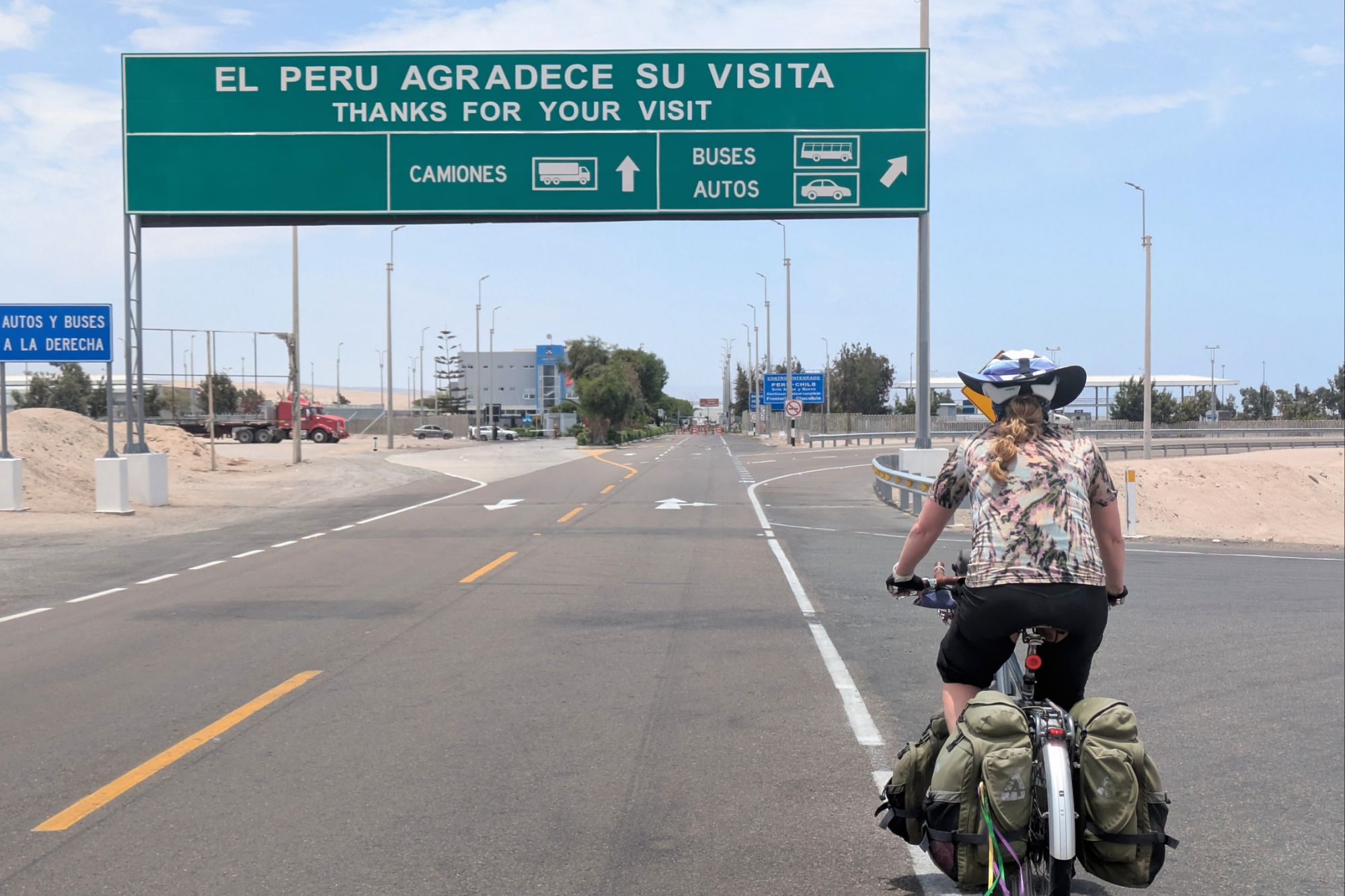
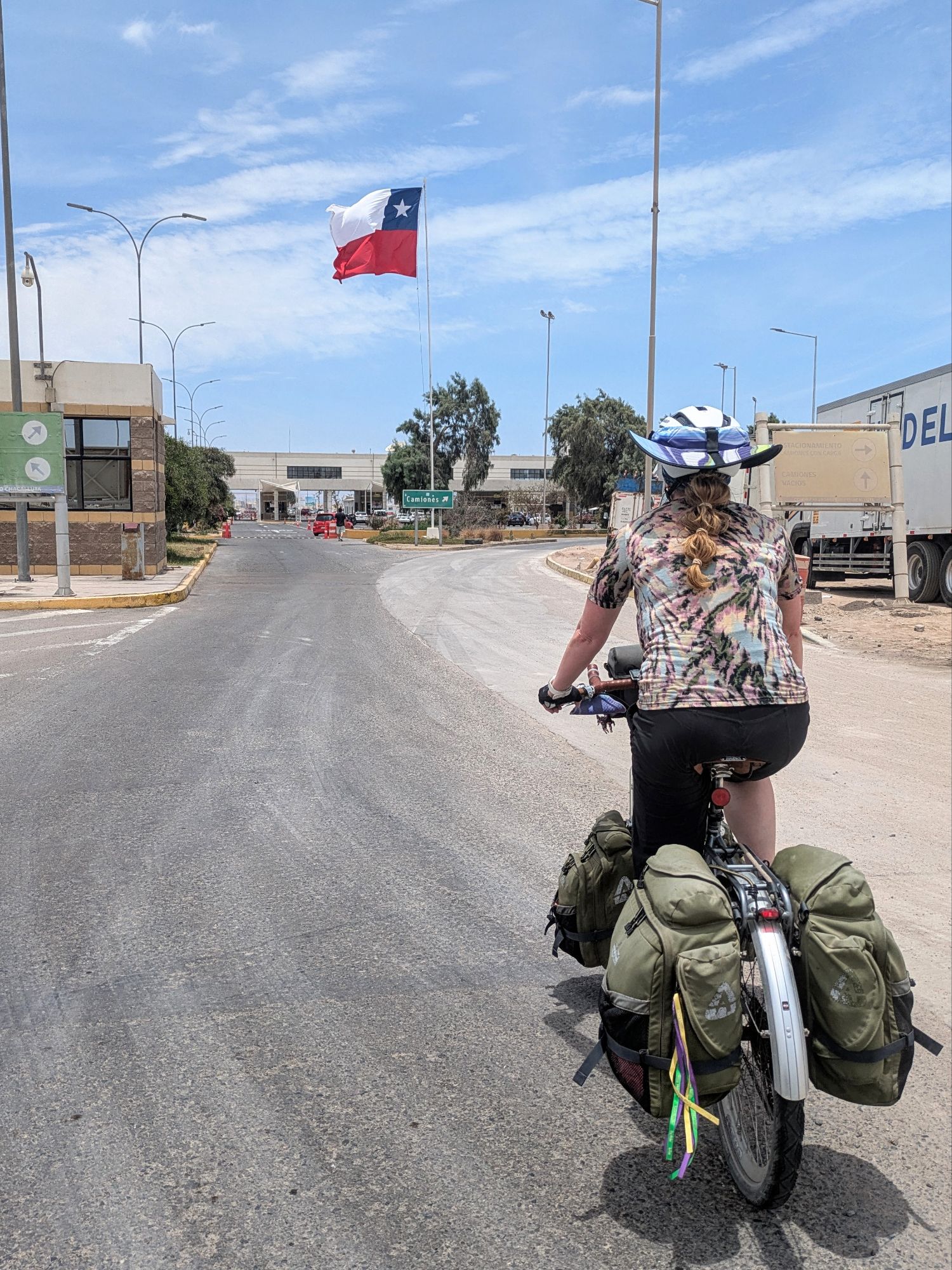
I knew from advance reading that checking out of Peru and checking into Chile occur at the same tollbooth-like complex, though there was little on-site instruction about how to navigate the process. So we did the usual observe-and-follow, parking our bikes ahead of the space where everyone had parked their cars, and got in line in front of one of the booths that had Peru flags in the window. When we got to the window, we learned the bit we’d read about was still true: we needed to fill out an exit form. Which they would give us to fill out, right? No, inexplicably the official government clerks don’t provide the required official government form! I’d read (on iOverlander, partly through our ride this morning!) that many people pick up their forms at the Tacna bus terminal. Crap. But the clerk informed us that the other oddity we’d also read remains true: the forms are sold (for S/3) at a little restaurant that sits on the second level stretched across the booths. Completely nonsensical, but at least we were able to get the form, fill it out, and get back in line.
We presented our overstay-payment receipts along with the form and our passports, but then quickly got directed to another window specifically-dedicated to overstay payments. It took a surprising amount of time for the clerk there to process everything (typing things into a computer, making printouts, consulting with a colleague, notating things with a pen), while we stood in nervous silence (it almost felt like it might have been simpler if we had just paid here in cash). But eventually our passports were returned with a normal exit stamp, no extra commentary, and certainly no expression of shaming or disapproval. Apparently for the most-egregious overstays (of years or more!) they may restrict re-entry to Peru for a period, but it sounds like we would have been informed if that had been the case. If/when we try to re-enter Peru, they may look at our history and be less-generous, but for now, we got to stay in Peru for nearly twice as long as “allowed”, for just a totally-worth-it US$241. Though I do feel a bit guilty in the knowledge that the attitude of our own government is far from reciprocal.
We then walked one “tollbooth” over to the right, with Chile flags in the window, and quickly got receipts granting us the standard 90-day entry to this new country. Then we had to go back and collect our bikes, and go around the far side of the rightmost (and biggest) “tollbooth”, where people were bringing all their luggage to pass through a scanning machine set inside. We unloaded all of our panniers, loaded them onto the machine, and then walked our bikes through the room. At the far end a couple of officers then registered our bikes, asking for serial numbers and make/model, though thankfully not asking anything about value (a number impossible to know, and if we stated something close to the several thousand US dollars of actual value built into them, would that trigger some import tax?) We were given forms for the registration to show upon our exit from Chile, but have heard that at other border crossings we may not be asked. Another thing we weren’t asked for was our declaration forms (that we’d filled out online) stating that we were carrying food products into the country; strict agricultural restrictions in Chile are the main reason for the inspection. They might have just forgotten in the unusualness with our bikes (I don’t think think this is a particularly-popular crossing for bike tourers), or the scanner just accomplishes all the necessary inspection regardless of our declaration, but either way, no one opened any of our bags, or asked about what we were carrying, so it’s likely there are a few things we had gotten rid of that we could have held onto. Oh well, no big deal, we’re now in a country with Walmarts!
Once through, the border-crossing stress finally evaporated into the desert air. We had successfully ridden our bikes through much of Peru, from an old new country to a new new country! While our decision to ride rather than bus/fly out of Cusco had paid off entirely on its own merits, it also produced the more-psychological benefit that came with the knowledge that we had crossed Peru entirely under our own power (excepting a couple of rides from the Good Samaritans of Huanta)!
Some Peru stats:
- Days traveling from Huaraz to Arica, Chile: 131
- Riding Days: 56
- Distance: 1625 miles
- Climbing: 106,500 ft. (aka, 20 miles! At 66 feet-per-mile, that’s 35% higher than what we’d thought was uniquely-hilly New Zealand)
- Pedaling time: 206 hours (on the flat US East Coast, we did 2500 miles in the same amount of time)
- Lodging Cost: US$3067 (US$23 average)
- Most-expensive night: US$56.84 (near Machu Picchu, otherwise, US$39.29)
- Least-expensive night: US$6.80 (Mazocruz motel, excluding 13 free wild camps)
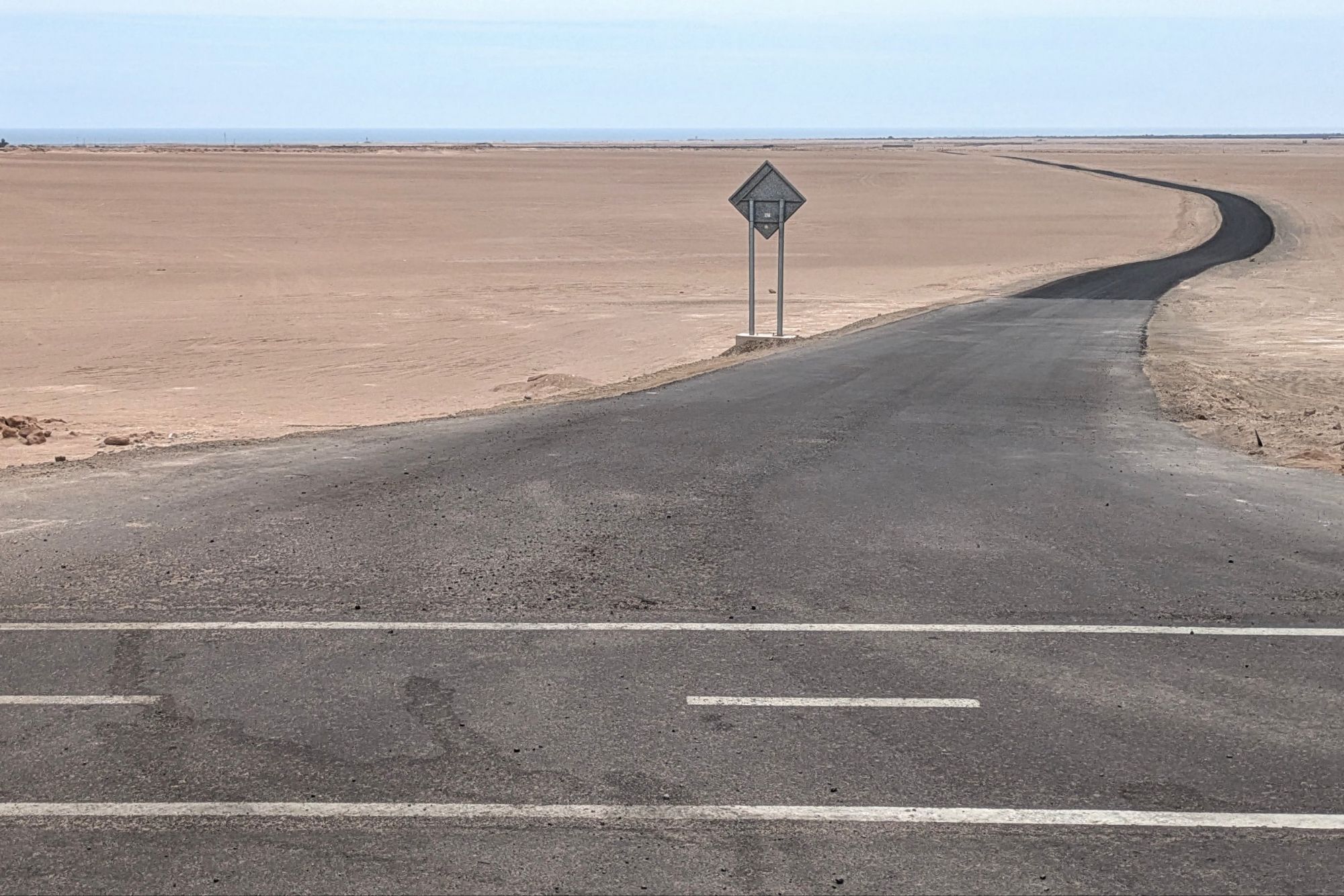
A wide black divided highway, with big smooth shoulders presented itself, and while we’d had something similar on the Peru side of the border, the two-way bike lane off to the right side is what truly proved we were in a different country. Luckily, we’d missed the entrance though, because we soon saw a place where concrete jersey barriers were laid across it; it might have been possible to navigate around them, but it would have been a big pain-in-the-ass. There was a military base adjacent, and maybe it was some security feature for that, but it seems you would have considered that before you built the bike path in the first place? Either way, the shoulder was totally fine, and little traffic was coming from the border post behind us anyway.
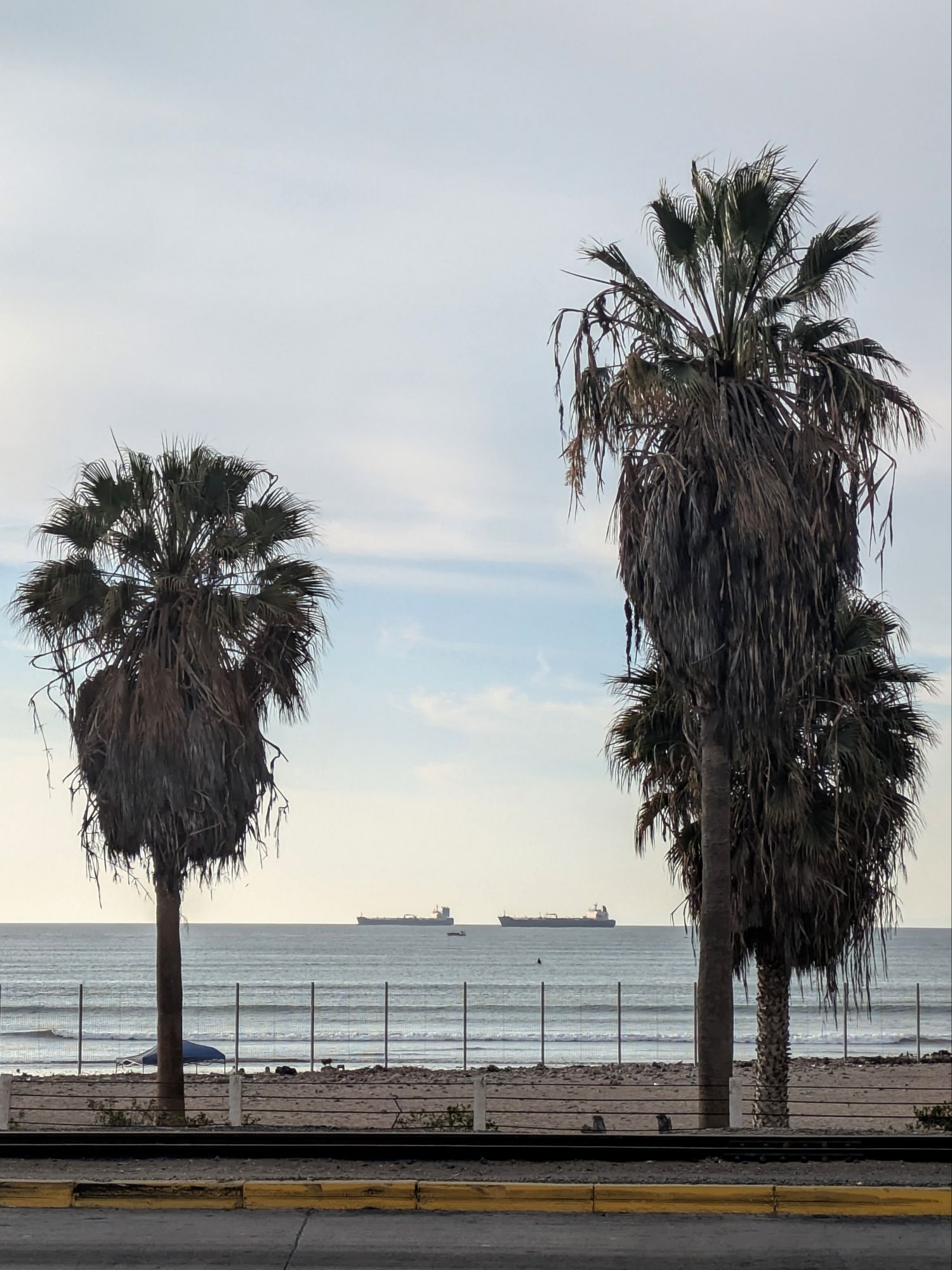
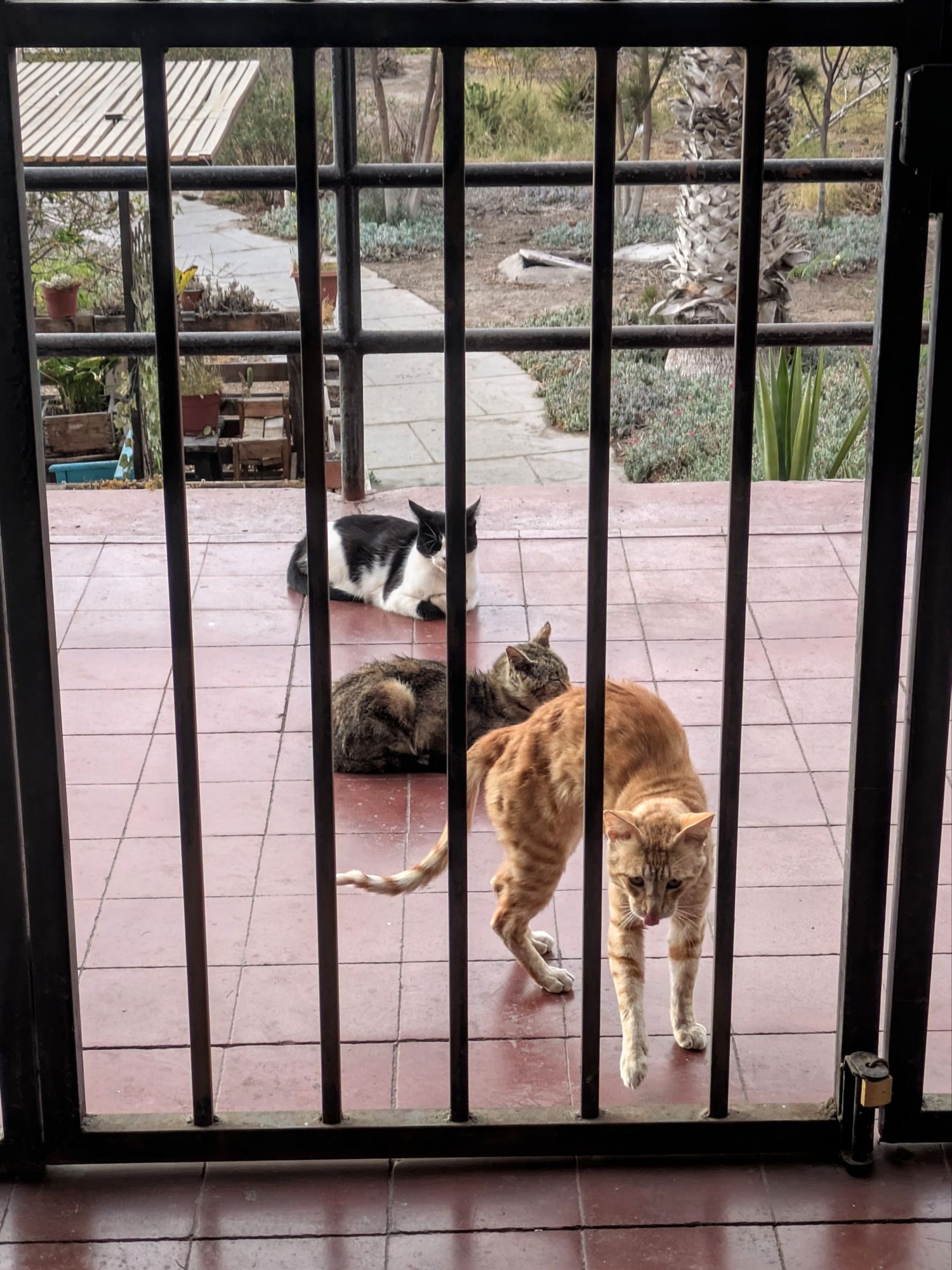
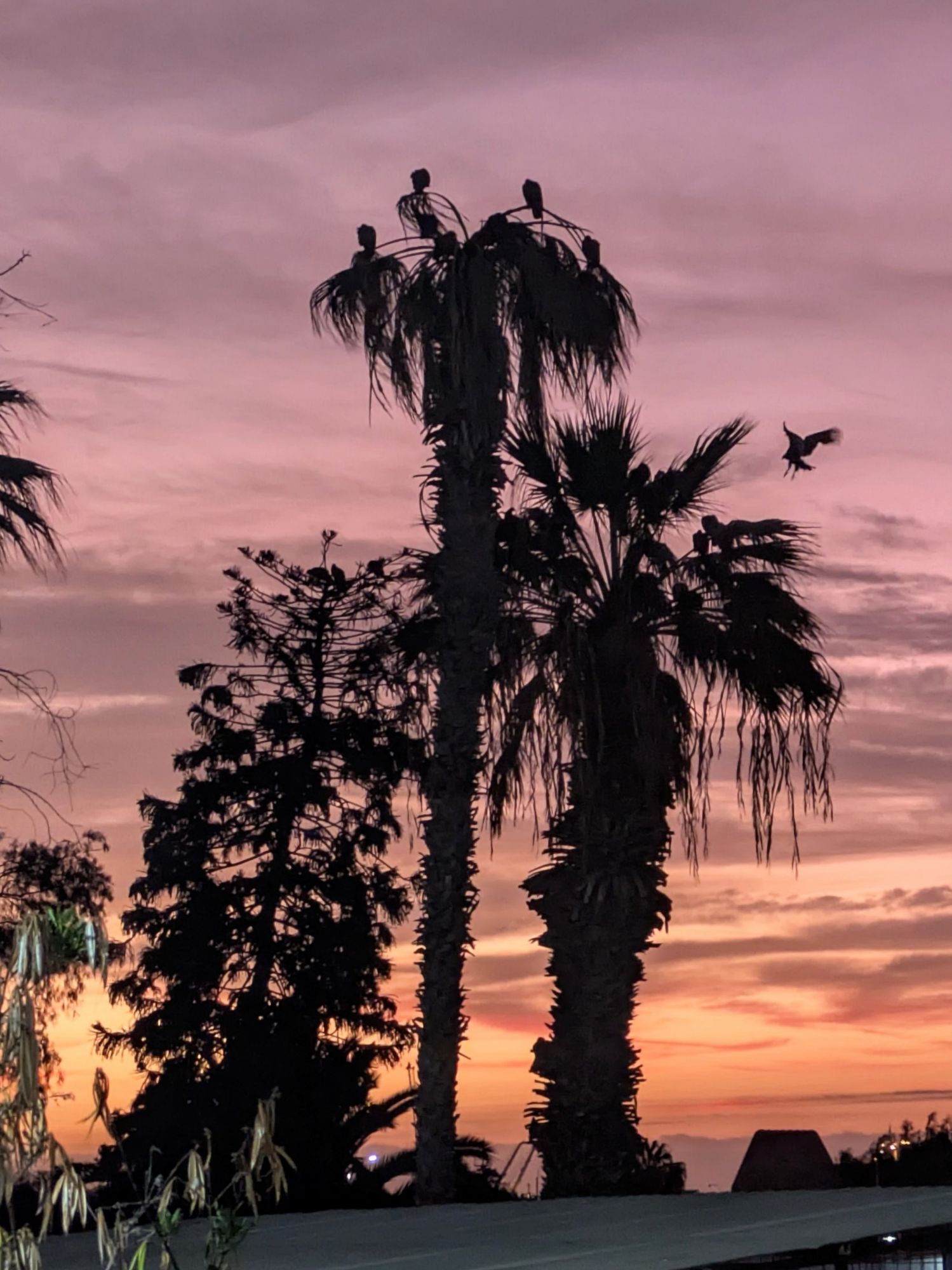
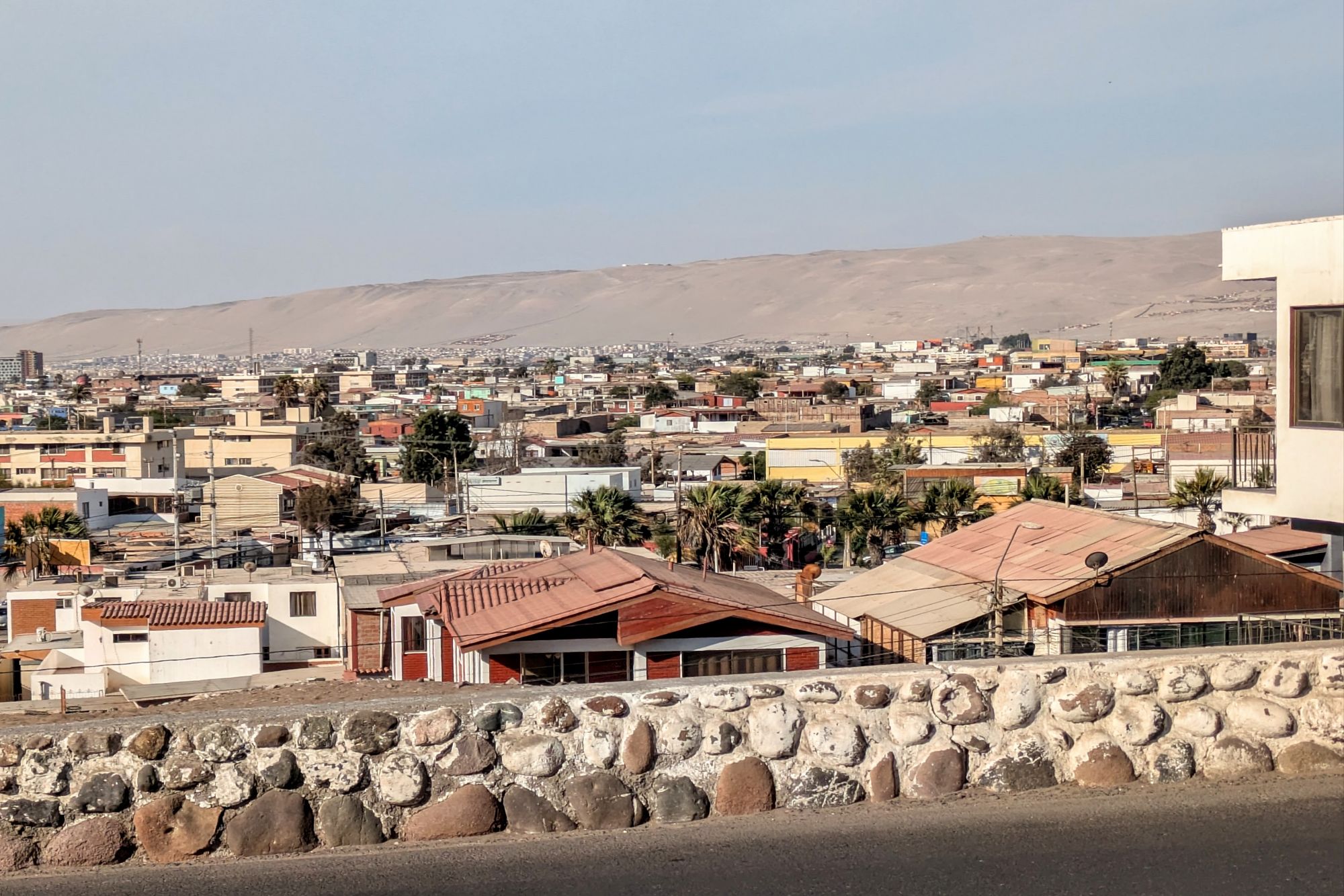
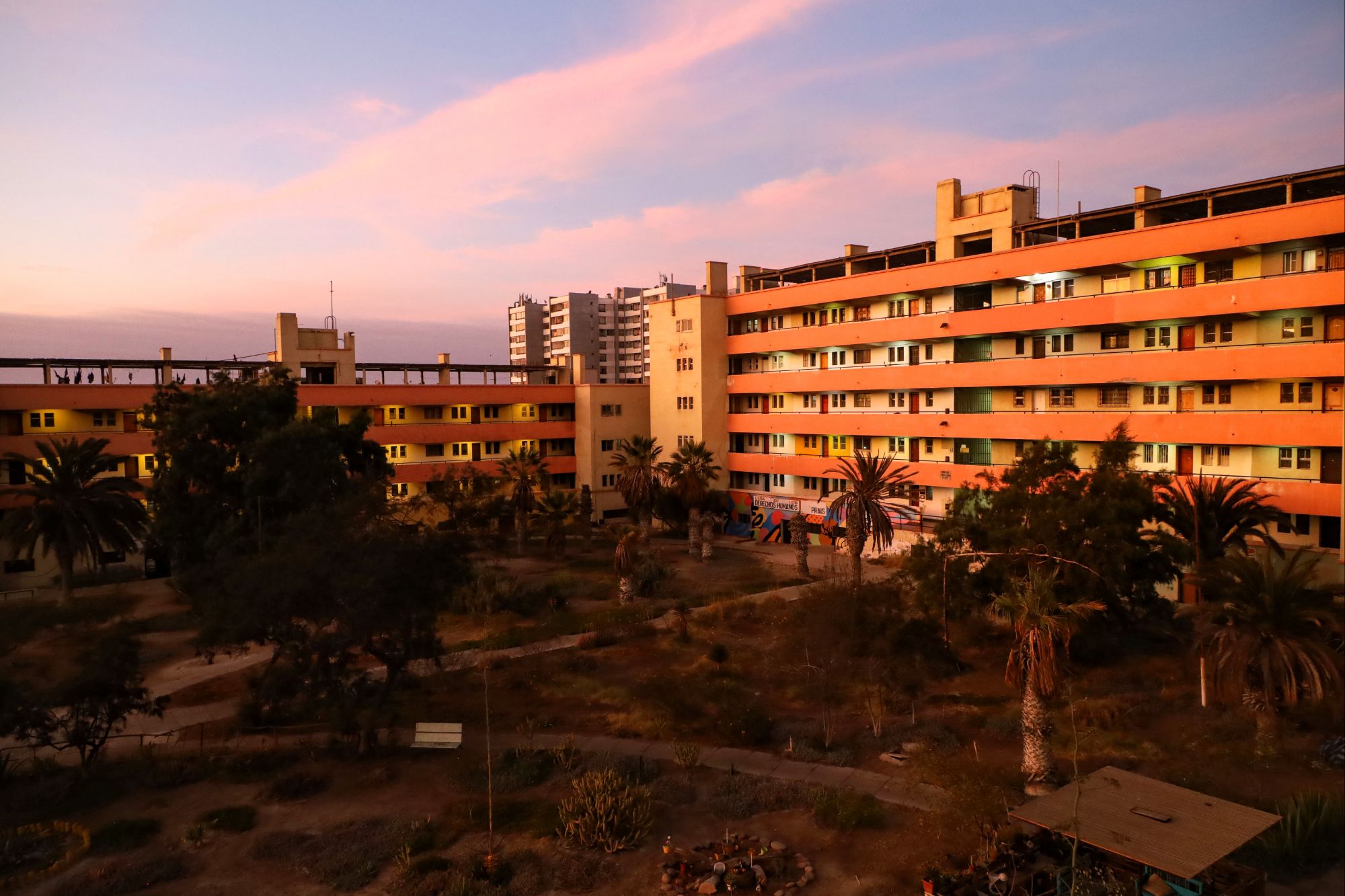
Twelve more miles brought us into Arica, with the decreasing slope and increasing headwind slowing our progress a bit. As we got into town, traffic got a lot denser, and then a new two-way bike path (this one on the left side) actually became useful. It had a lot of bumpy annoying transitions, but was still better than the alternate. We were welcomed to our first Chilean AirBNB by Eduardo, who spoke fluent English. But while our unit was nice, the large apartment complex that it was in felt run-down and slightly “housing project”-like (though the stadium-like ramps circling up to the 3rd floor made it super-easy with the bikes!) Along with some tents in a public park, it was already clear that the wealth of Chile relative to Peru also came with greater consequences for being poor.
Days 2-3
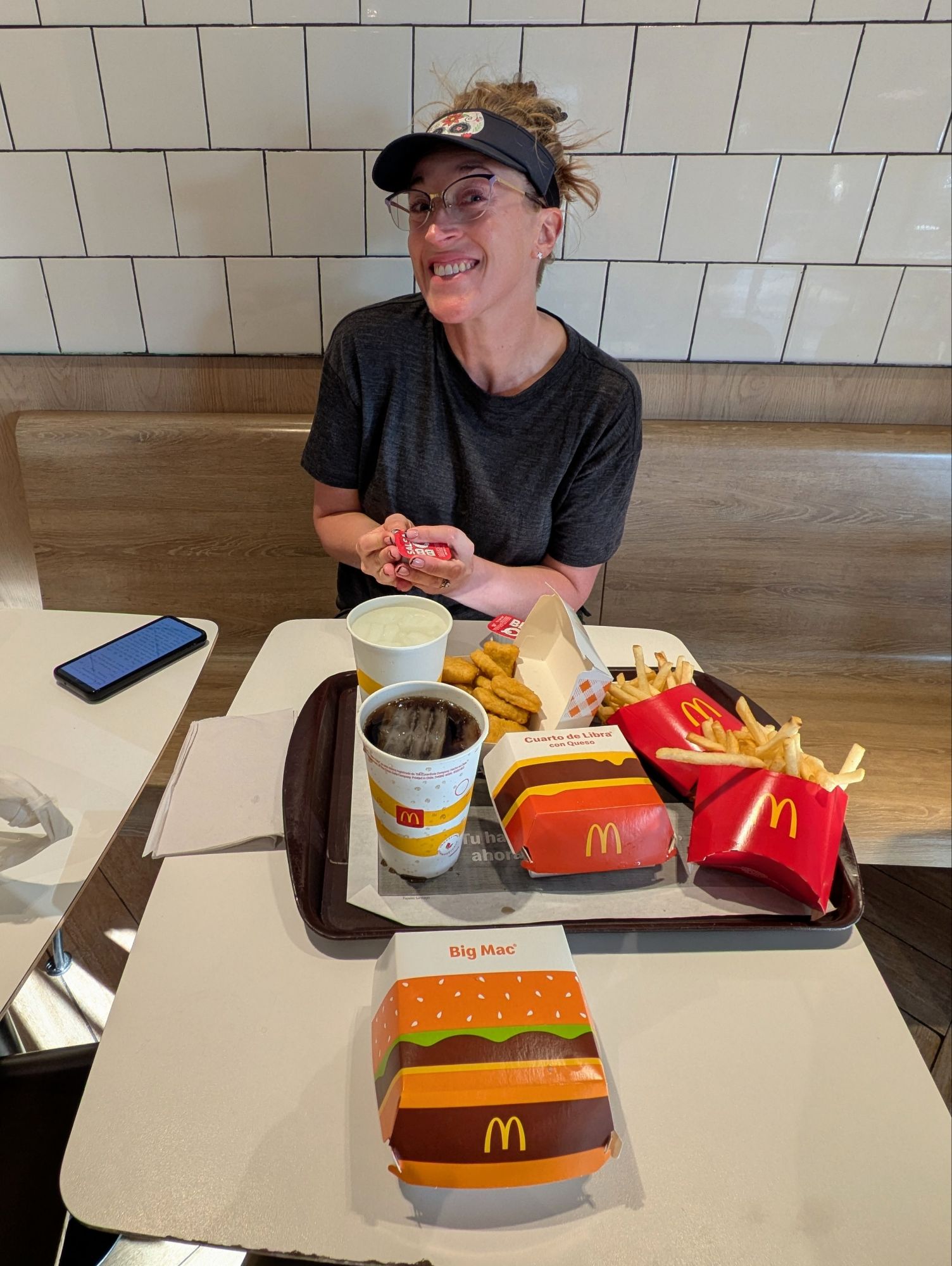
On each of the three days of our stay in Arica, we visited Lider, which is the brand purchased by Walmart in 2009. Right at the entrance they had a section of “Marcas Americanas”, food products specifically sold at US Walmarts! The store was in a fancy new mall, where it took a while to realize that the high ceiling in most places (including the food court) wasn’t actually solid. It was effectively an outdoor mall, but with typical indoor-mall kiosks sitting unprotected in the concourses. I guess this is the way they show off that Arica gets essentially no rain, and has near-constant always-comfortable year-round temperatures.
We otherwise spent the time adjusting to the new culture: learning to trust that drivers will stop for pedestrians at crosswalks, figuring out how the ATM menus are organized, refraining from saying “buenos dias!” to people on the sidewalk (because no one else says it), and realizing that our Spanish skills are near-useless against the Chilean accent.
Leave a Reply