

36.7 mi / 9.9 mph / 1338 ft. climbing
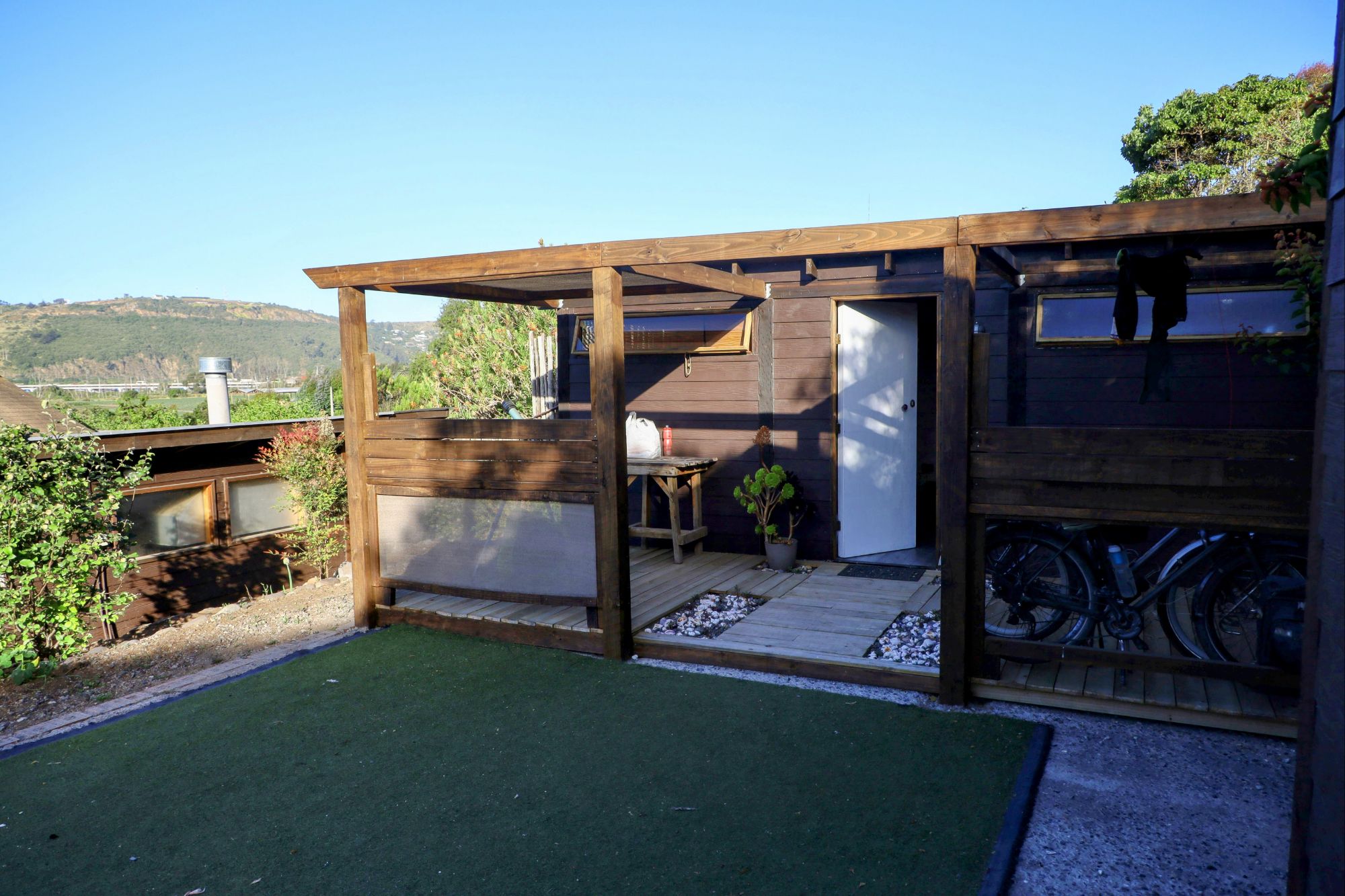
Home: Maria Paz’s AirBNB
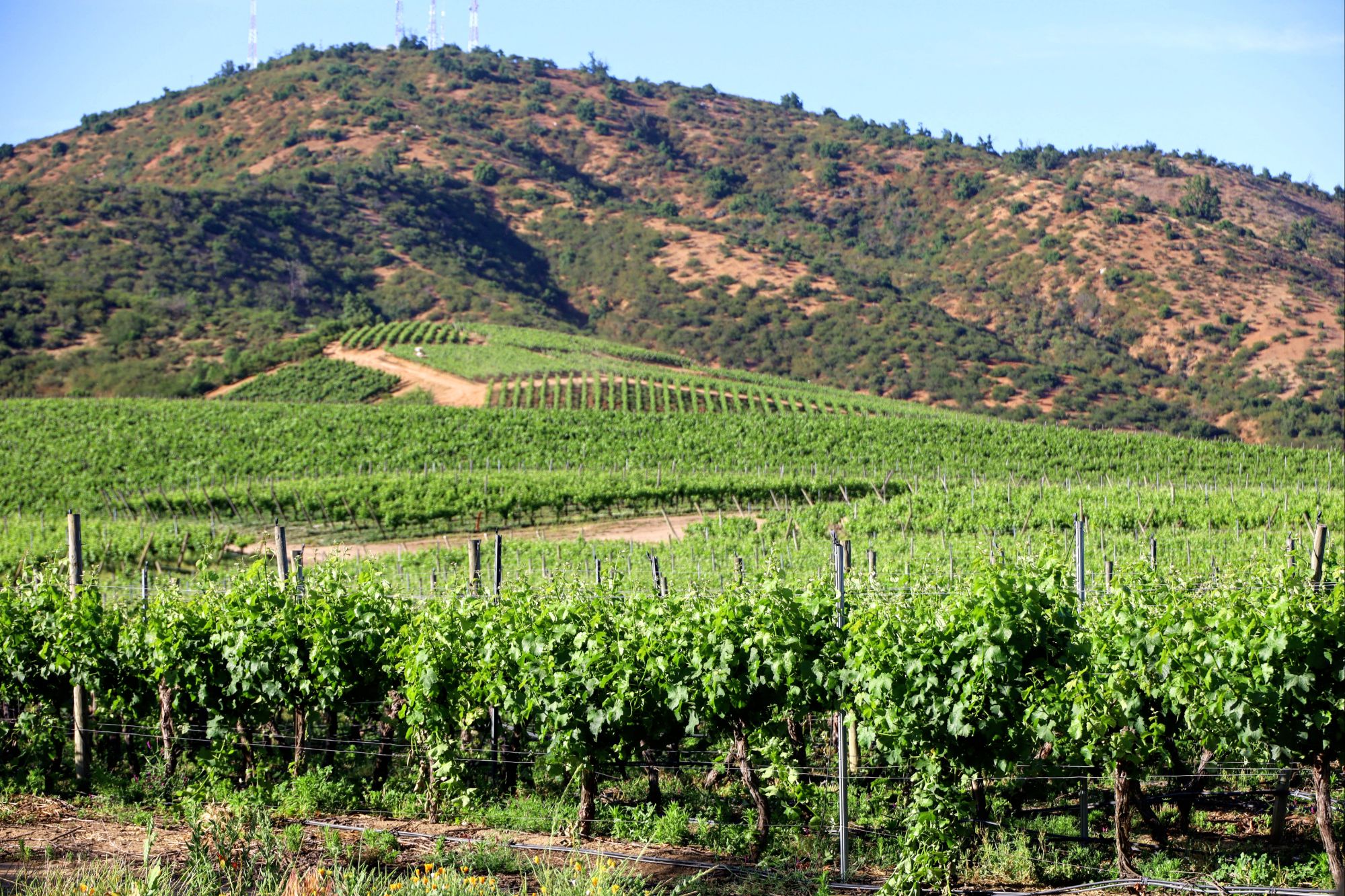
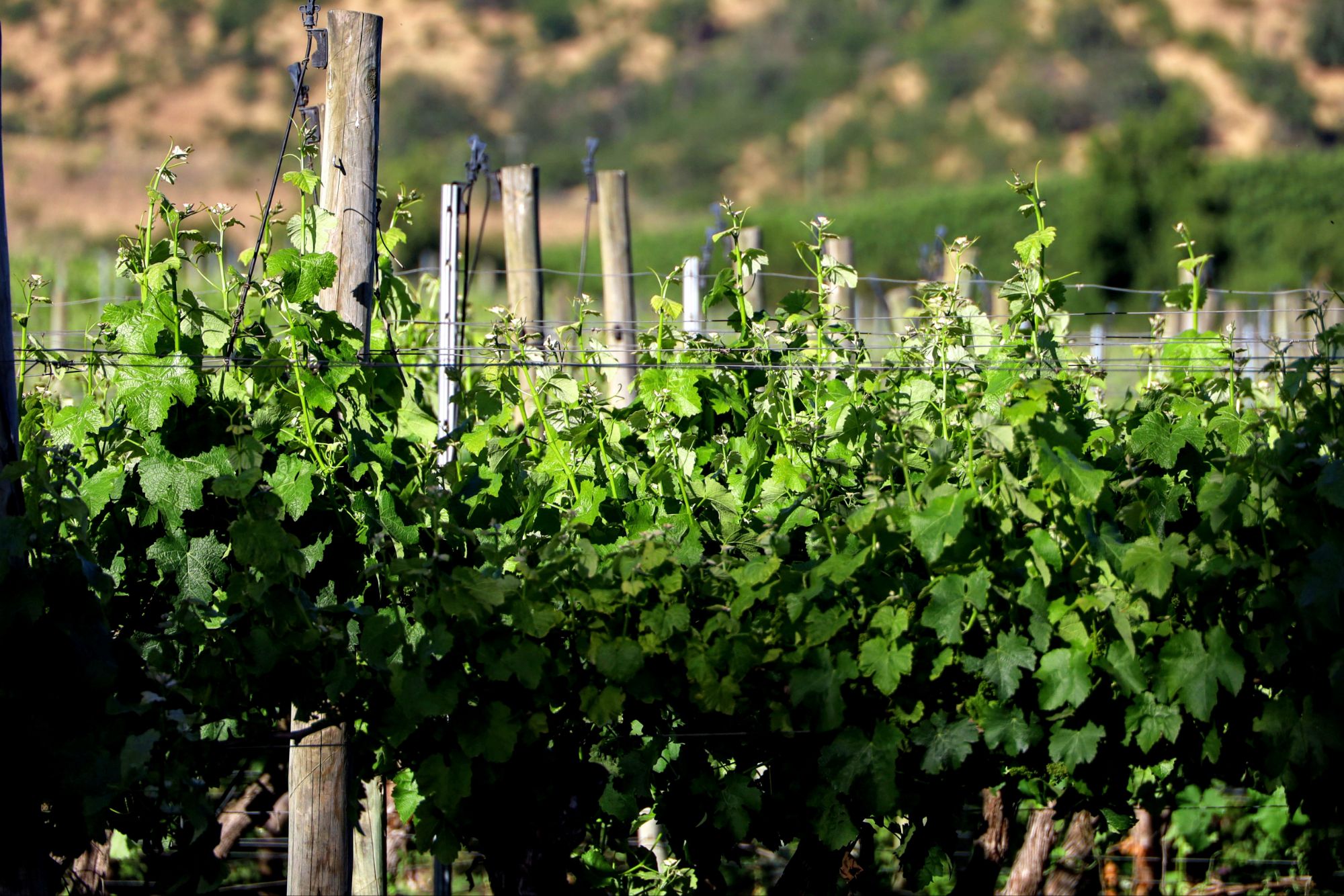
Our accommodation was called “Bed & Wine”, and while it provided a bed, there was no wine. There was a breakfast included in place of the wine, but it would only be served at 9am, well after we would need to depart, so we just put together our own breakfast in the shared kitchen like we would have anywhere else. The “wine” part refers to the fact that the Casablanca area is one of the wine-producing regions of Chile. We had passed a large vineyard on the way into town yesterday, and would soon pass more on the way out today.
Along with the layers of low green mountains, and the country houses with sloped roofs (really just “standard” roofs, but unusual after all the square, untopped buildings of Peru), those vineyards made it feel like our sleep had secretly transported us back to New Zealand. And not just for a second, where a quarter-mile stretch will frequently make us recall a similar stretch in a different country until the next building immediately snaps us back. Here, the confusion lasted for most of the day. When we would pass through small towns, I would literally expect to see a 4 Square (the New Zealand small-town grocery brand) on next corner, and that’s the first time the name “4 Square” has even entered my consciousness at any point within the last two years. I’m lucky that I was able to keep myself from riding on the left side of the road! The similarity may not be completely random; if we were to sail directly west from here across the Pacific Ocean, the first land we would see would be the northern tip of New Zealand passing just to our left.
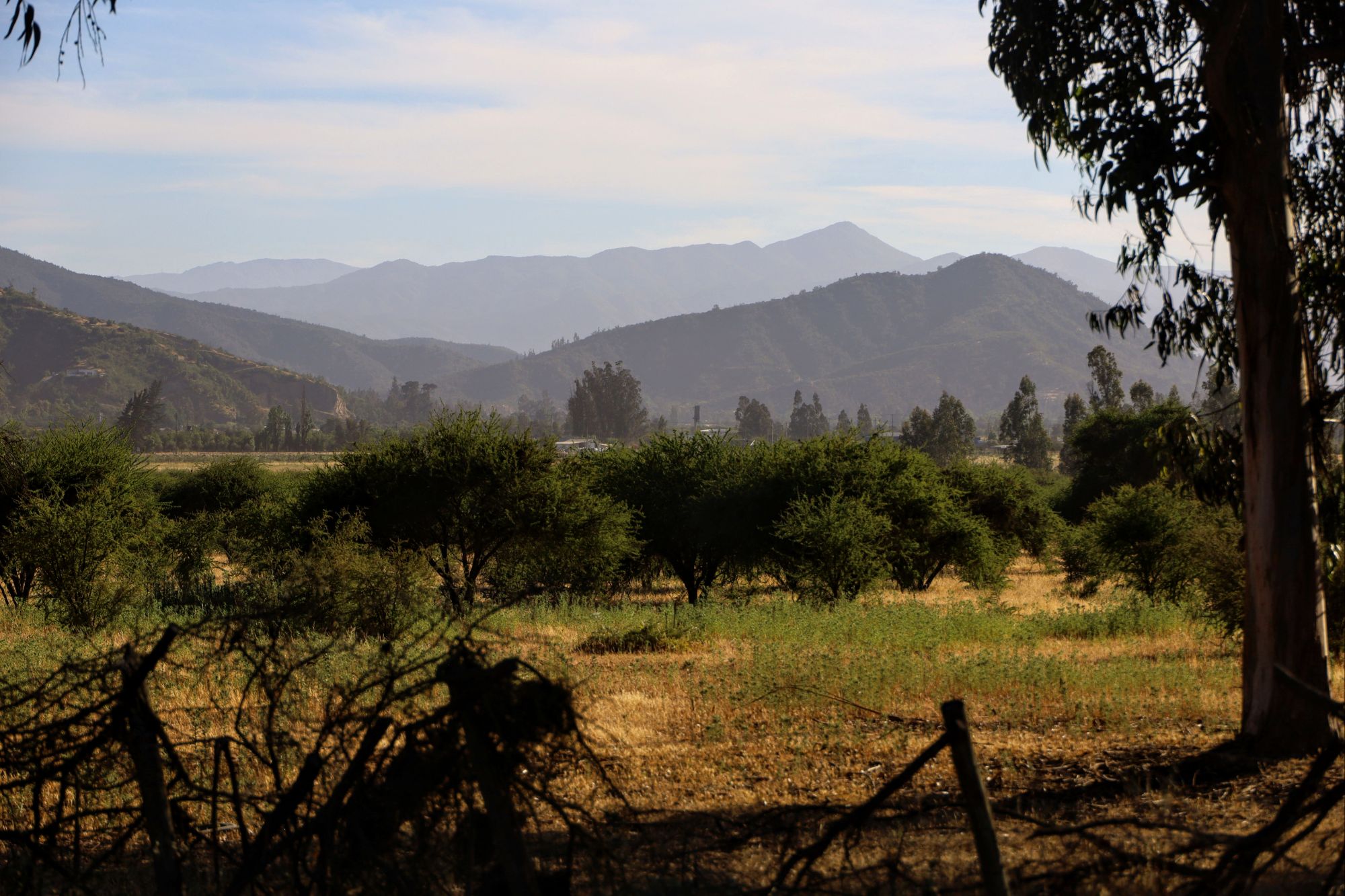
Despite the narrowness of Chile (about 100 miles at this point), there is (currently? at this time of year?) a huge temperature variation between the coast and the center of the country. It’s been over 90°F in Santiago, and barely over 60°F at the coast. Though you don’t even need to go as far as Santiago to feel that heat; just five or ten miles inland can be enough to change “cool” to “sweltering”. So our goal is to stick to the coast as much as possible. We went inland from coastal Valparaiso yesterday to Casablanca, only because no road runs along the rugged coastline south of Valparaiso. But today we would be able to return.
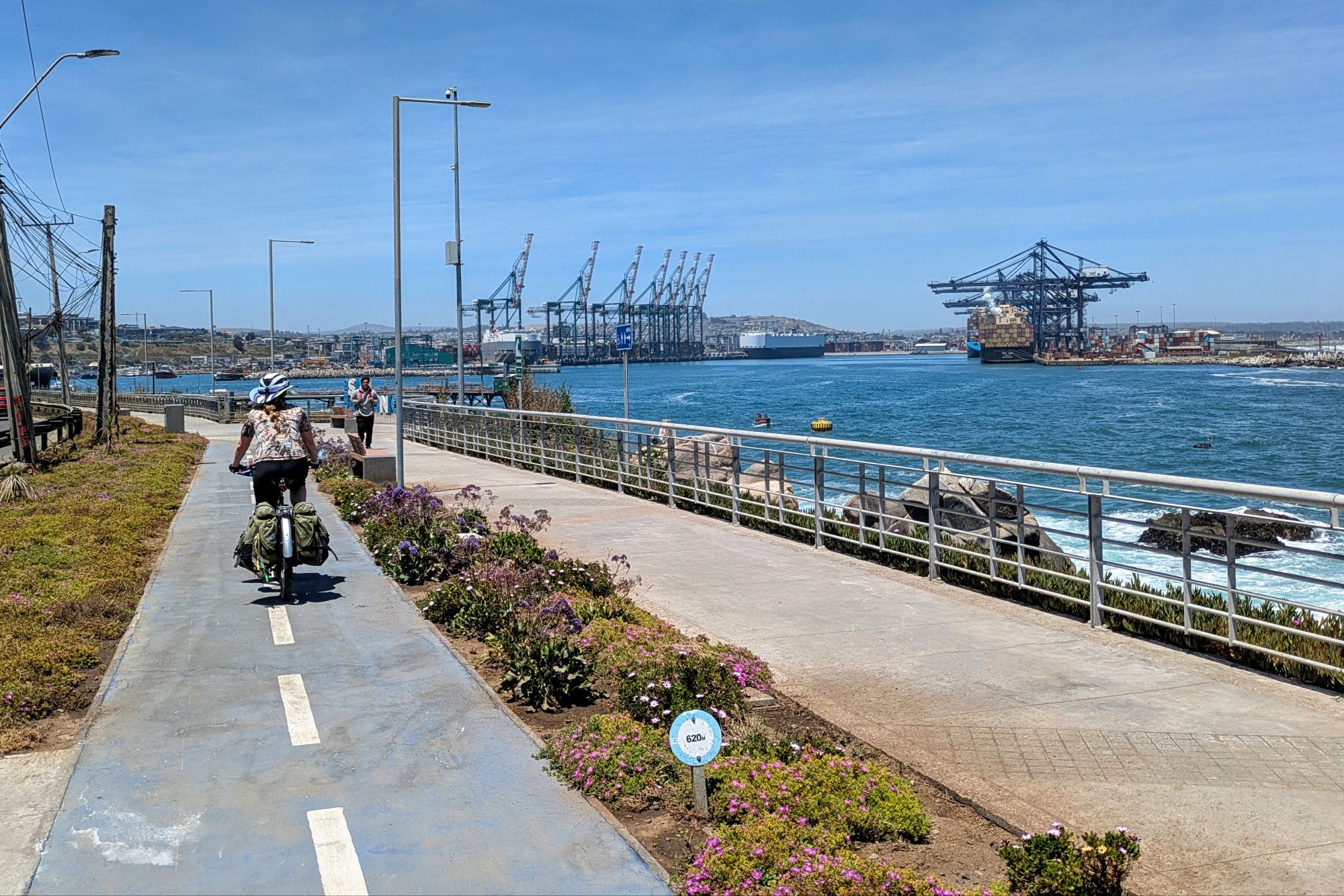
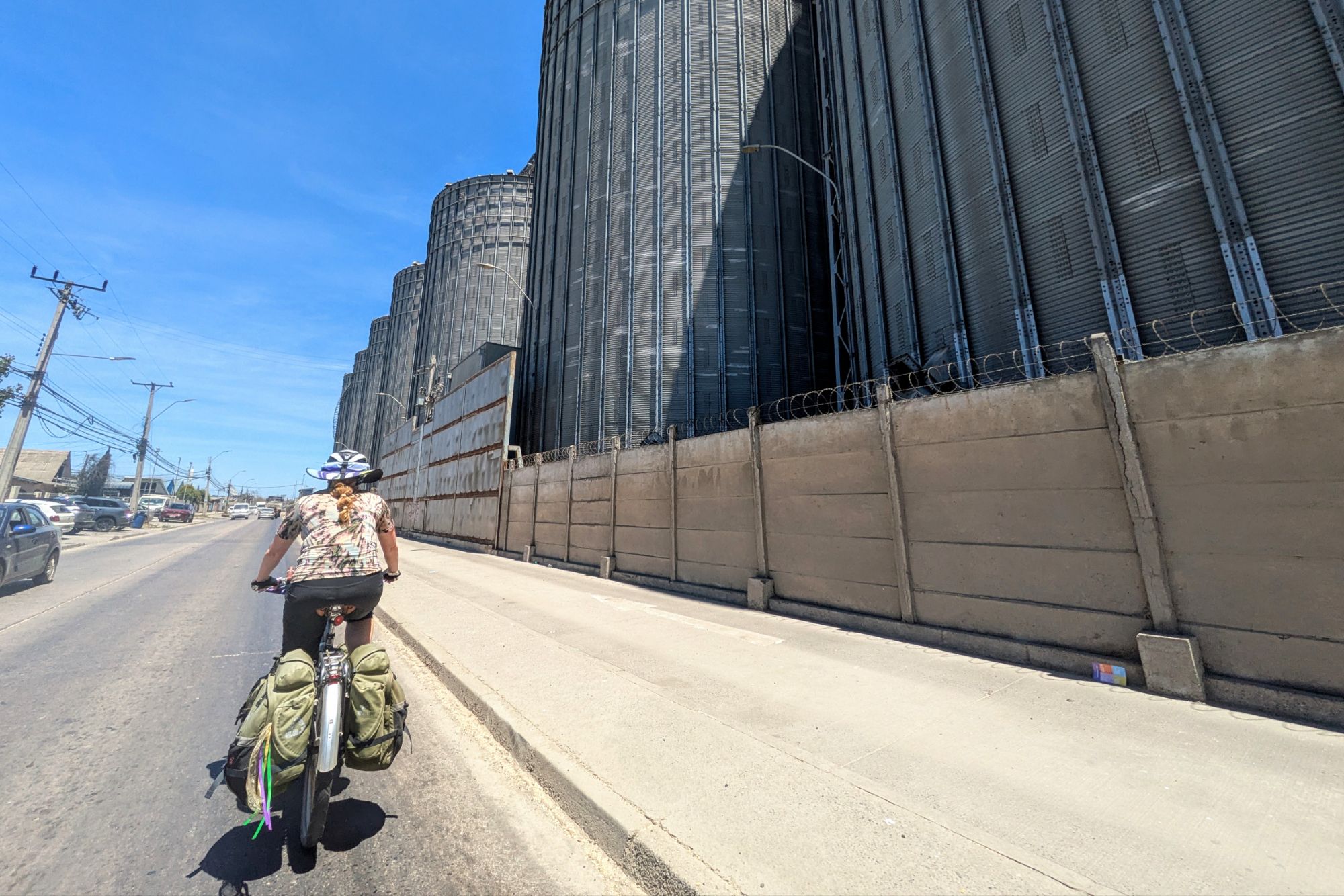
Again we rode a 6-mile stretch in the middle on a (somewhat-) limited-access highway, but for the rest we had pleasantly-quiet (if less-direct) rural roads.
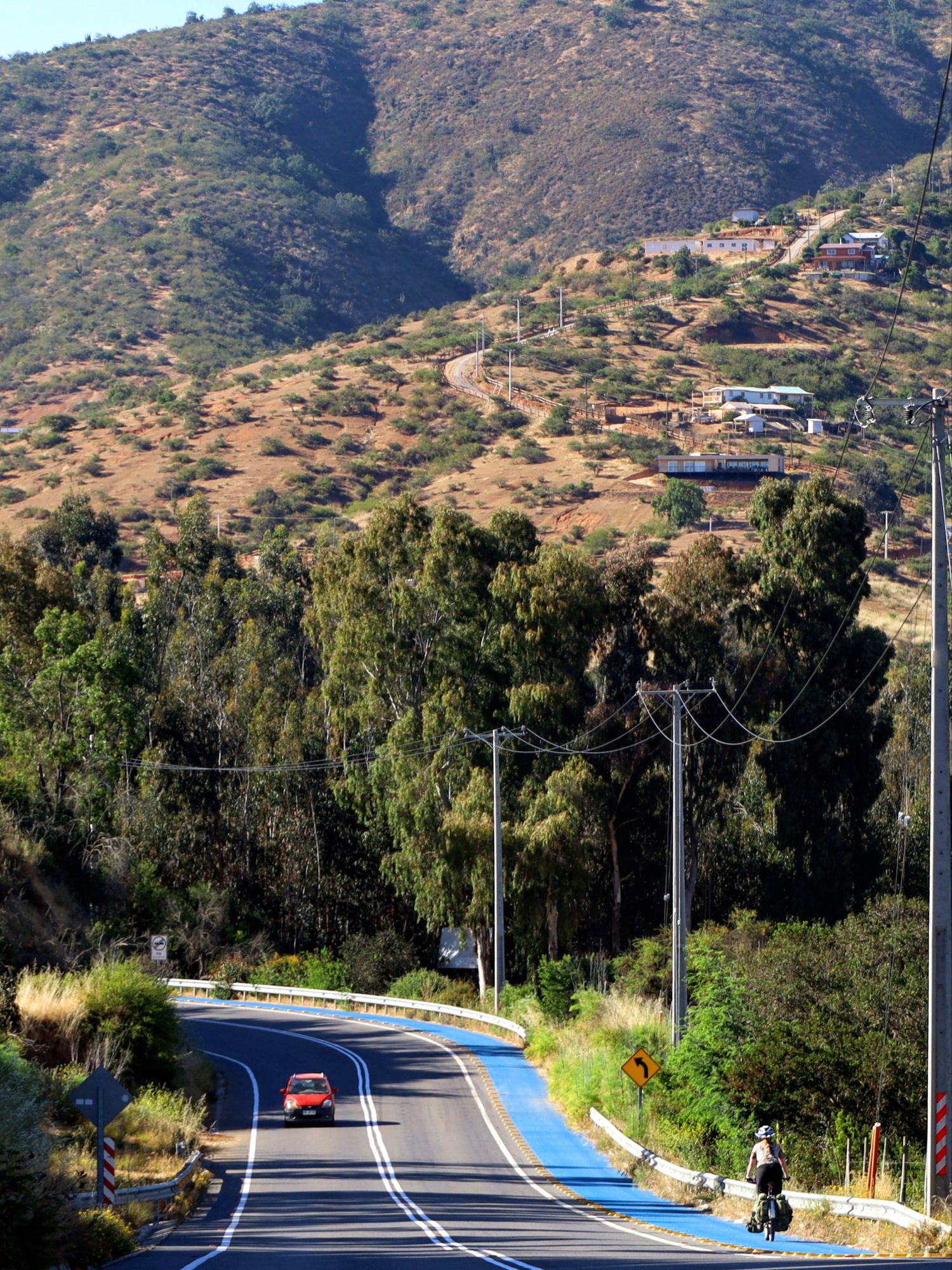
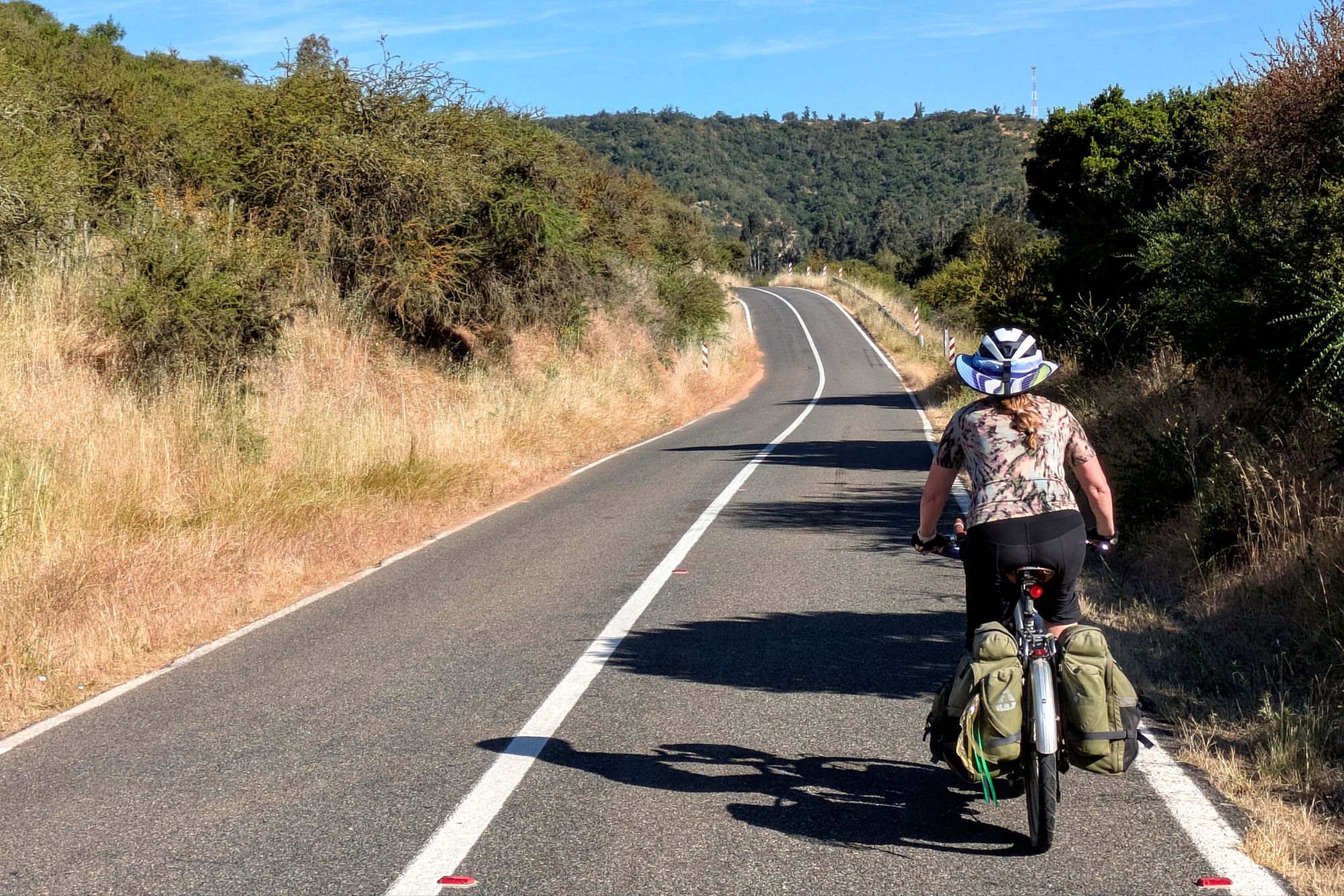
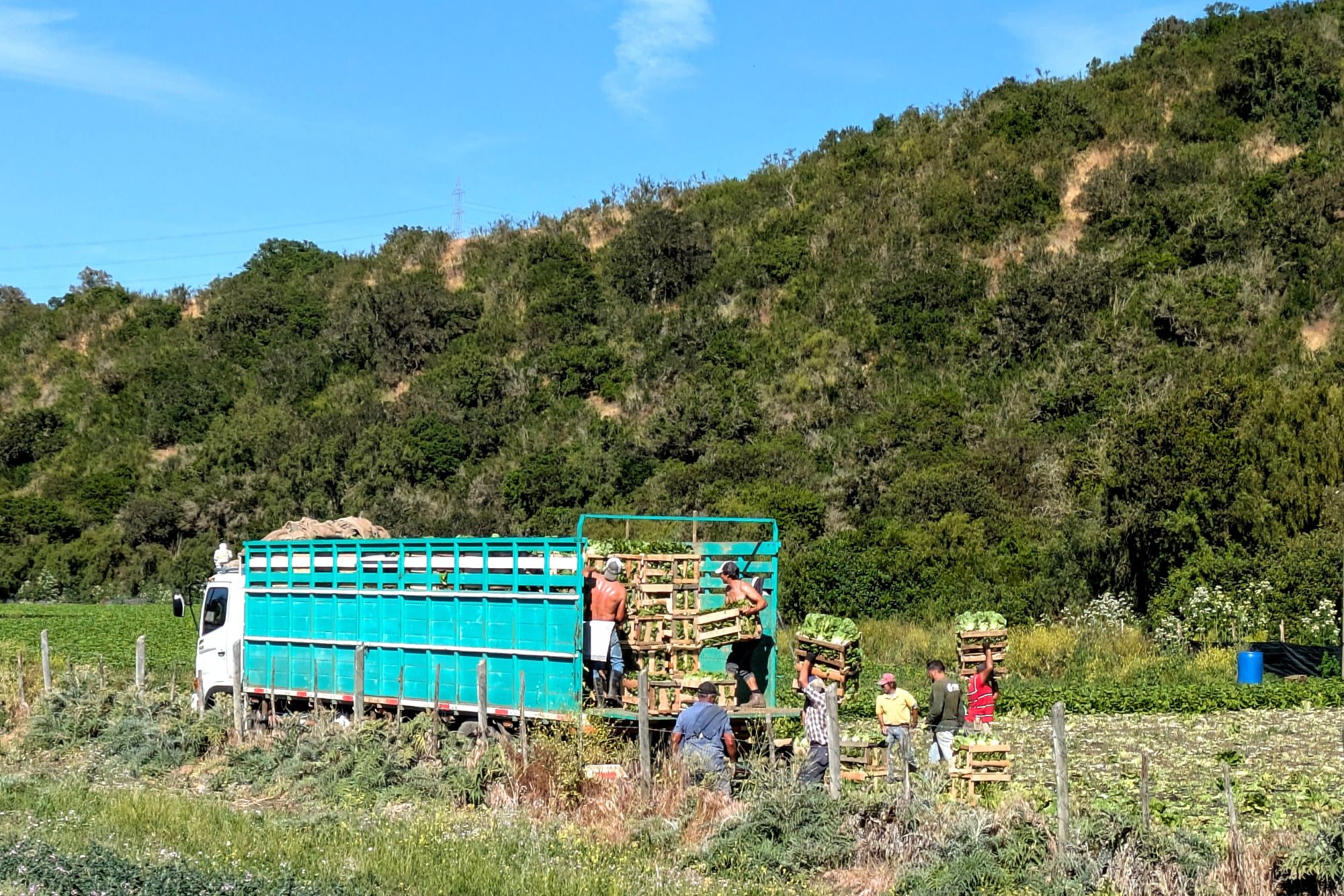
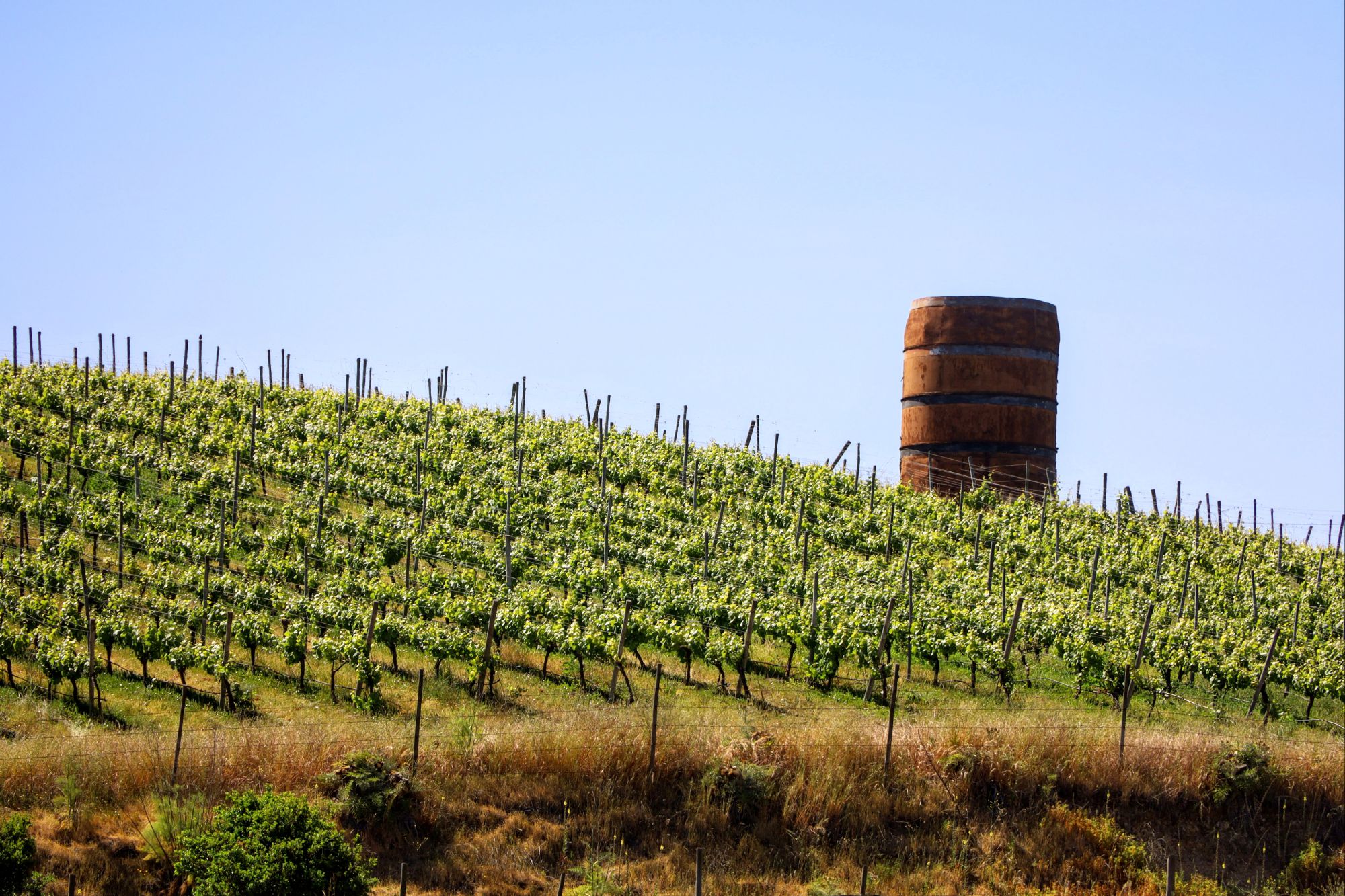
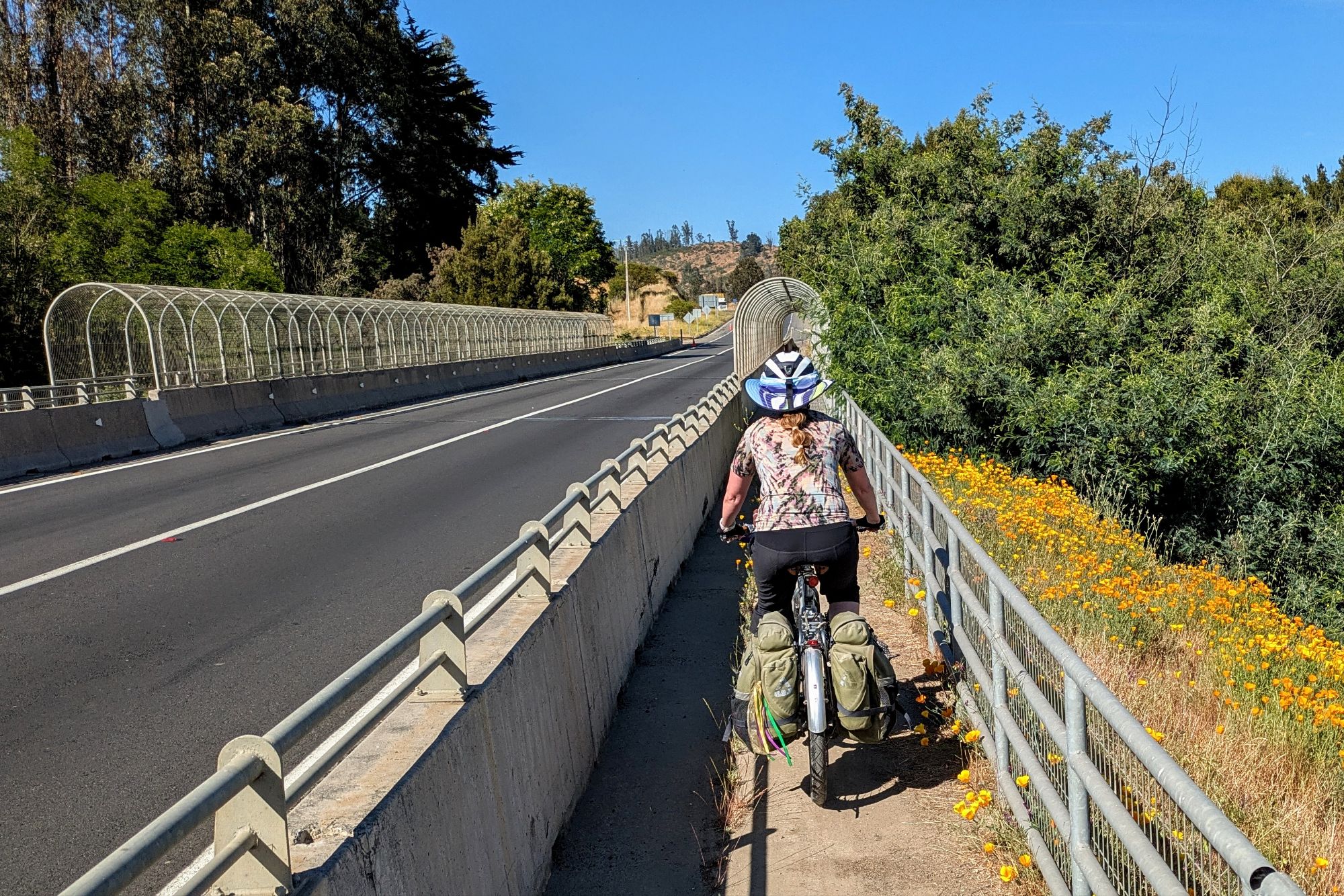
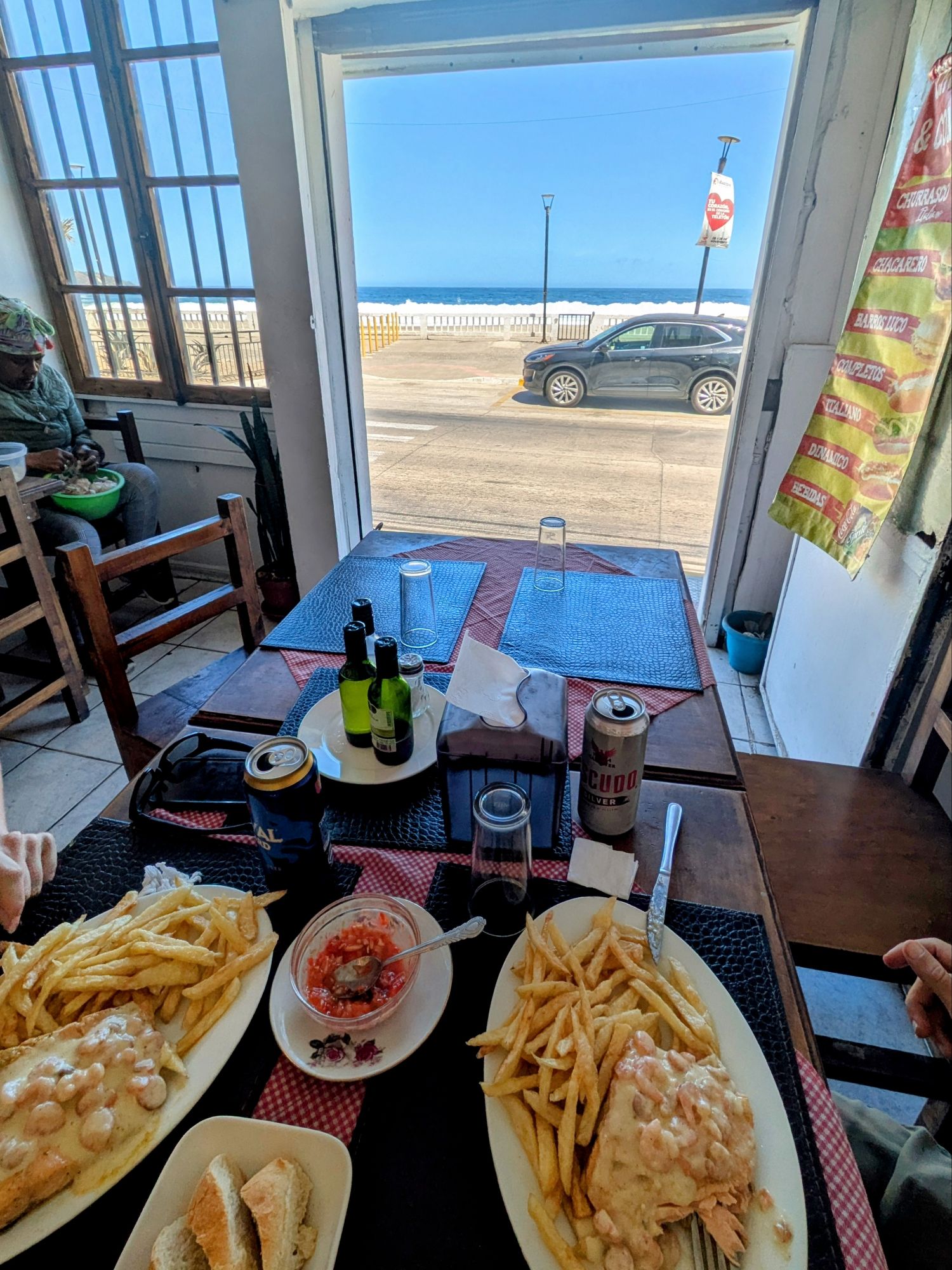
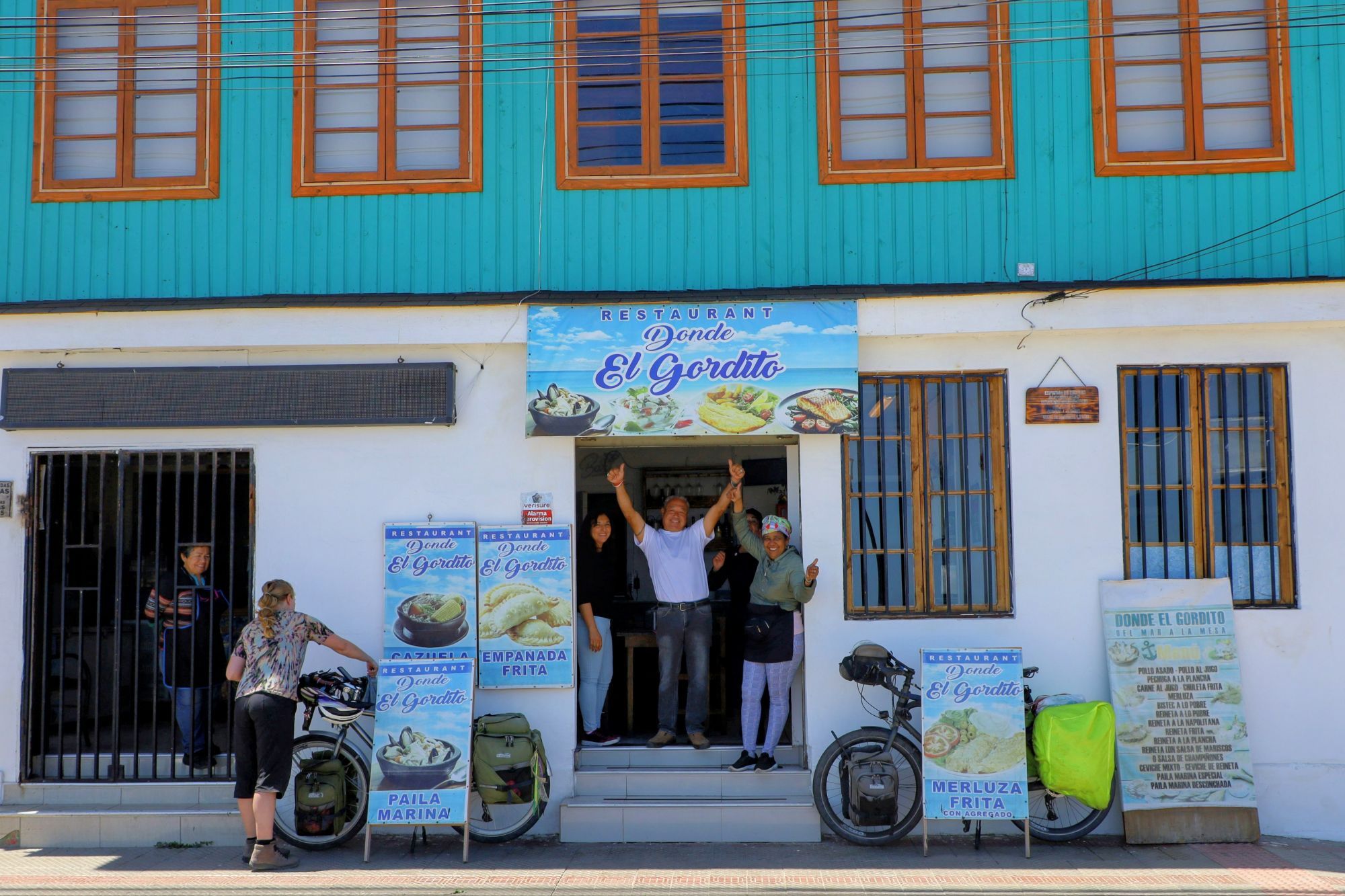
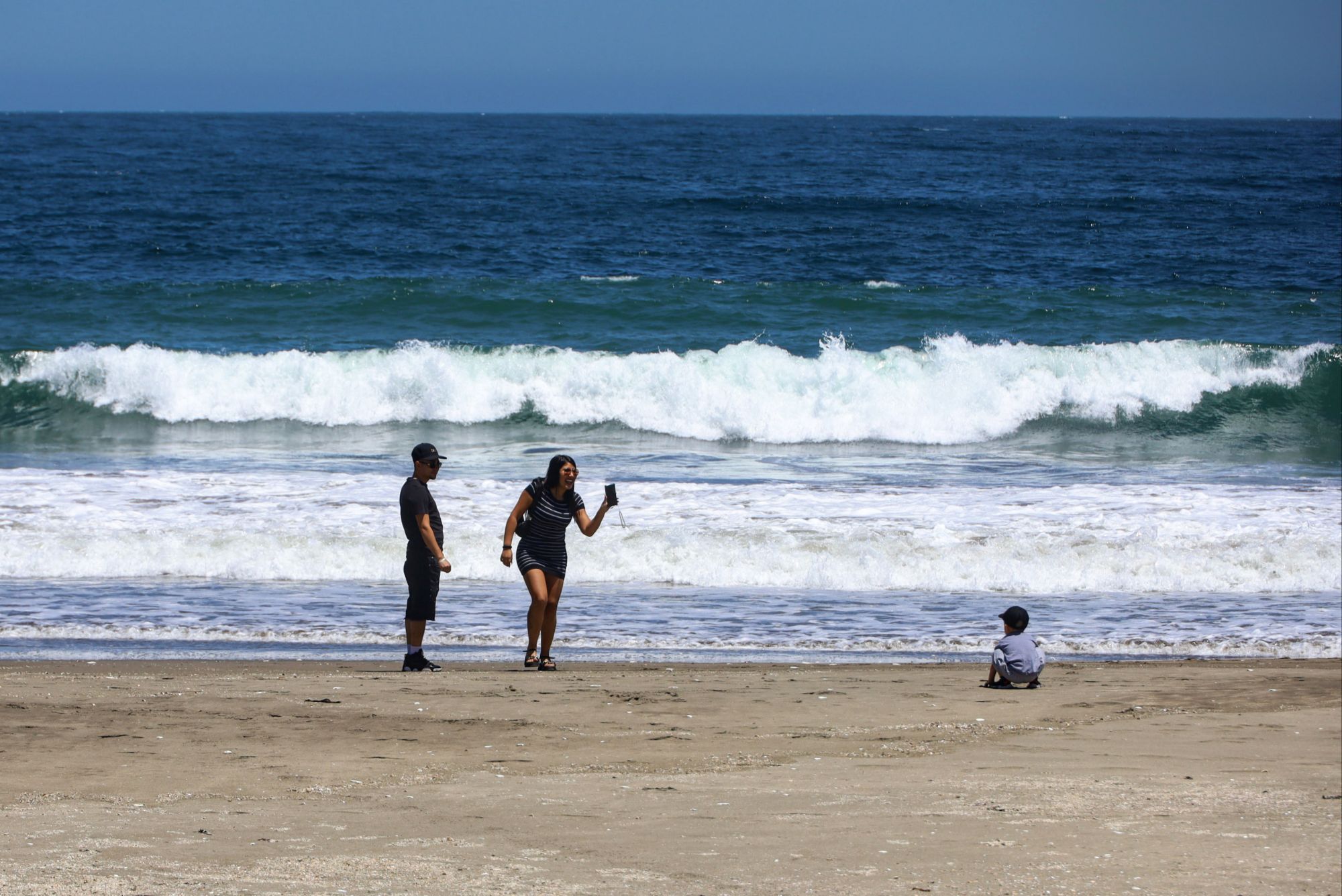
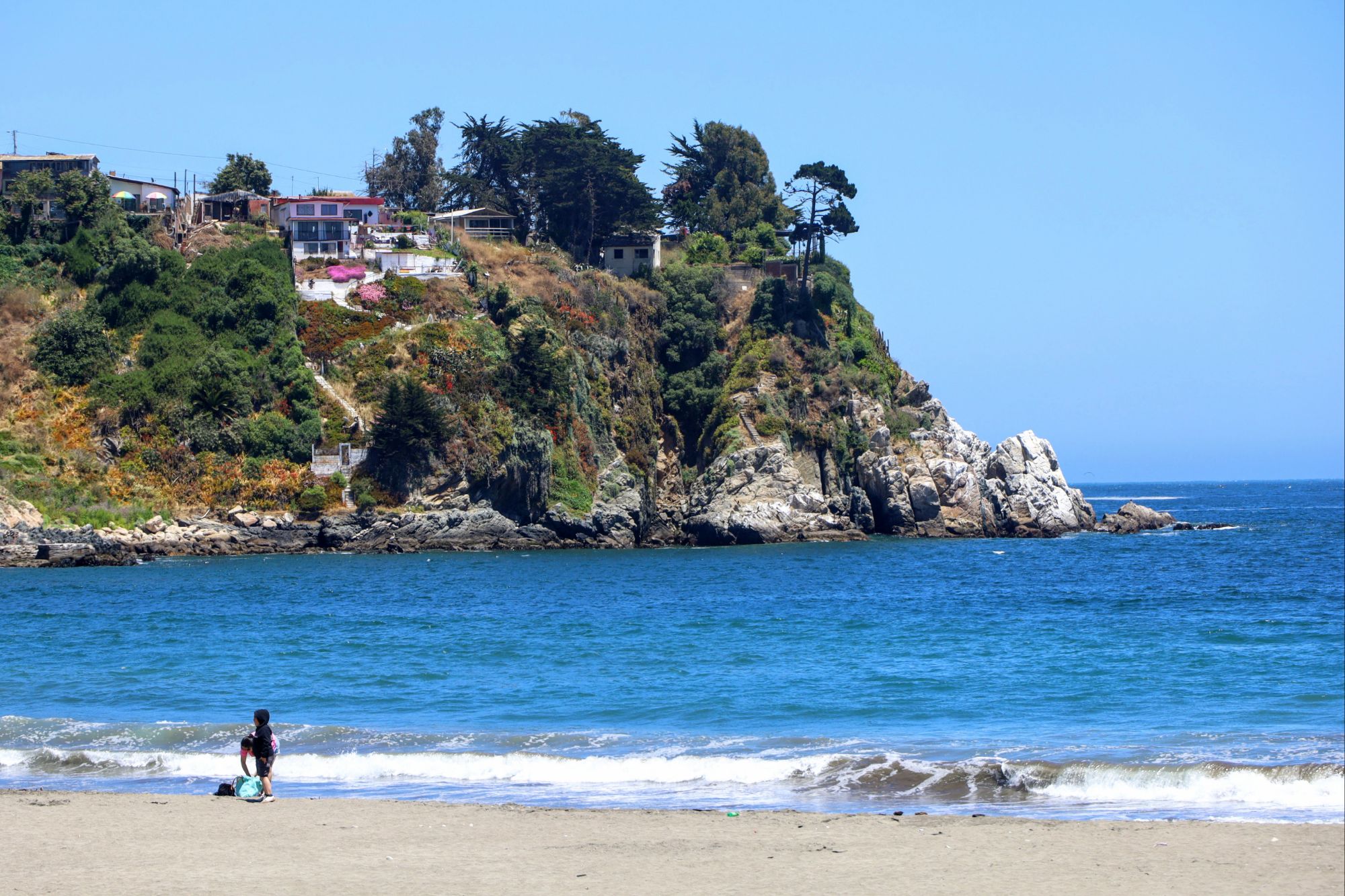
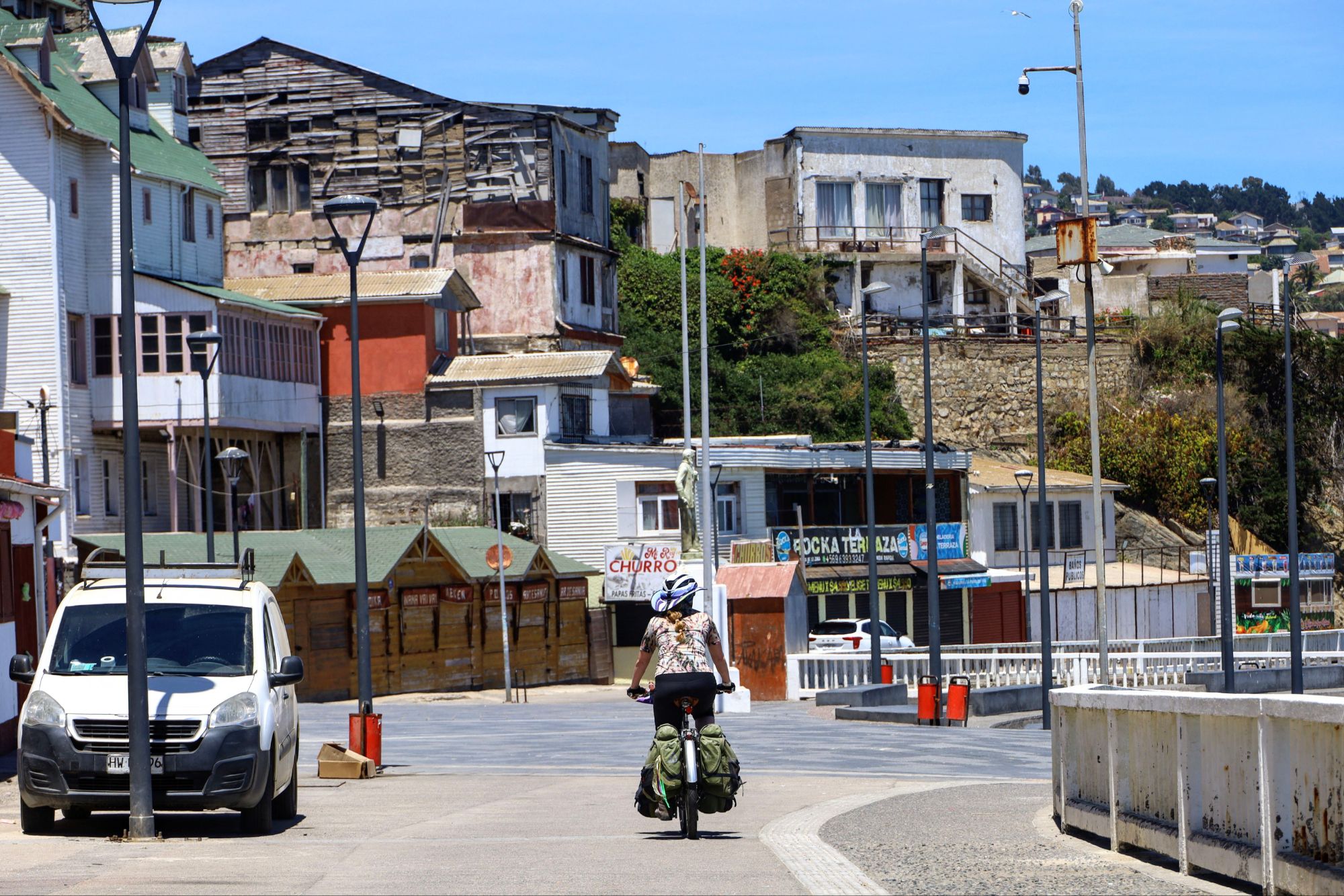
Failure to procure wine (or anything else) to go with our packed lunches led me to propose pushing a bit further to get a restaurant lunch someplace on the ocean road in Cartegena. A big drop down the hill soon reconnected us with the deep blue Pacific, and while we were checking Google Maps to help select a restaurant, a guy who spoke a bit of English came over and recommended a place. It quickly became clear that this was his job, but also his restaurant was the highest-rated one on the strip, so what the heck?
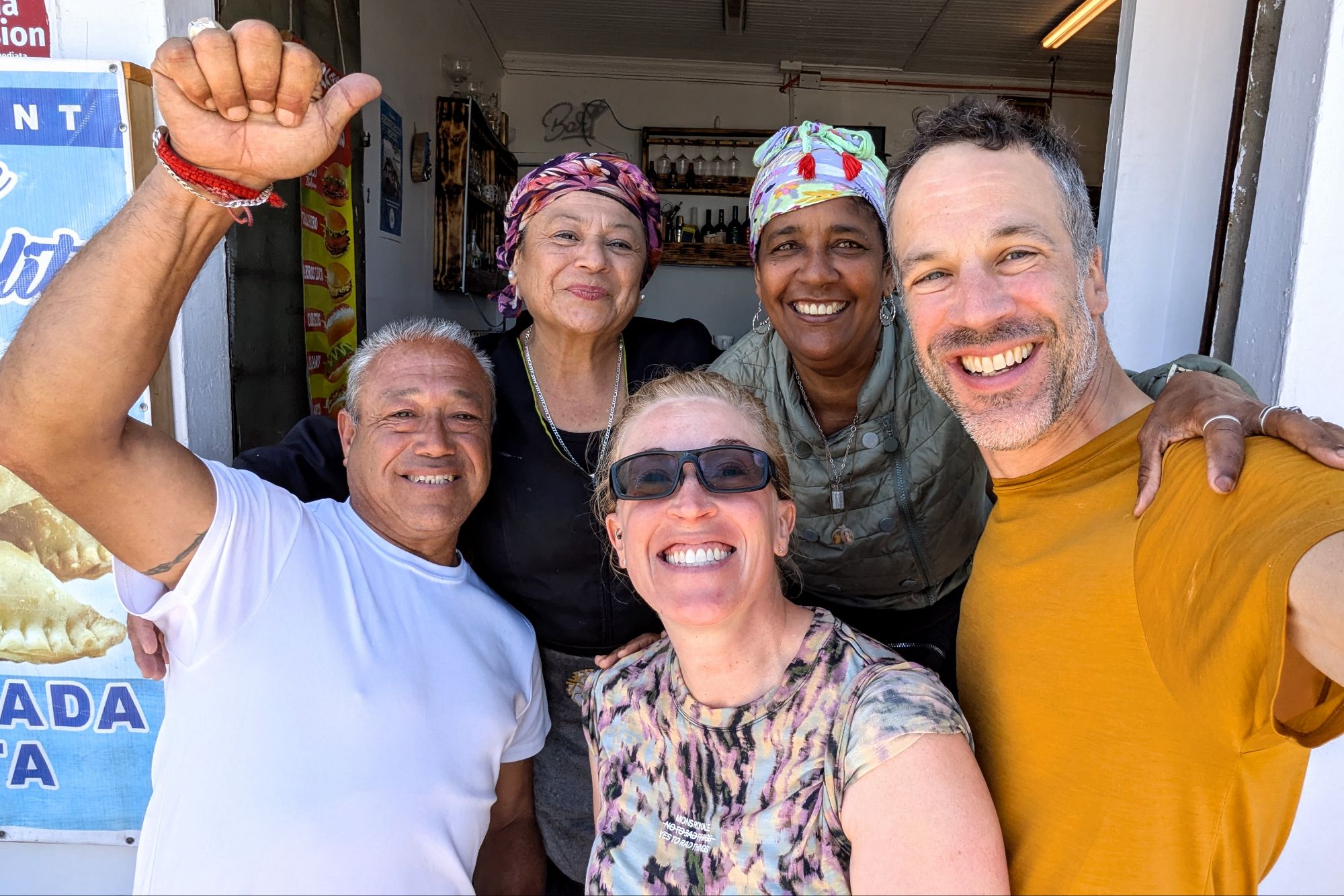
My general belief is that touts luring you into their restaurants is negatively-correlated with their quality, but this one turned out to be a great choice. While everyone wasn’t actually family (a woman sitting at a table and peeling hundreds of cloves of garlic into a bowl in her lap was originally from the Dominican Republic), it felt like they were. Just a very relaxed and friendly environment, with no written menu; instead, a multi-party communication about what we wanted to eat.
Before arriving in Chile, the social media algorithms had been smart enough to feed me a meme a couple times that shows a world map that colors Spanish-speaking countries based on the “difficulty” of their Spanish, grading from 1-4. Chile is completely off-scale, captioned with “Is that even Spanish?!?” We are quickly finding the meme to reflect the truth, to the point where our (still-terrible) Spanish that had been reasonably-helpful in Peru feels completely useless here. We might as be touring in Turkey or Japan, where we would be no more hopeless with the local language than we are here.
But it’s an amazing way to be reminded how little of human communication is actually about the words; the emotions conveyed (which are transmitted via a more-universal language) turn out to play a huge role in making an interaction satisfying. Obviously knowing the words for the food we’re ordering is important (though actually not that important; at some point, if it’s food they like to cook, we’ll probably like to eat it!), but the openness of spirit that comes with their attempts to bridge the language-barrier are even more valuable. One of the women even started a video chat with her English-speaking son to help us, but it turned out to be unnecessary because we all worked out our own channels in the meantime. Our seaside seafood lunch would have been very good under any conditions, but the welcoming atmosphere that emanated from our new friends made it taste even better.
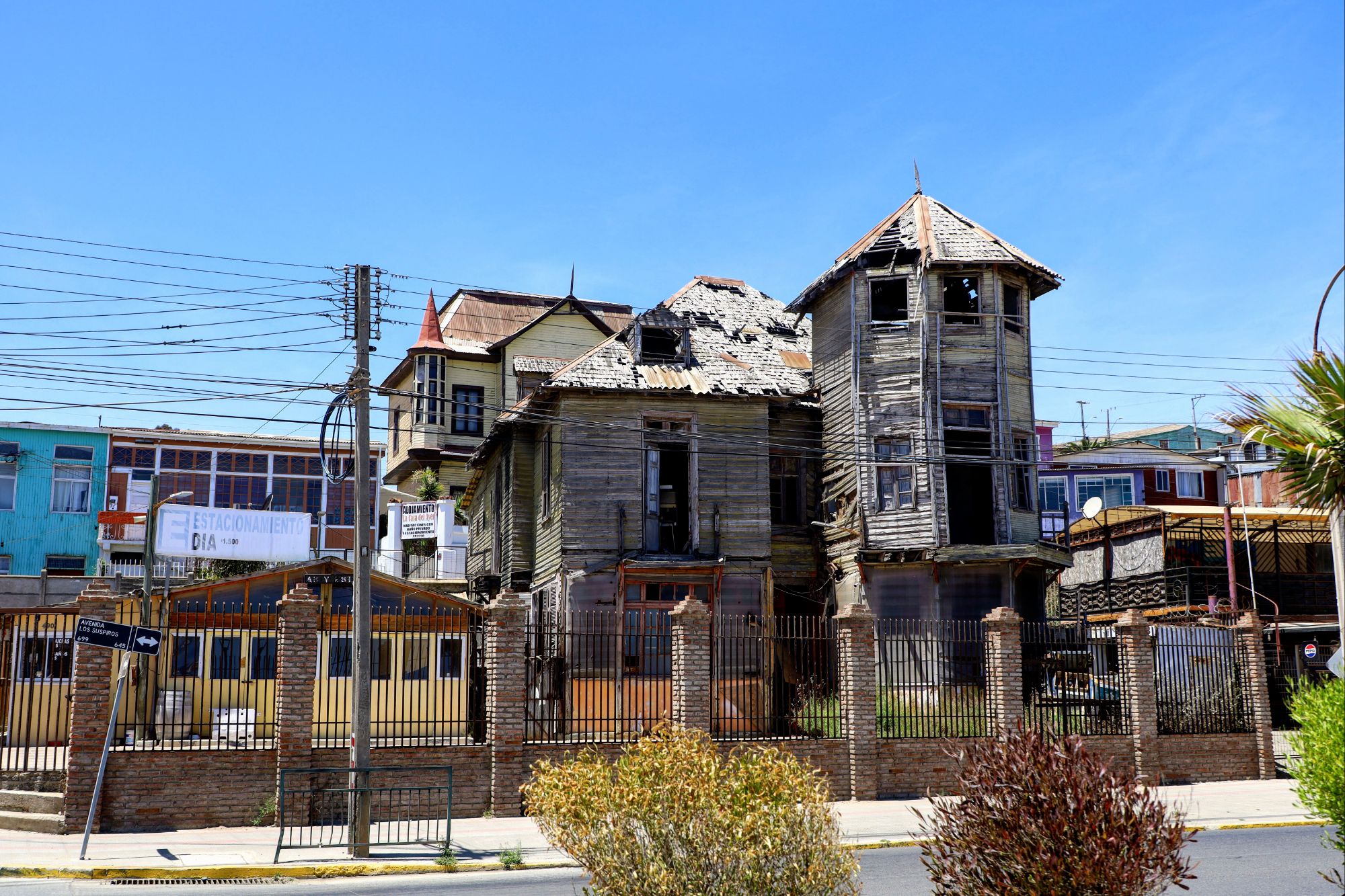
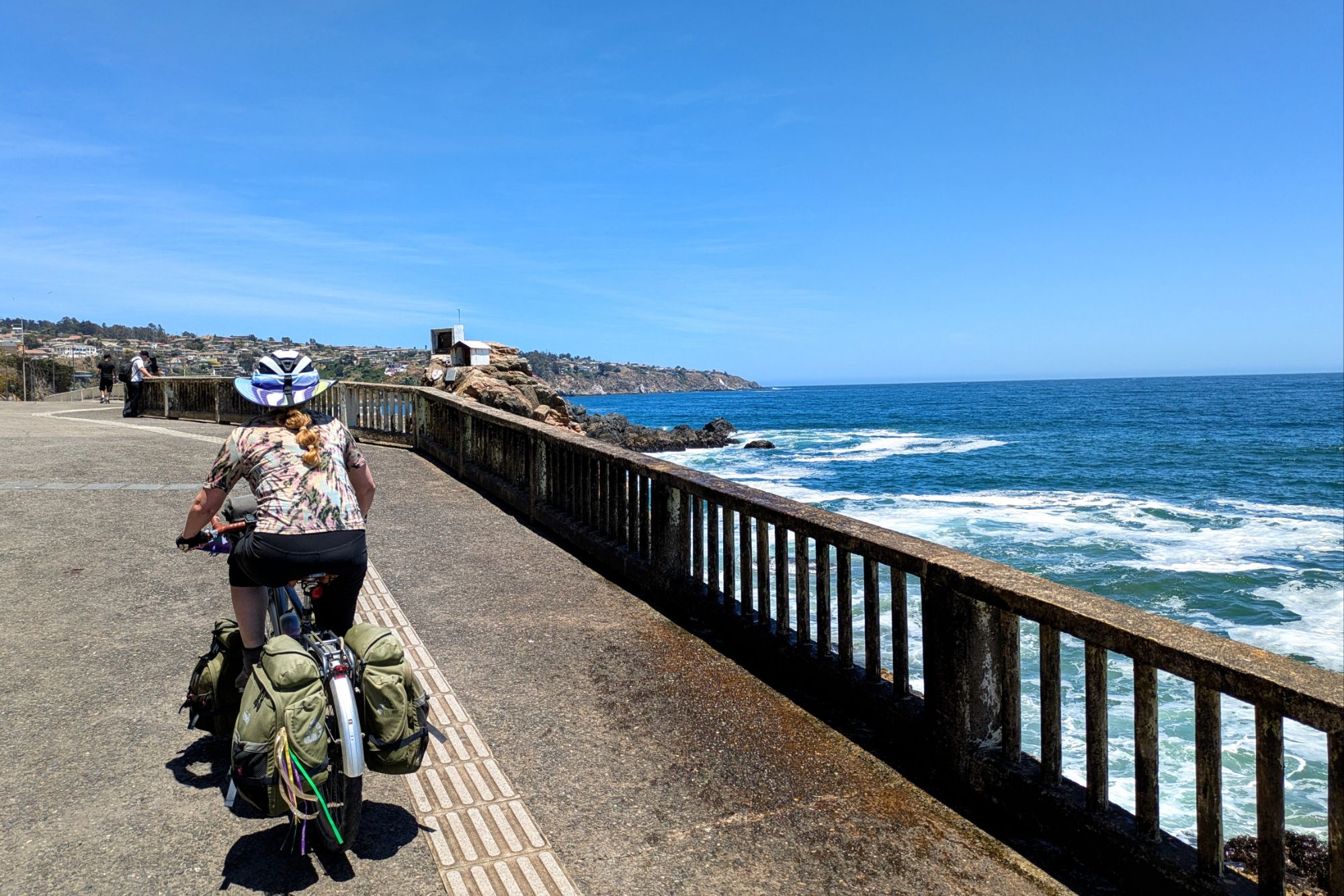
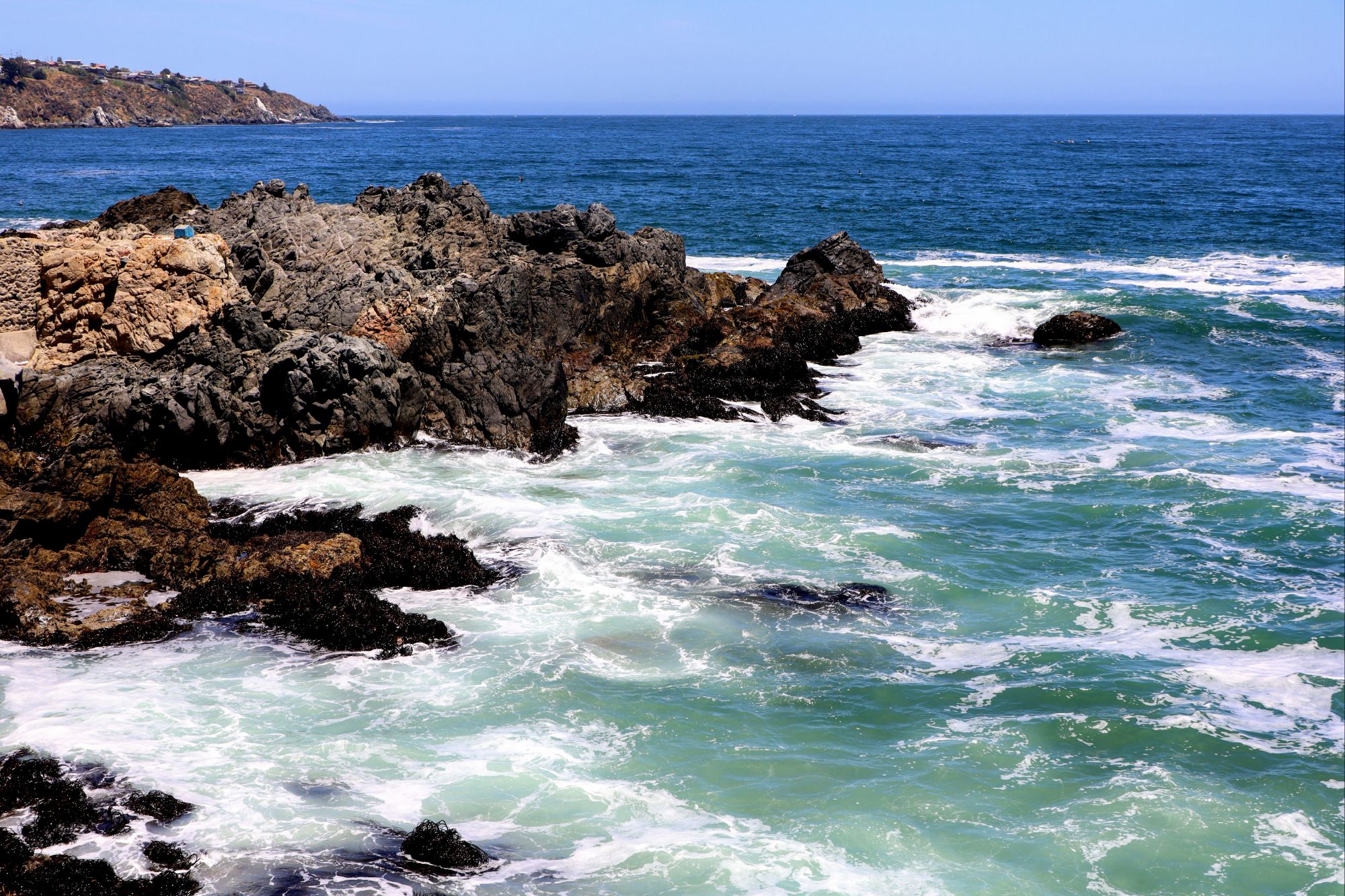
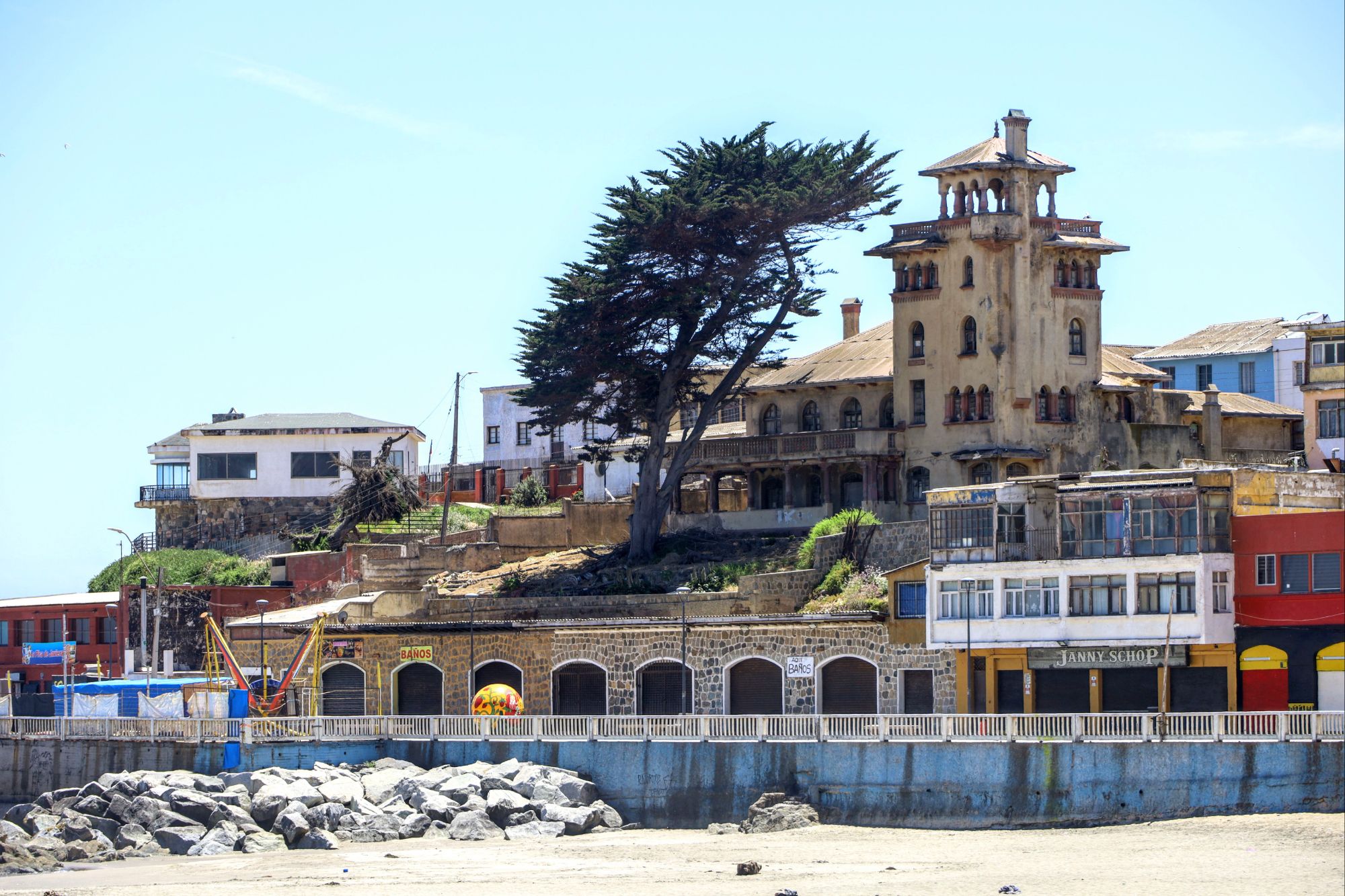
Further south, our destination of Santo Domingo is more of a suburb, that seems to have seen a lot of development in recent years. Our plan to stop at the grocery store a couple block from our AirBNB was foiled by its mid-day closure. This seems to be more a random peculiarity of this store, rather than a sign that we’ve reached a broader siesta culture (which is apparently more of an Argentinean thing), but it’s something we’ll have to start being aware of.
It turned out that our AirBNB was in the back yard of a small sort of “country shop”, and while it wasn’t enough to prevent us from returning to the main store once it re-opened at 4pm, we did acquire slices of four different pies there for various dessert-times!
Leave a Reply