

25.2 mi / 11.6 mph / 538 ft. climbing
Home: Sylvia’s AirBNB
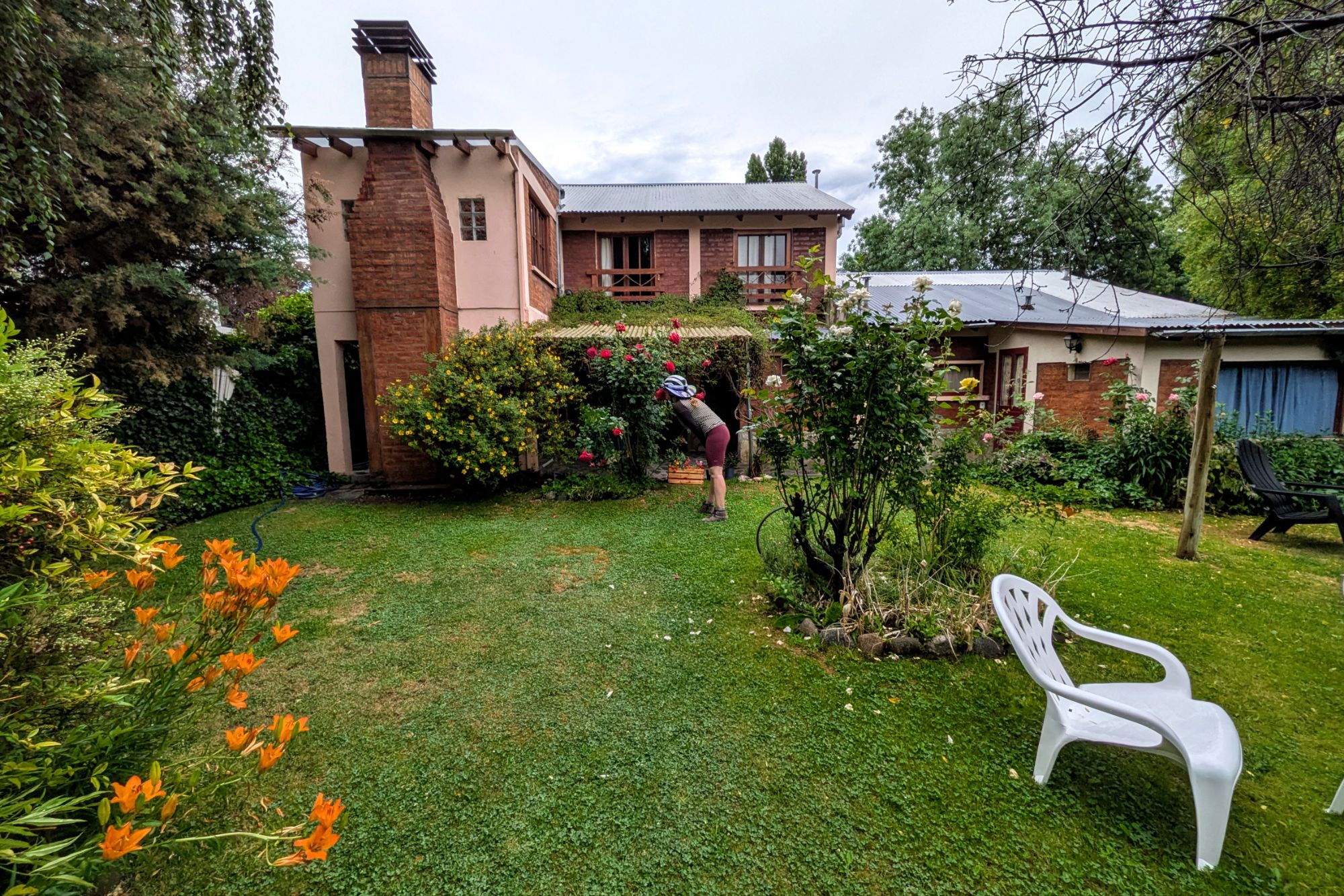
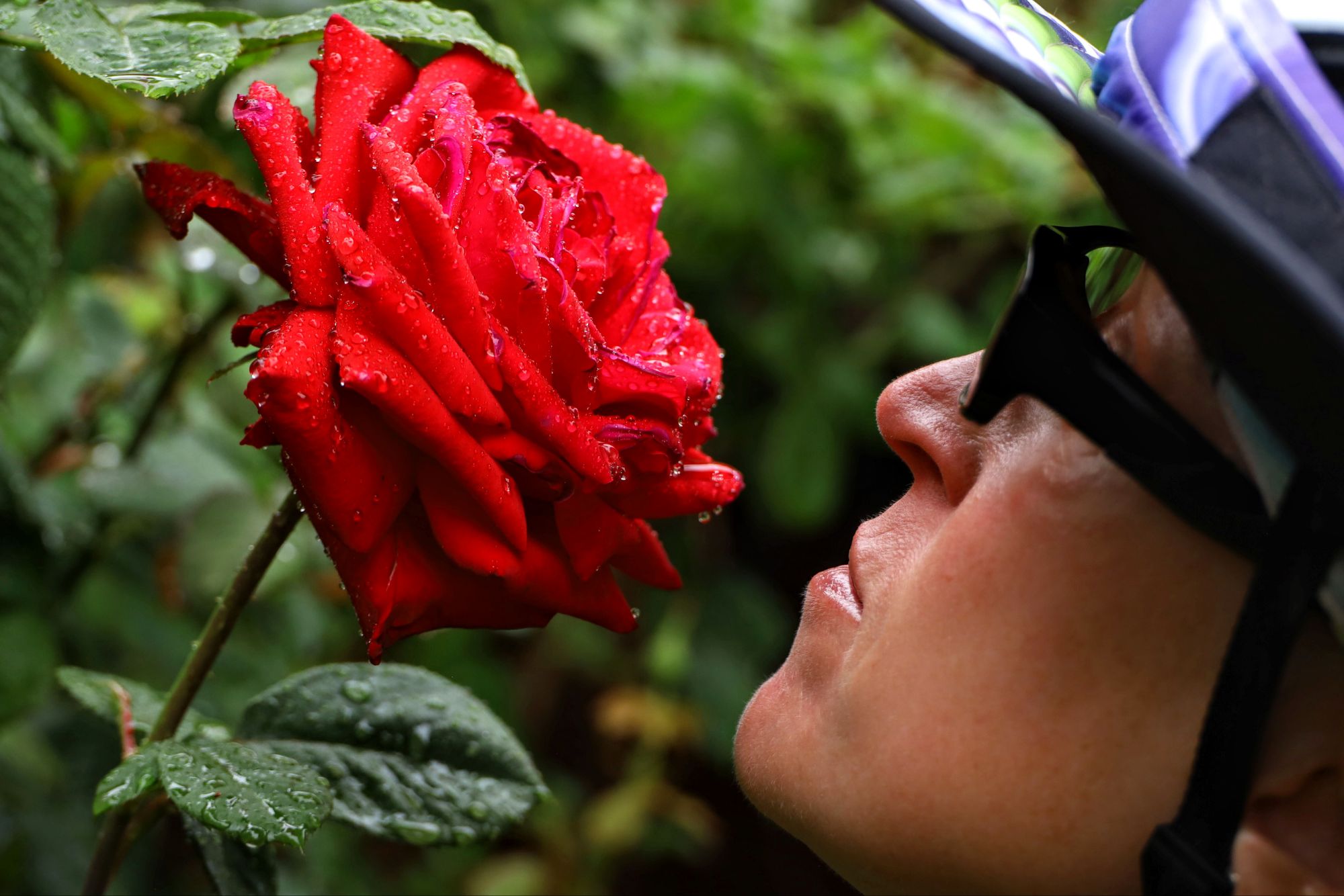
We woke up with a bit of drizzle still in the air, enough to make us put on our rain covers, but also enough to make the garden surrounding our AirBNB glisten and sparkle. It quickly dried out, but the temperature never climbed high like it had done the last few days, topping out in the mid-70s.


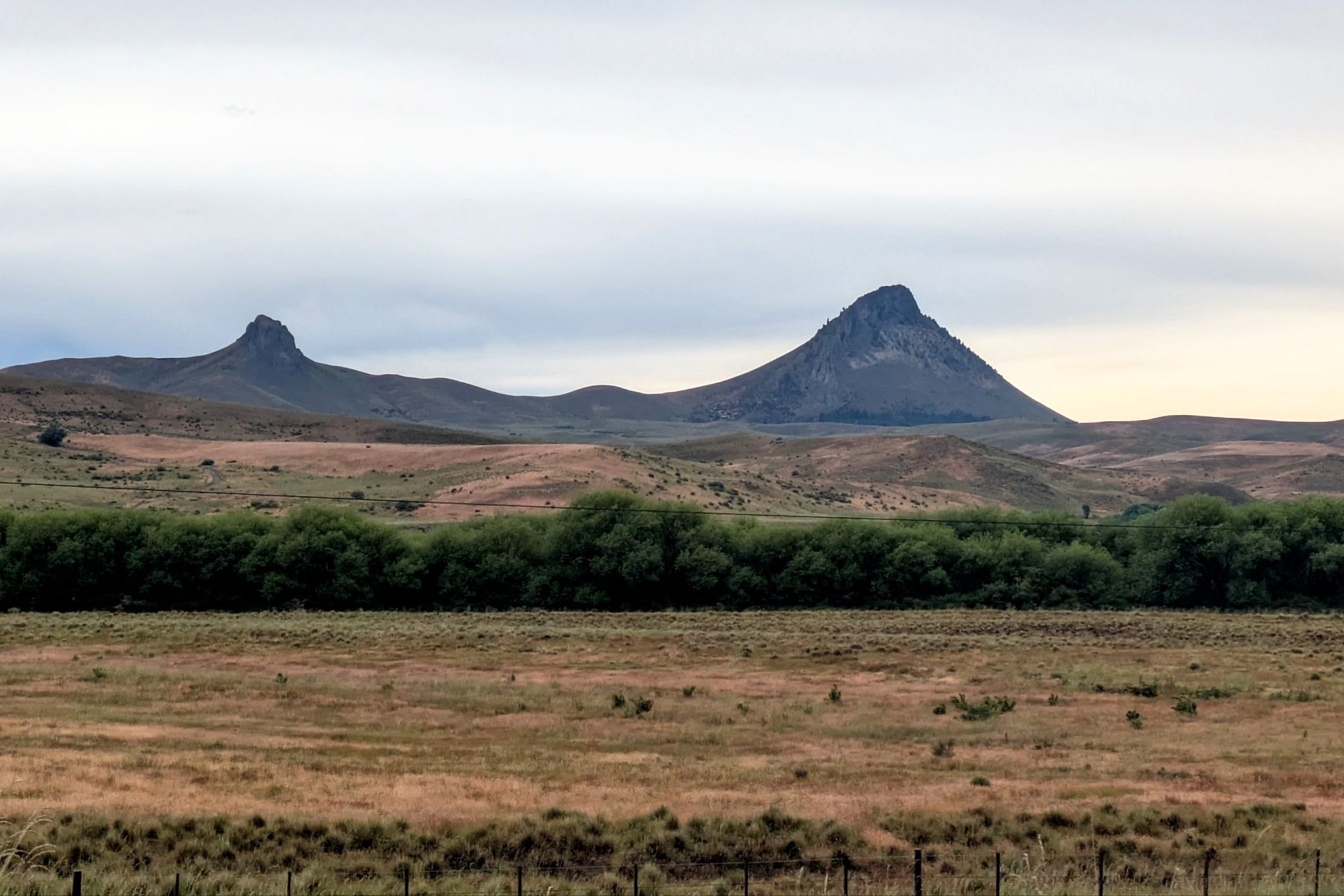
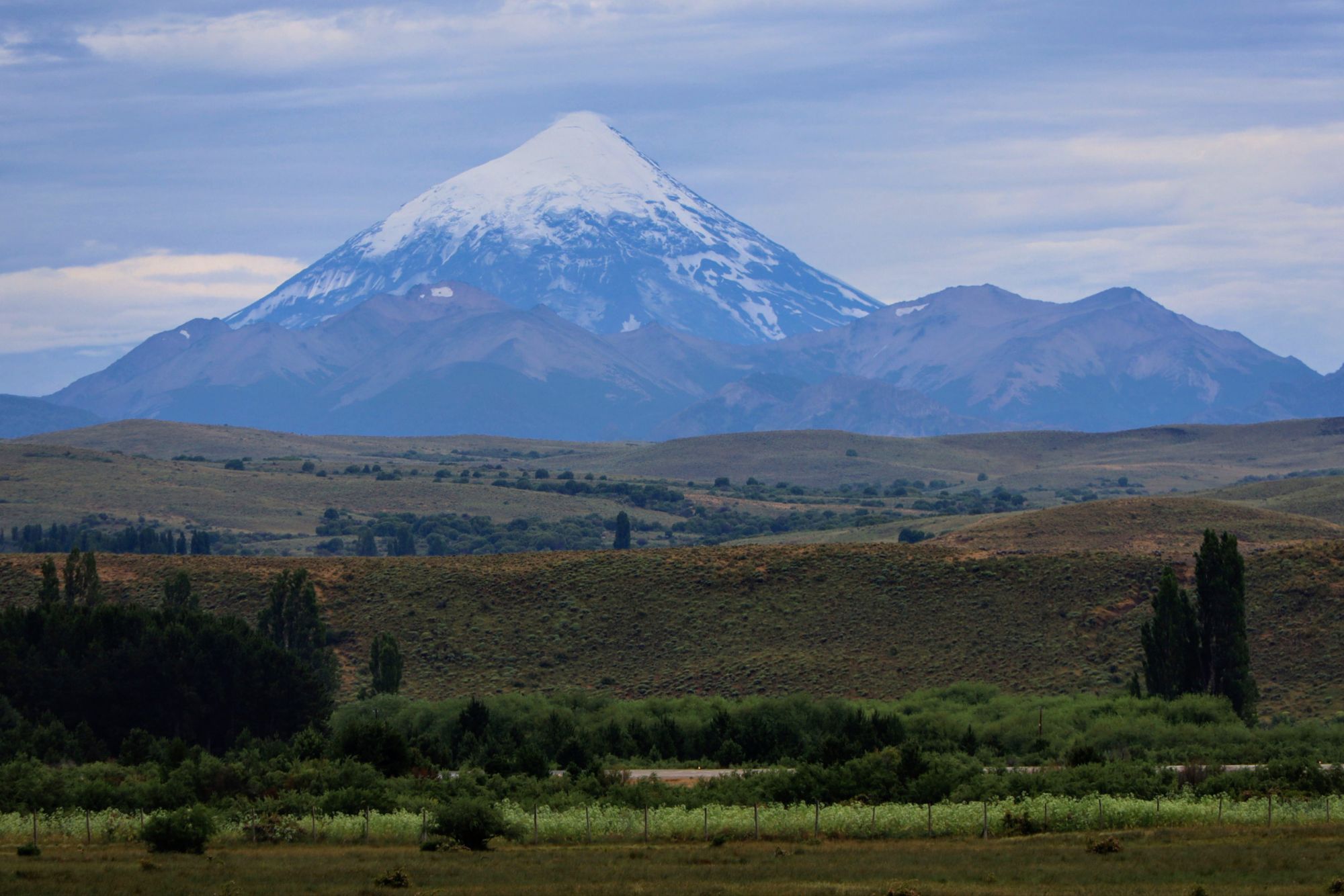
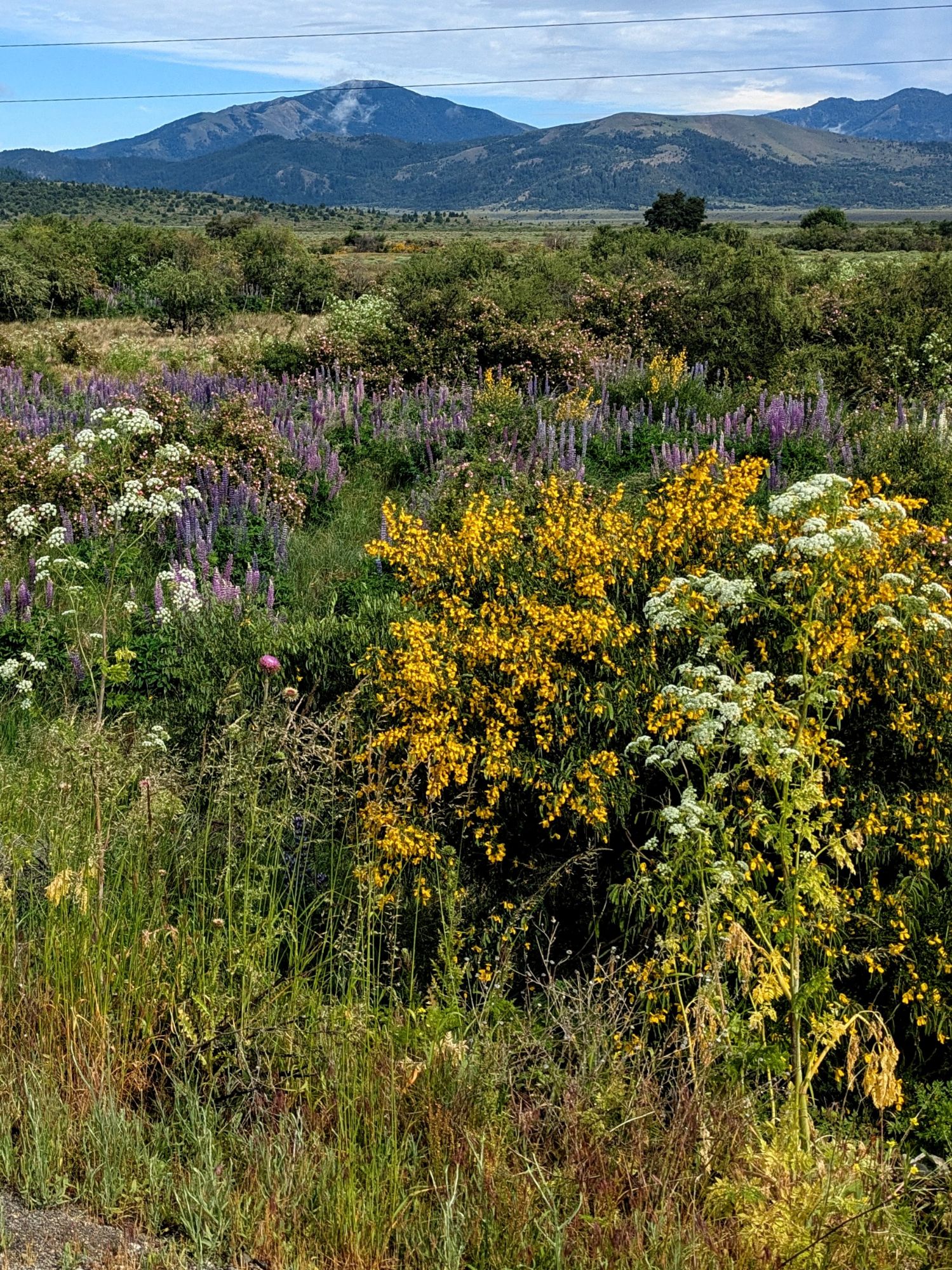
Near the end of yesterday’s ride, our road descending from the west joined up with Ruta 40, Argentina’s main north-south artery on the east side of the Andes. But with no real increase in traffic, we barely noticed. Today we continued south on 40, and once we got out of town, it quickly reverted to its shoulderless version (though with wide gravel shoulders that wouldn’t be good for riding in). Now with traffic joining us on the way south from the population center of Junin, there was definitely more traffic, but most of the drivers were good and respectful, better than Chile overall, but of course we still got a lot of close passes.
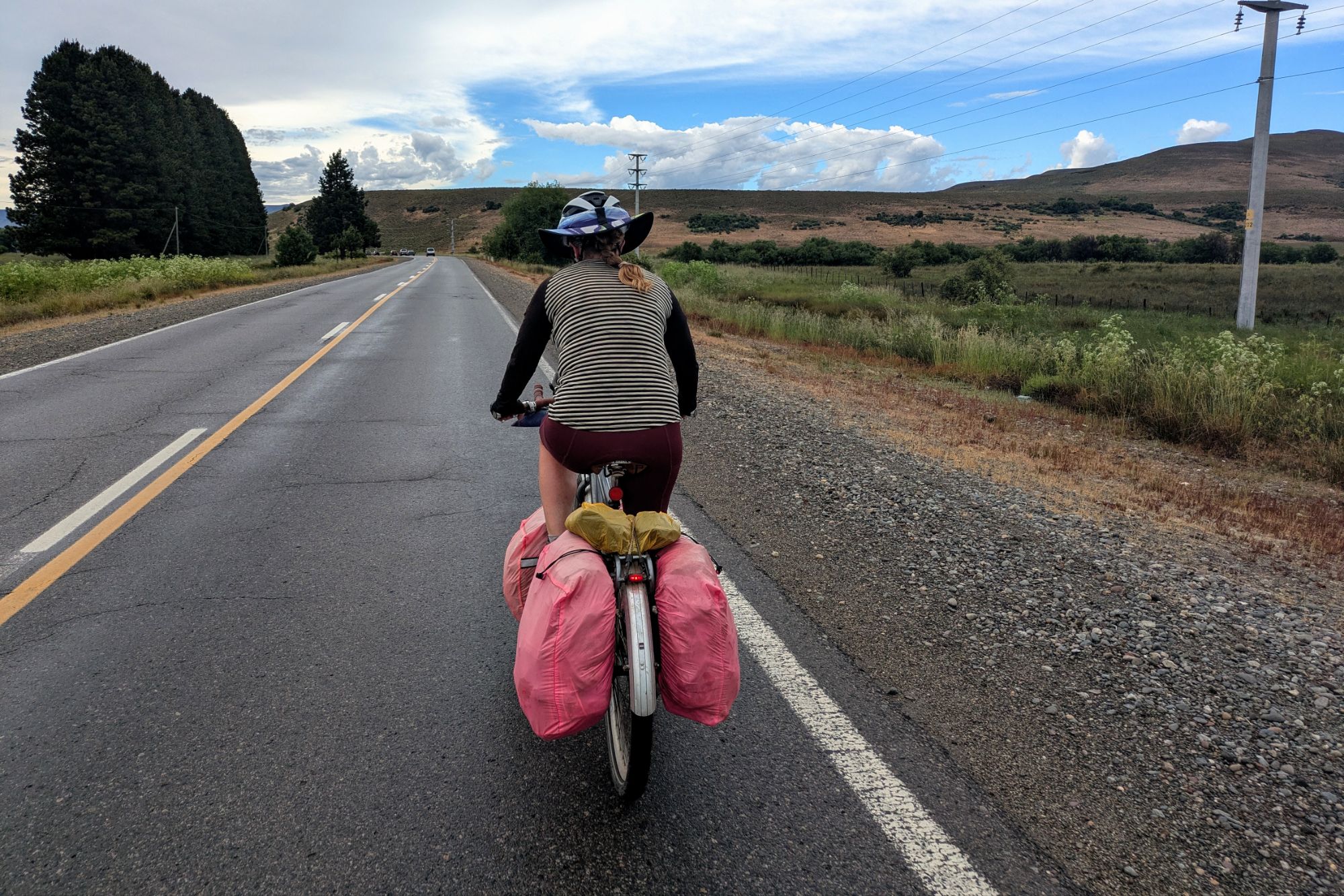
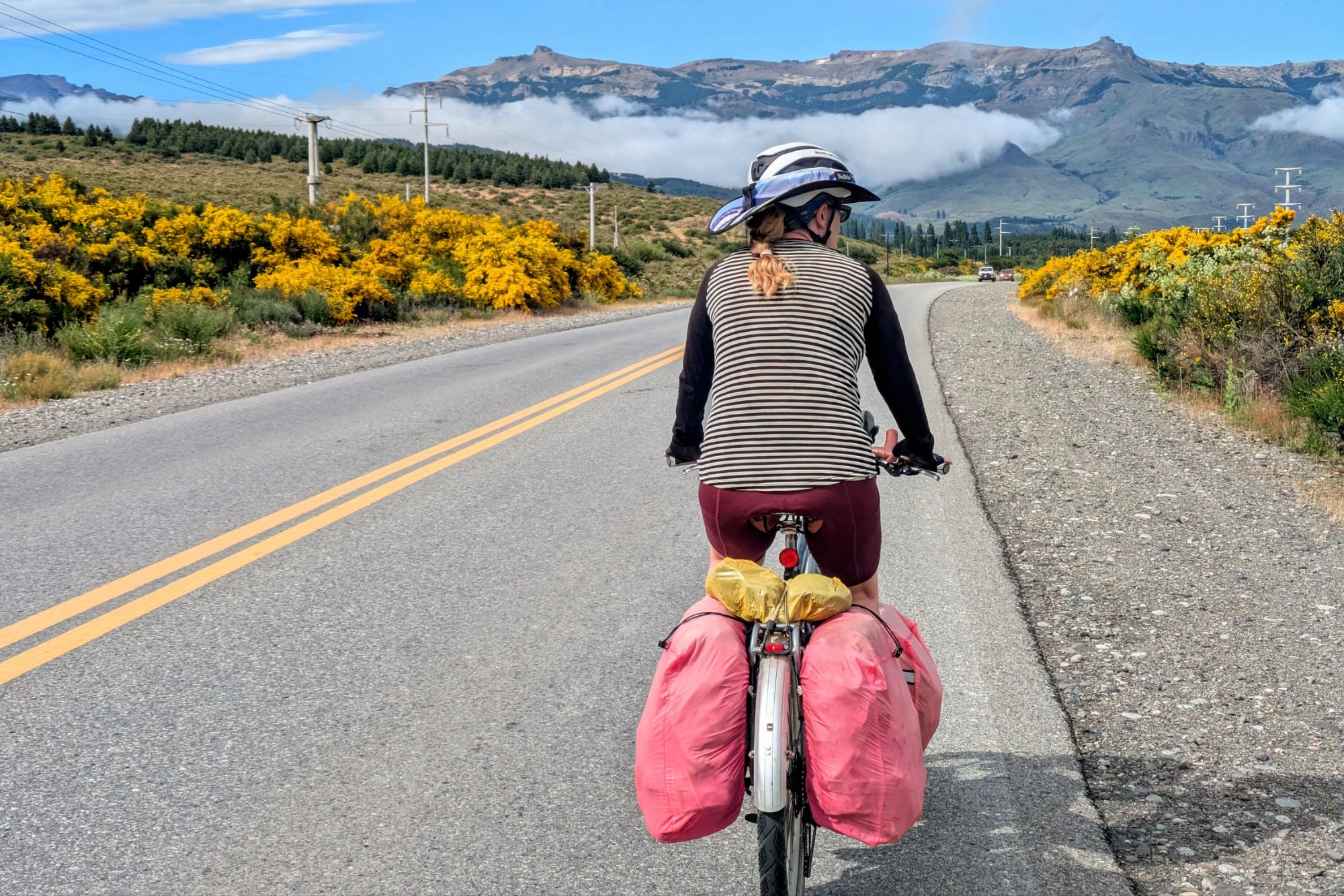
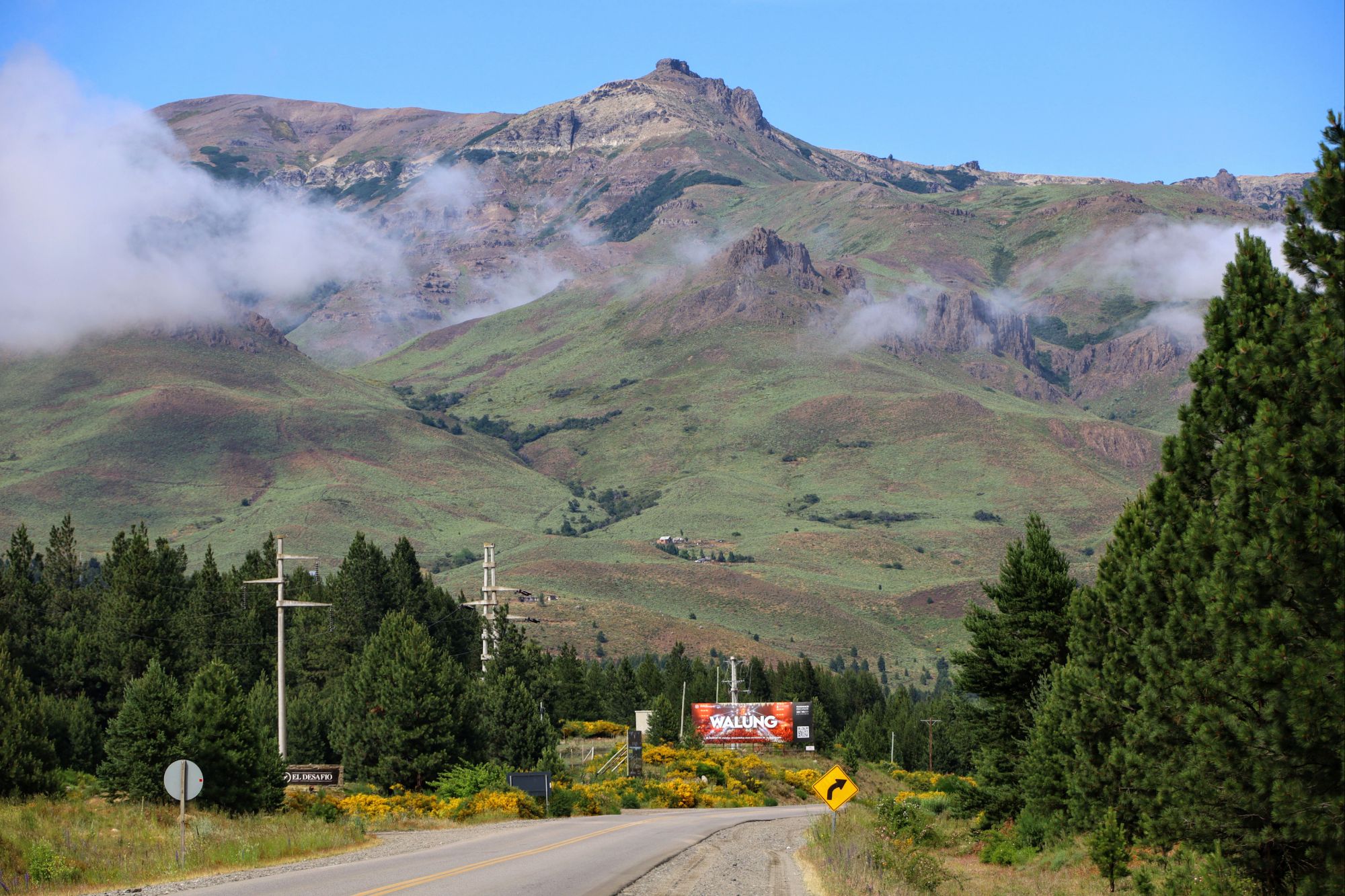
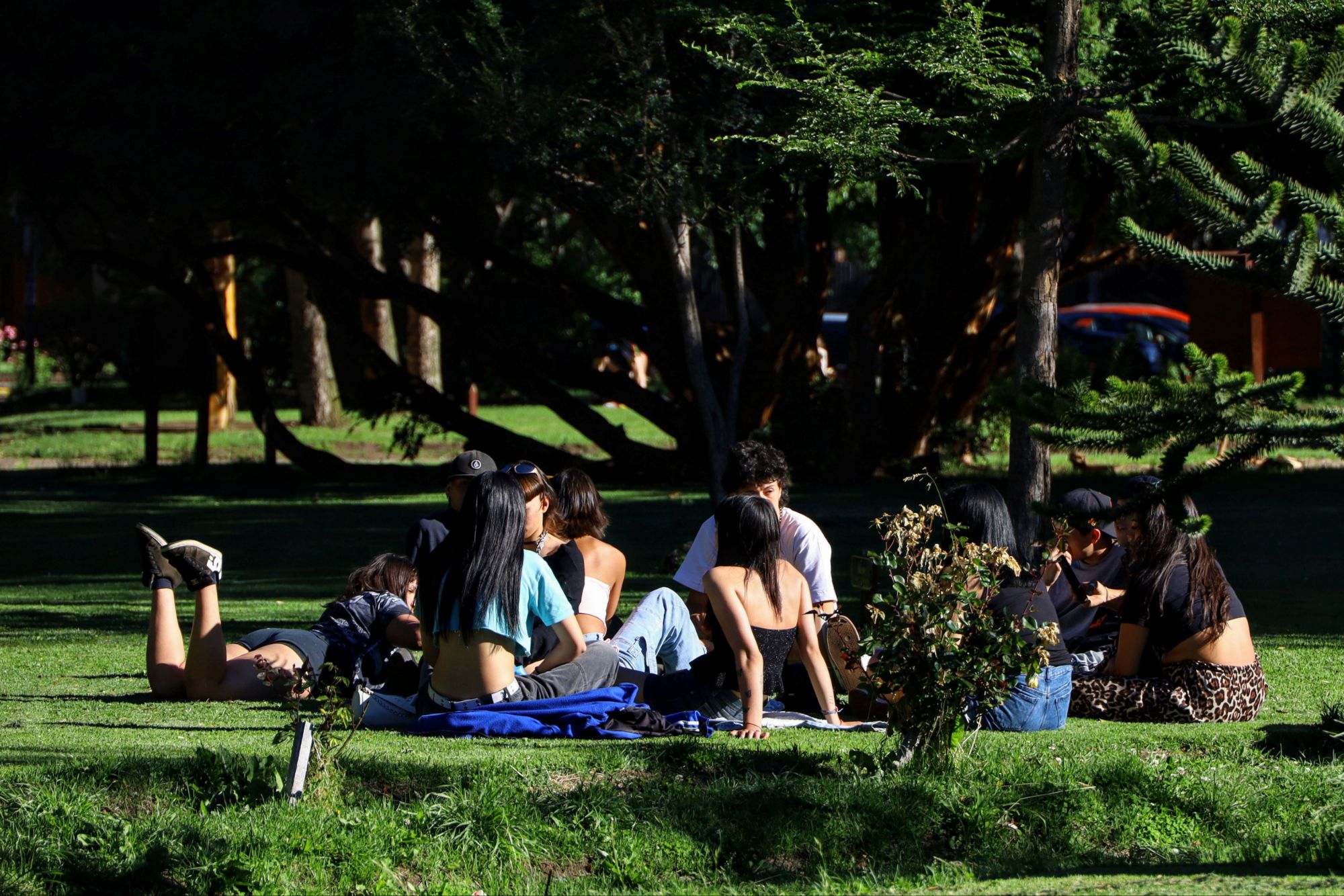
As we got closer to San Martin, the traffic got really busy and the drivers more-asshole-y, frequently squeezing by inches from our elbows, as the road essentially became filled to capacity in both directions. At that point it might have been better (safer, more-relaxed) to just give up and ride in that gravel shoulder. But Rett was determined to claim her right to the roadway, and I was glad to support her from behind. Finally we got some relief when a bike lane appeared at the edge of town, and when that disappeared there were wider lanes for us to fit in, and finally at one intersection near the center of town the traffic just completely disappeared (there must be a bypass route around the center). That’s where we stopped in a forested plaza to figure out what we were doing.
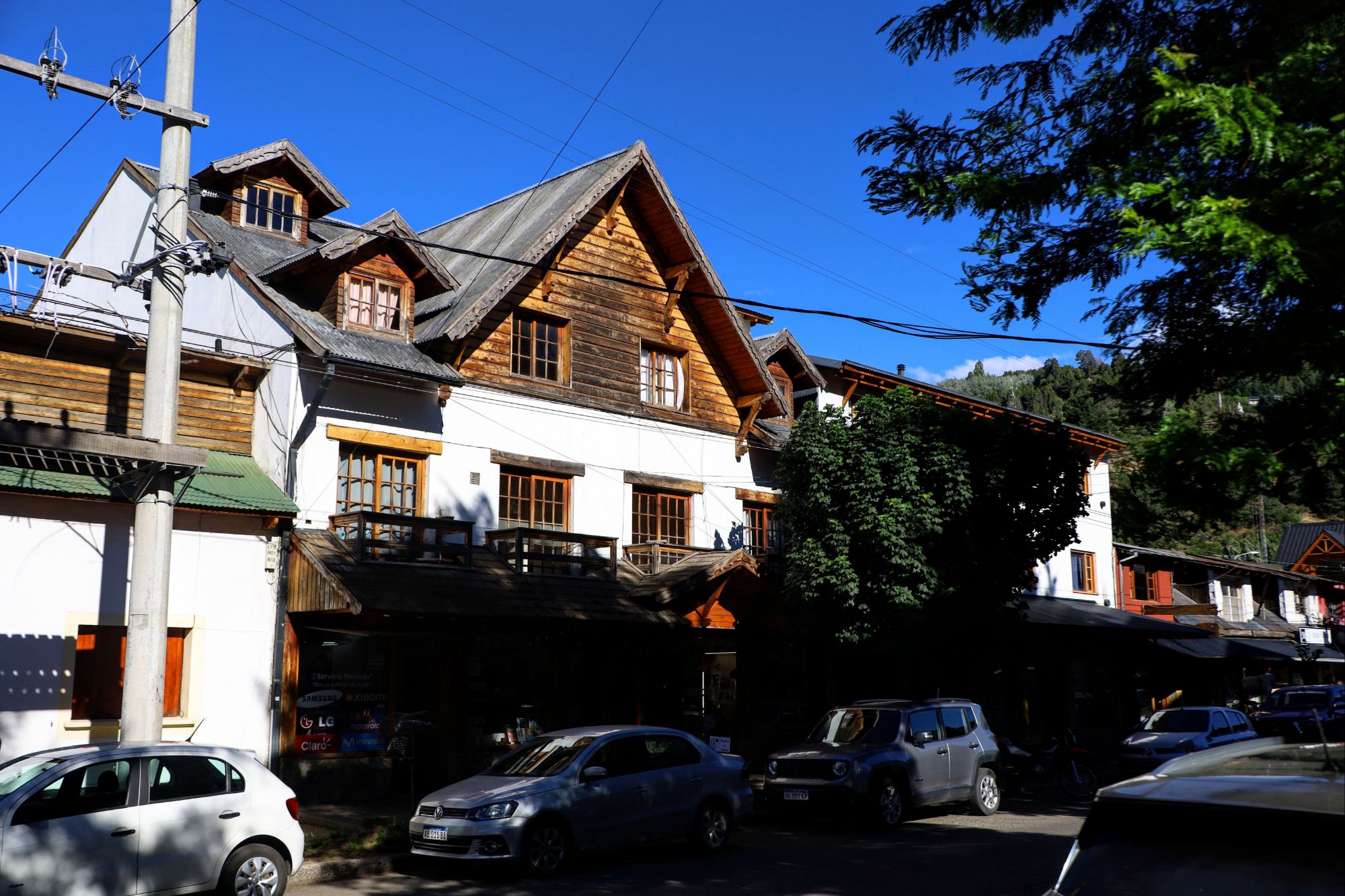
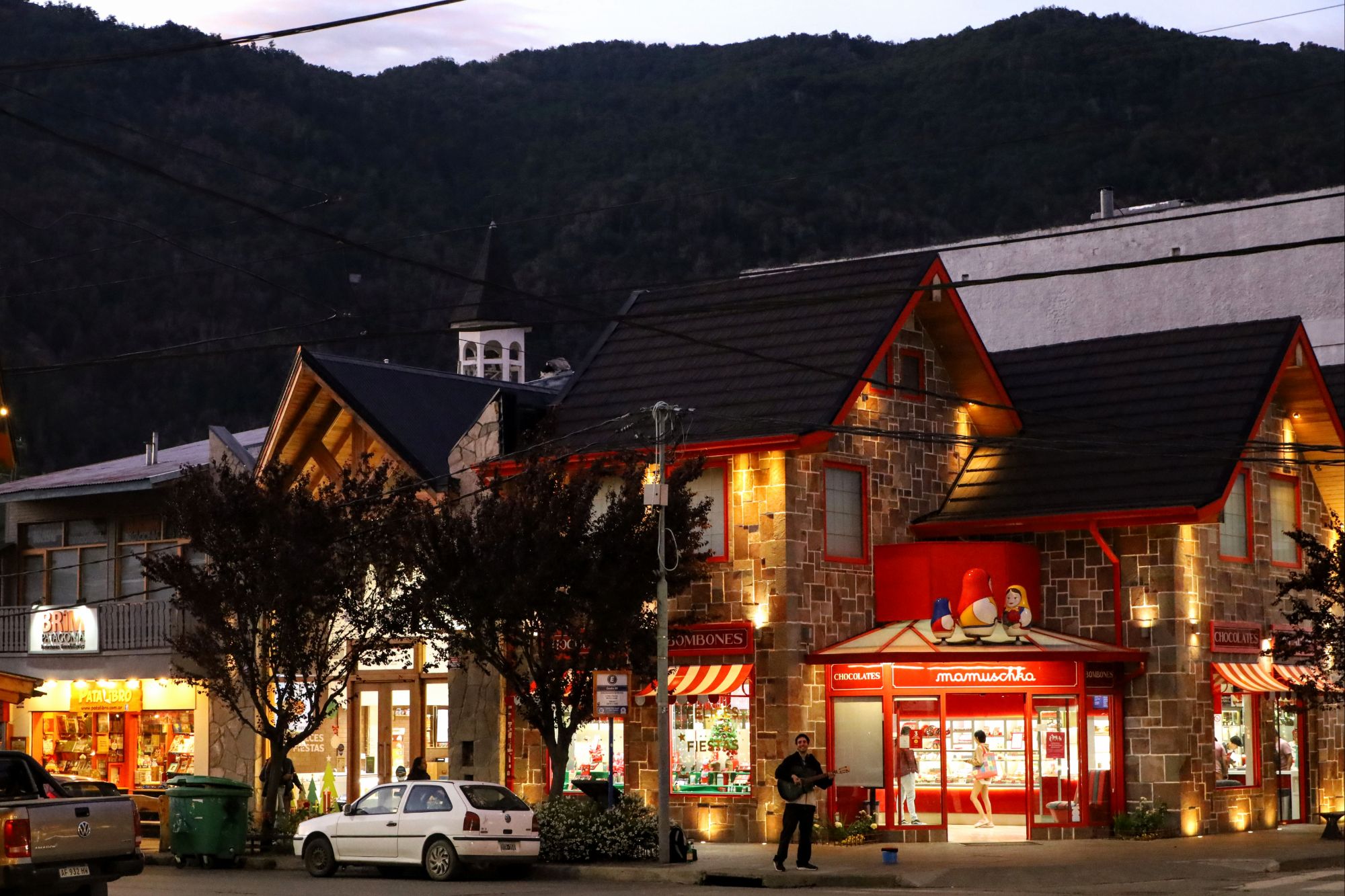
The short ride meant that we were quite early to check into our AirBNB, so we walked our bikes down the streets of this very-touristy mountain/ski town and found a place for lunch. It was rather expensive, and the service was really slow, but Rett at least got a good deal by ordering their “menu del dia”, which included venison, one of the specialties of the restaurant/region. Our AirBNB was a genuine self-check in (rare in Peru and Chile), and we spent some time figuring out how to use the bidet; our first place in Argentina had the washlet built into the toilet, but here it was a genuinely-separate porcelain appliance, definitely revealing a cultural difference bounded by the international border. The grocery stores still had quite bad produce (hopefully not a country-wide cultural difference), and Rett had to flee one because the (admittedly quite-strong) smell of fermenting bananas was making her ill. But, they had Starbuck’s Veranda coffee (her favorite!), so, fair trade?
Days 2-5
After five days of riding, and 20 in our last 23 (an insanely dense stretch for us), and a night of camping required next, it was definitely time for a day off. So booking two nights in San Martin (several days ago) had seemed like the obviously correct choice. But our weather-luck finally ran out with the worst-possible timing: days of rain were in the forecast, and worse, they would be accompanied with high winds, and temperatures maxing out in the low-40s. Miserable (and potentially even dangerous) conditions for cycling and camping. However, we still had two good days before the forecast turned, but that was part of the problem: we had already committed to taking the first of those days off, so then we couldn’t use either of those two good days to move us forward. Because if we moved on the second good day, we would then be trapped waking up in a cold wet camp for a day of cold wet riding, before reaching the next opportunity for a roof in Villa La Angostura.
With only 7 days of riding left to our holiday booking in Puerto Montt, the three off-days we had available had felt like plenty (after all, we had just completed a stretch of 20 riding days with only three off-days). But now suddenly it was looking like we might have to delay the holidays, since it would be at least five days (including the two good ones we were forced to burn) until the weather improved. One possible “solution” was to cancel our off-day in San Martin and spend the next two days of good weather riding to Villa La Angostura. But they would be really challenging rides, with camping in between, and our bodies were just not in a place to continue that level of pushing (Rett’s lower back has started giving her similar symptoms that required six weeks off and physical therapy in 2022). So that was a non-starter.
If we instead added three nights to our stay in San Martin, then we would be able to ride out with improved weather, but at that point we would be two days behind where we needed to be. The first obvious option to make up that time would be to take a bus, where the unknowns come with a huge load of stress for me (and buses seem even less bike-friendly in Argentina than Chile). But then Rett thought of the car-rental idea, and this region is a popular mountain/ski vacation area for Argentines, so there appears to be a relatively-robust car-rental system operating here, and a quick search showed that we could get a one-way pickup truck to Villa La Angostura for ~$160. That also comes with a fair amount of stress too (do rental car companies in Argentina know how to “hold the reservation” any more than they did in Seinfeld’s America?)
So as a wild “doesn’t hurt to ask” alternative, our AirBNB host (who we hadn’t met in person) seemed friendly, so Rett messaged her and asked if she knew anyone with a pickup truck we could pay to drive us. Her near-immediate response seemed almost too good to be true: “yes, my partner has a van, let me ask him how much”!
I feel like her proactively giving us a price, without us even asking, and without passively asking us to “make an offer”, or “we’ll work it out” was at least as amazing as being willing and able to drive us. Even more head-spinning, the price she came back with was…~US$160! I joked that she must have been listening to our conversation through secret cameras, since that’s exactly what the rental would have cost us. But this deal would remove 99% of the uncertainty of a rental and 100% of the risk of me driving in Argentina, so it was obviously a far better value.
And on top of that, she gave us a deal on our 3-day extension!
That meant we could spend more time in this upscale-cute ski-resort town, and while we did some fun stuff, one of the major un-fun tasks was acquiring cash. We survived for three whole days without any (almost everywhere has card readers), but at some point we’re surely going to need another option than tapping our phones (perhaps especially when we re-cross into Argentina in the more-remote south). Argentina’s wild inflation over the last decade has made this much more-challenging than it is in other countries, however. At least there is no longer a black market (“blue dollar”) exchange rate to navigate around (though that’s also part of the problem, things are always changing, so any results for “best way to get cash in Argentina” older than 6 months are next-to-worthless). ATMs are basically useless, only dispensing ~USD$40 at a time, with a fee of nearly half that amount.
So the best method currently is to send yourself money via Western Union. But does the Western Union branch have cash to give out? How much? At what time of day? Here in San Martin, there is no stand-alone Western Union branch, just an “agent” (which also happens to be the Post Office). And they had really bad reviews, but thankfully one Google Maps reviewer posted the agent’s detailed and unusual requirements, which are what leads to all the bad reviews, but if followed, provide good results. First, you are limited to ARS$350,000 per day (US$240), per person. And then you need to hand over a photocopy of your passport.
How to get a photocopy? The Google reviewer helps again: go to the print shop a few doors down from the post office where they’re really nice. True to the review, one of the clerks just saw us standing in line with our passports in our hands, and knew exactly why we were there. Cost: ARP$1200 (US$0.82). But they don’t take card payments at least not for that amount. But we can’t get cash to pay for the photocopy until we can use the photocopy to get cash! How to solve this conundrum? Trust! The clerk happily indicated that we should just come back to pay once we get the cash. Amazing!
With all the rules followed, we obtained our cash without issue (we had to tell the clerk our profession, I just said “Engineer”). The only annoyance was that Rett, who went after me, drained most of their cash supply, meaning that she ended up with two inch-thick, rubber-banded stacks of ARS$1000 notes, 100 bills each, essentially the equivalent of paying someone US$50 in quarters.
Luckily we could offload those bike-touring-unfriendly wads of cash when paying for our ride/AirBNB. Our host had offered prices in both US dollars or Argentine Pesos, a common occurrence here, which requires each vendor to go through the mental load of determining their own exchange rates to offer. And then we have to go through the mental load of deciding “is it better for us to spend our small supply of US cash, use our credit cards, or get Pesos from Western Union and spend those?” None of this is insurmountable, or even particularly noticeable at an individual level, but the cumulative cost of calculation across the nation is a burden that countries with more-stable currencies simply don’t have to bear. Given the trust we were granted at the print shop, I had thought that maybe if someone hands you a rubber-banded stack of ARS$1000 bills, and the height looks about right, the culture is to just accept it. But no, our host spent the time to count to 200. Again, that takes maybe a minute, but those minutes add up across the population!
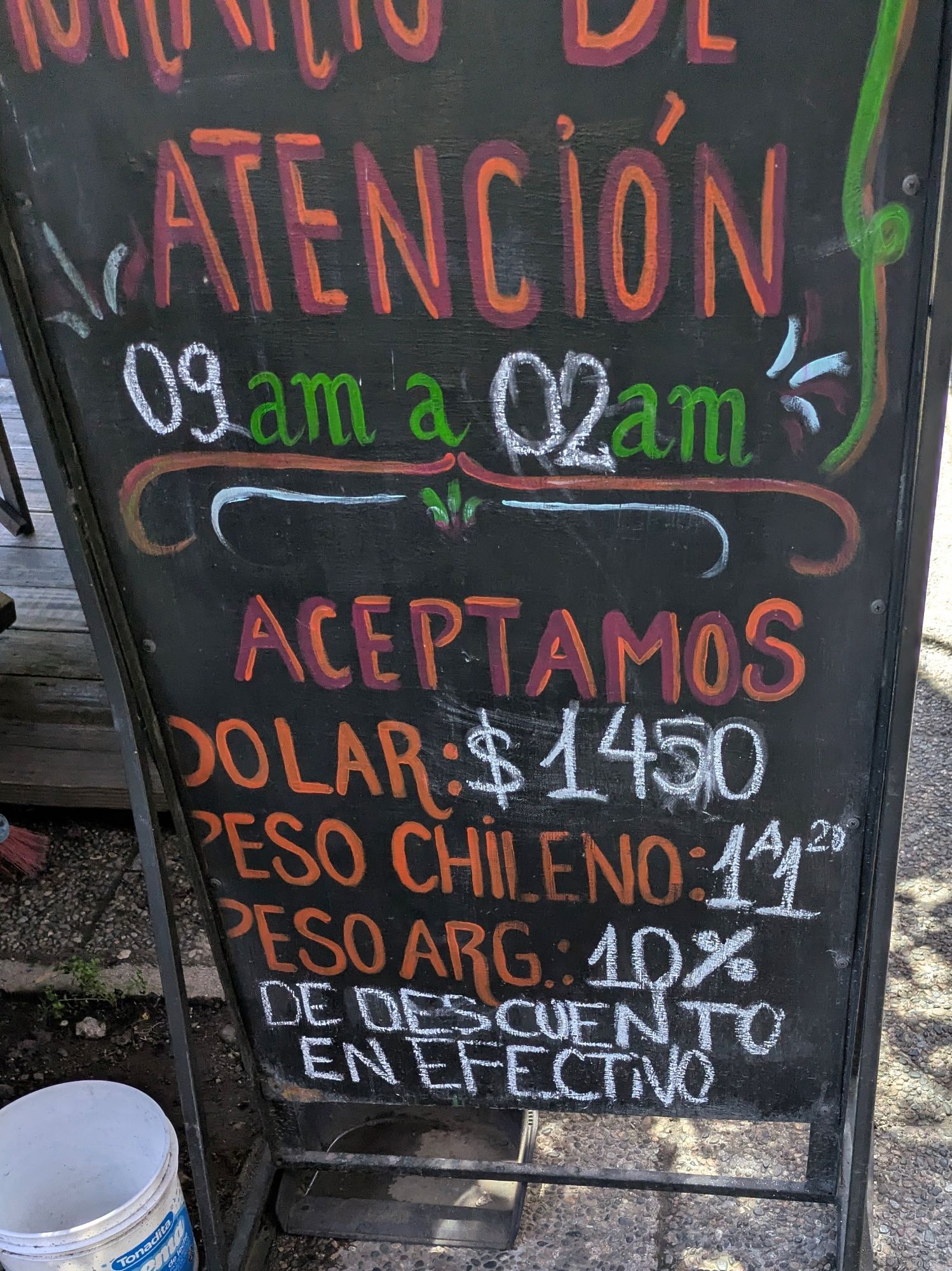
It did make me think that the best way to solve the political cost of recent inflation in the US would be for inflation to increase significantly. That’s what would make people finally realize that “yes, I need to pay 10 times as many dollars for things as I did a year ago, but I’m also getting 10 times more dollars as income, so it doesn’t really effect my life as much as I thought it would”. It’s fun to look at photos of restaurant menus posted on Google maps here, where there are frequently dozens of photos per restaurant of the “same” menu, because any photo of prices more than a month or two old is inaccurate! And it’s fine! Or at least it seems to be fine from the limited perspective I got as a tourist in this wealthy, highly-touristed town. “Five years ago, a burger cost 500 Somethings, and now it costs 17,500 Somethings?! People must have to sell their car to pay for a burger!” No! There are still tons of completely-normal people here buying and eating burgers!
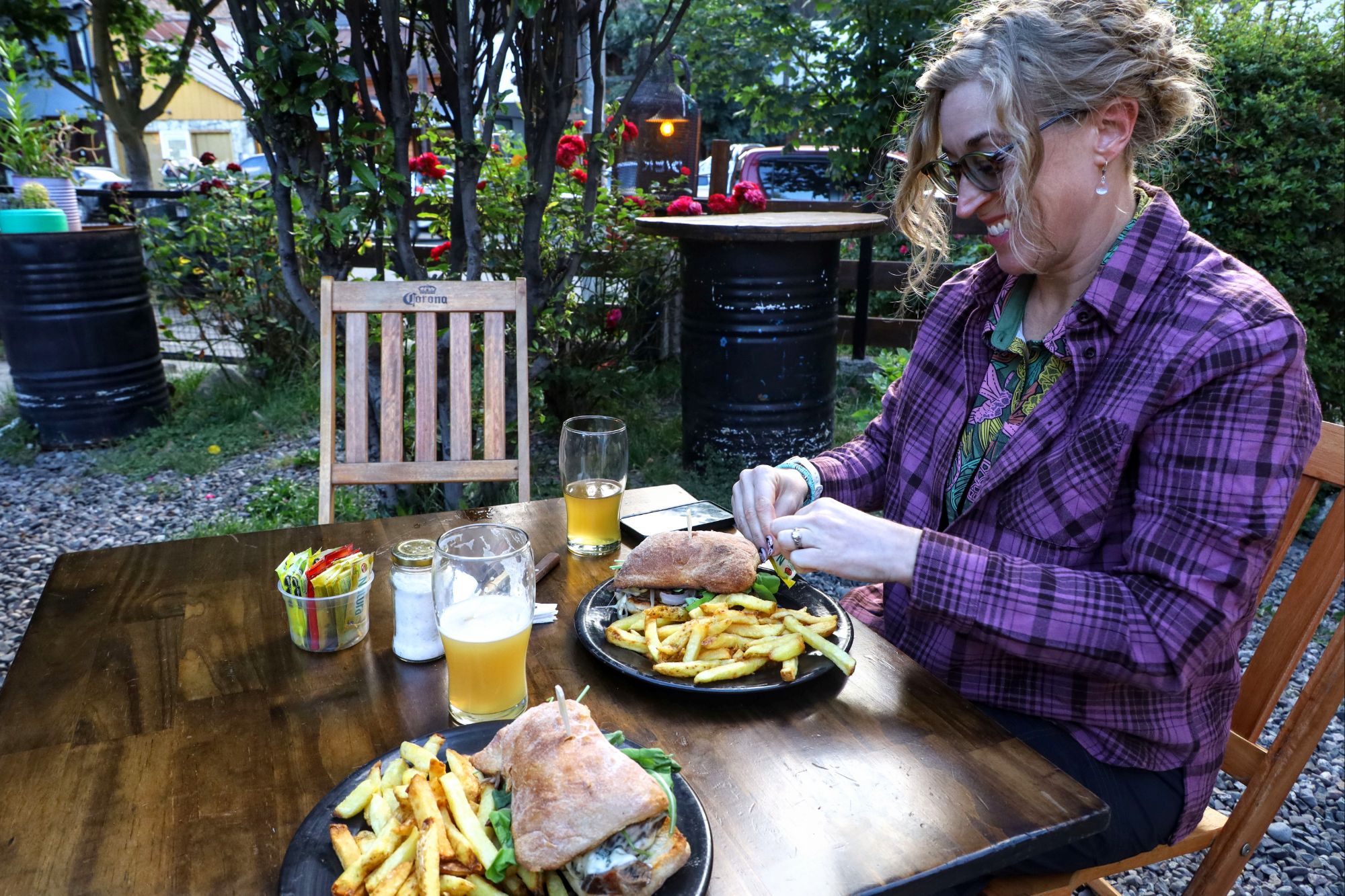
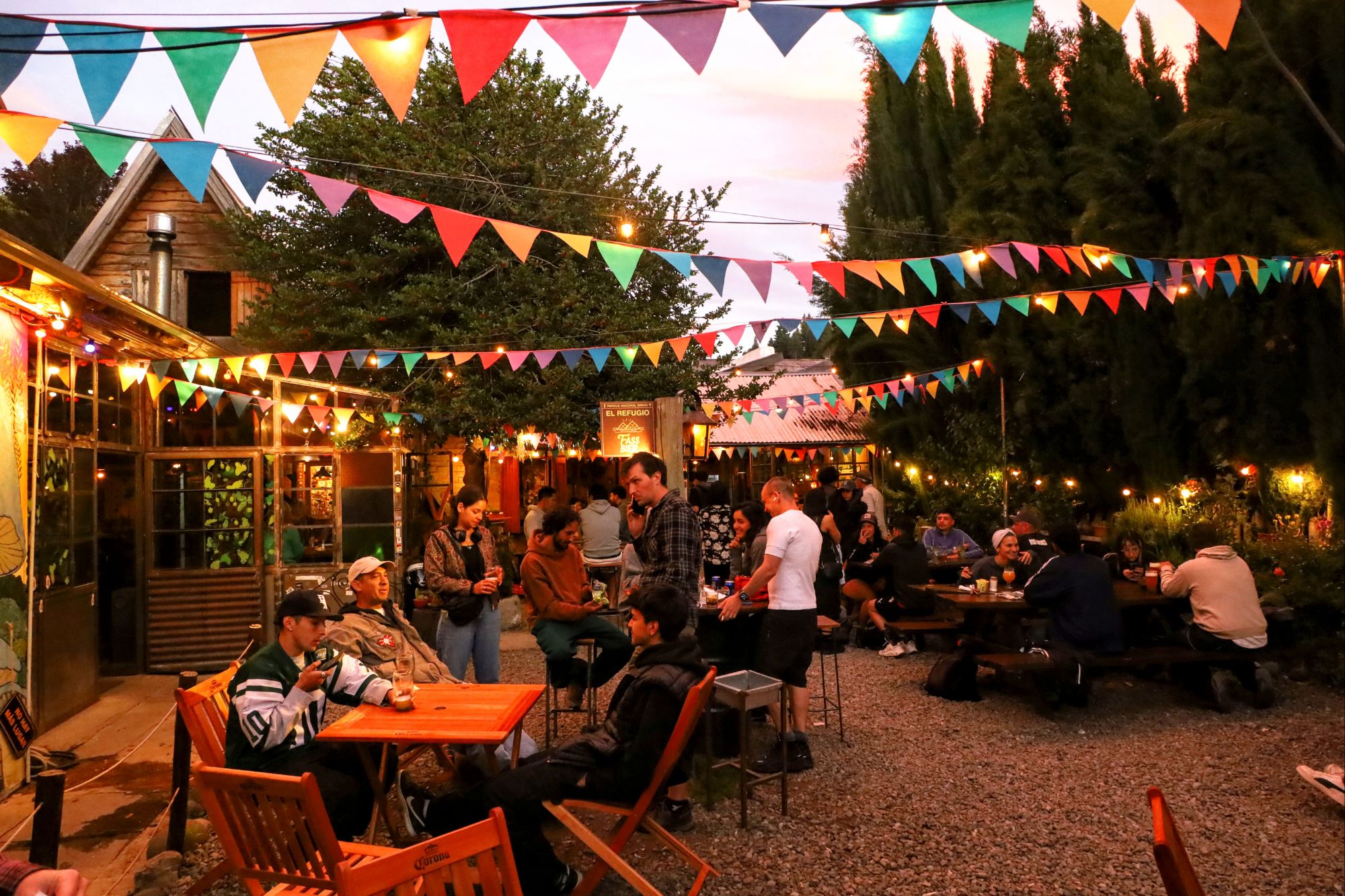
We were some of those completely-normal people, getting burgers at FassBier, out on their packed patio. Well, actually we got “colitas” (on the recommendation of our English-speaking server), where instead of a ground-beef patty, it was more of a steak thing. They were excellent as were their beers (they had a saison for Rett!)

Leave a Reply