
27.9 mi / 11.0 mph / 787 ft. climbing
Home: Airstrip Wild Camp
Even though we had a proposed solution for Rett’s instinctive reaction to horsefly attacks, we hadn’t actually tested it, so we again tried to use the time of day to minimize their combative interactions. But we were slightly-more relaxed than yesterday, meaning we got up at 5am, and were rolling out a little after 7am. It was another morning where despite the not-exactly-summer reading of 47°F on the thermometer, I was totally comfortable departing with bare legs under my shorts (though with my warm long-sleeve wool top).
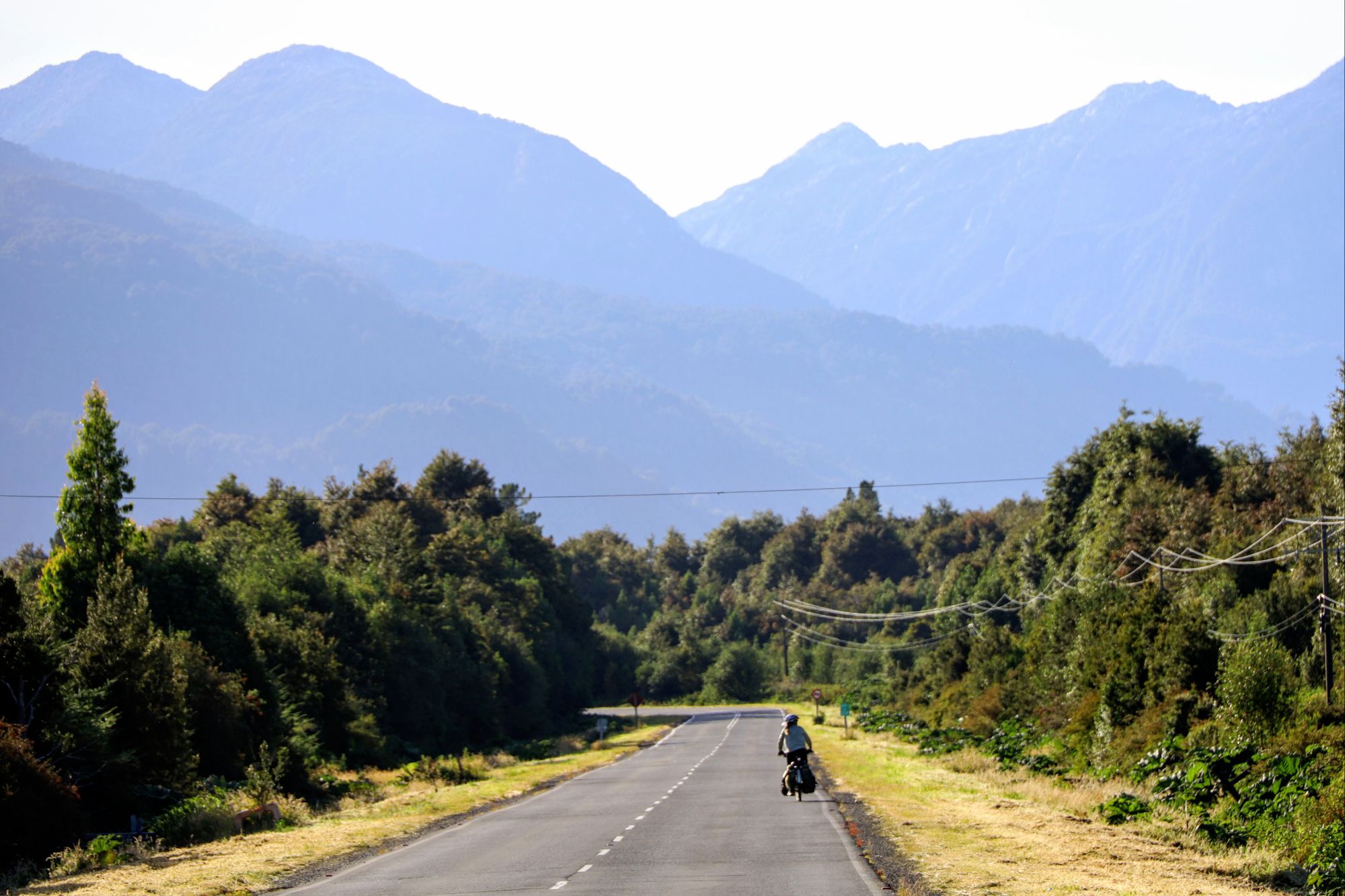
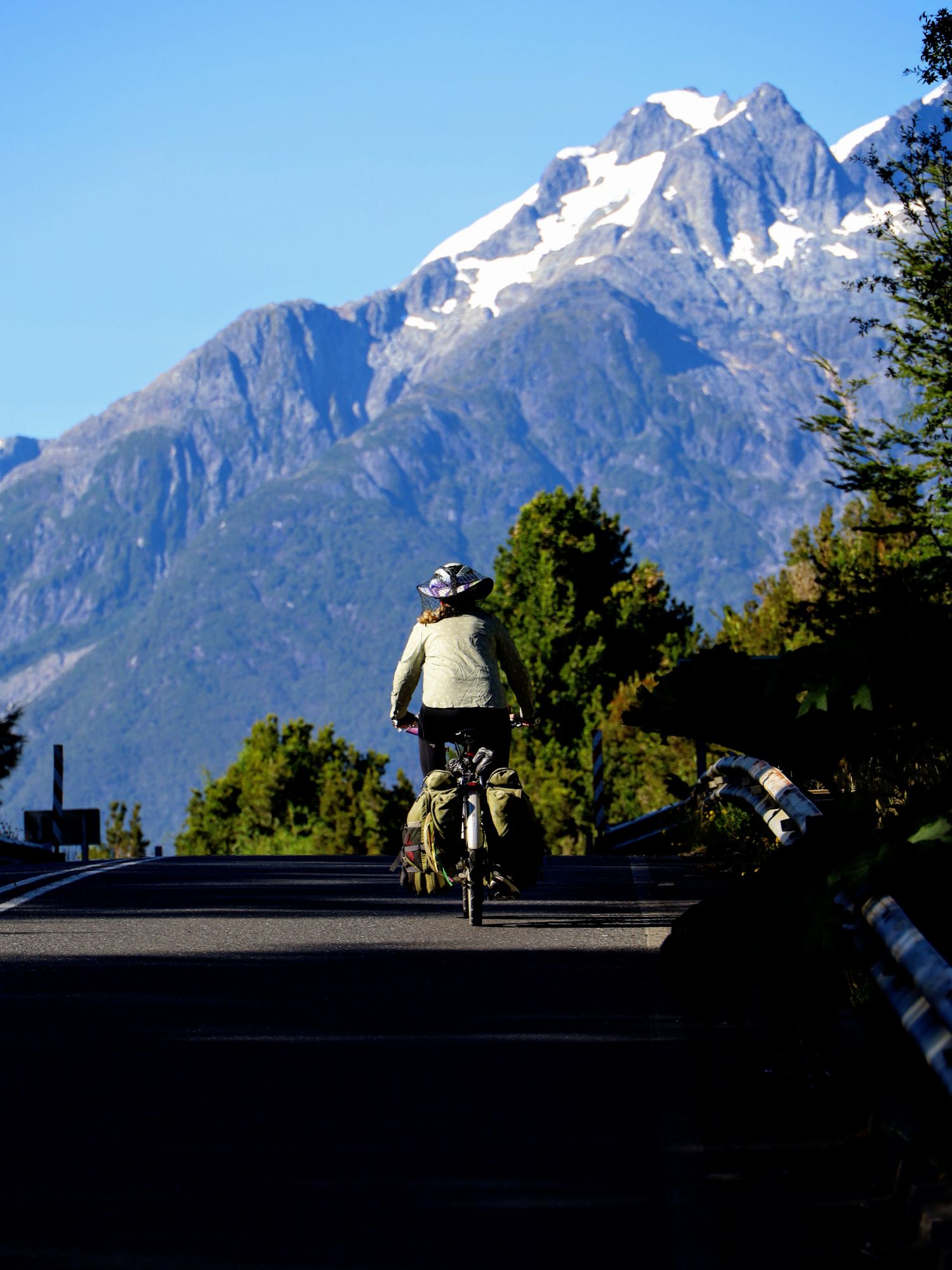
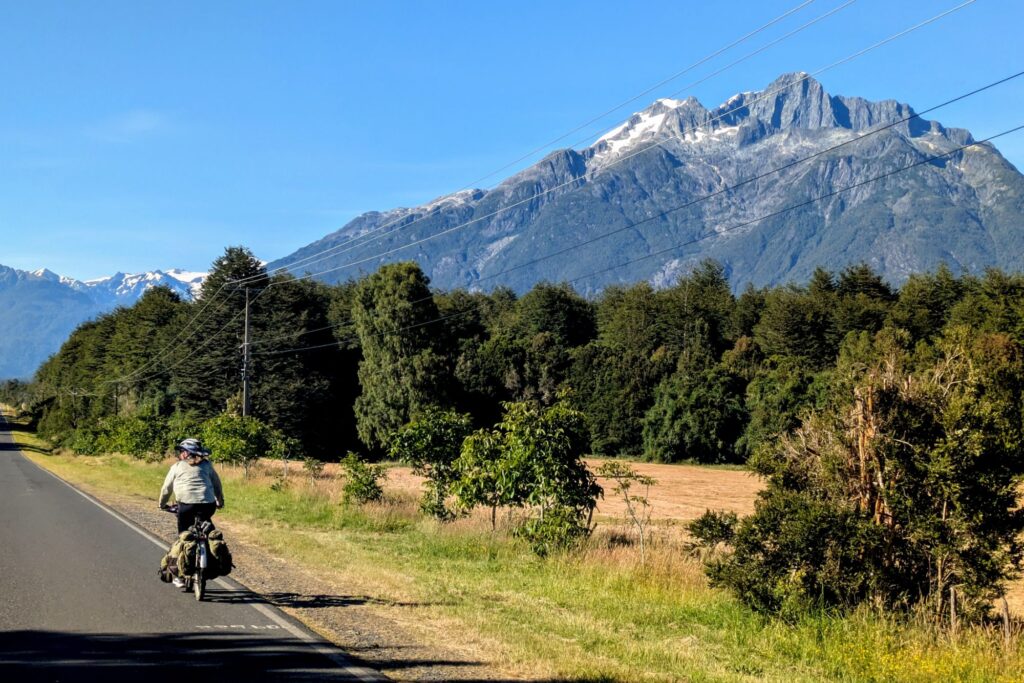
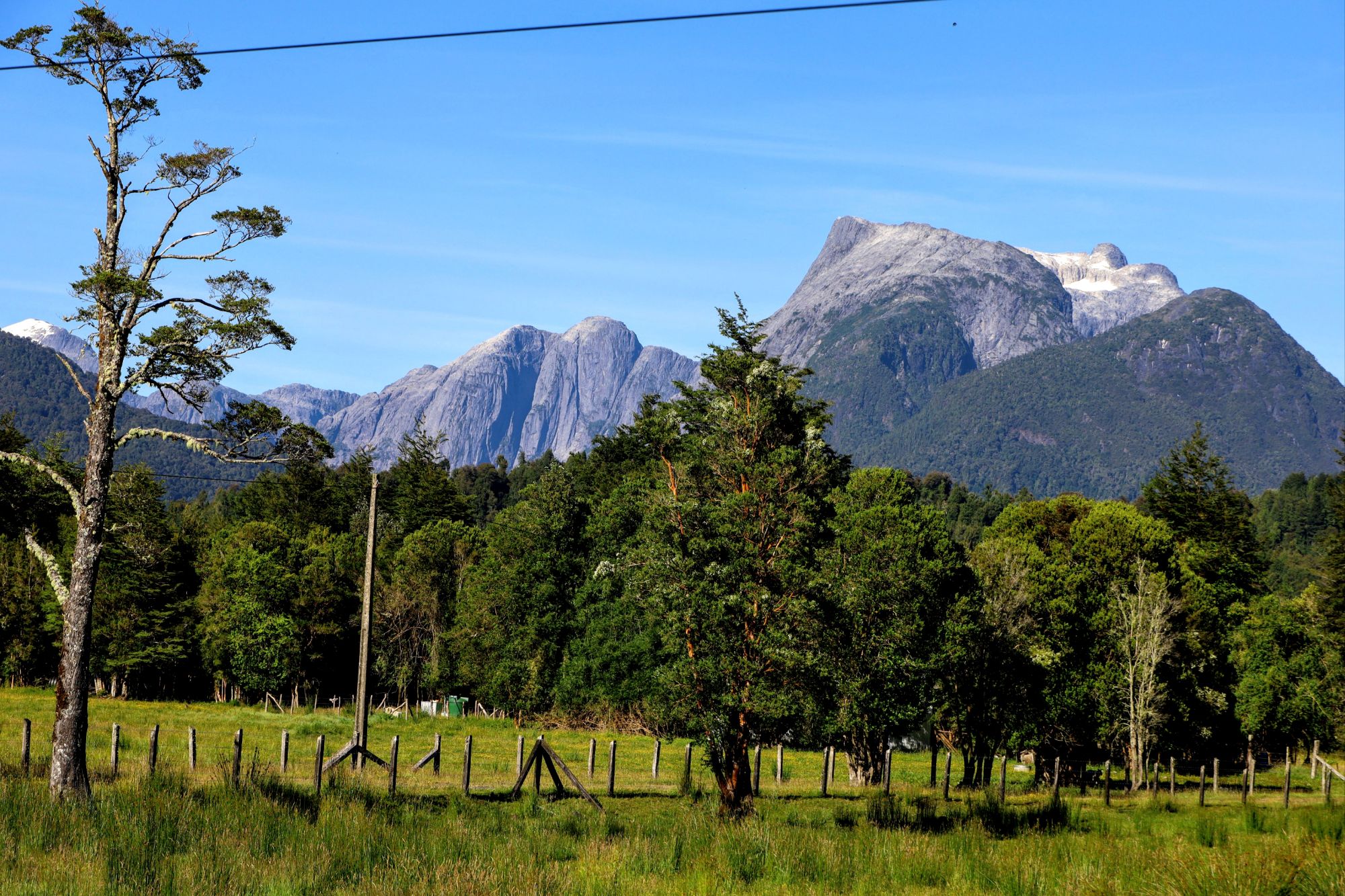
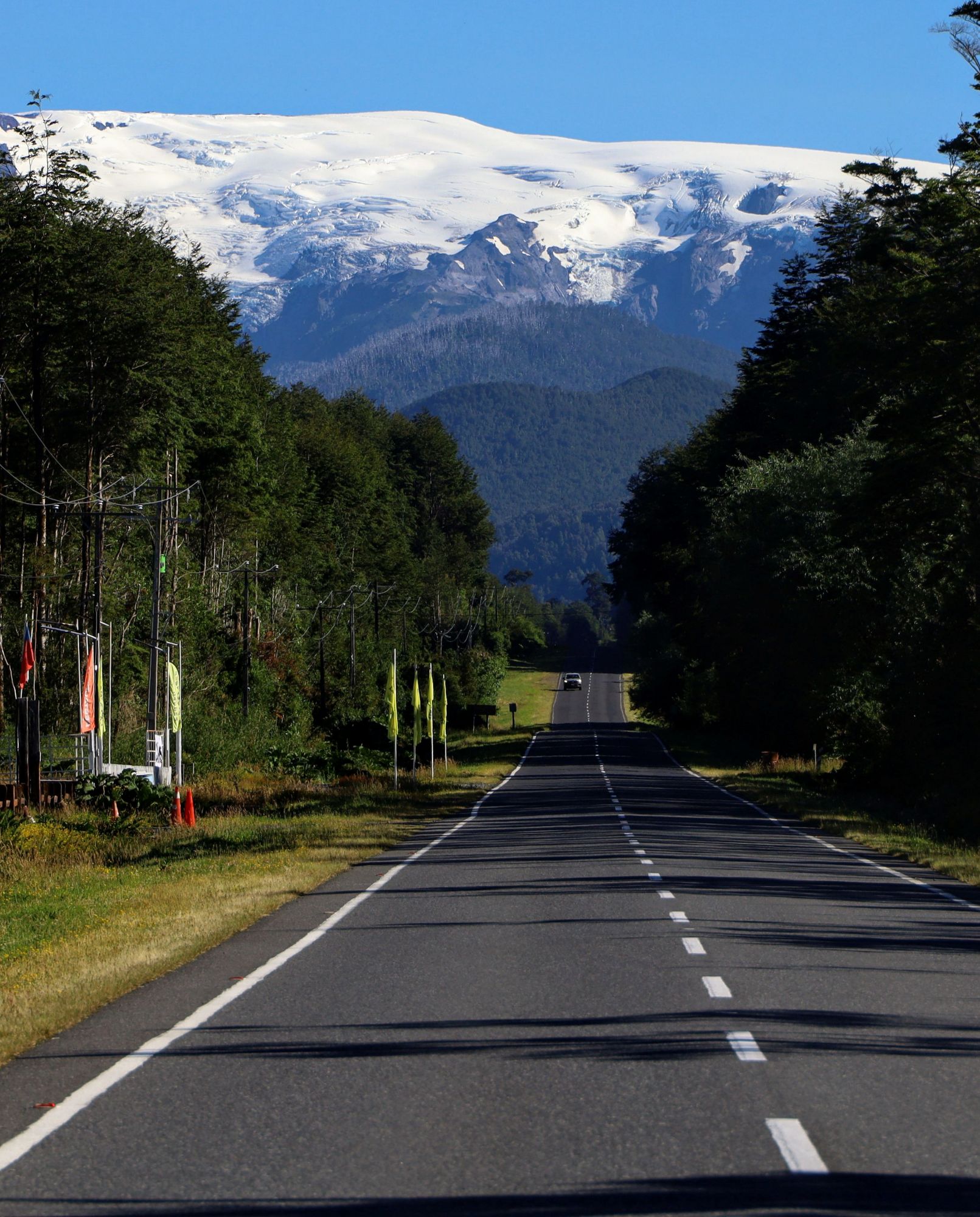
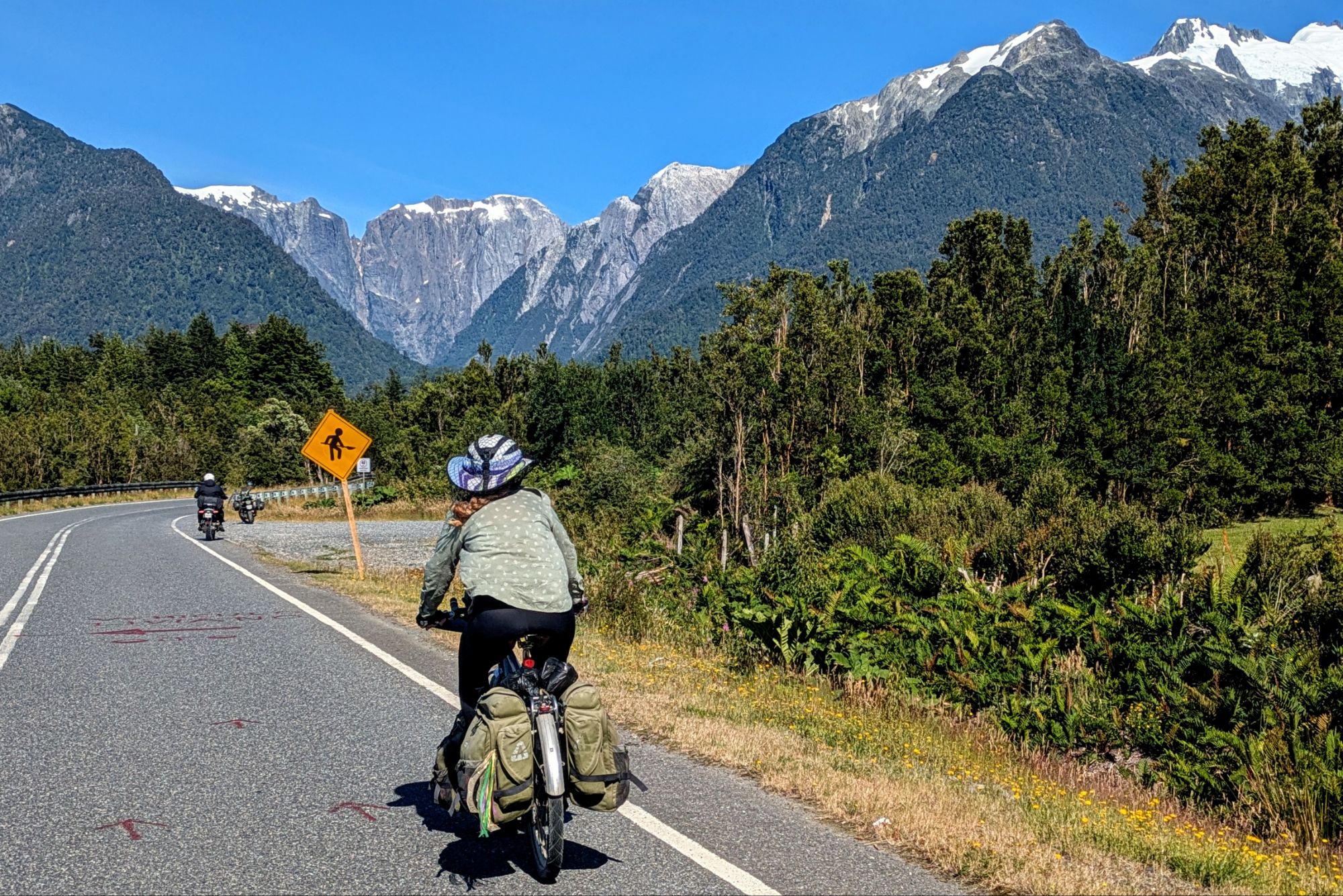
Again we had the early-morning advantages of beautiful light tunneling its way through the deep valley, and no traffic on the smooth road (which even had a bit of a shoulder for a while!) Within 10 minutes it was clear that we were heading into a world-class ride, and we were both glad we had decided to continue riding. Of course, this was still before the horseflies had even rolled out of bed and started making their morning coffee.
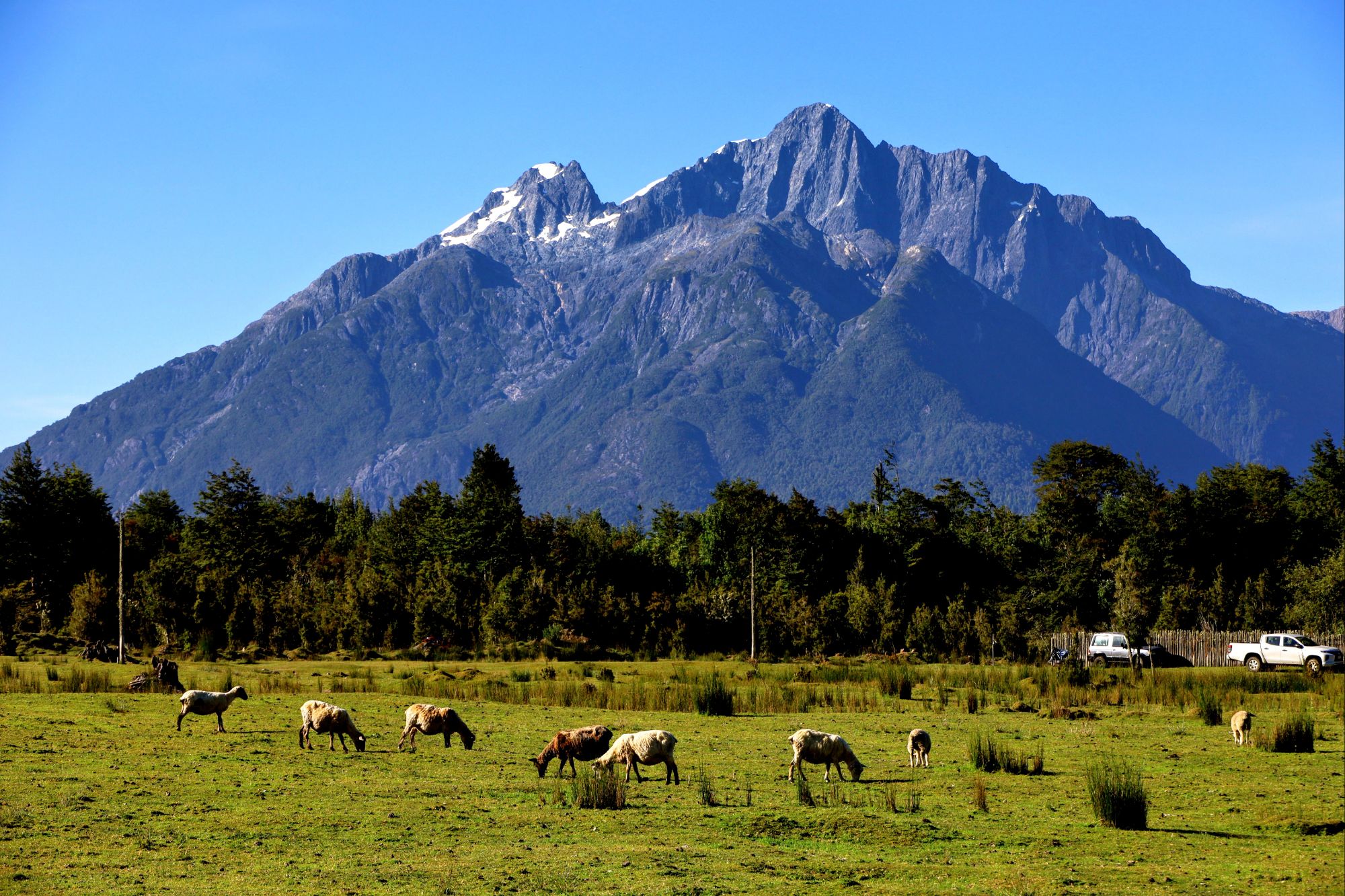
The perfectly clear day was certainly a big contributor to the visual majesty, but this was also the first time on the Carretera Austral (or anywhere?) that we have seen the topologically-complex New Zealand-style “podocarp forests”, backed by snow-capped mountains on both sides, but with enough space in the valley for pastoral scenes to play out in the foreground. Three of our favorite elements all in one grand painting.
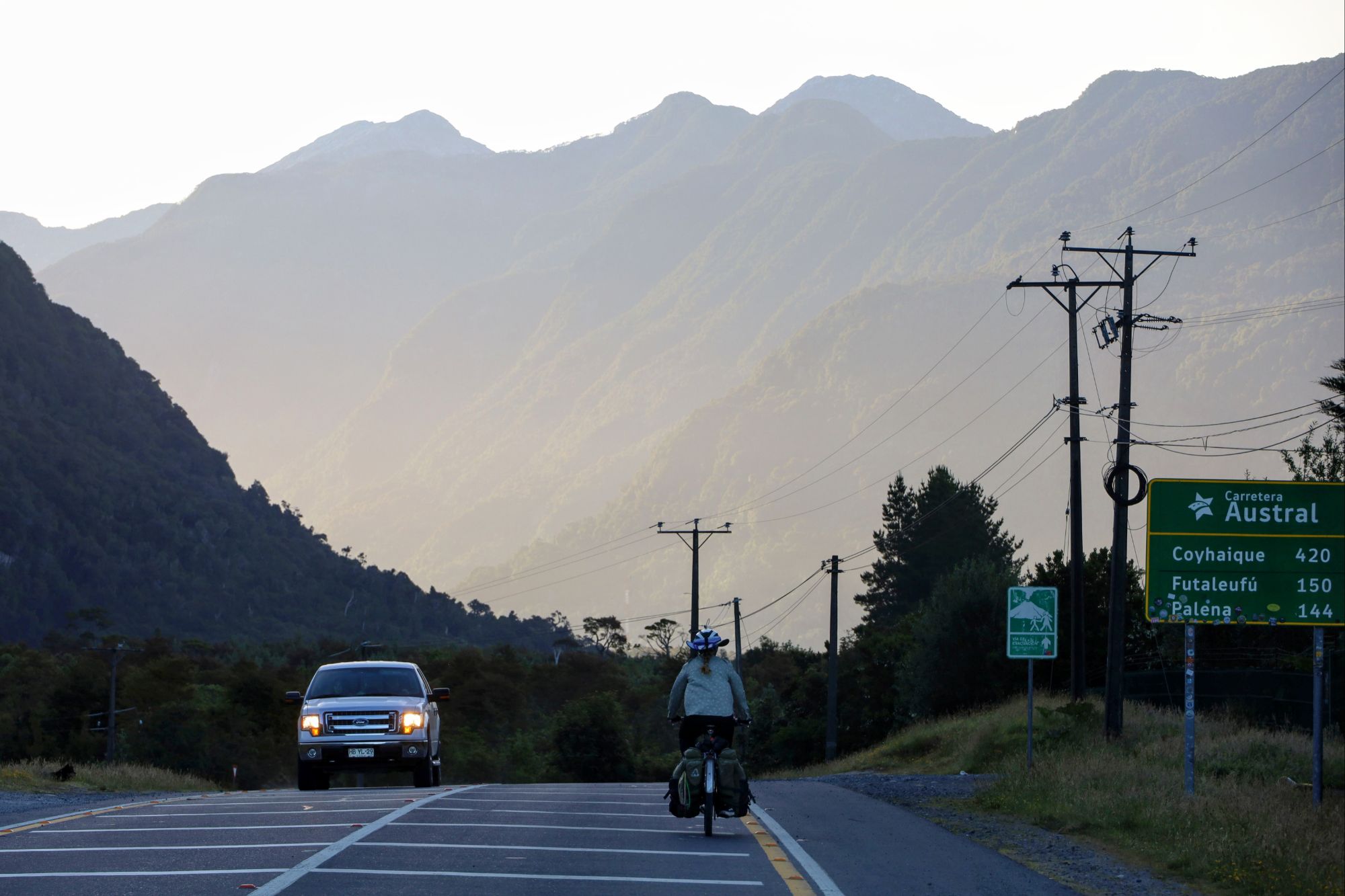
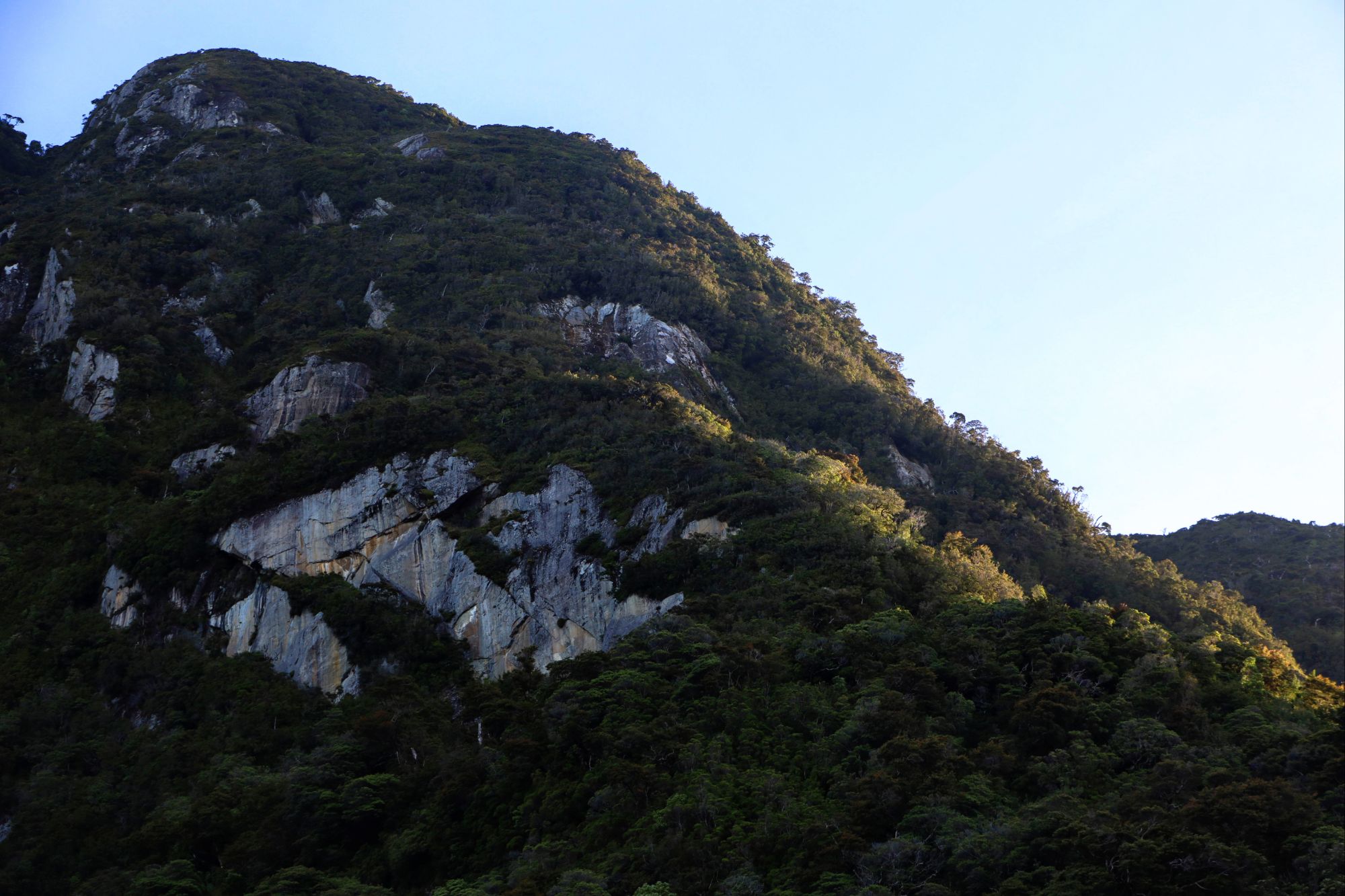
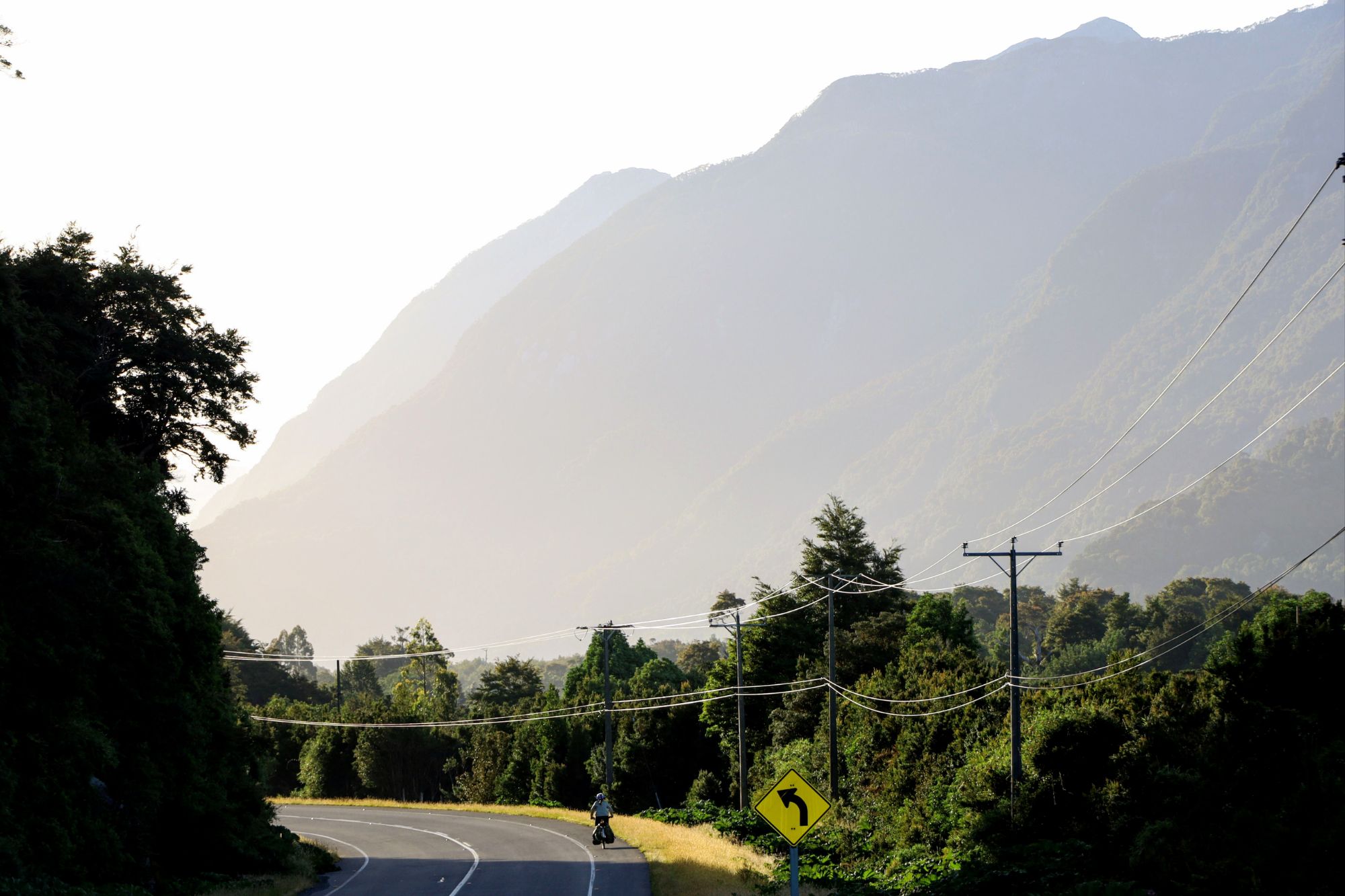
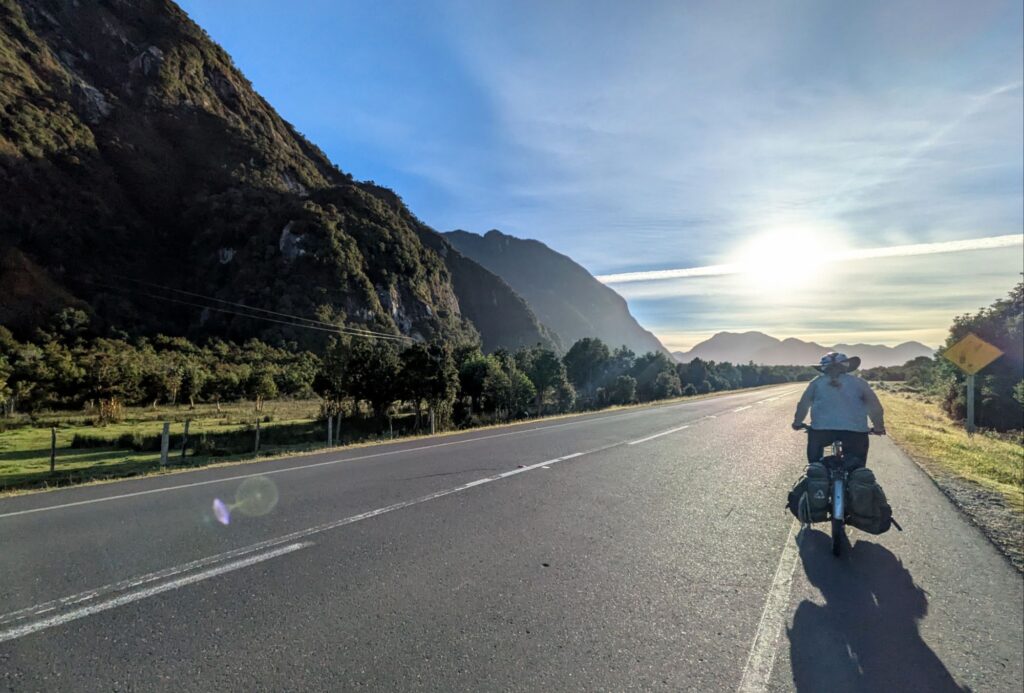
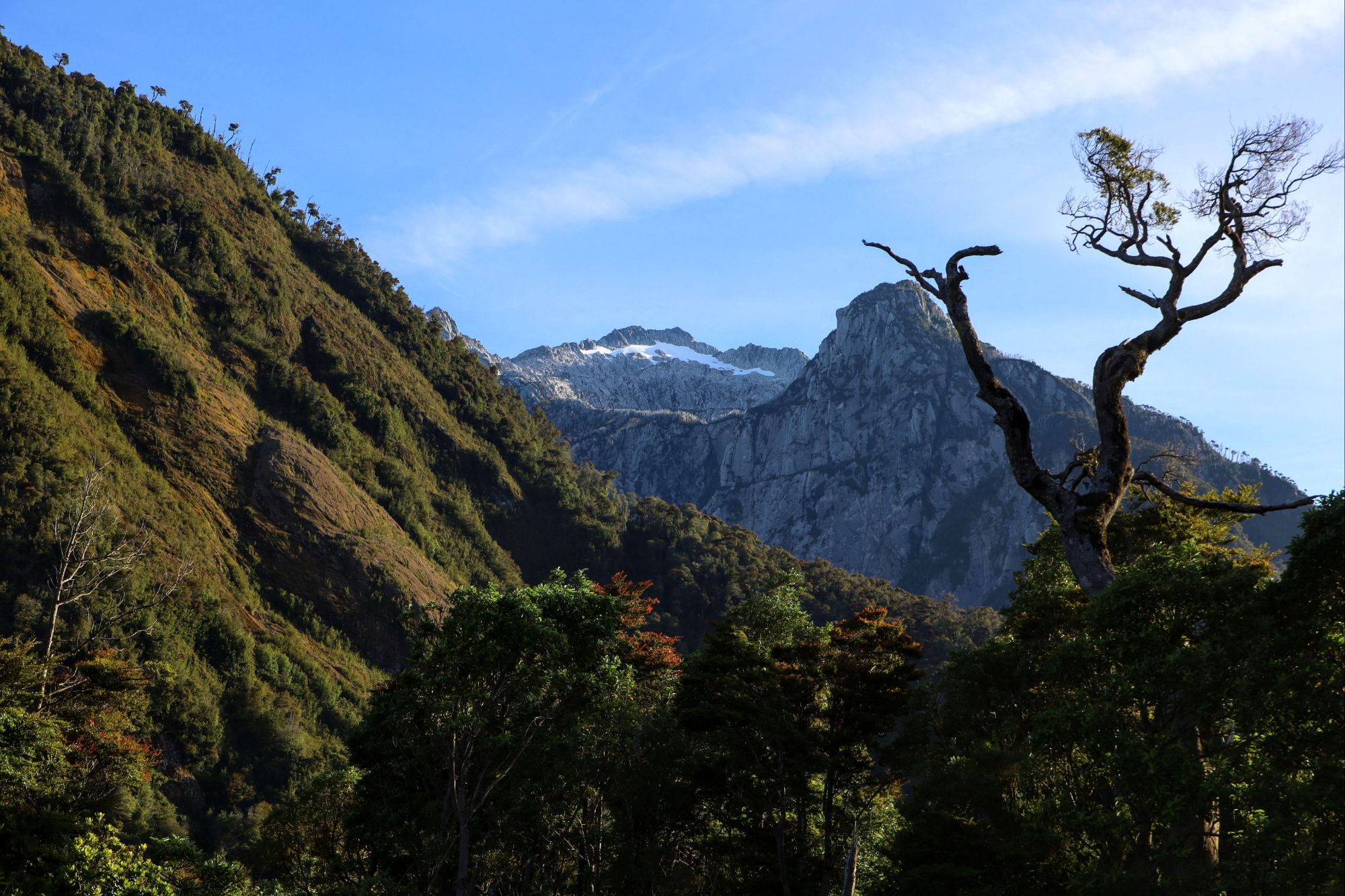
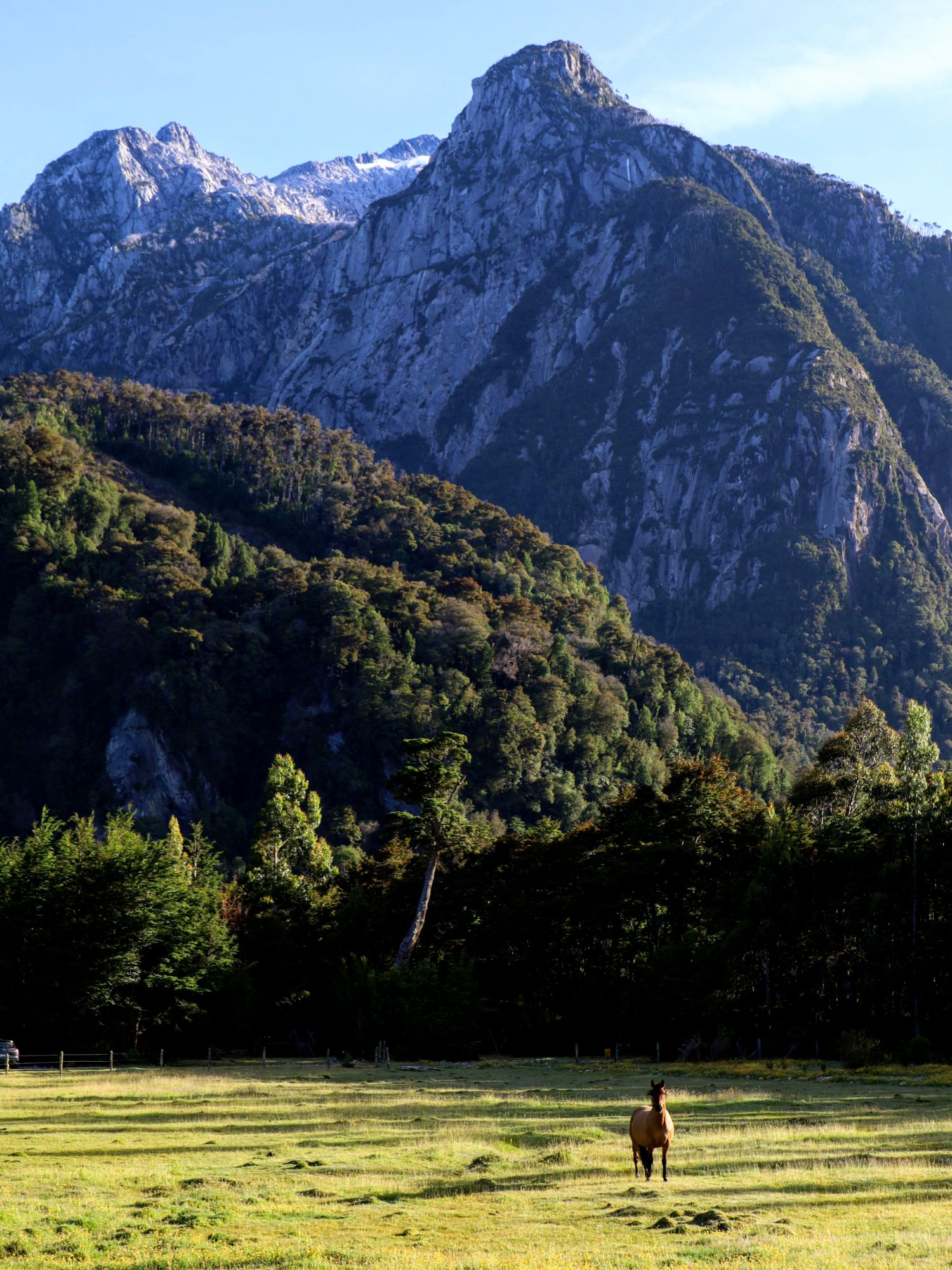
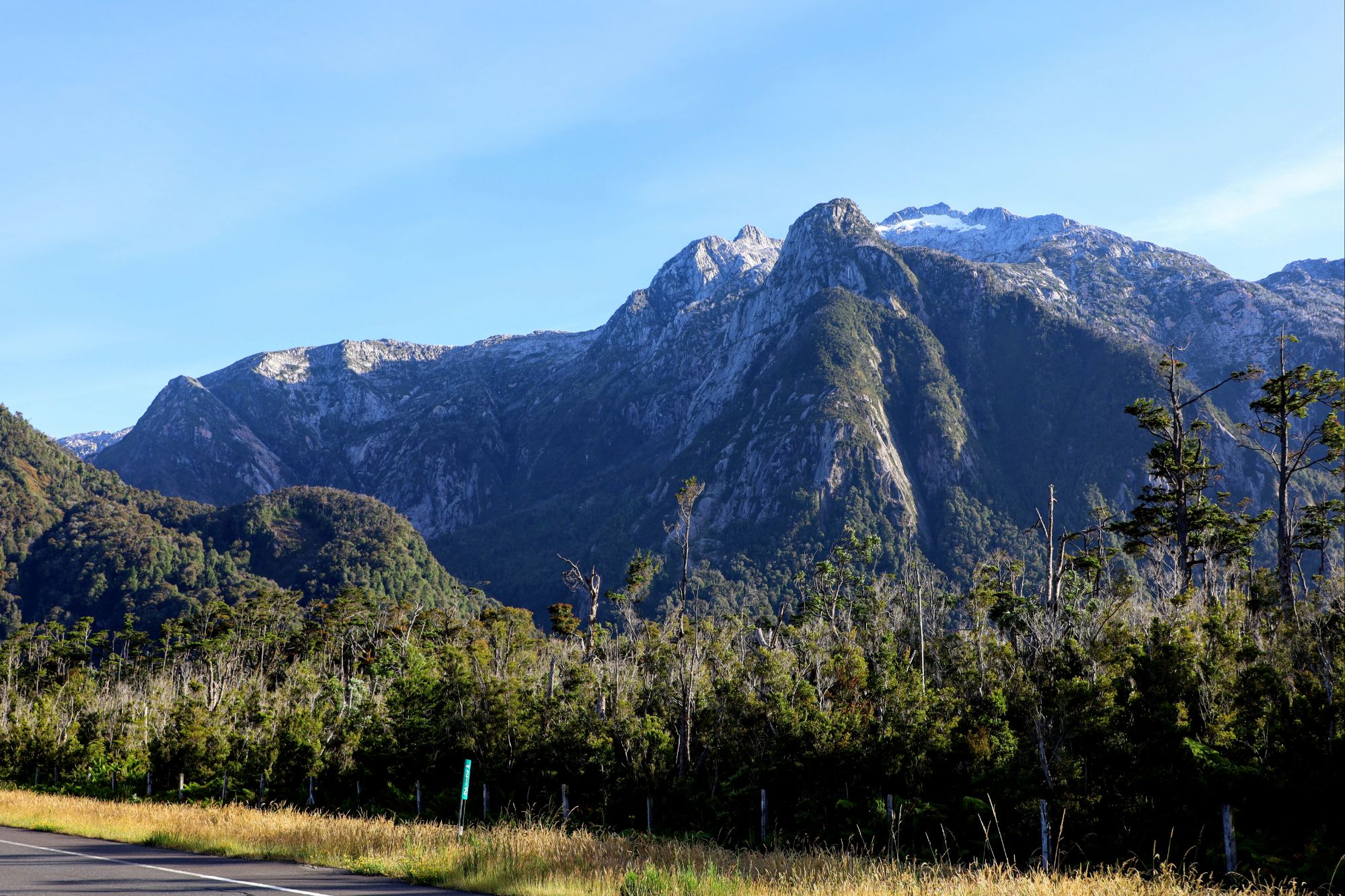
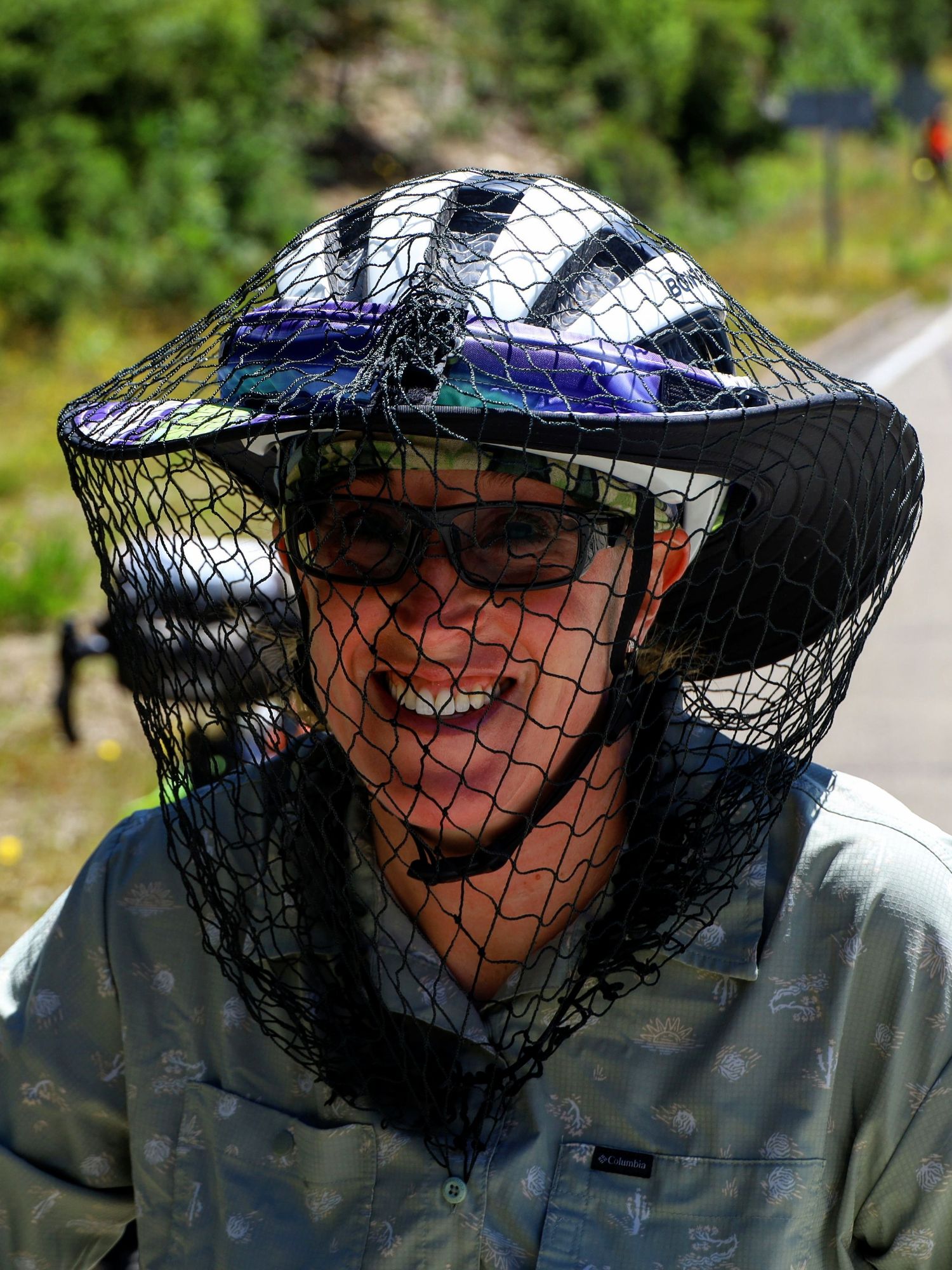
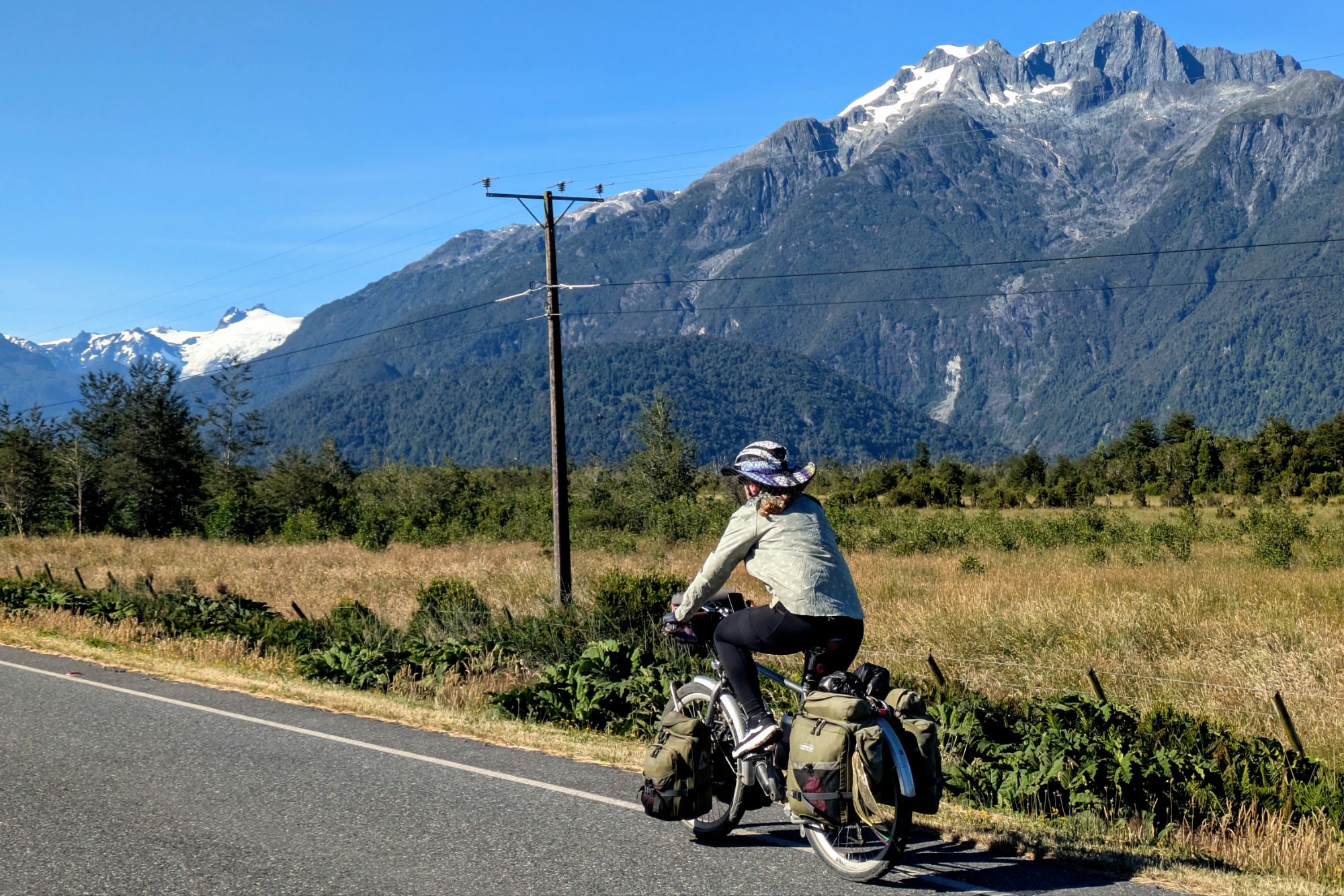
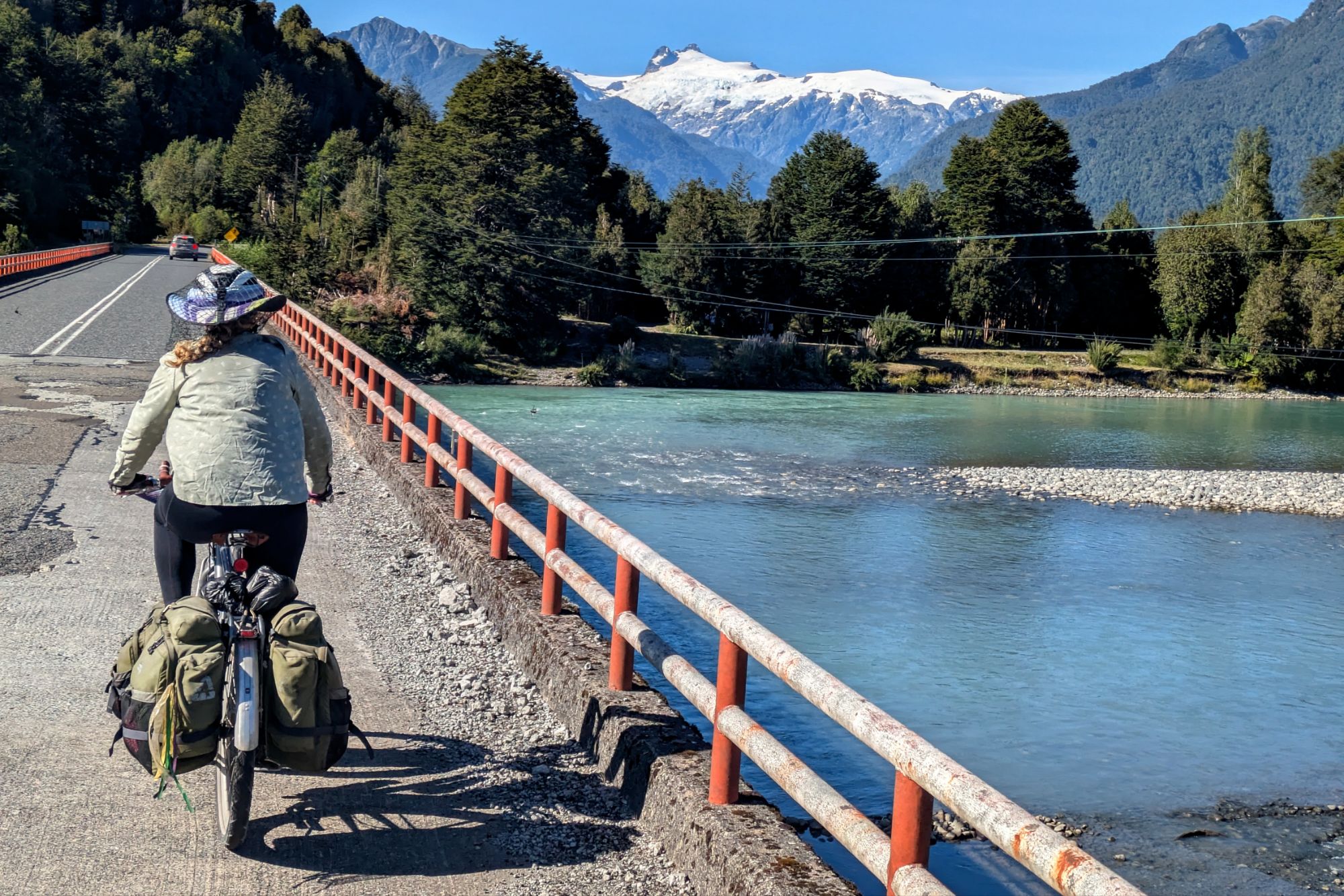
We were woken from our dream-ride when the horseflies appeared right on schedule, just after 9am again. So we got out the fishing net, pulled it over Rett’s helmet (and “Da Brim”), and set off again. Two minutes later we passed a dozen tourists getting out of a van, and I could tell that several of them immediately understood why she had the bizarre getup, and pointed it out for their friends or just nodded toward her with jealous approval.
And it was immediately showing its effectiveness, though that was probably more obvious to me than to Rett. I could see her riding ahead of me, so calmly that her natural inclination would be to attribute that to “the flies just not being that bad right now”. But as the person riding “naked”, I got whacked in the face five times by the buzzing behemoths in a few miles, as many as had gotten me in the previous four days combined! So it was a bit like letting some air out of our tires on a rough gravel road and then thinking “ugh, bad timing, because the gravel ironically got a lot smoother just after we did that”. No, it’s a case where the solution is so effective that it tricks you into thinking the problem doesn’t even exist!
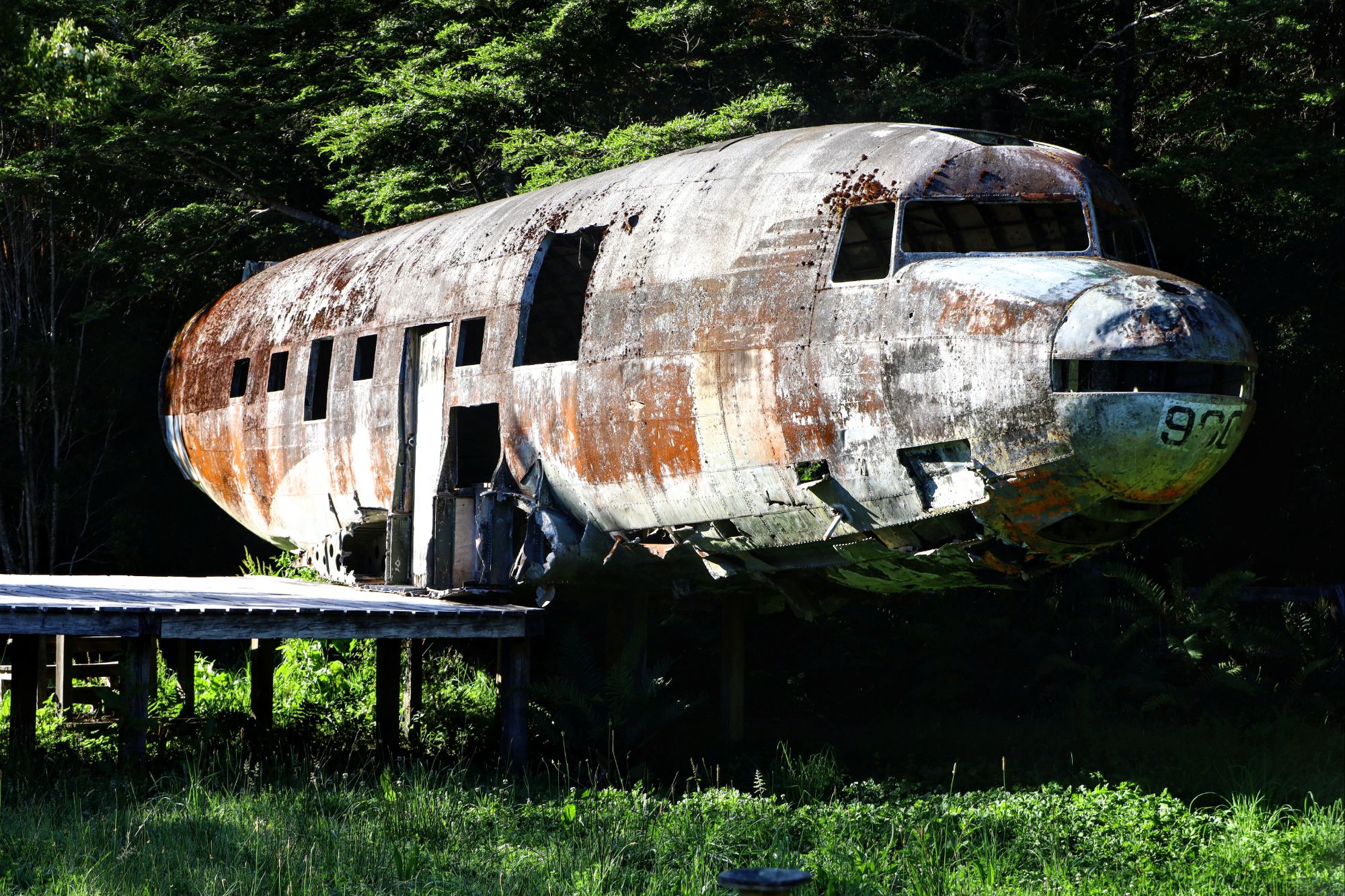
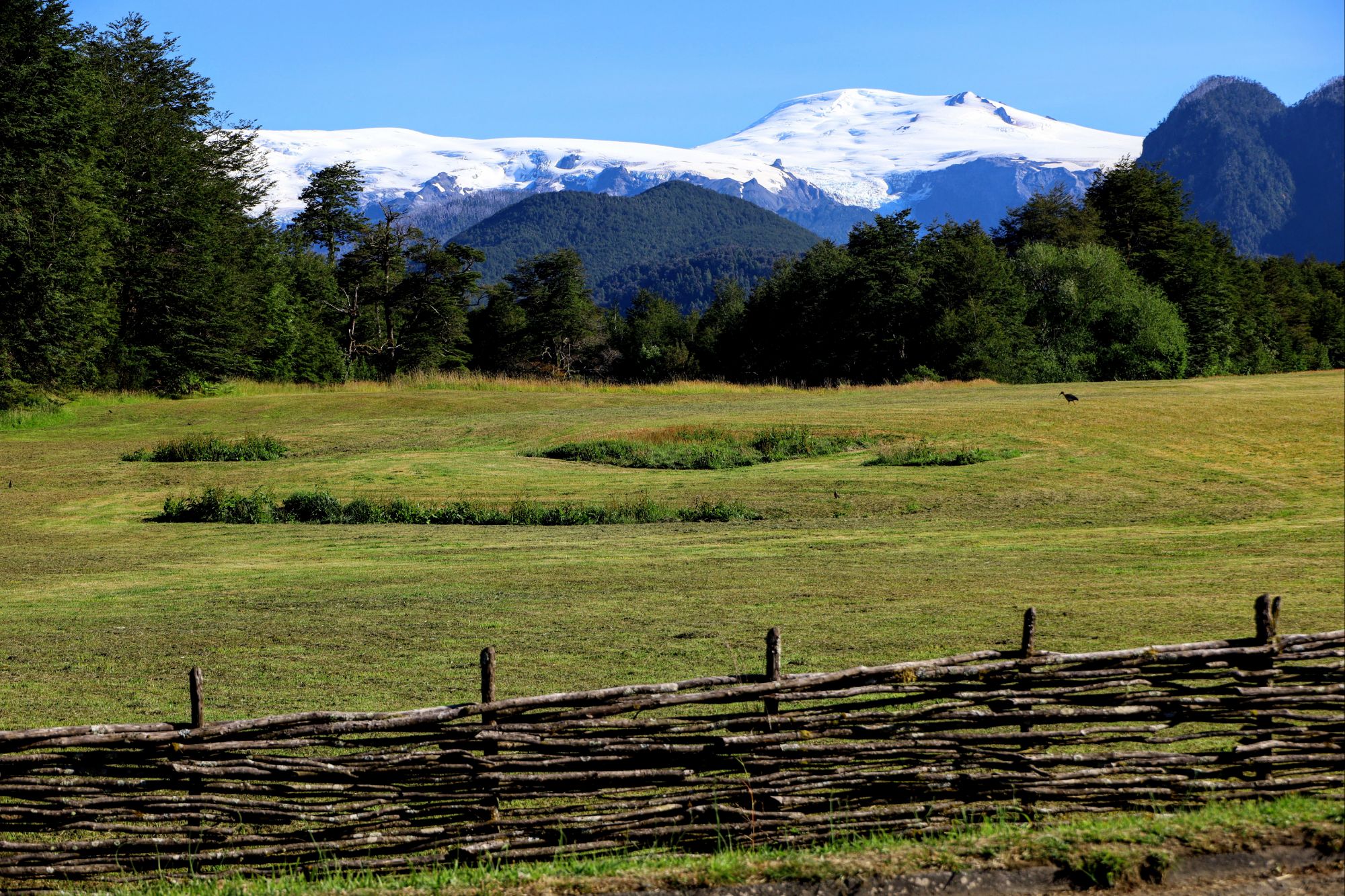
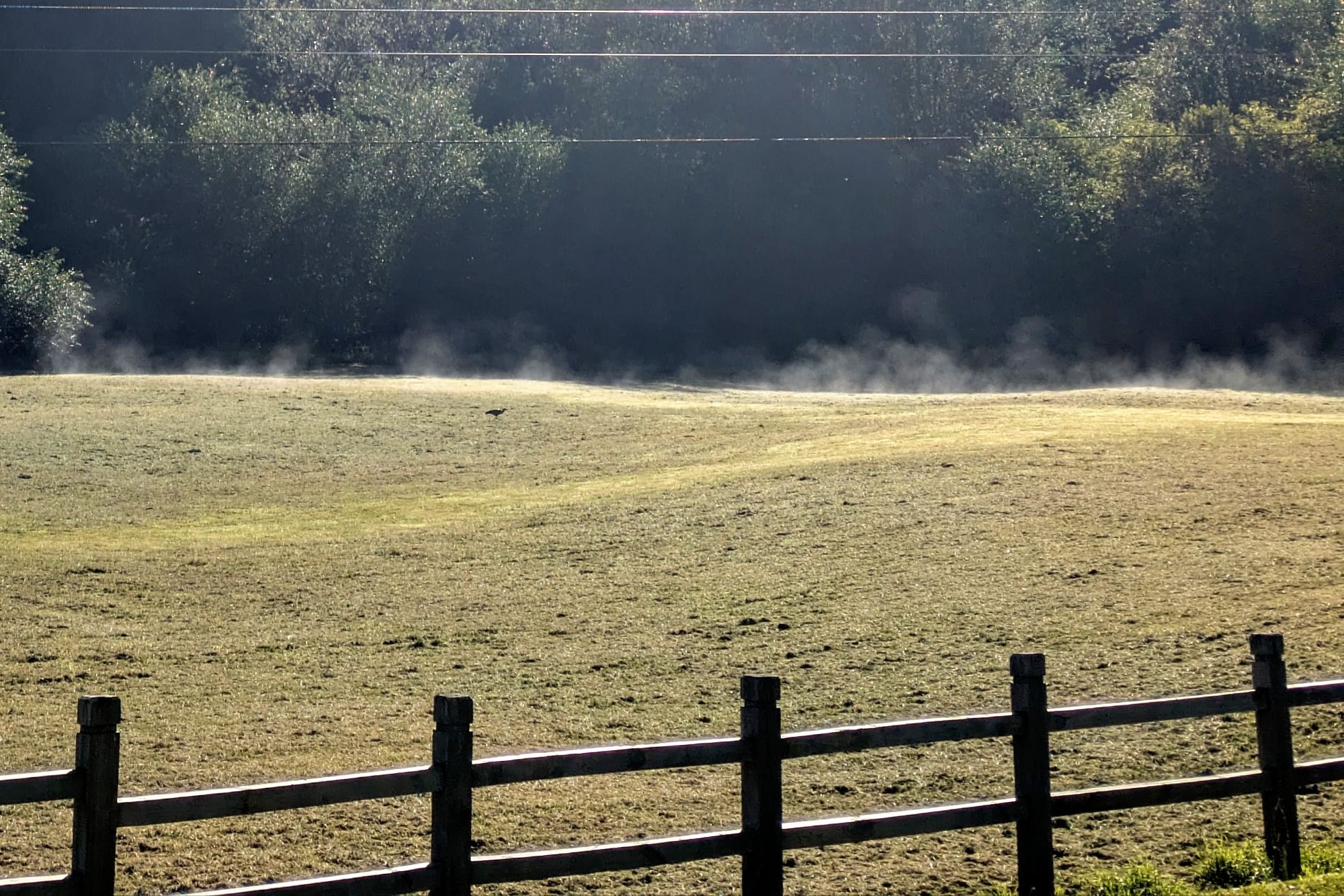
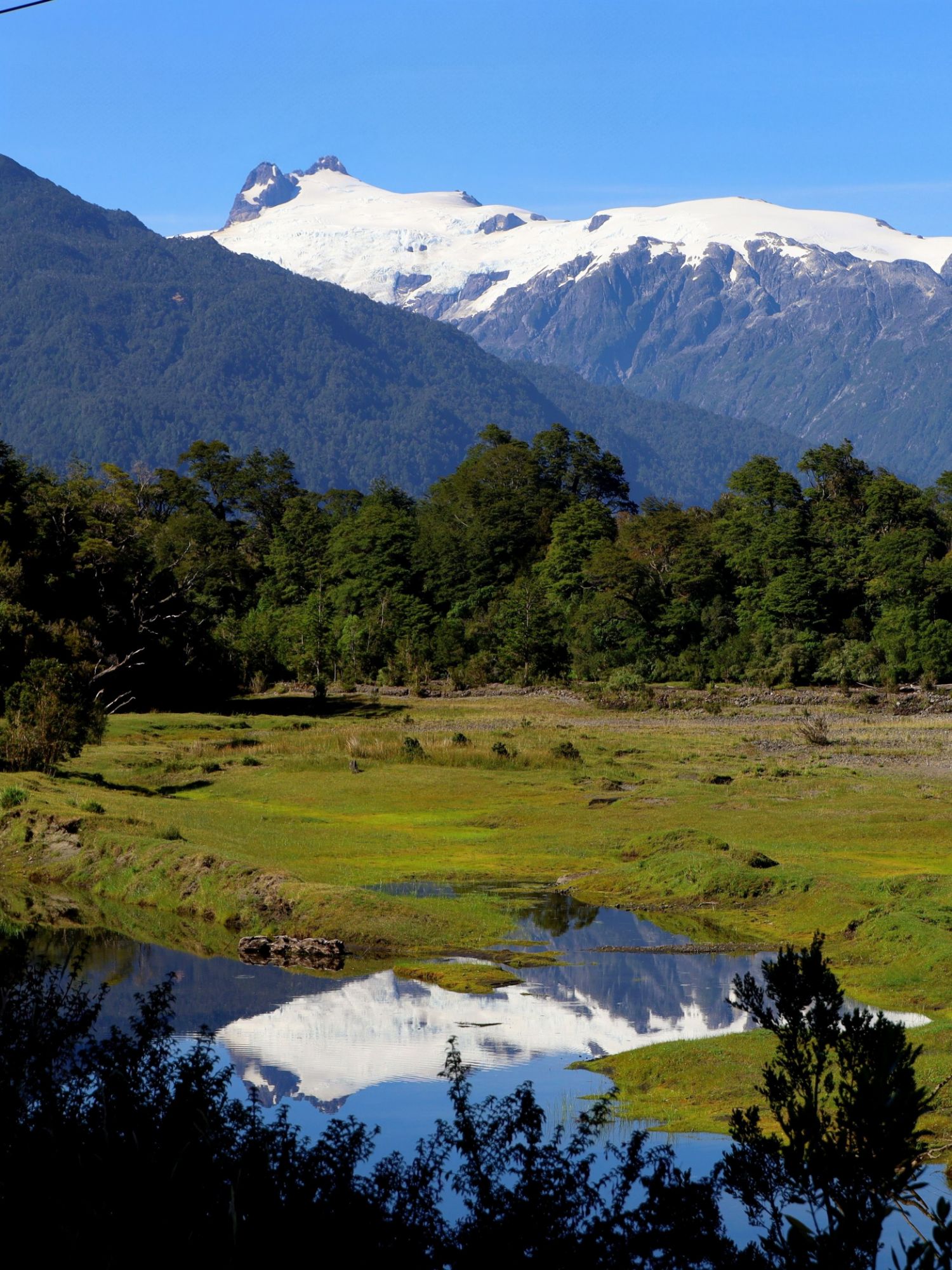
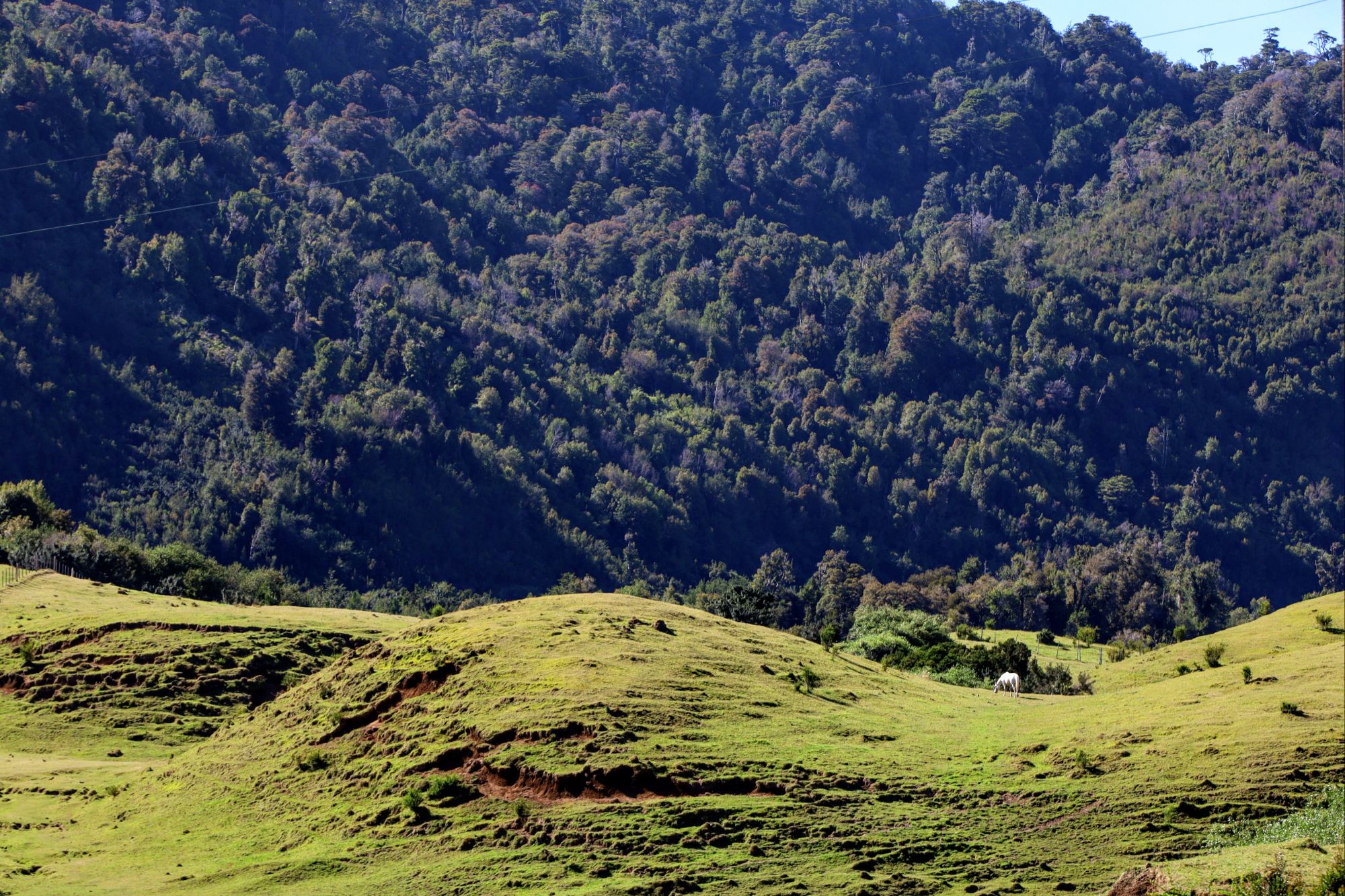
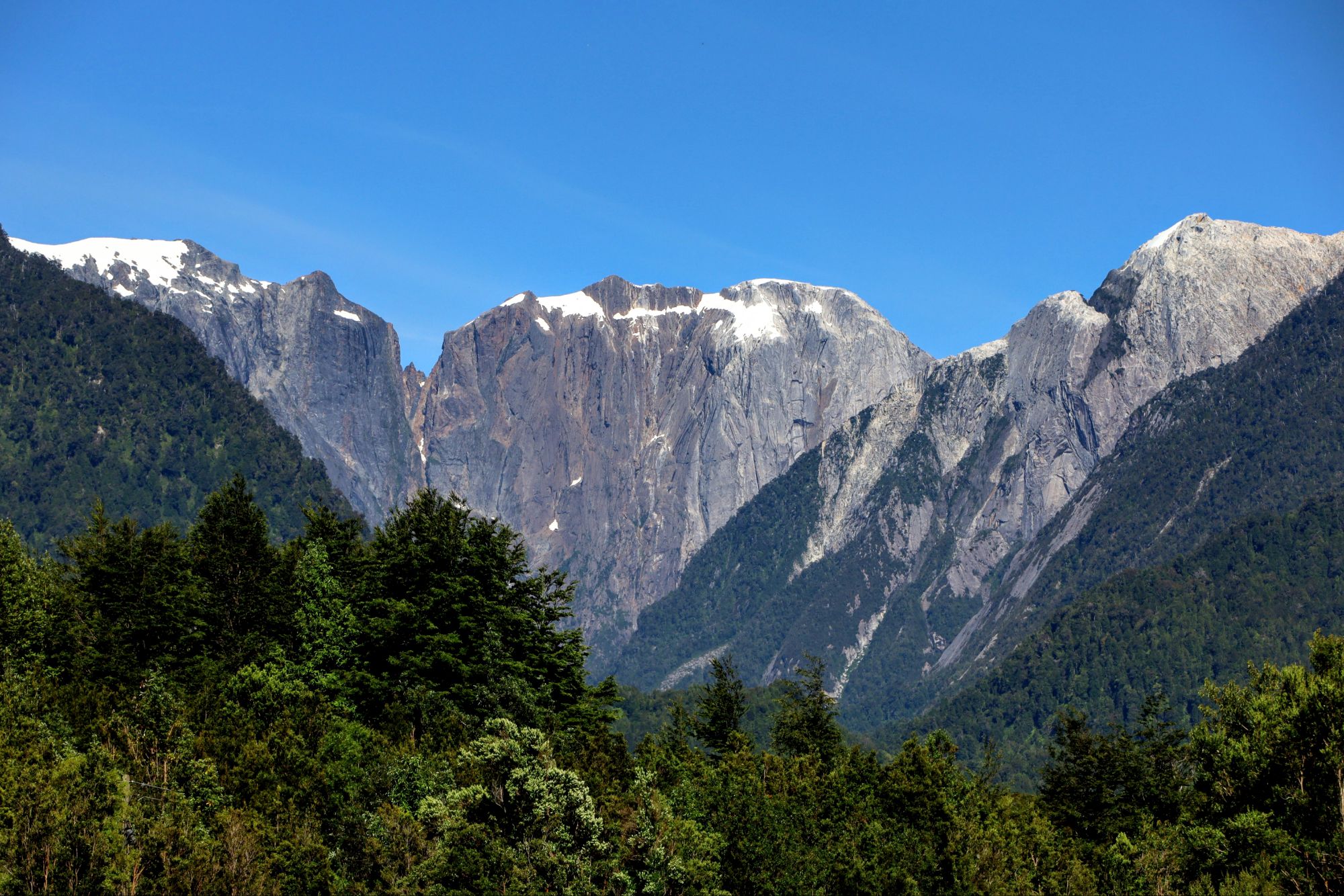
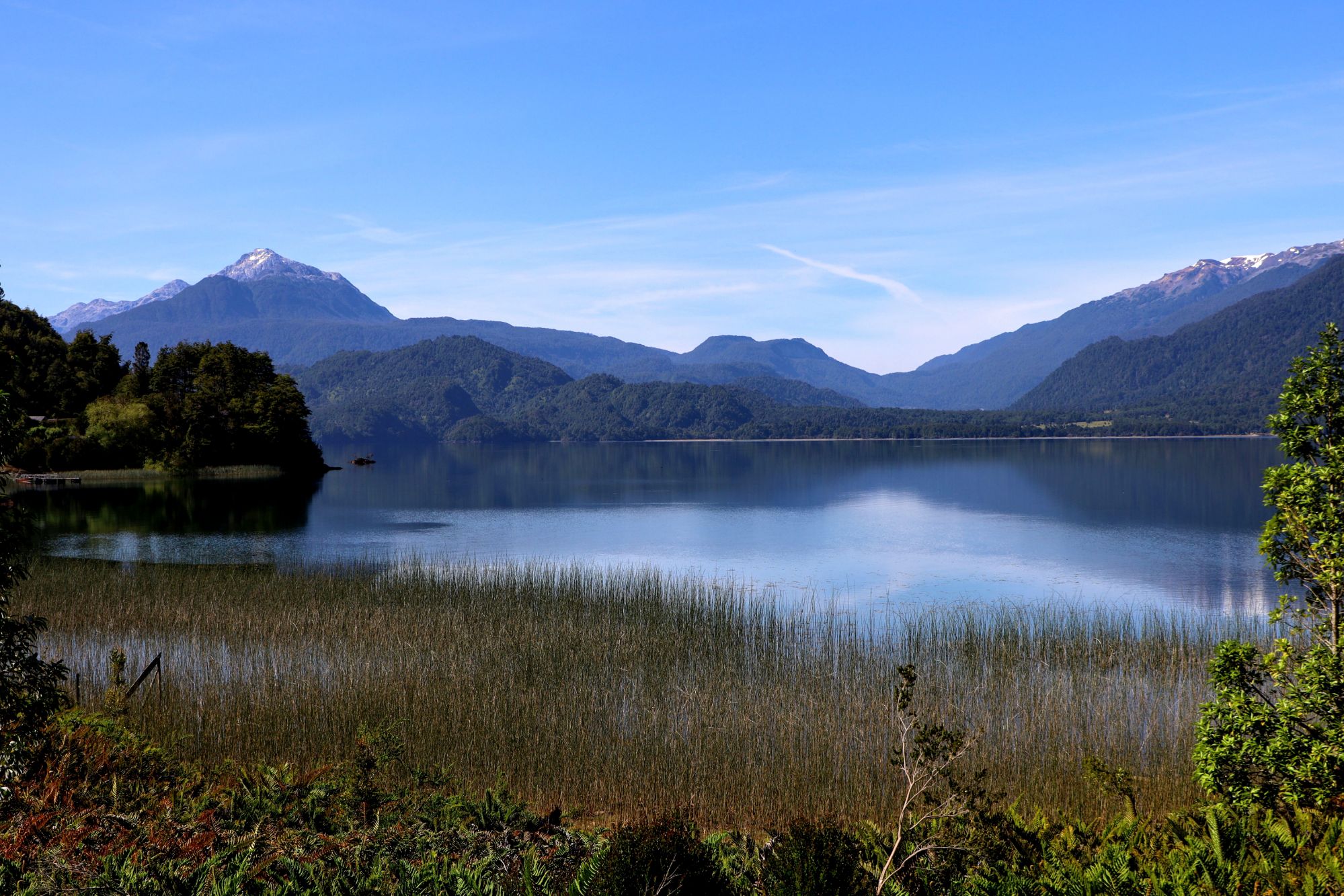
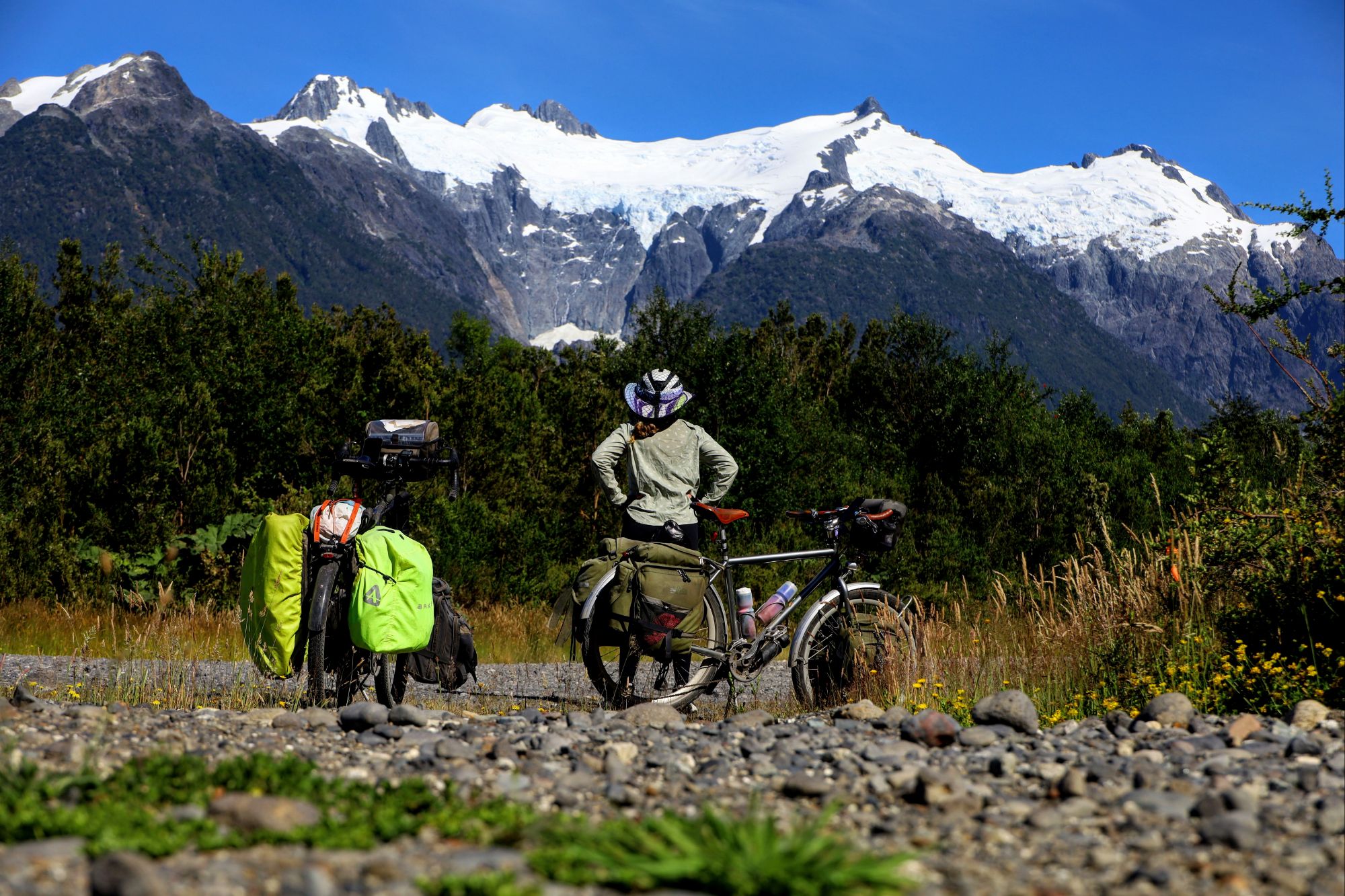
Yesterday the main downside of our super-early start was that we reached our destination hours before our accommodation was ready. But one way to eliminate that downside is to wild camp, where there is no check-in time or anyone to give you the keys. So reaching the end of our ride at 10:30am today was a huge bonus, since our “accommodation” was world-class, and we could spend hours just enjoying its million dollar views. Huge thanks as usual to iOverlander (and particularly The Shaws) for guiding us to such an incredible place to pitch our tent.
Especially since we had to pass through a gate at the far end of the airstrip, and then navigate down a faint trail to reach the recommended river’s edge, where someone had cut through fallen logs to make the path to the many flat tent spots easily-passable! And with zero trash, it almost felt like someone’s personal property, so without the many reviews saying that it was fine to camp, we might have thought it too good to be true and scared ourselves off. If it is someones personal property, they could easily charge US$50/night to stay, and it would be totally worth it!
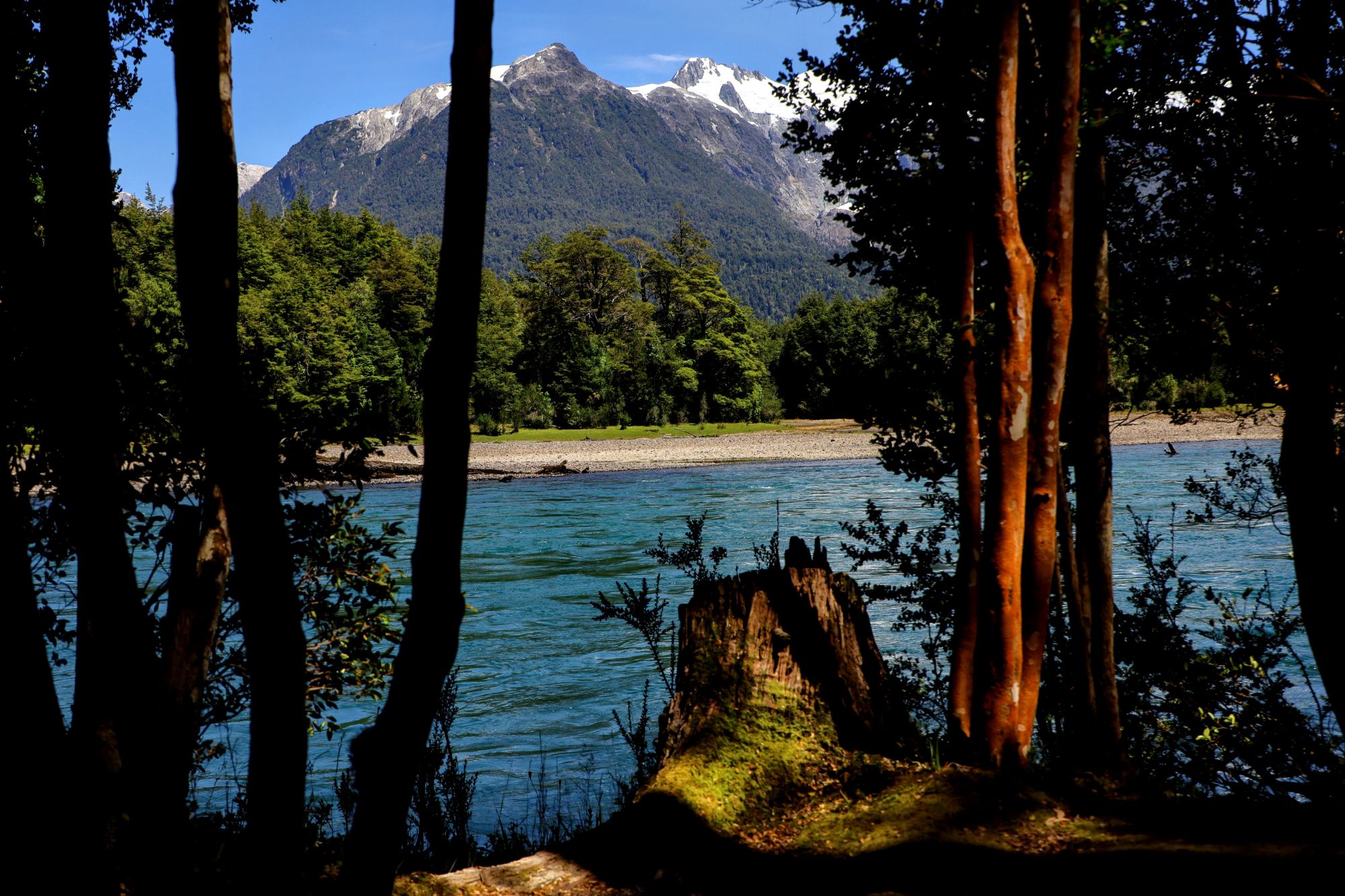
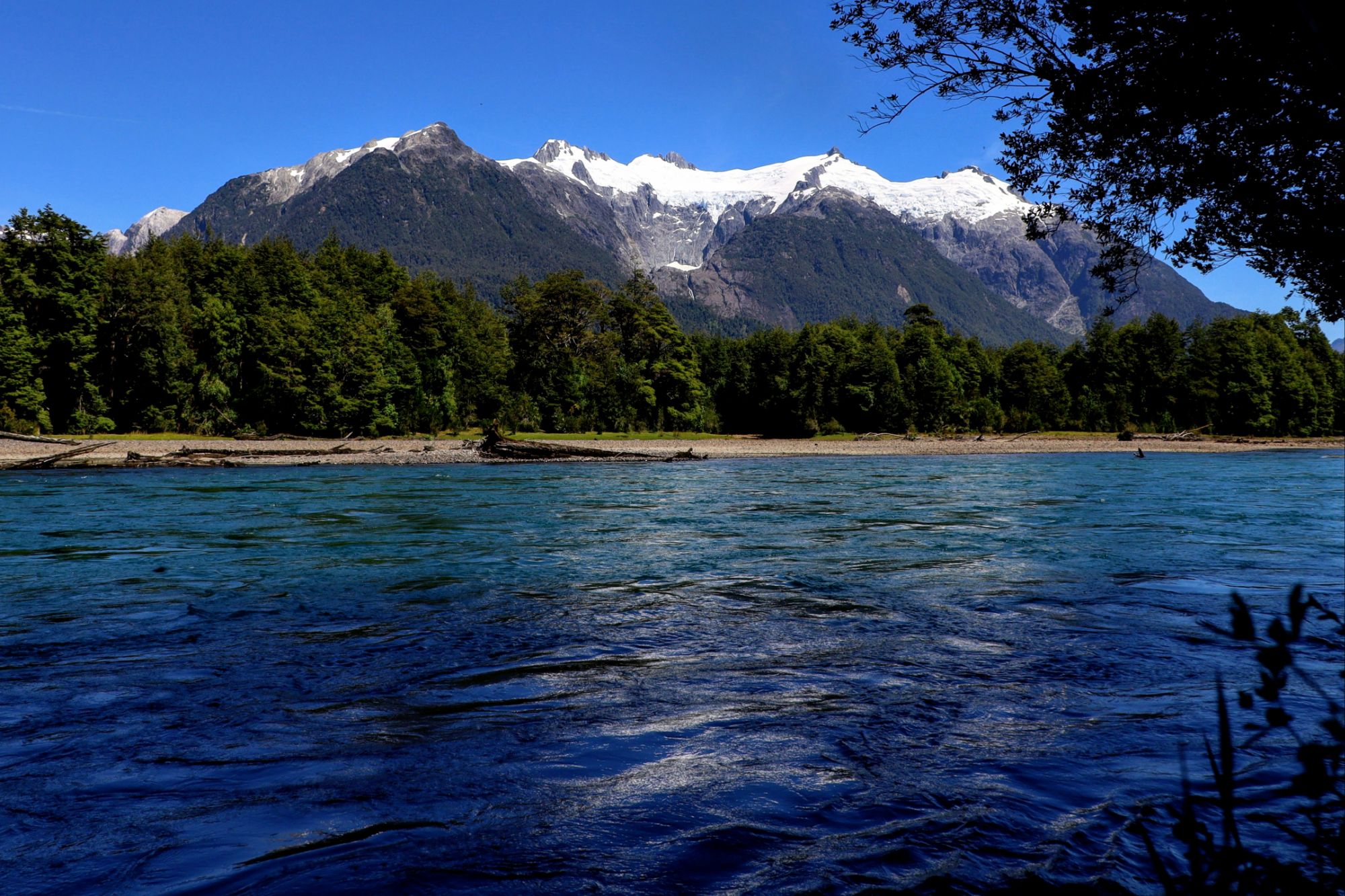
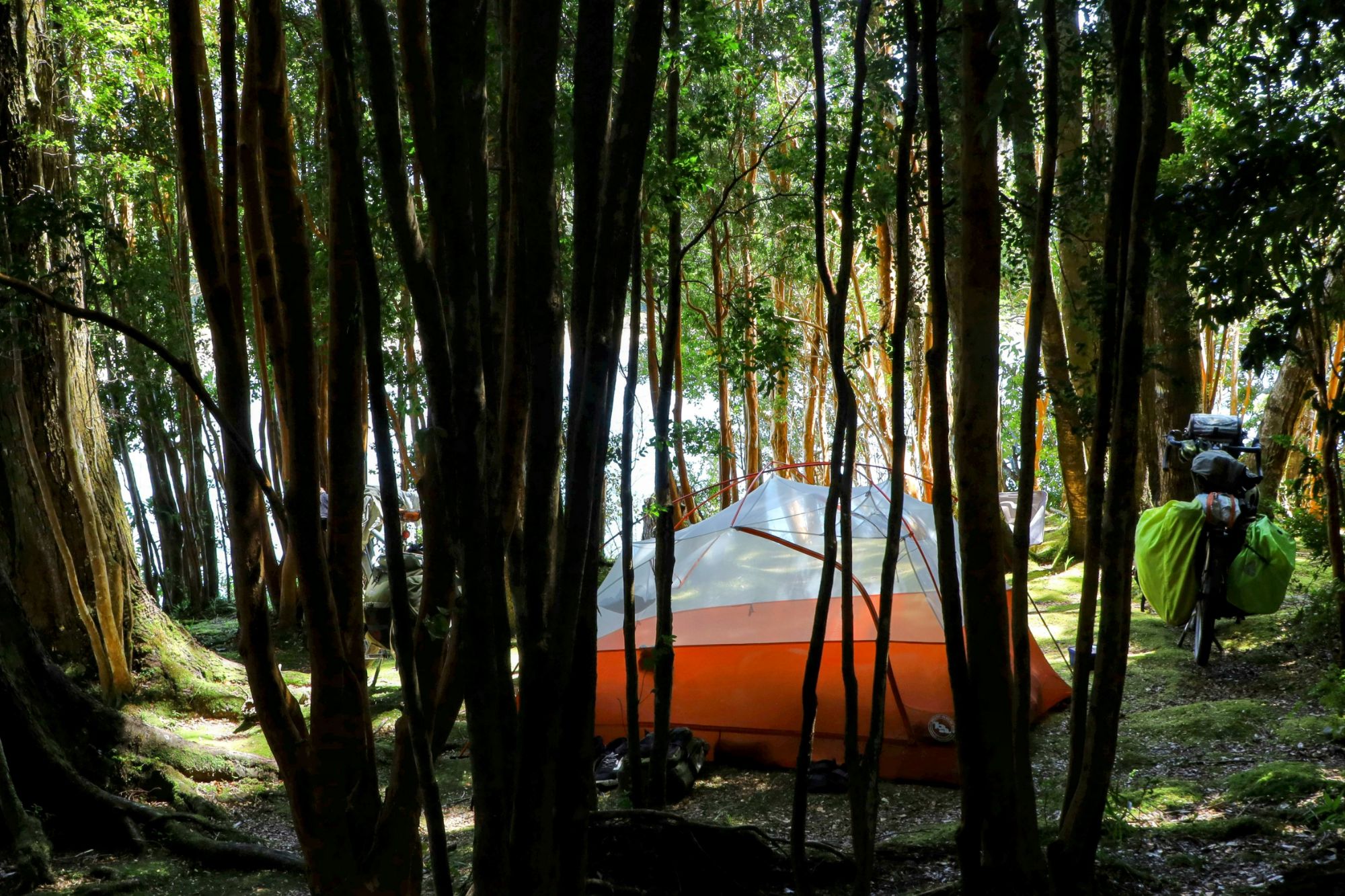
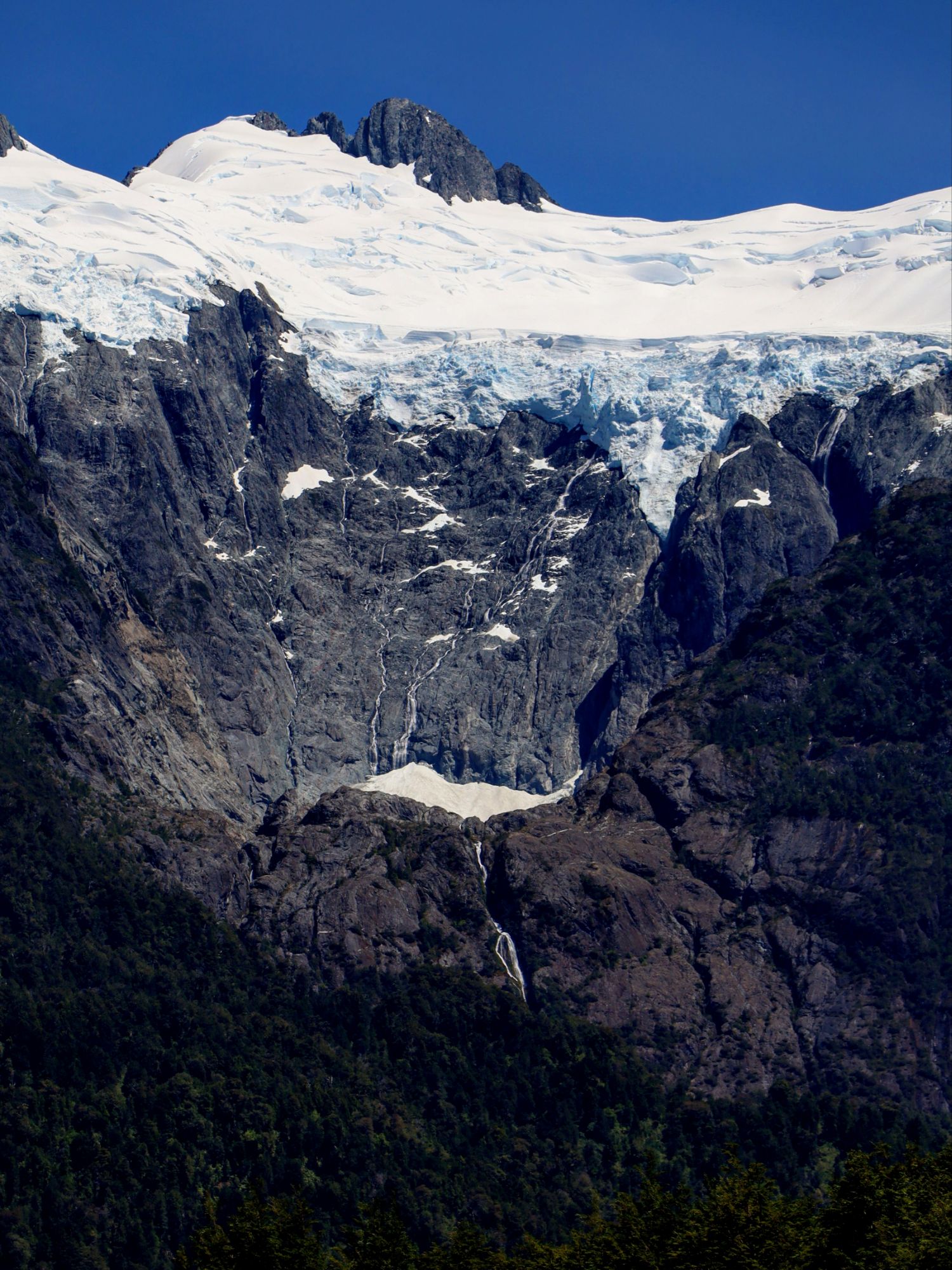
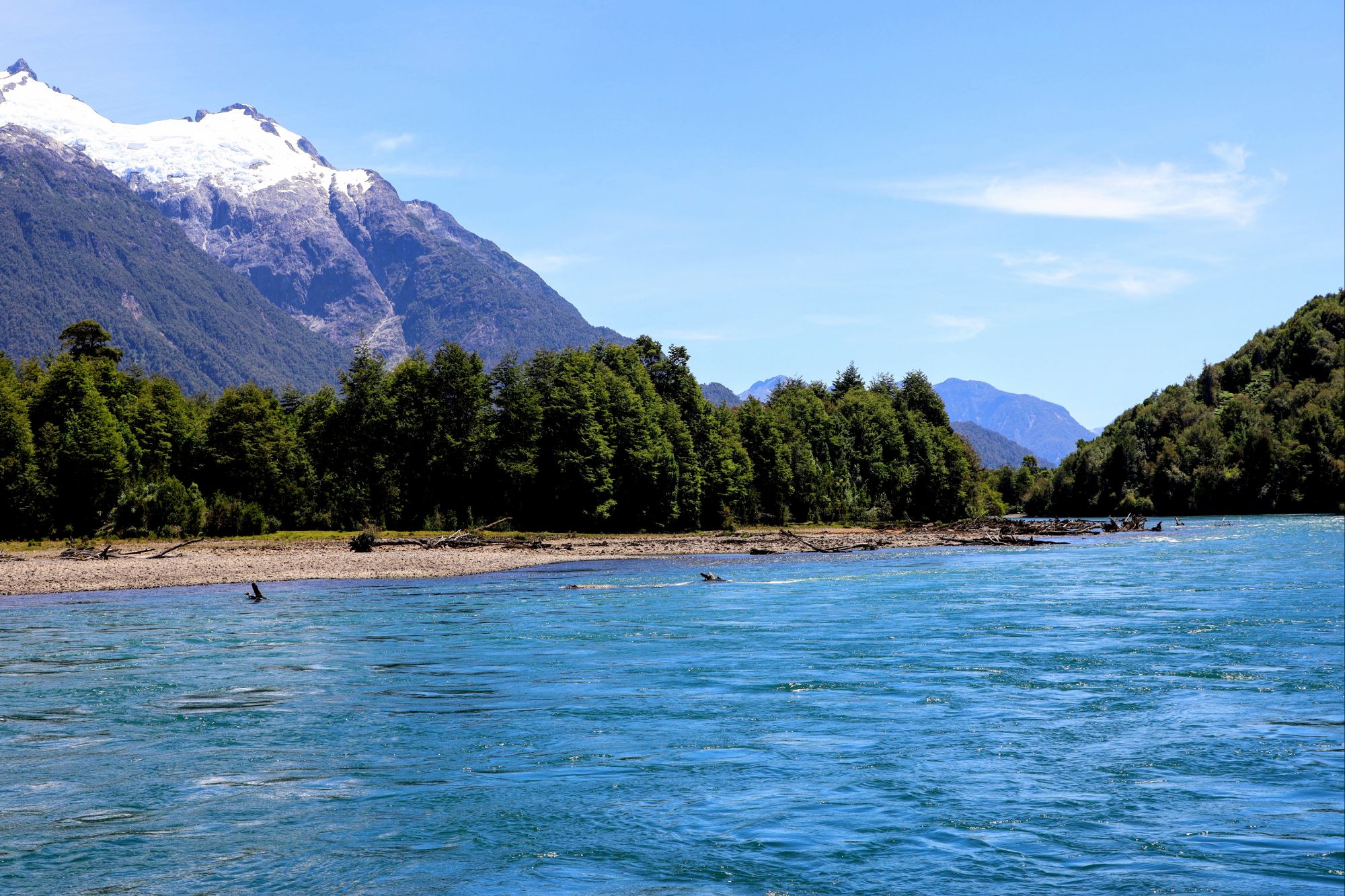
The only downside to our campsite was…you guessed it: the flies. At first I hoped that the ones buzzing around us had just followed us in from the road, and as soon as we killed them, we would be left in peace. But no luck, they definitely liked the forest too. But Rett had no problem spending the rest of the day inside the protection of our tent, napping for a few hours, and still able to enjoy the magical atmosphere of our environment.
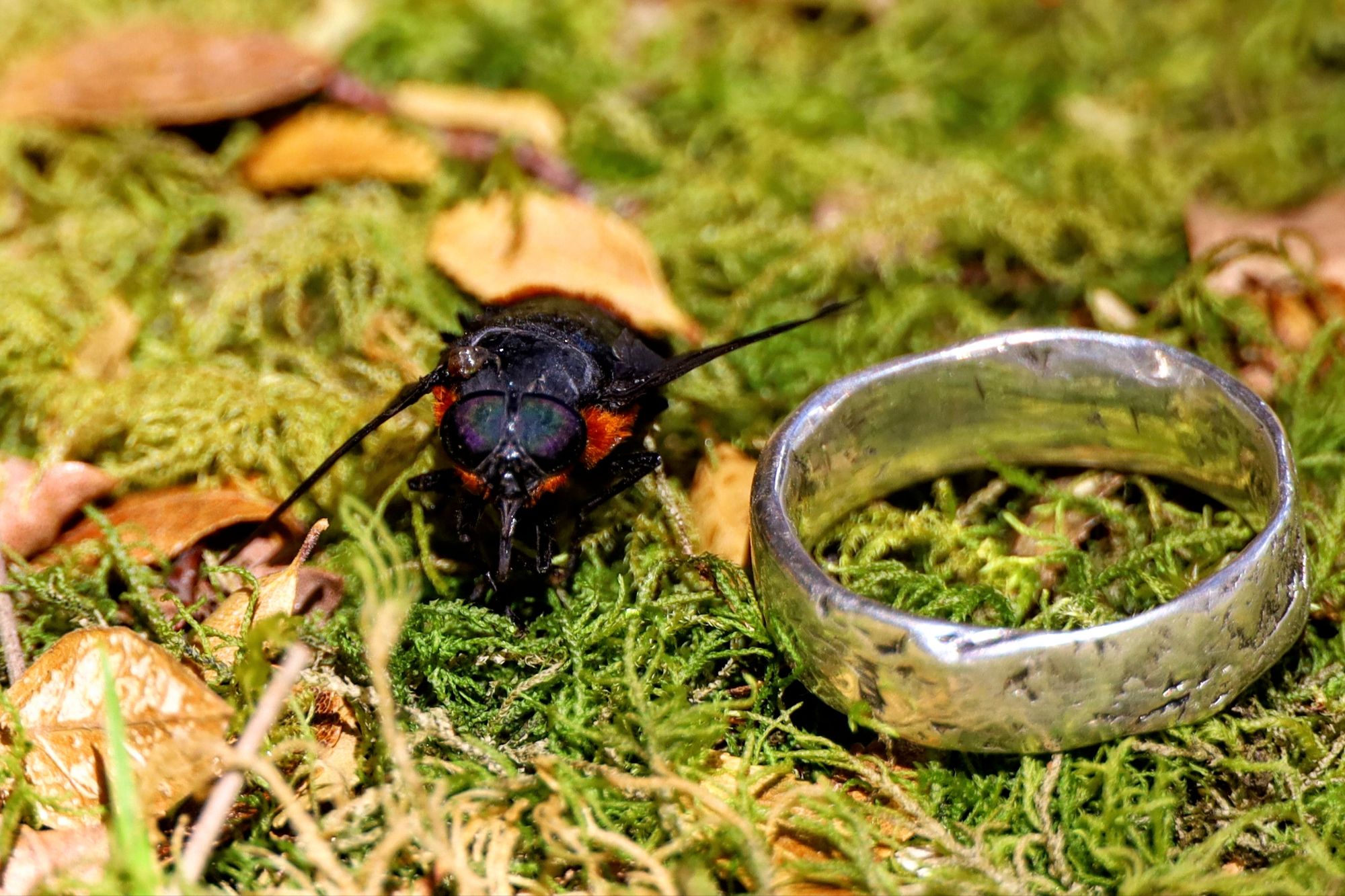
For me, I had hours to play naturalist, studying the ways of our enemies. When we first encountered these orange-tufted giants during our crossing from Argentina, the hotel receptionist mentioned that they’re attracted to black clothing, and later reading repeated that claim. This sort of folk wisdom can often be nothing more than repeated nonsense though, so I was glad to get a real-world confirmation by noticing how the highest density of them was continually swirling around my bike and its big black panniers. Covering the panniers with my yellow rain covers made an immediate difference, but moving both of our bicycles away from our tent area helped the most.
I found that a backhanded slap by just flicking my right wrist was the best way to knock them out of the sky, and they generally seemed fragile enough that decent contact would be enough remove them from the battlefield. Of course a tool was even better, and after searching for a while I found a good short stiff branch that spread into a paddle-like surface of bifurcating twigs. With the flies being so large, a swing would result in solid contact 50% of the time, with much more oomph than my hand could deliver. I regretted leaving the wooden frame from our fishing net in our AirBNB, because it would have been easy spend this afternoon with a needle and thread, re-stringing it like a tennis racket, and I could have laid some serious waste to them with such a weapon. But even with the branch, it was immensely satisfying when I made contact, and now I know how Sauron felt when he was swinging his giant mace and sending whole swathes of elves and Numenoreans flying skyward to their doom.
Given the excellence of our campsite and the number of cyclists on the Carretera Austral, I figured we might have a lot of neighbors (and there would have been plenty of room for them, a little further from the river though), but we ended up with only one. Lee was from Alaska, and as we chatted for nearly an hour after dinner, I discovered he was a great camp-mate with whom we had a lot in common. He hasn’t come directly from Alaska, but rather has somewhat done it in stages, returning home for a few months each year for salmon fishing seasons, while leaving his bike in storage (a new idea!) So he has been riding a long time, but also goes slow and is happy to be sidetracked and stopped in nice places like this.
I frequently tell people that my helmet mirror is so useful, that there are times when I’m walking down the sidewalk, and I hear something behind me, and I instinctually look up and left to where my mirror should be, only to realize I’m not actually wearing my helmet, dammit! Lee is the first person to ever tell this identical story to me, and I don’t think that before him I even got an “oh yeah, totally!” in response from other mirror-users. He also doesn’t know how he could live without his kickstand, but I told him how getting a handlebar lock makes it even better.
His strategy with the flies was to catch them right out of the air in one hand, throw them down on the ground, and stomp them; again they bothered him in his dark clothing far more than me in my light colors even though we were standing just feet apart, and he is the second Alaskan I’ve asked in the last few days who has said that the flies here are worse than the famous mosquitos at home!
Leave a Reply