
15.9 mi / 6.4 mph / 1435 ft. climbing
Home: Río Baker Wild Camp
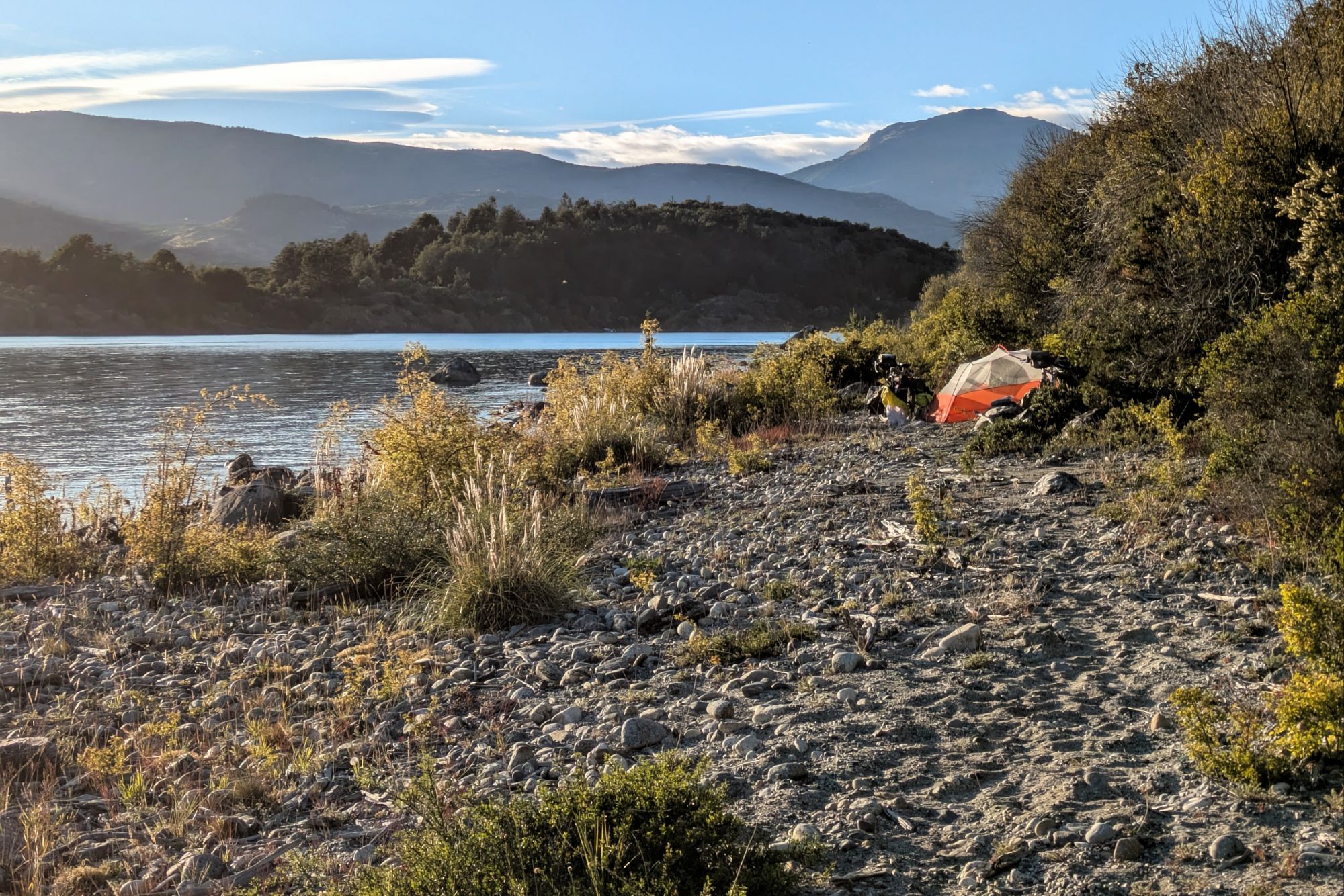
The alarm went off at 5:45am, and I crawled out of the tent to witness the barely-lightening sky on a perfect windless morning, with ripples from the lake quietly lapping on the rocks. Our hidden spot was just as peaceful as I’d hoped. With the water right there, it was easy to collect some and boil it for coffee and oatmeal (yogurt + chia seeds for Rett), and then to clean up afterwards.
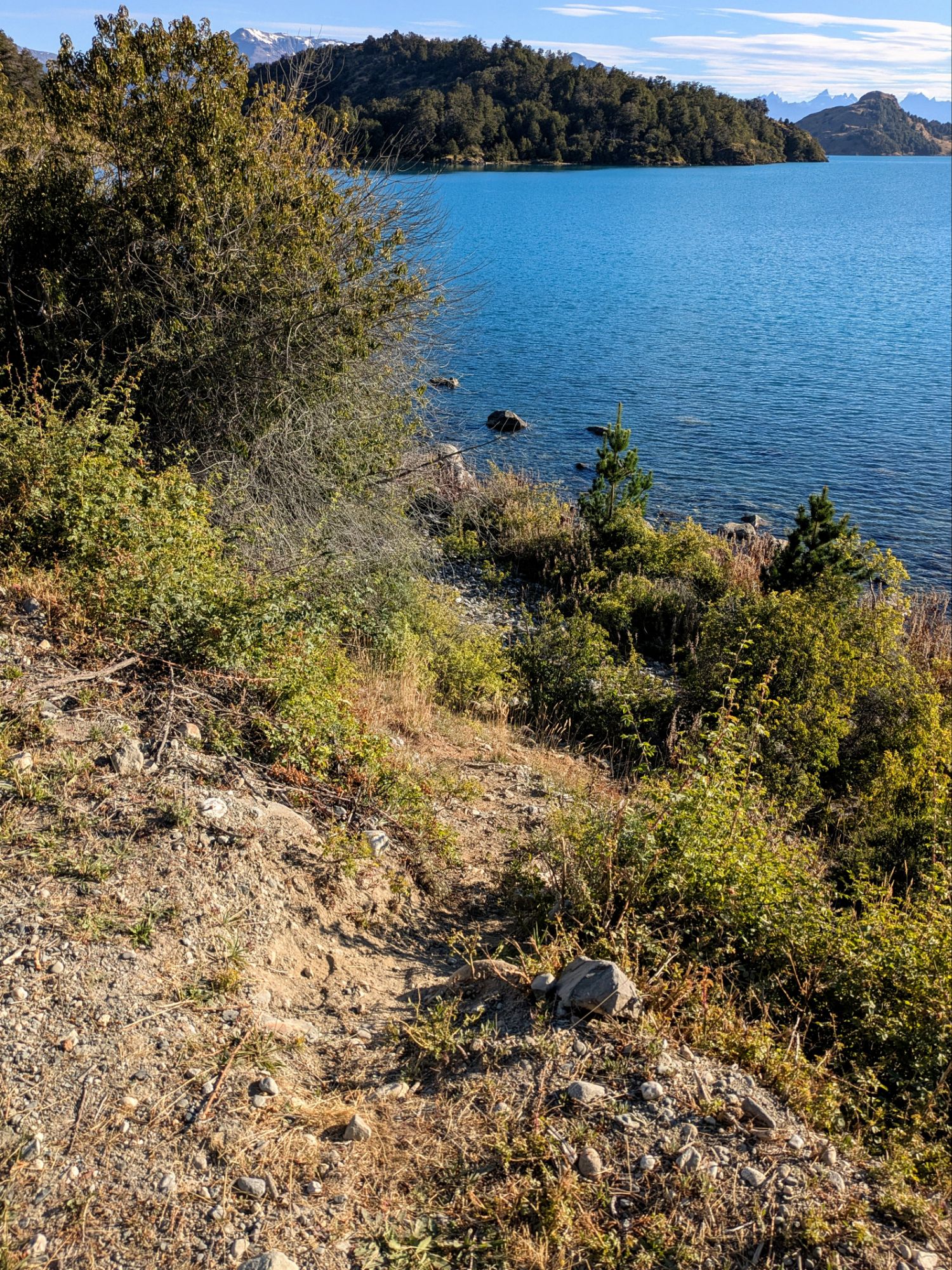
Less easy was hiking all of our gear and bikes back across the rocks and up the steep hill to the road, though it wasn’t as hard as the reverse had been. It was interesting to discover how my now dozen-plus trips back and forth had allowed me to learn and remember the optimal route: “step on boulder A to climb to boulder B, cut between boulders X and Y where the bushes don’t have thorns, leave dry land for a few steps here for an easier path on flat partly-submerged rocks…” Also hauling things up a slippery slope is “easier” than carrying them down, even if it technically requires more energy, and having Rett at the top to pull bikes/bags while I pushed for the final 5 near-vertical feet was a big help. But by that point the sun was well up, and with no shade to hide from it, I was definitely ready to get riding for some cooling breezes.
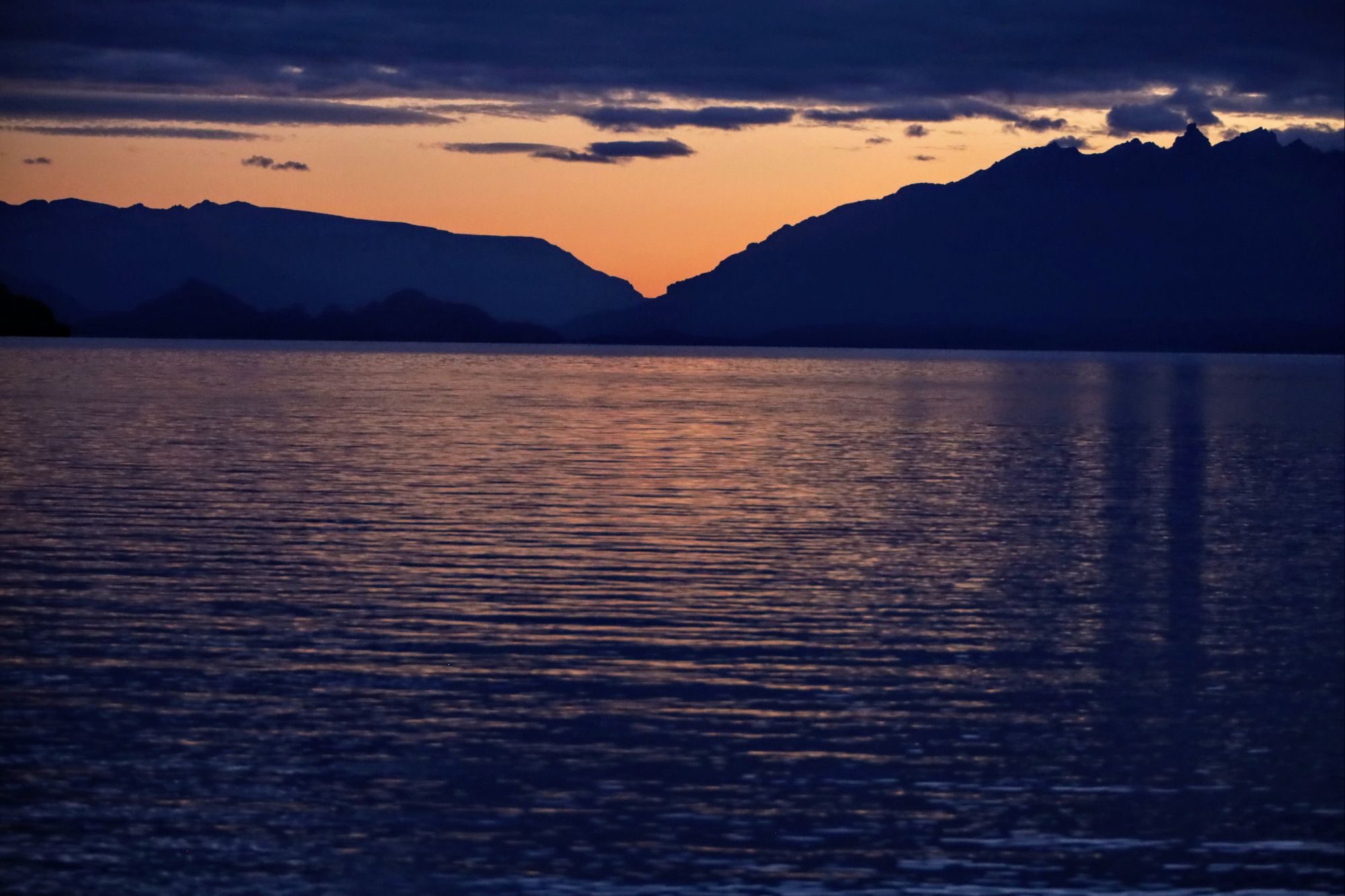
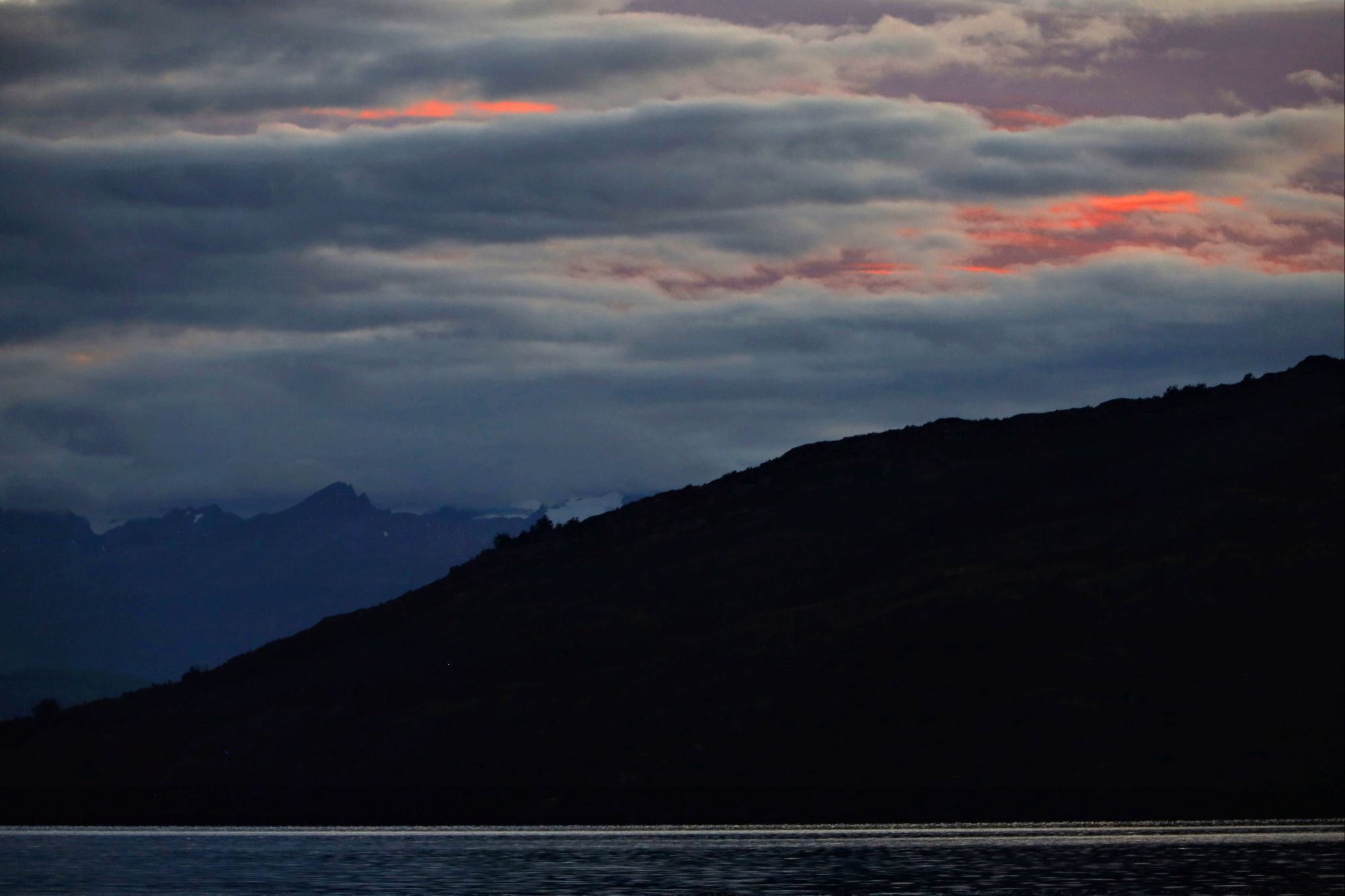
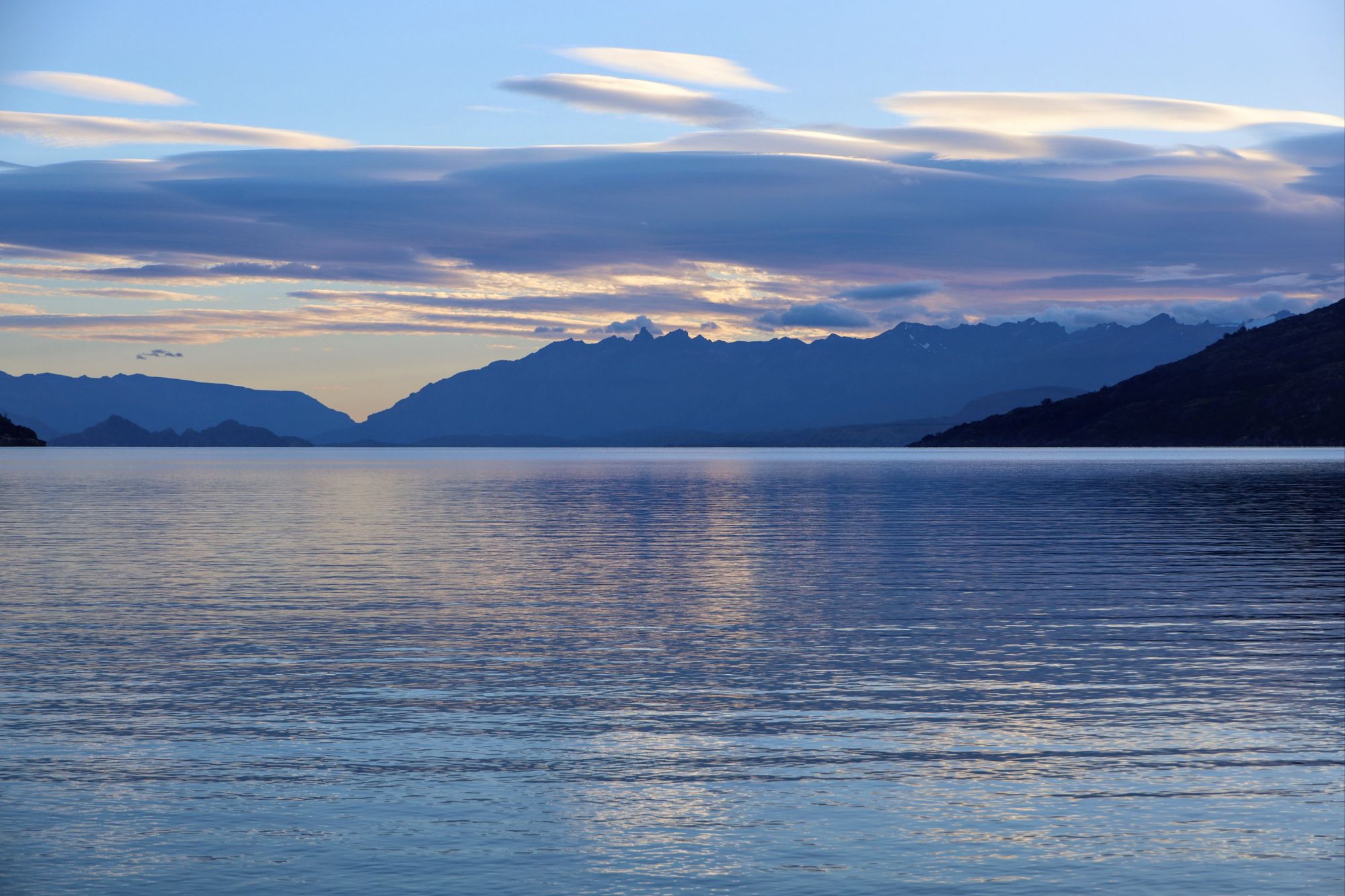
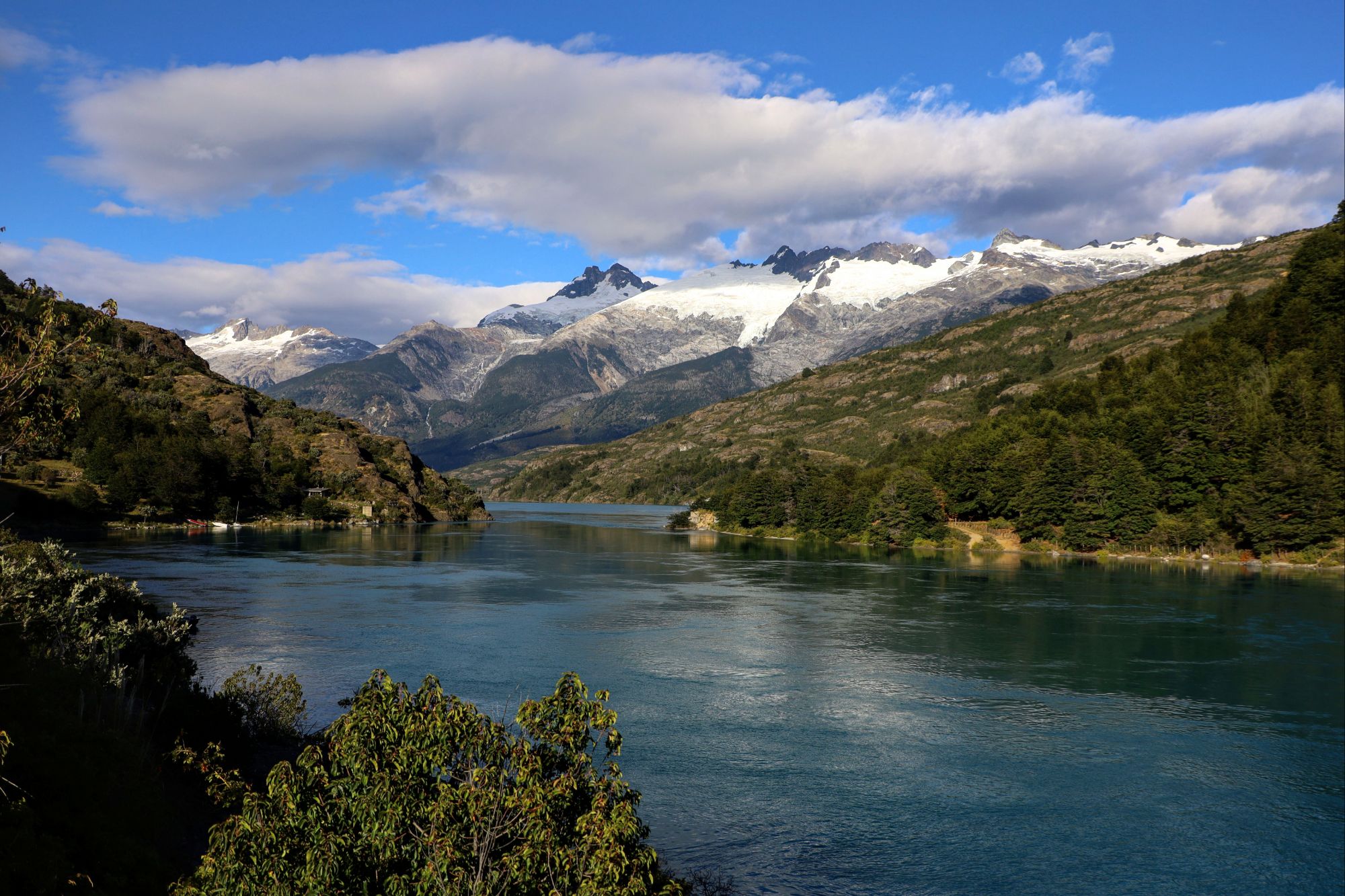
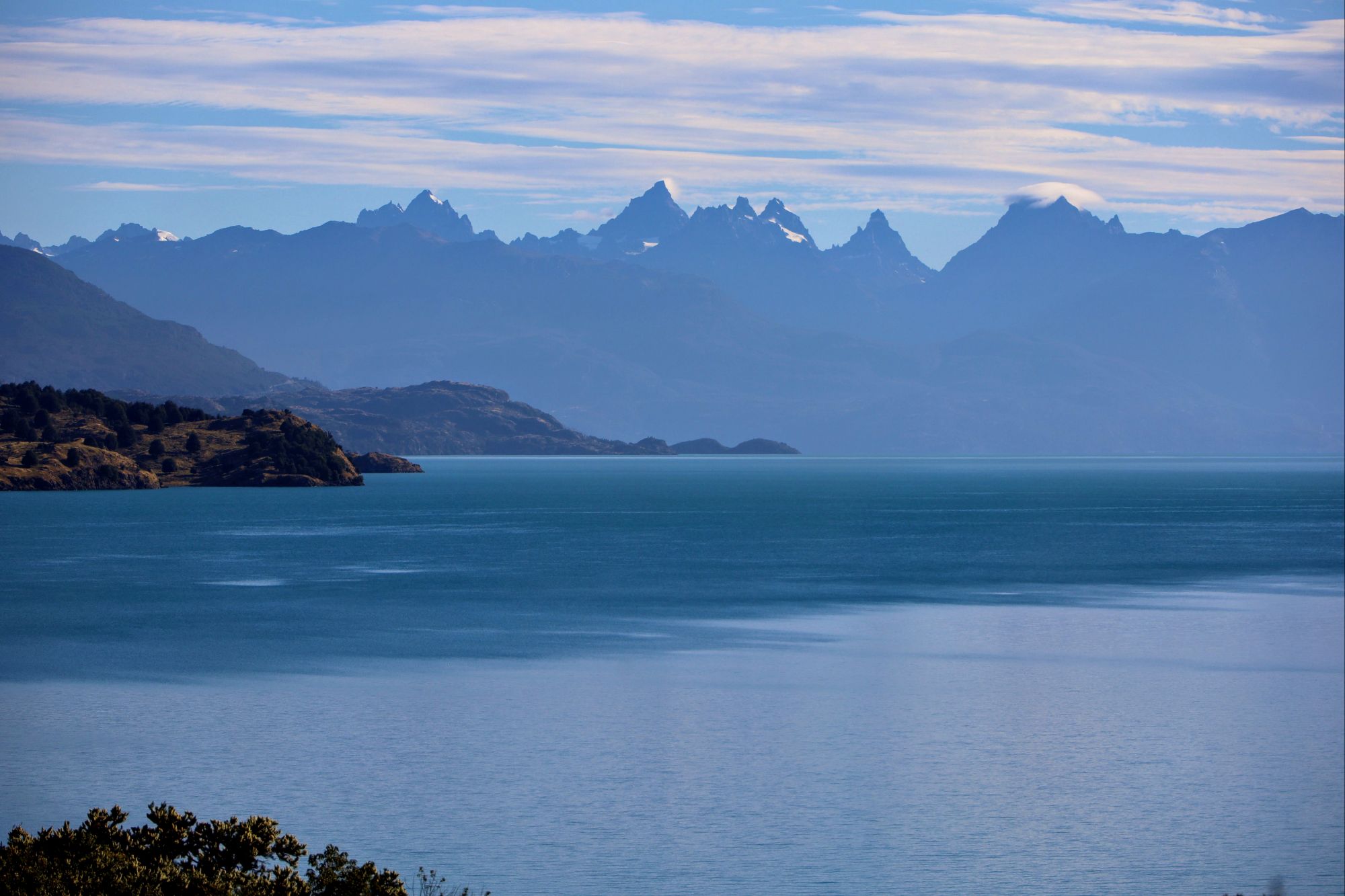
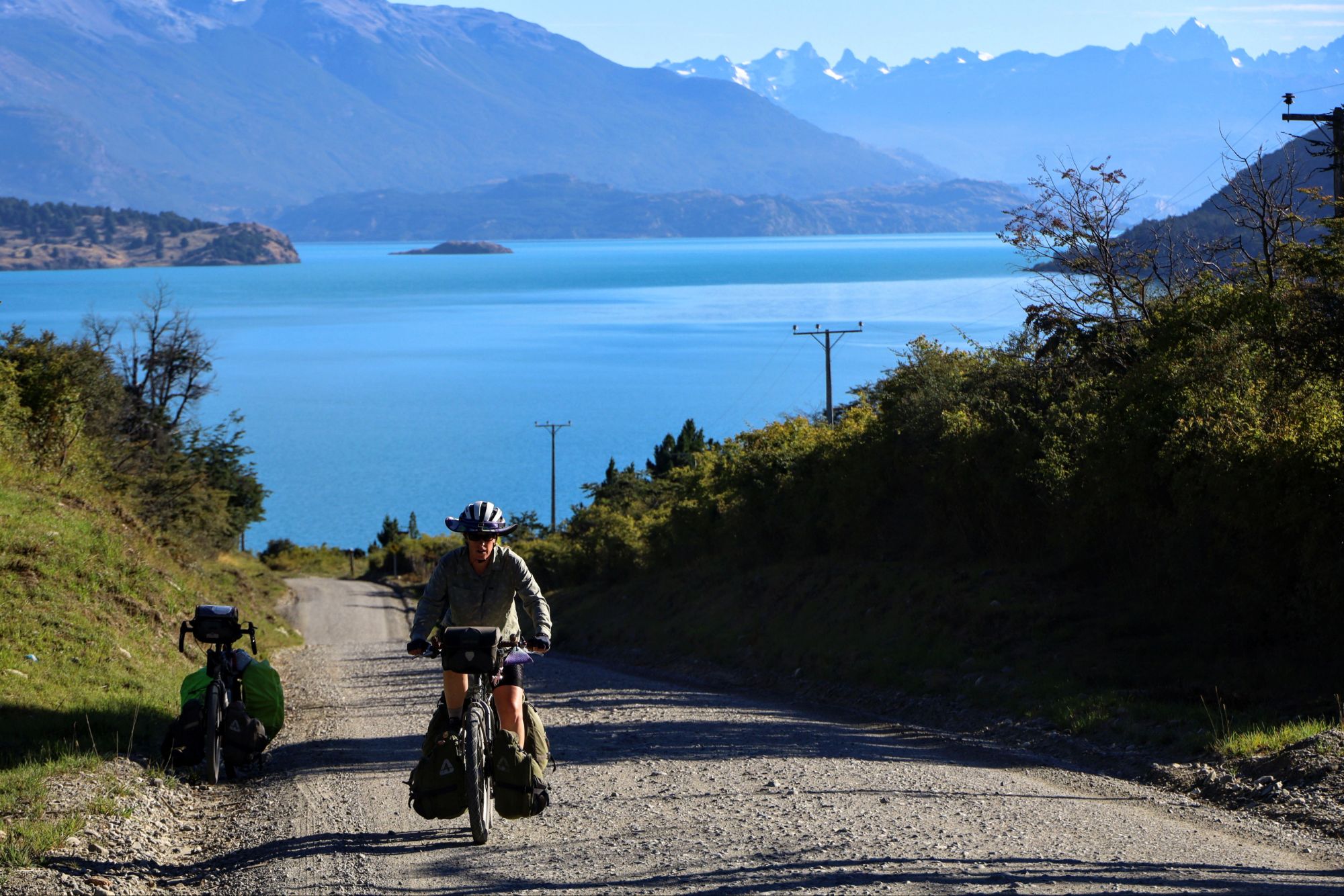
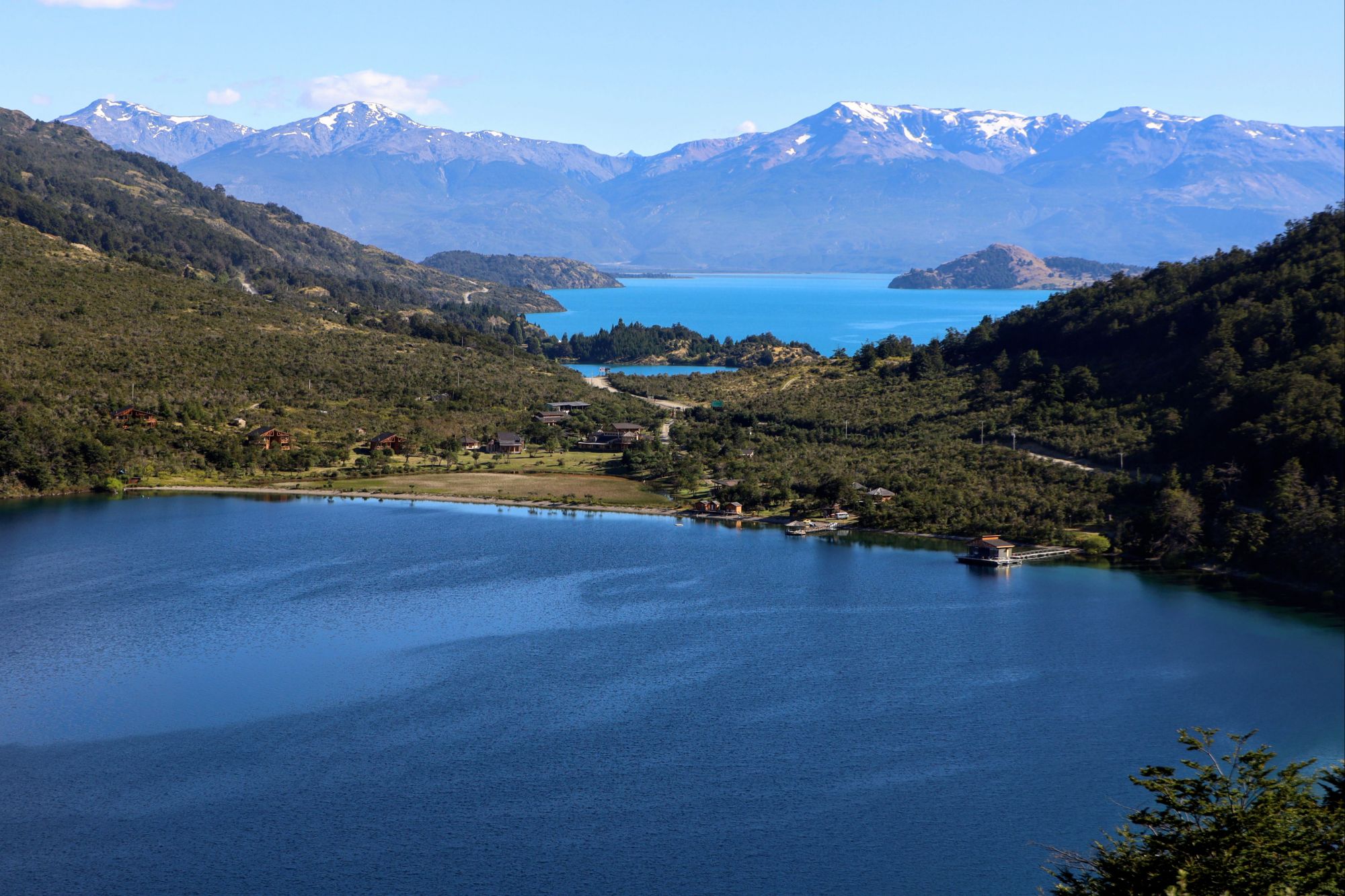
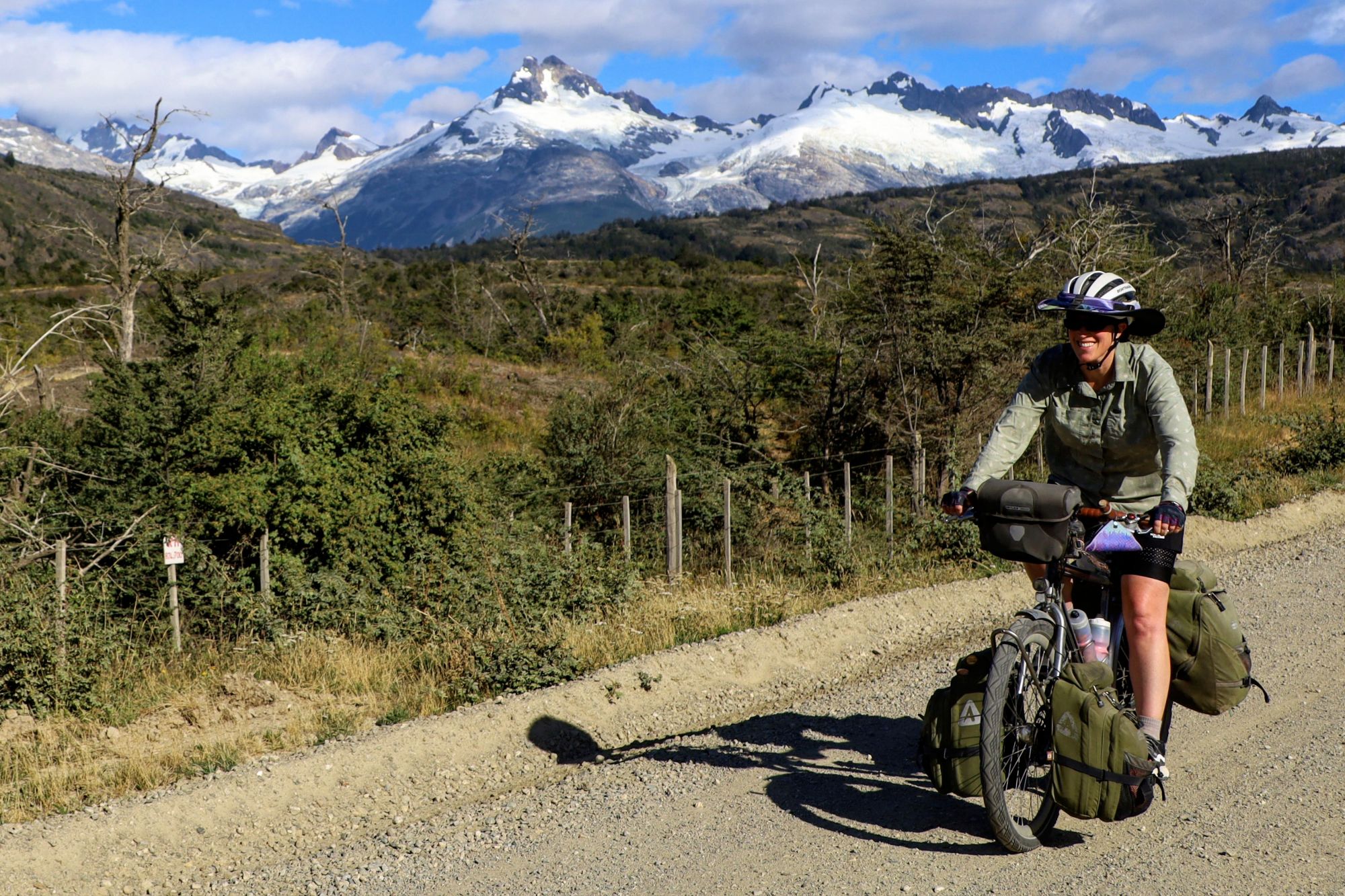
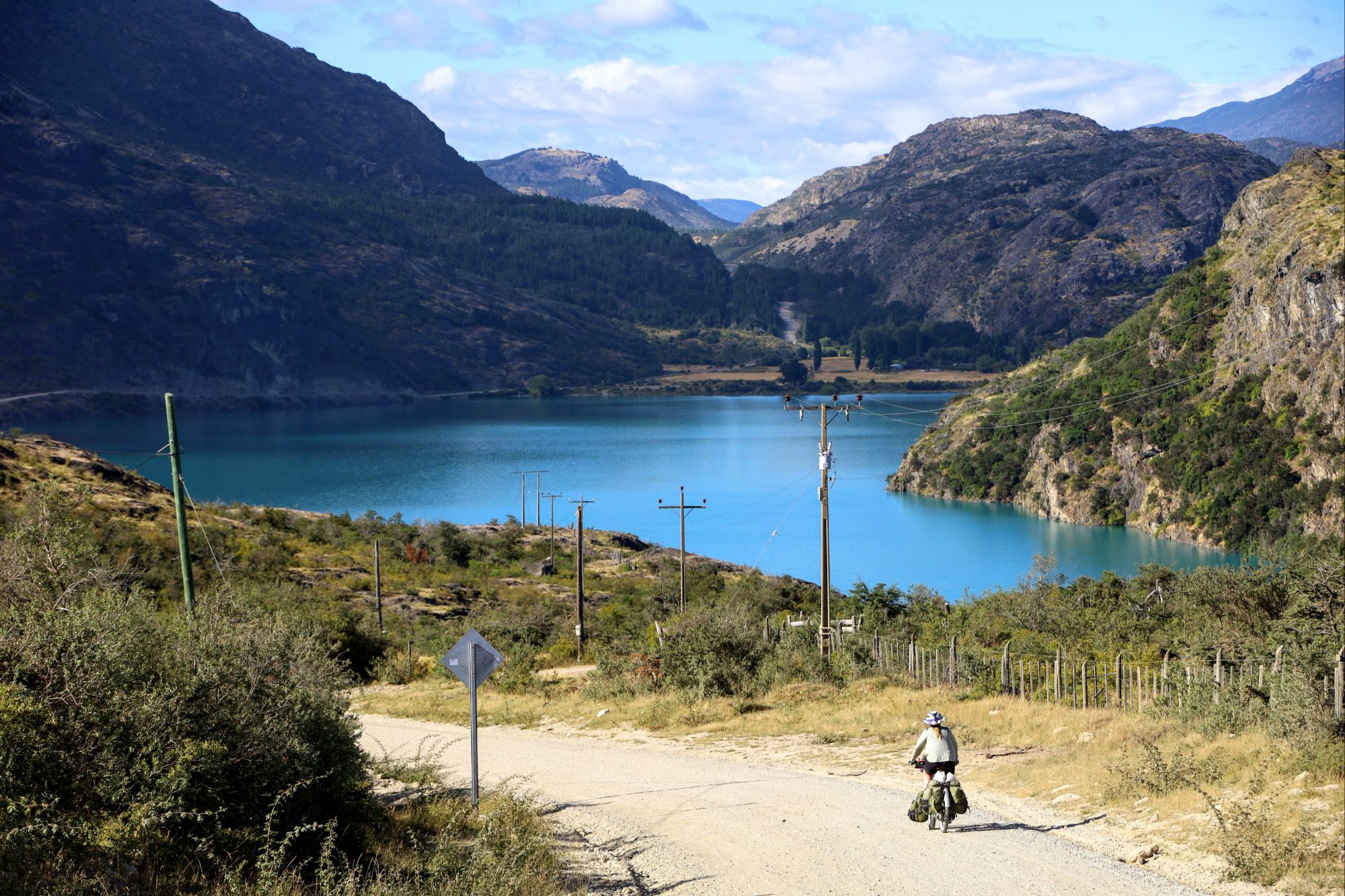
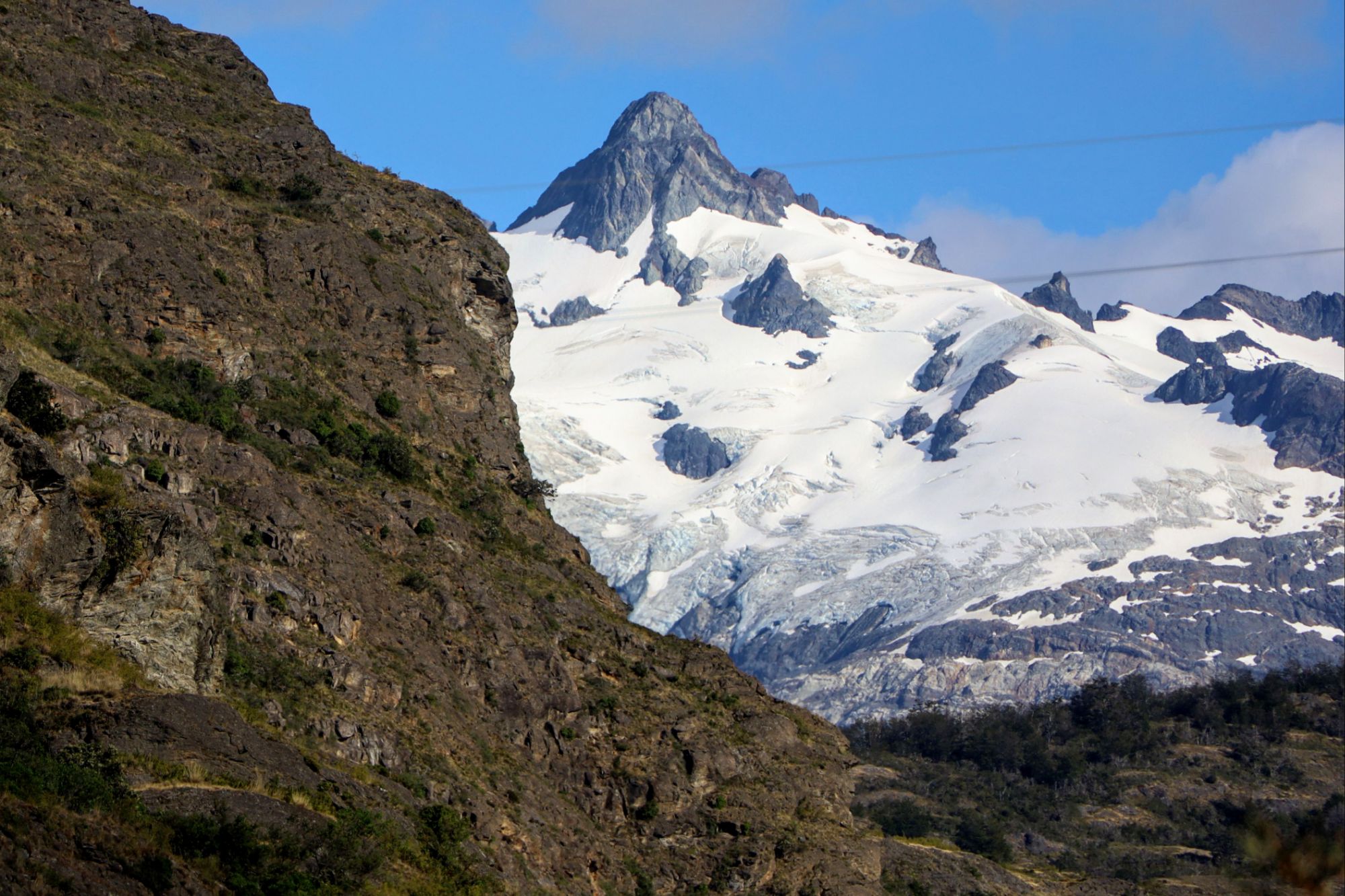
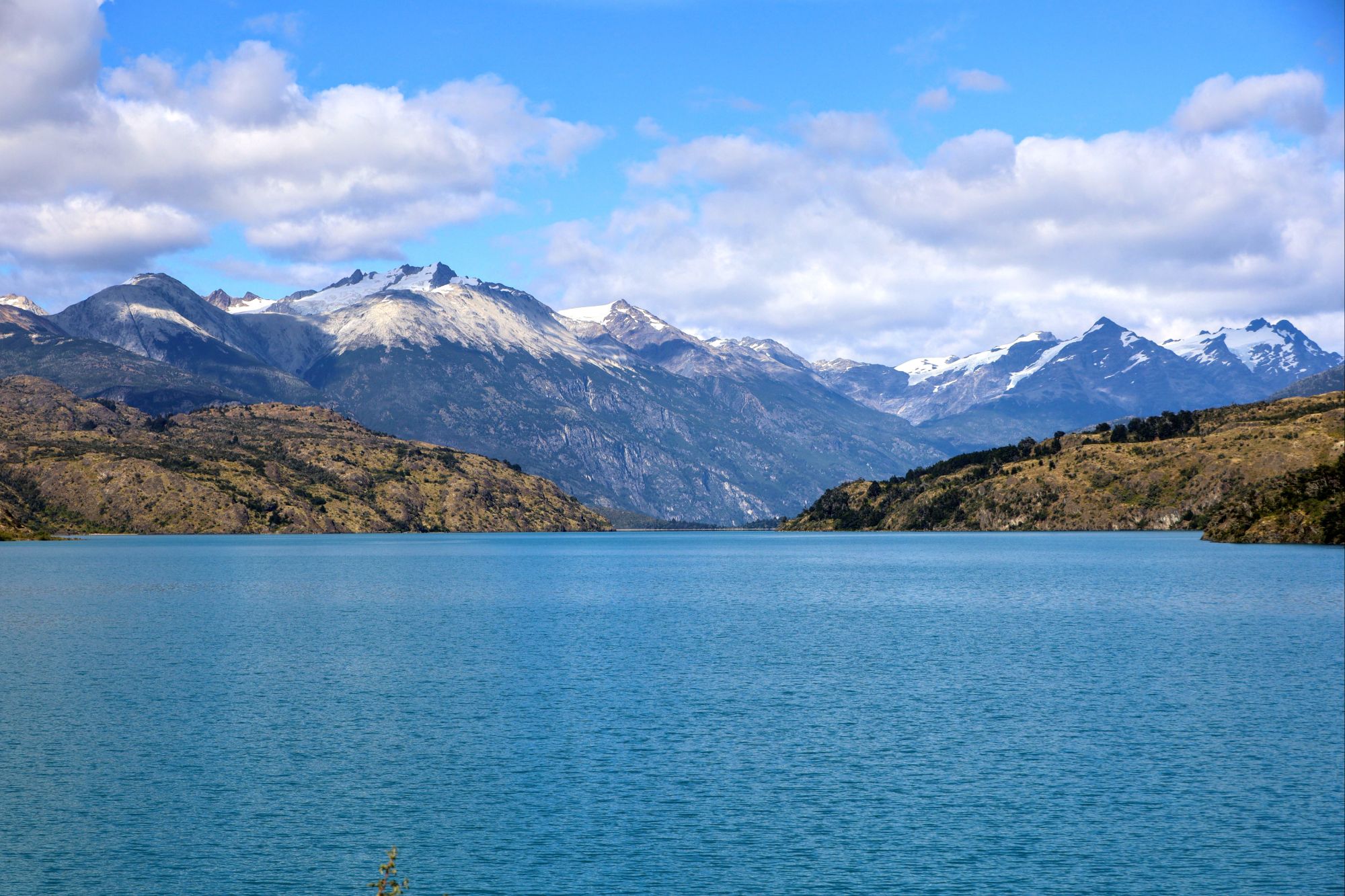
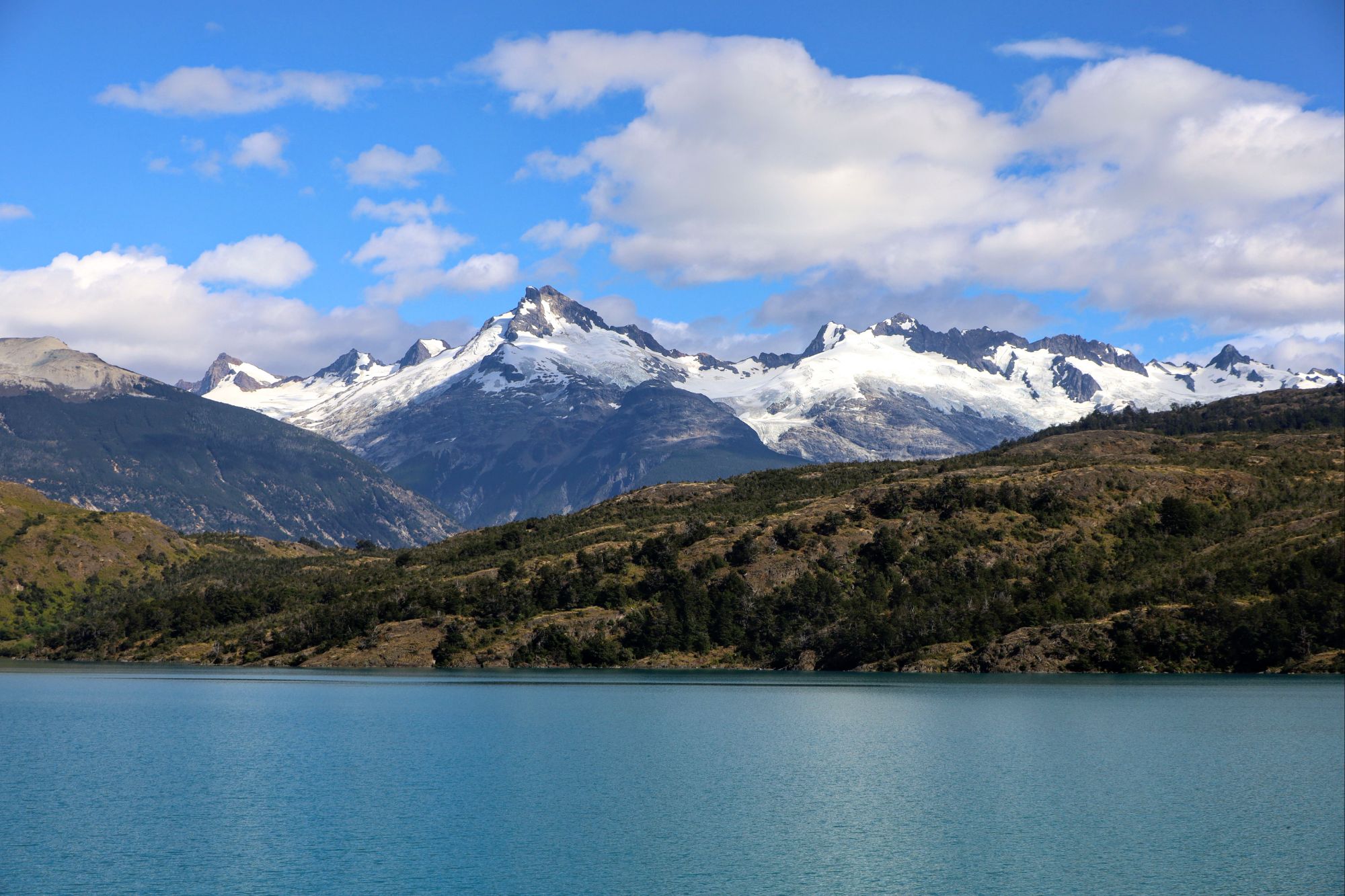
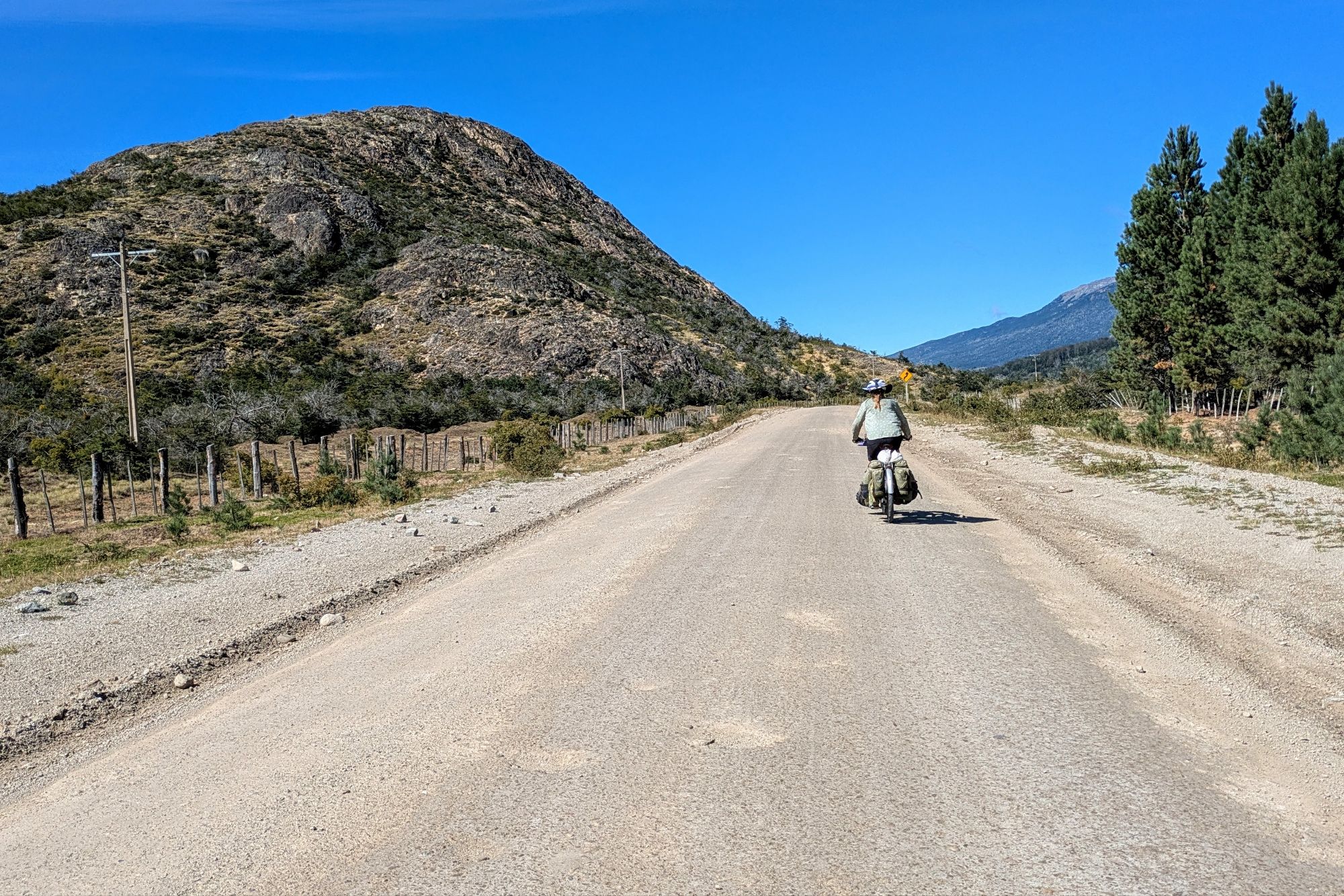
The gravel road continued to have a good surface, where occasional washboards were the only problem. For a few miles outside Puerto Bertrand, the gravel was even compacted and cemented into a near-pavement-like surface. Still, crossing the hills between the lobes of the lake (sometimes quite steep) meant that covering the 16 miles on this “easiest” middle day of our three into Cochrane nonetheless required 2.5 hours of pedaling. But we still made it to the small town of Puerto Bertrand by lunchtime, leaving us with a decision: take the winding route down the hill that would take us through the town, or take a direct route that largely bypasses the town but passes a supposed pizza place? In order to eliminate the risk of having to re-climb a hill, I left Rett and the bikes at the junction, jogged down to confirm the pizza place was open, and then returned to bring us all back as a group.
While waiting for our pizzas to come out, the restaurant wifi allowed Rett to notice that the town’s small grocery store did an afternoon closure between 1pm and 3pm, and it was 12:47. Crap! Since we had been counting on it for supplies, I quickly ran out, hopped on my bike and rode the rest of the way down the hill, and then back up, after collecting yogurt, tuna, pasta and desserts. Only when I was halfway down the 100-foot hill had I realized that with our planned wild camp being less than half a mile outside of town, it probably would have been easier to just return after 3pm. Oh well! (the idea of wild-camping less than half a mile outside of town is not at all intuitive, so that’s probably why I hadn’t considered the easier option!)
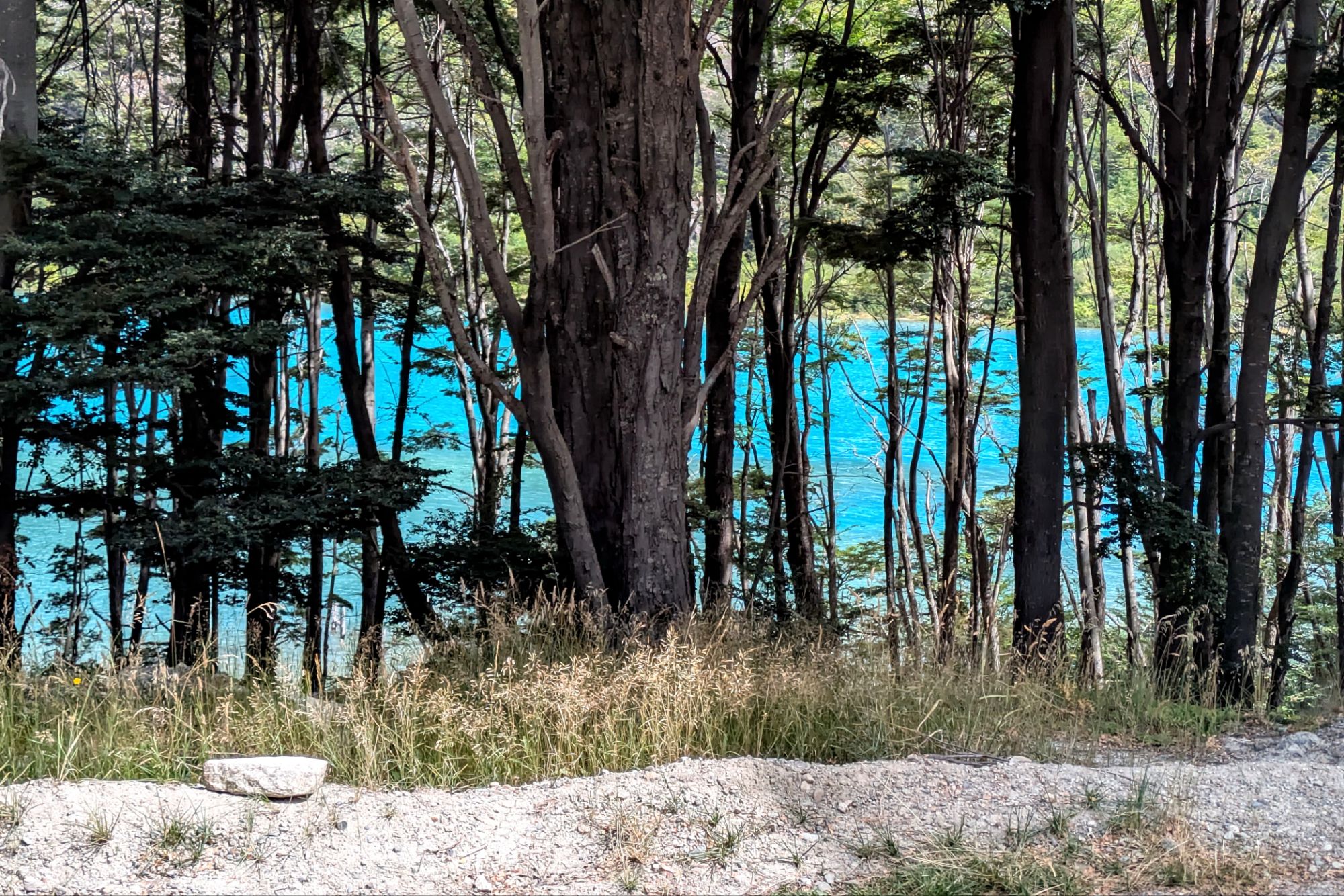
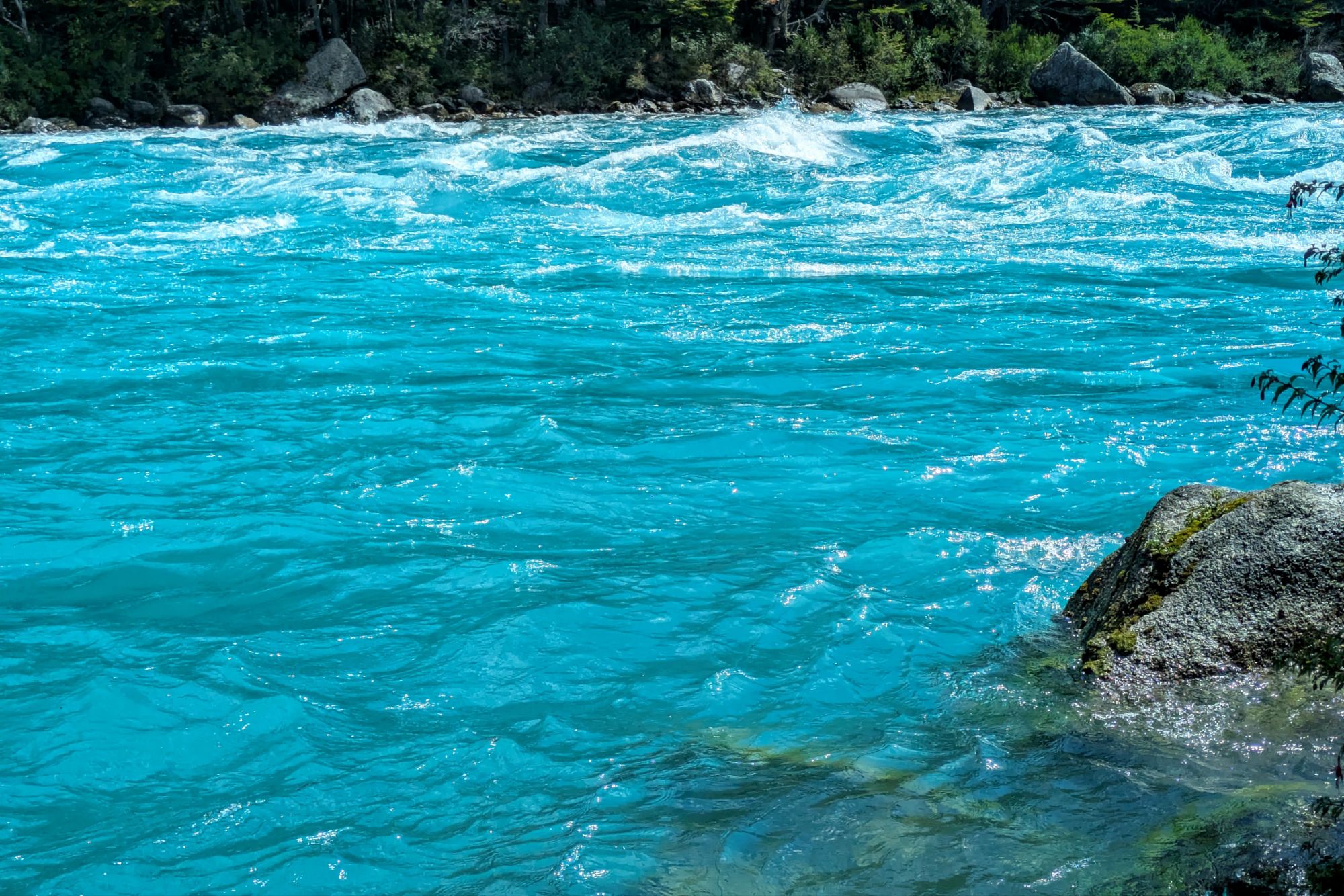
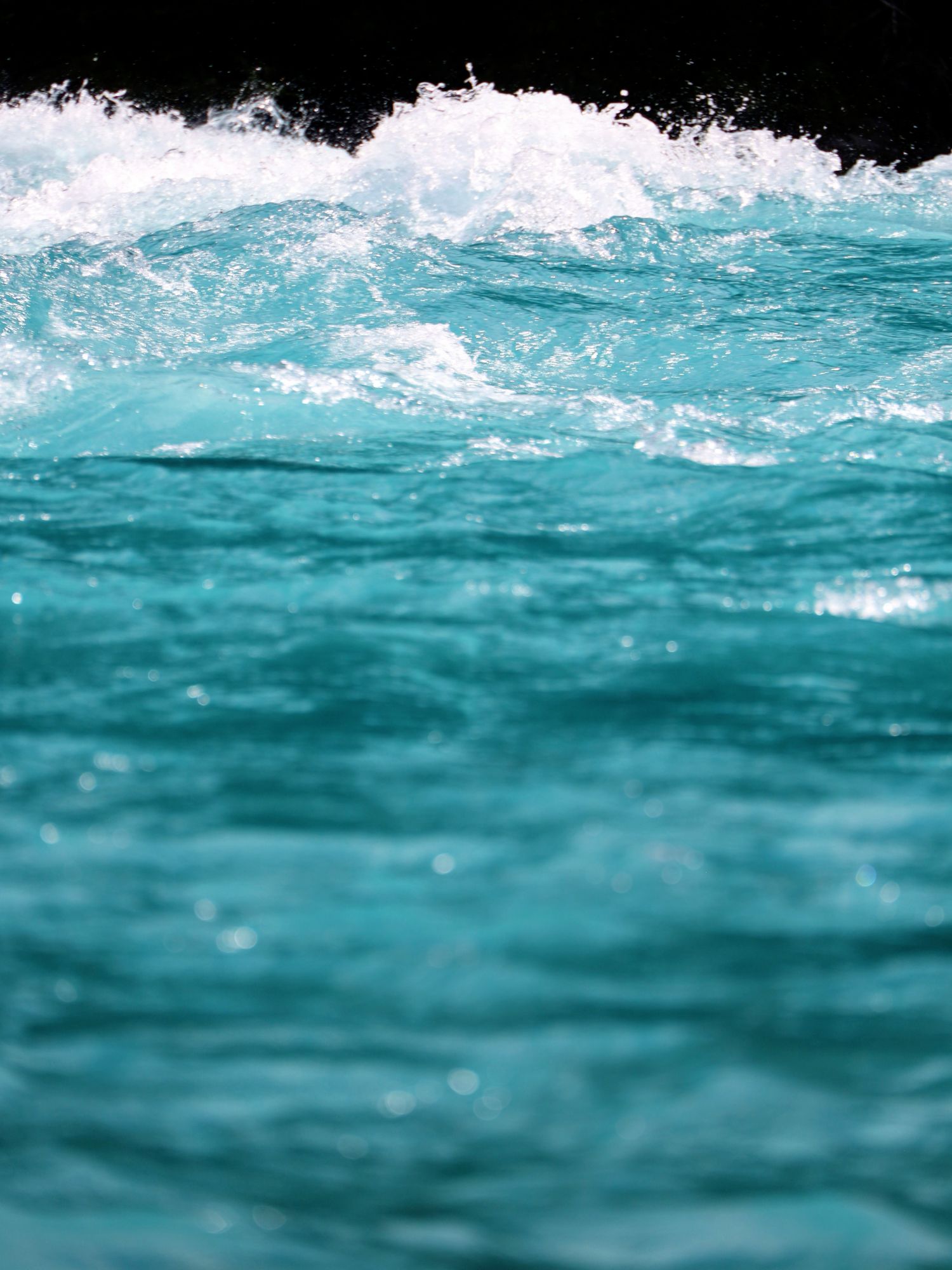
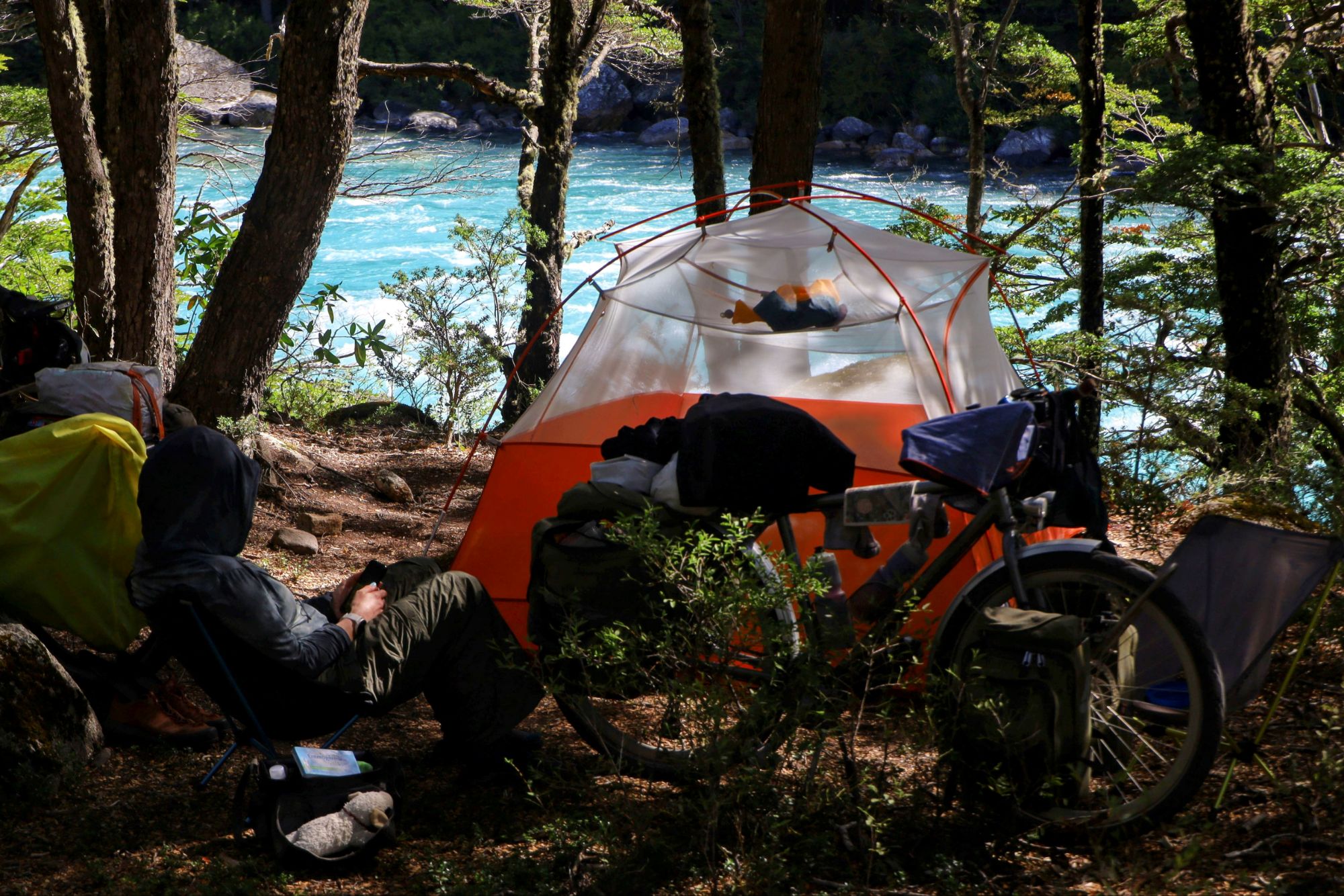
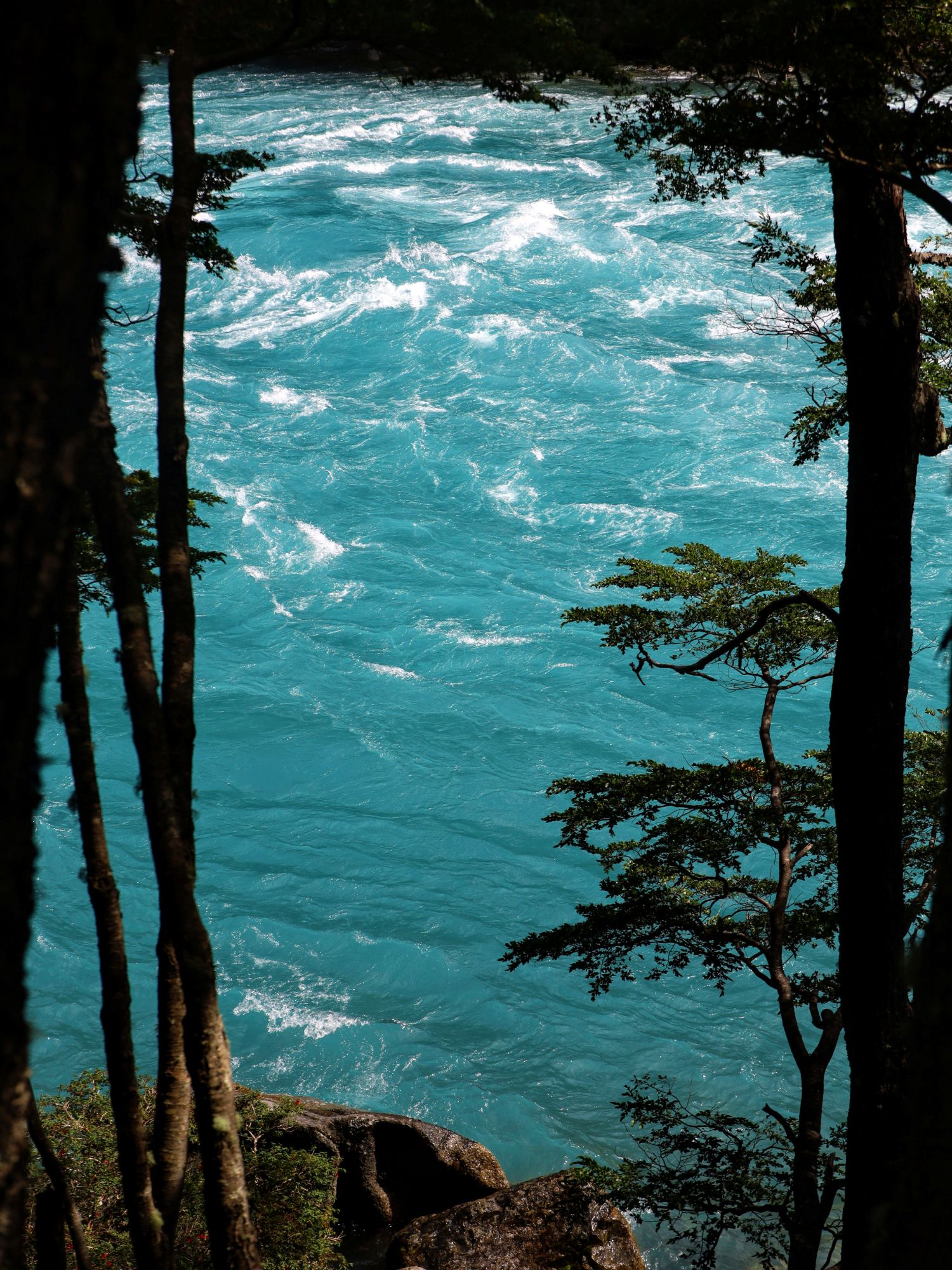
Today’s campsite was much easier to access and more “known” than yesterday’s (and thus included a couple parties already set up), but by taking the Shaws’ advice (once again) and turning back north and pushing our bikes upstream along a trail, we came to their incredible spot looking down onto the blindingly-bright river that still felt nearly as secluded as last night’s. And oddly, not a single other person came exploring up the trail the whole afternoon, night, or morning).
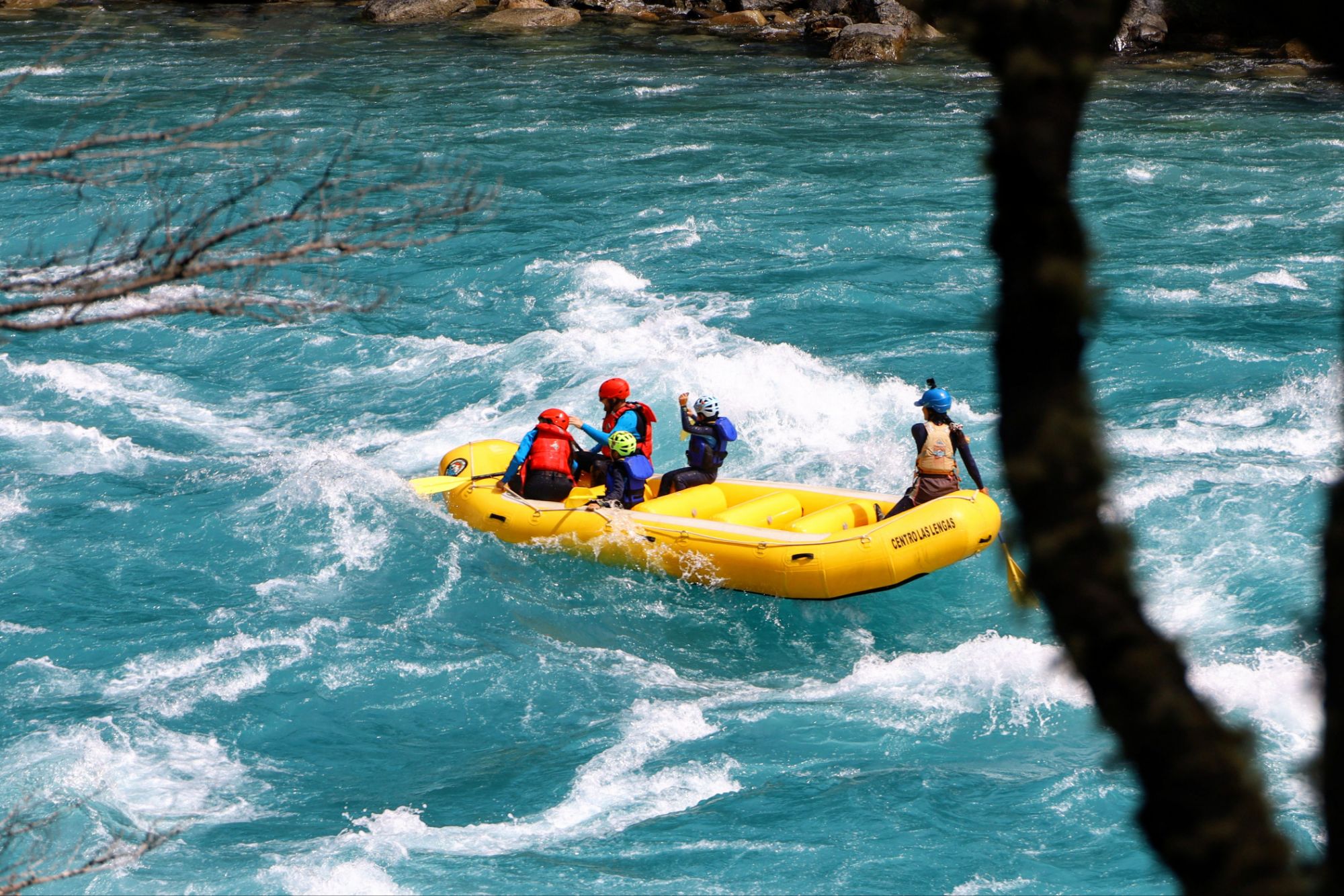
So it was a surprise when we heard voices approaching, but then saw nothing on the trail. Oh, shit, they’re down in the river! On rafts! Because they’re clearly insane people to be running down this river with the strongest and most violent current I’ve ever seen! But then we saw (and heard!) several more go by throughout the afternoon, bucking and whooping, so it’s apparently a standard tour operation. Again, in a tiny remote place like this its a bit of a culture shock to see such a developed form of outdoor recreation, but the server in the pizza place had complimented Rett’s nails, and at the grocery store the checkout girl’s surprising first communication to me was “do you speak English?” (in English, even though buying groceries is the place where English is least-necessary for us), so those three oddities now all sort of fit together.
Leave a Reply