
36.1 mi / 7.2 mph / 2390 ft. climbing
Home: Camping Maria
We had been counting on the food truck/restaurant at Lago Vargas for yesterday’s lunch and dinner, but assumed that we would need to carry our own breakfast with us because, #1, food trucks don’t usually serve breakfast, and #2, even if they did, they wouldn’t be serving at the super-early time we like to leave. So it was a surprise yesterday when our host asked if we wanted just the room (~US$55) or the room with breakfast (~US$66). And then I was far more surprised when we asked if 6am would be possible, and he essentially said “sure, of course”. This in a country where a 7am breakfast request has generally been met with raised eyebrows and head-shaking at these strange tourists who obviously are going to do harm to their stomachs by eating so early.
Still, I thought there was a good chance that the language barrier led us to believe something that hadn’t actually been promised, especially when we woke up at 5:15am with the generator off, and thus, no lights (we got out our headlamps and tent light) and no water (we’d get one toilet flush!) But at 5:30am, I heard sounds from one of the neighboring rooms, and then the generator came on, and soon we were eating a good Chilean breakfast (bread, jam, cold cuts, cheese, and eggs to order)! It’s likely that cyclists are the majority of their clients in this no-reason-to-stop location, so maybe we’ve just “trained” them in our ways?
The overnight rain shifted later than expected, so our partly-sheltered bikes were getting decently-sprayed when I was loading our bags pre-breakfast. So we donned our rain gear, but luck brought it to a stop just before we rolled out, and we never got a drop all day. Our rain jackets stayed on for much of the day for warmth though!
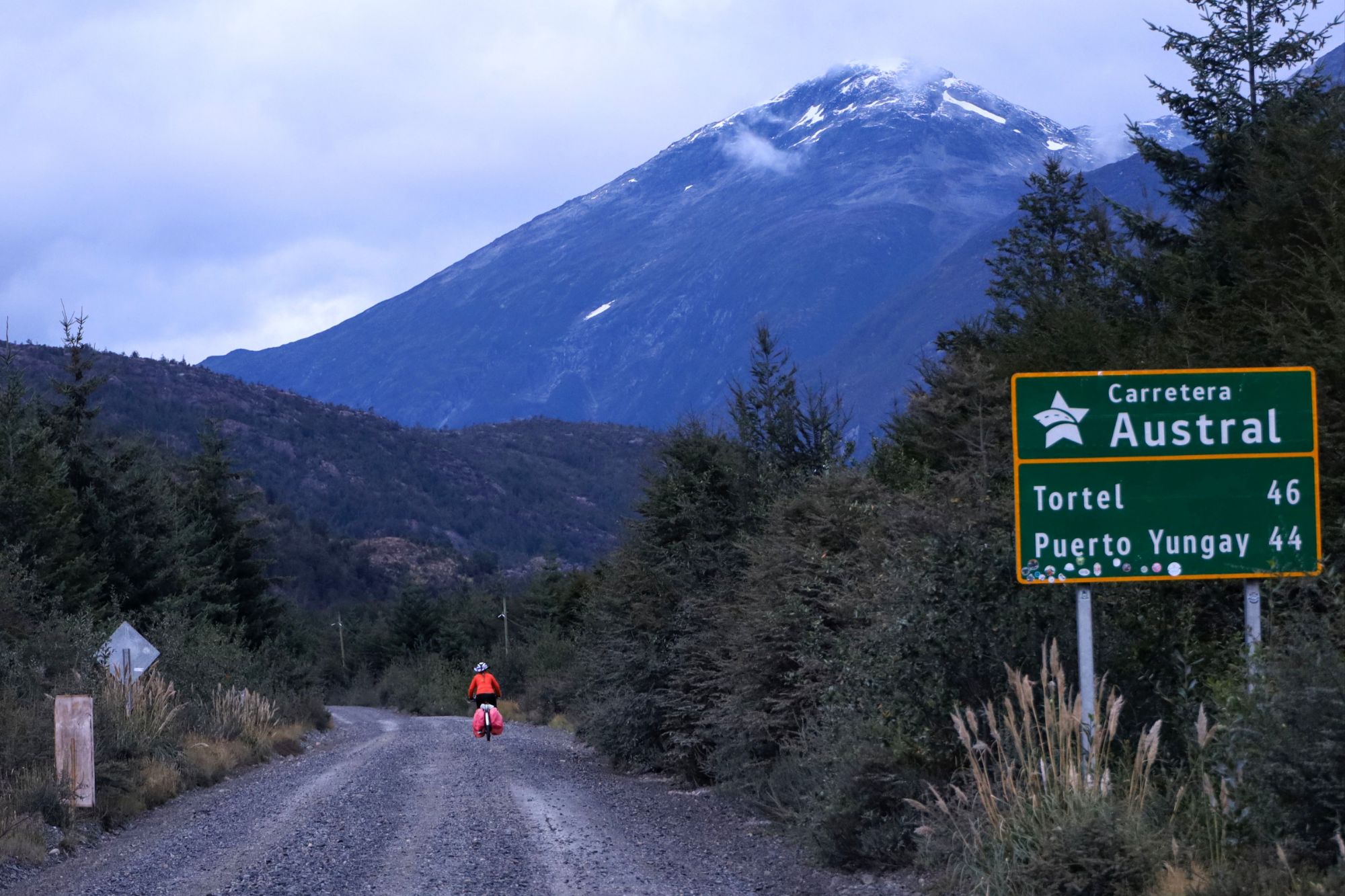
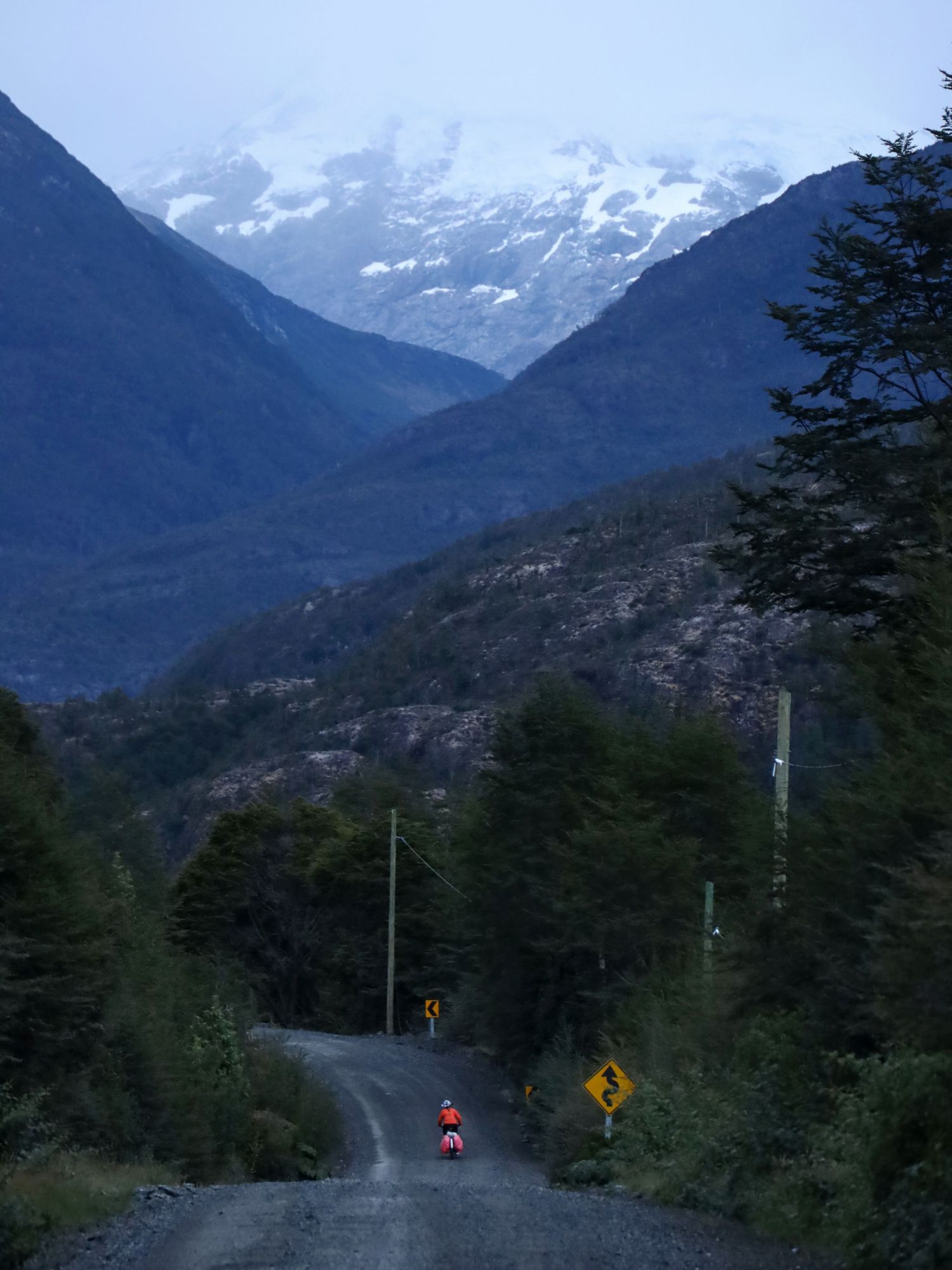
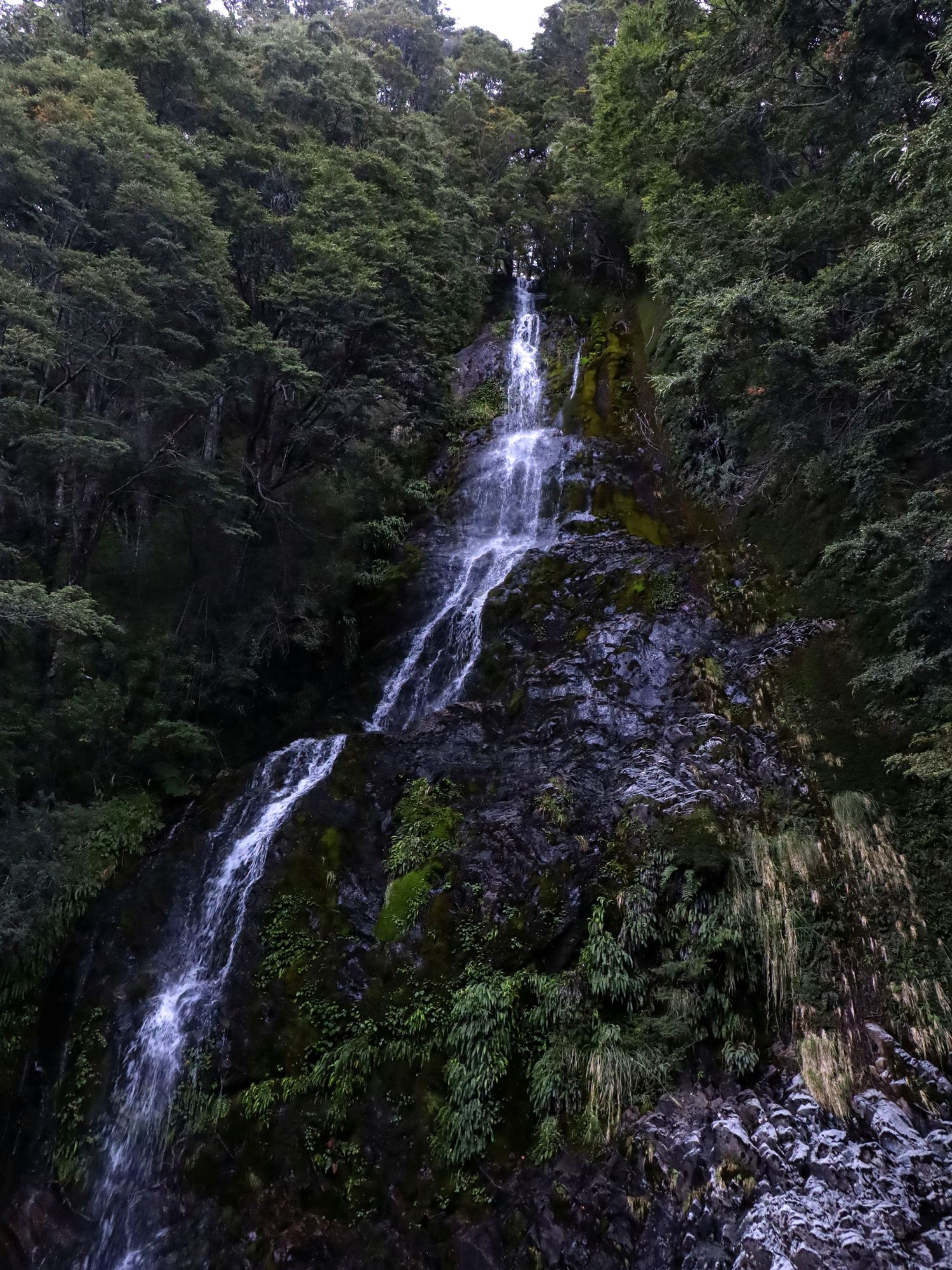
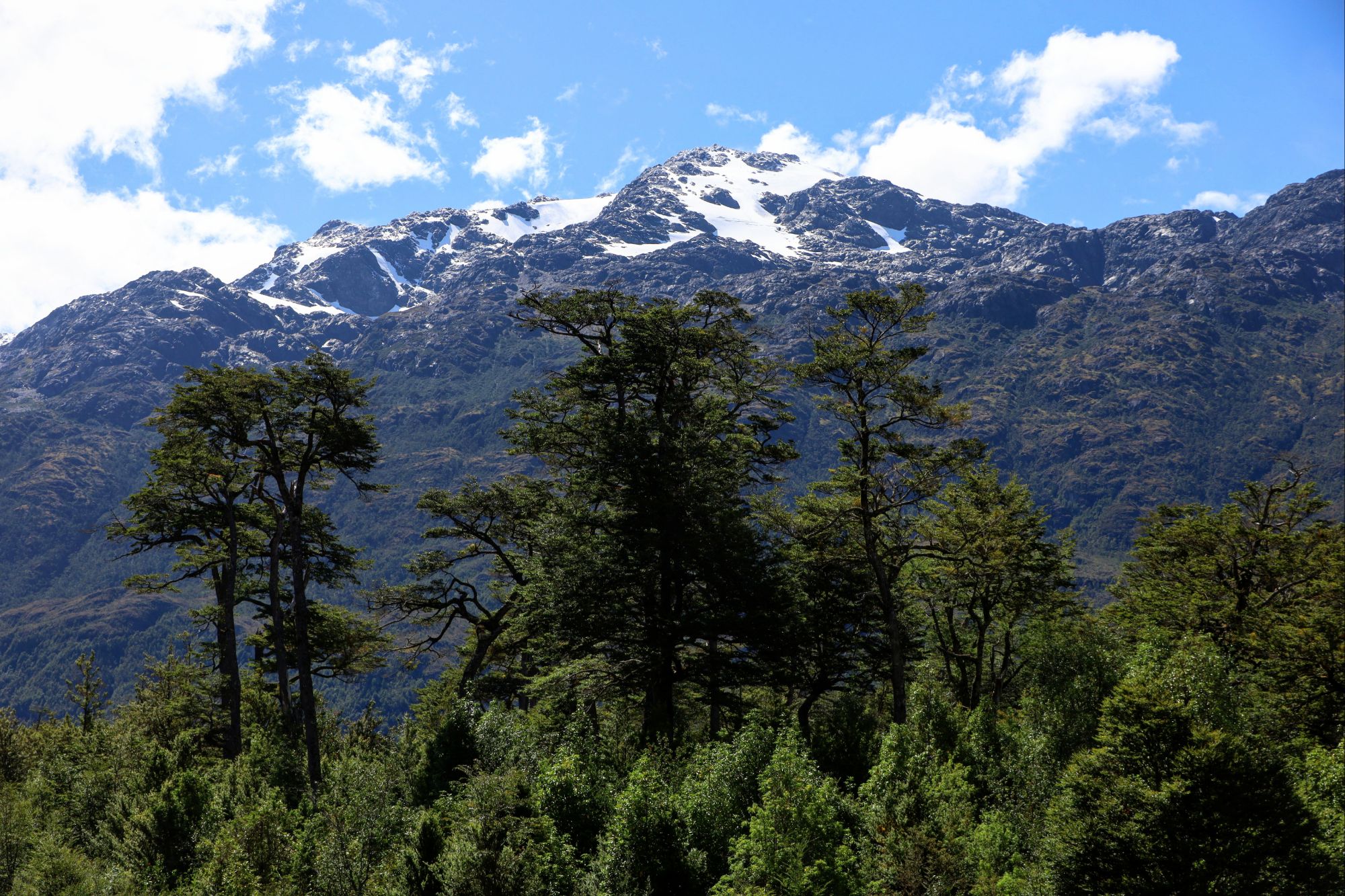
I’ve frequently congratulated myself for timing our riding days on the rainy Carretera Austral with perfectly-clear skies. But today taught me that maybe “ideal” can be…less than? Because this morning’s overcast sky created a truly special atmosphere, particularly in the way that warmly glowing sun-backed clouds interacted with the cold blue ice of the mountains. The clear-sky “postcard” views are more-conventionally perfect, but those identical “postcards” are seen by thousands of people. Here, particularly on the essentially-empty morning road, it felt like we were witnessing scenes created only for our eyes, that would never be painted the same way again.
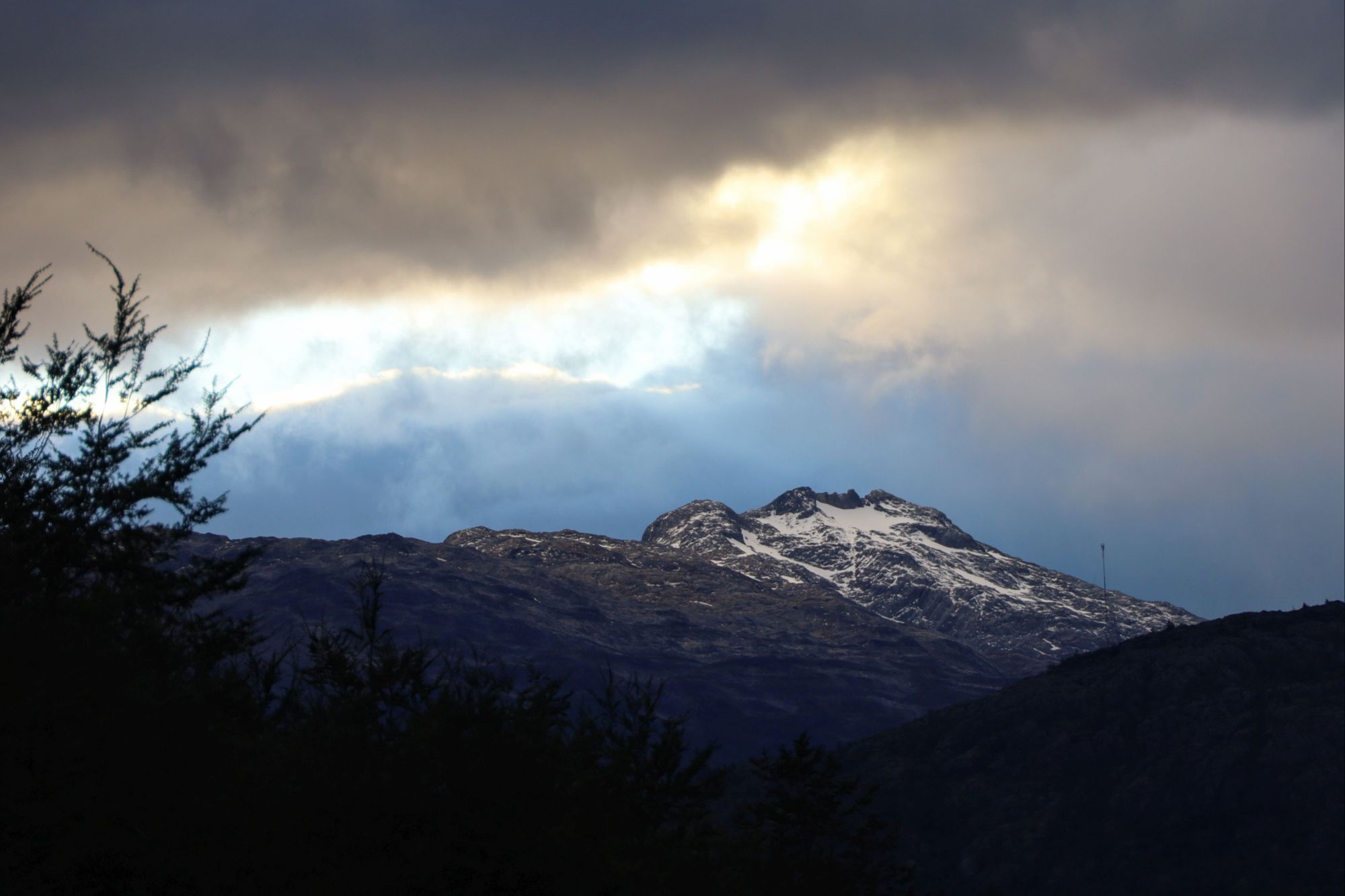
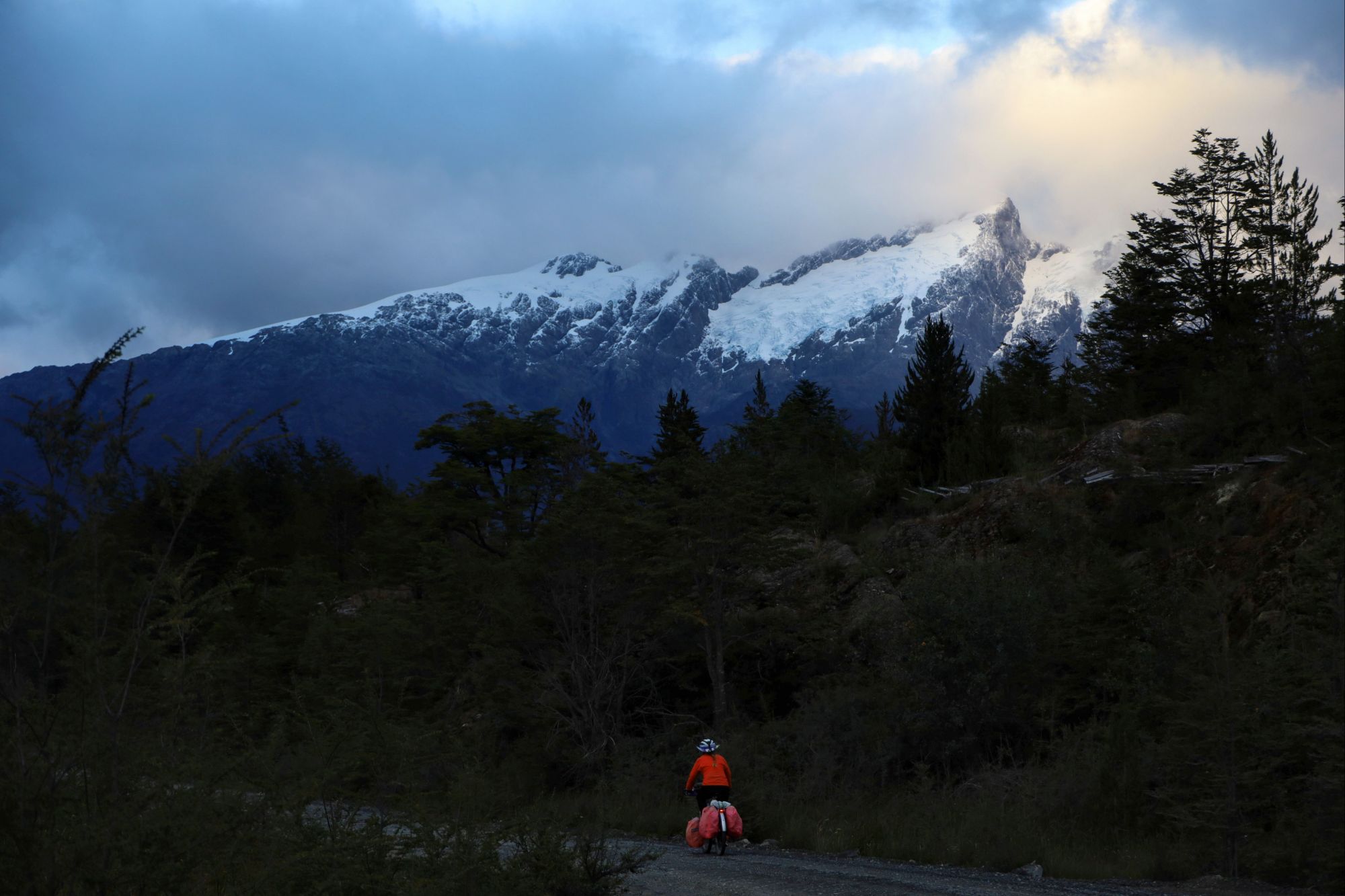
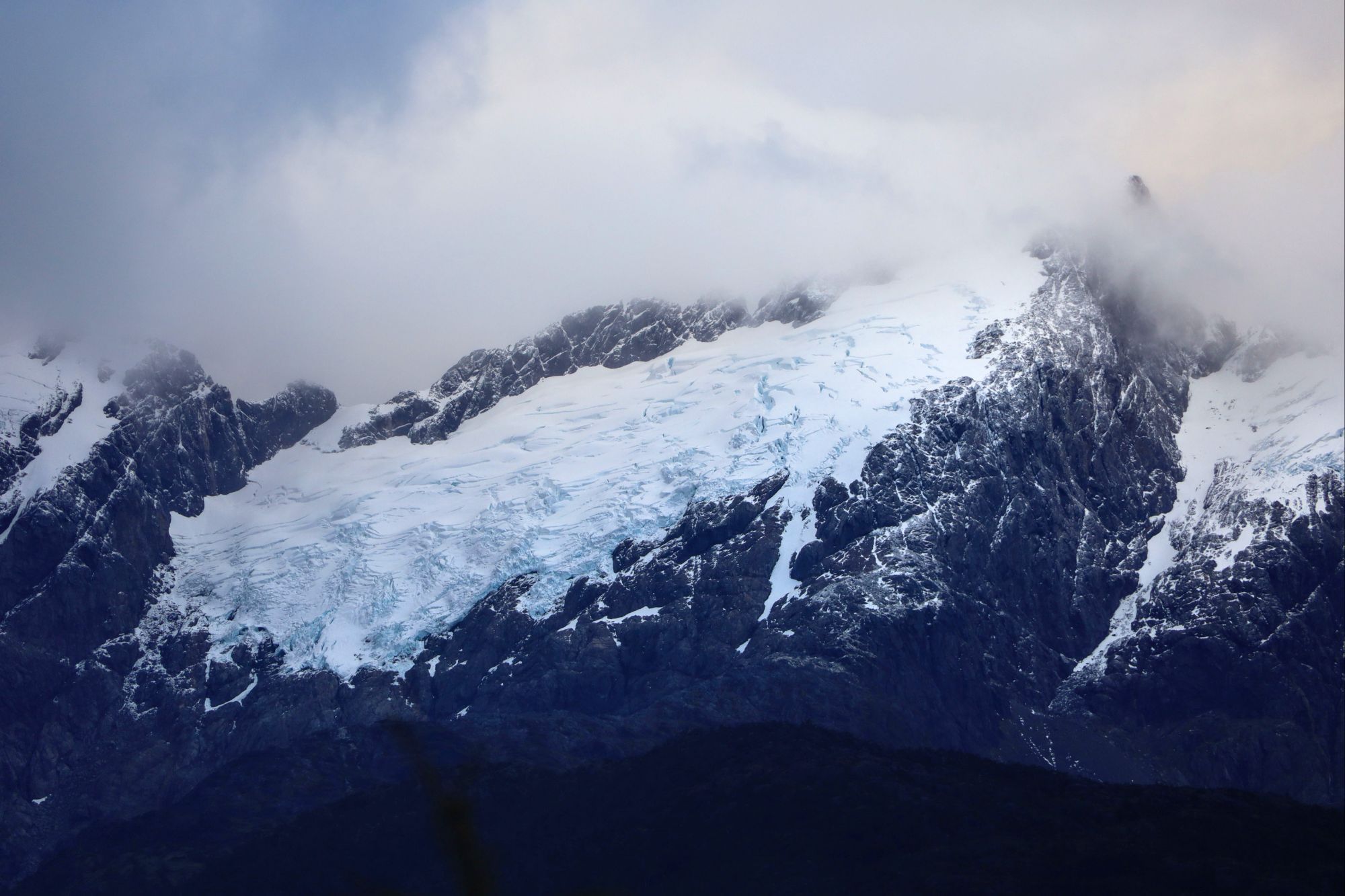
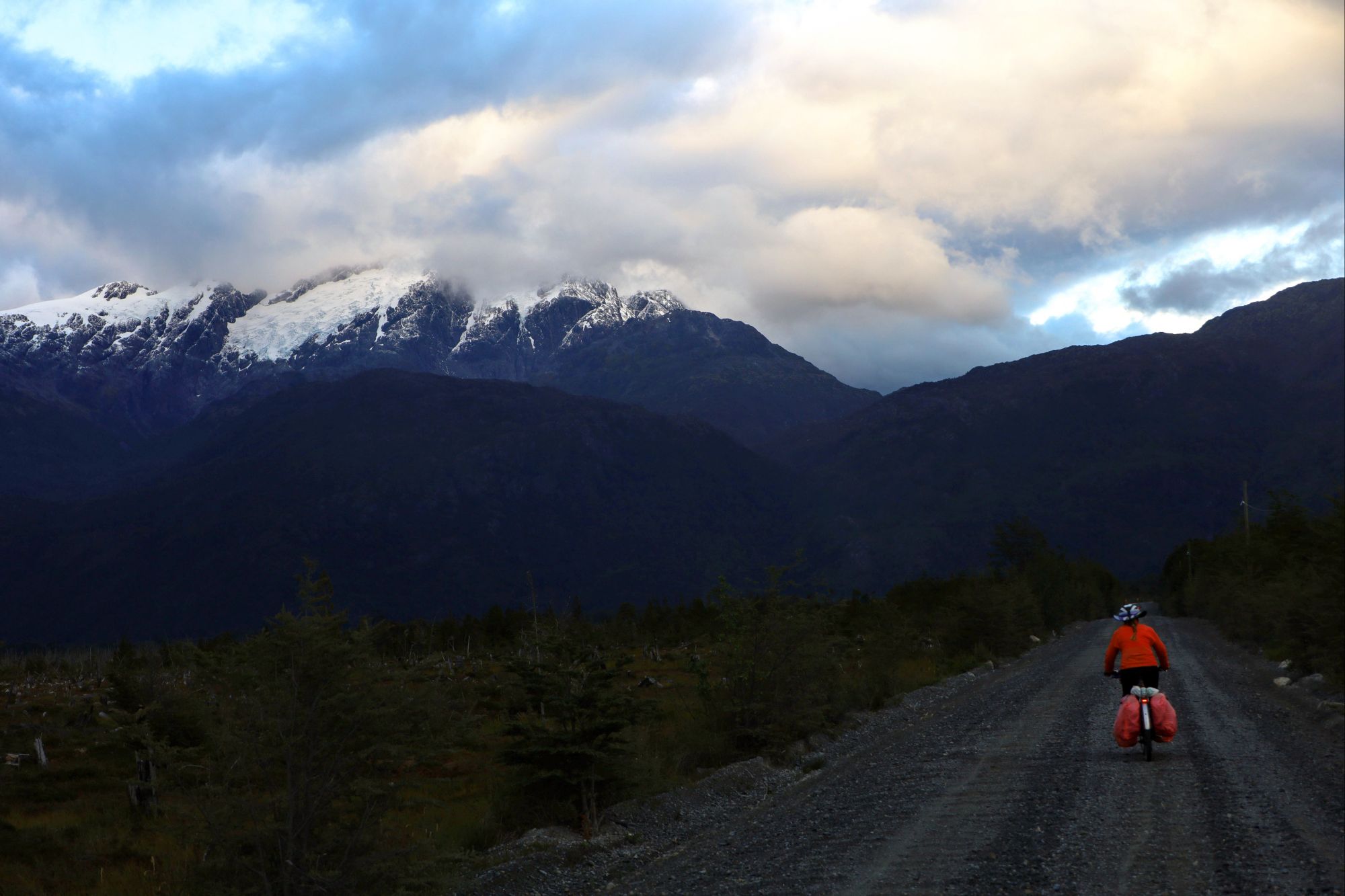
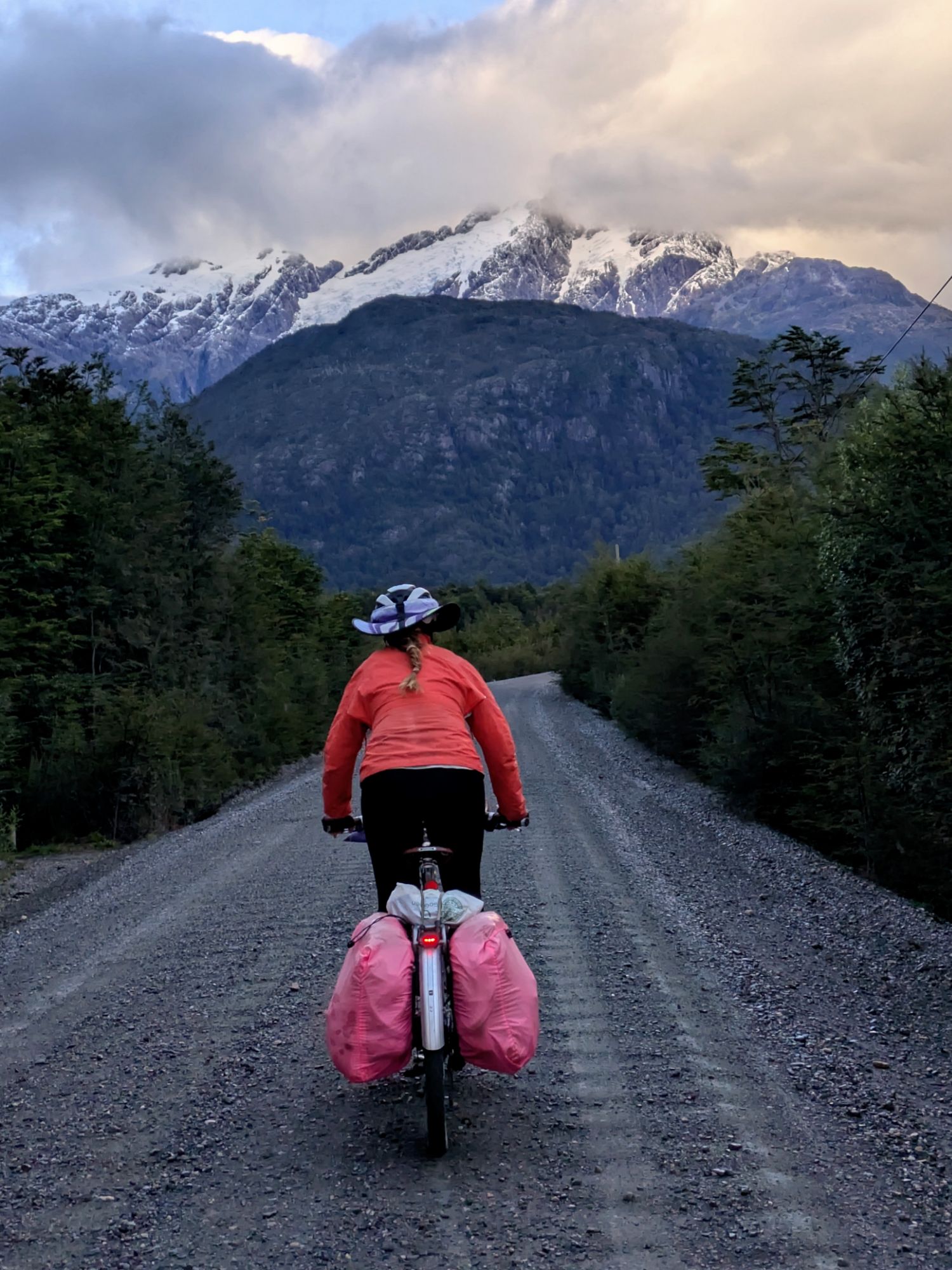
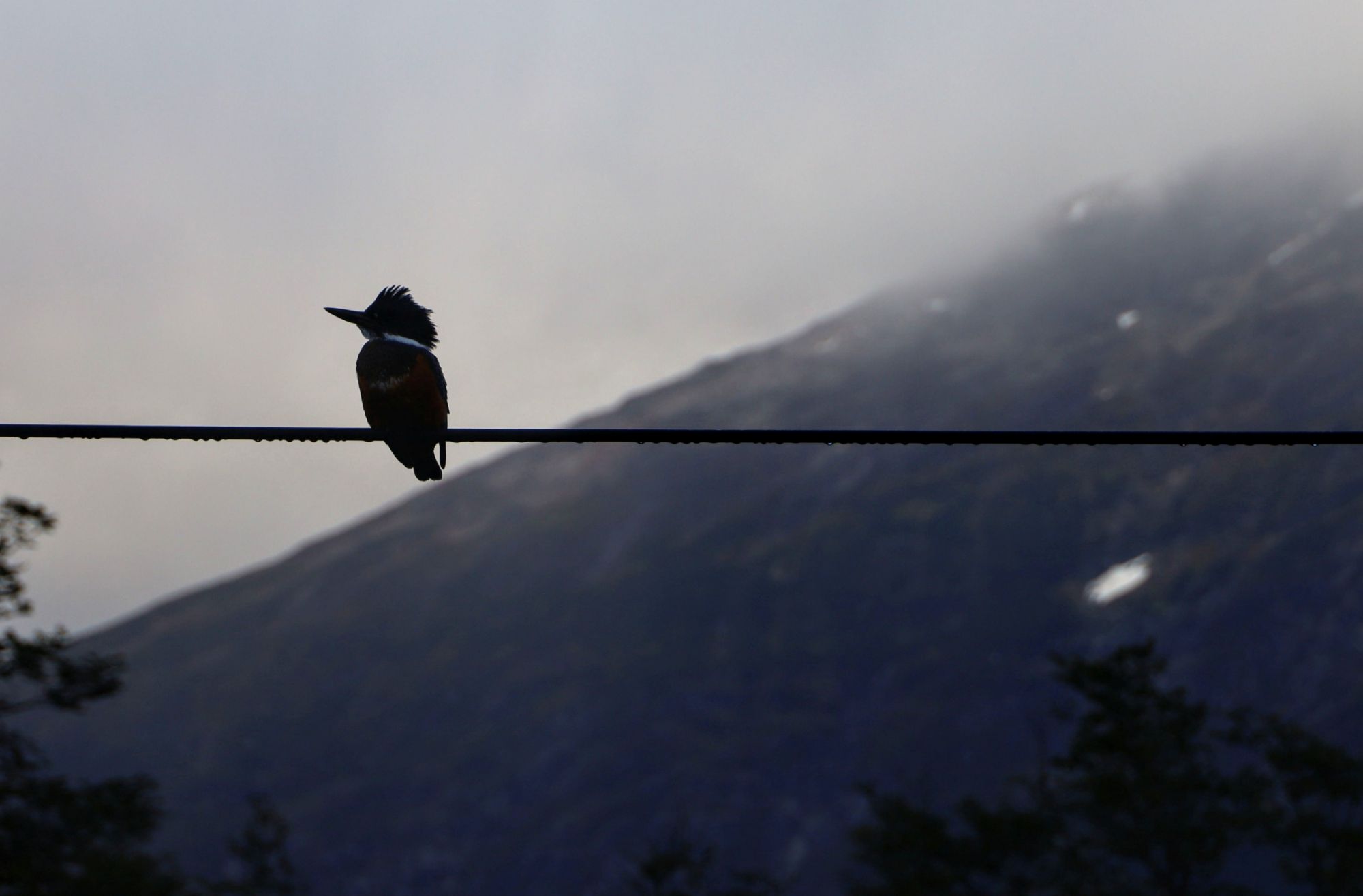
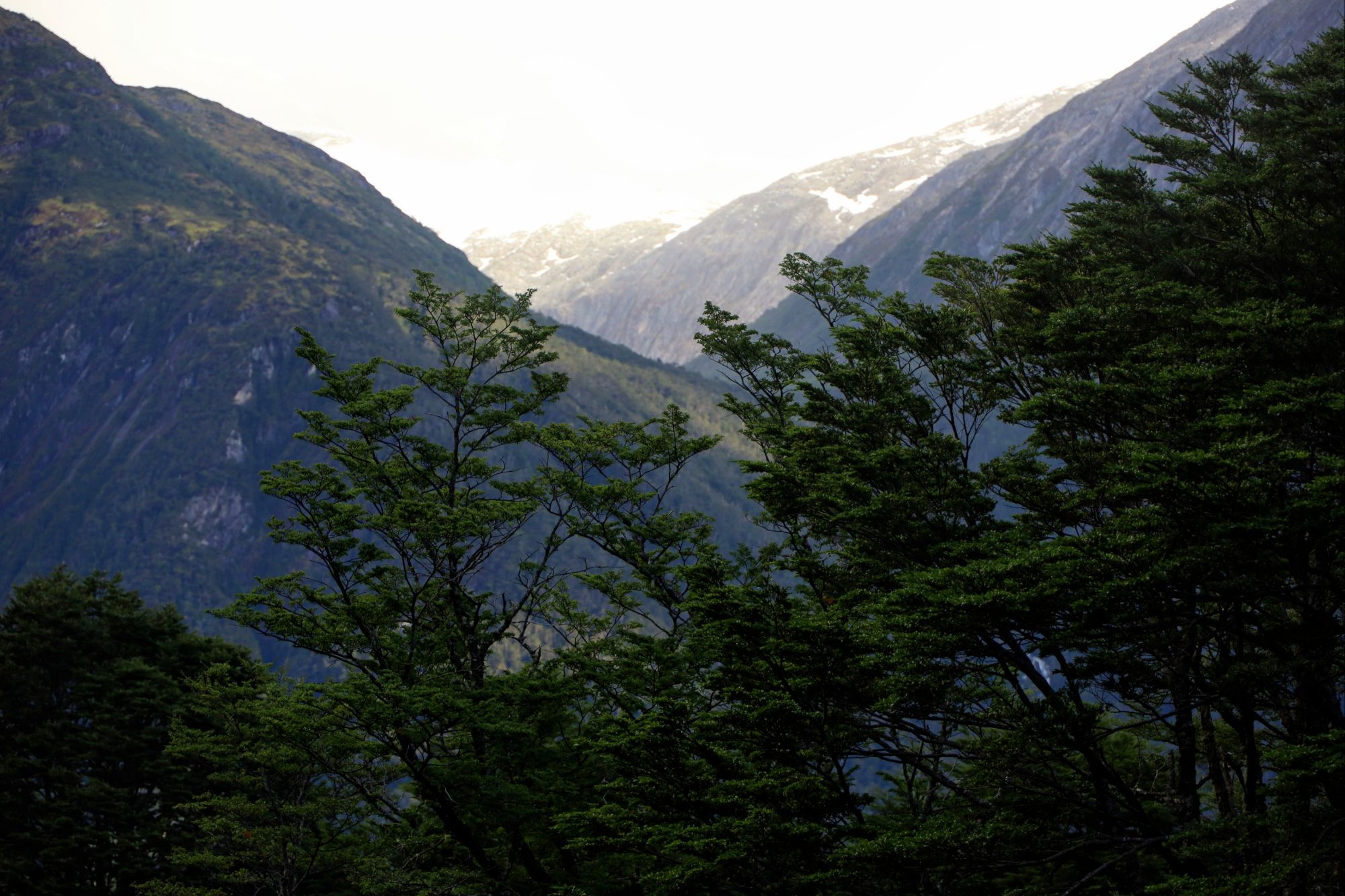
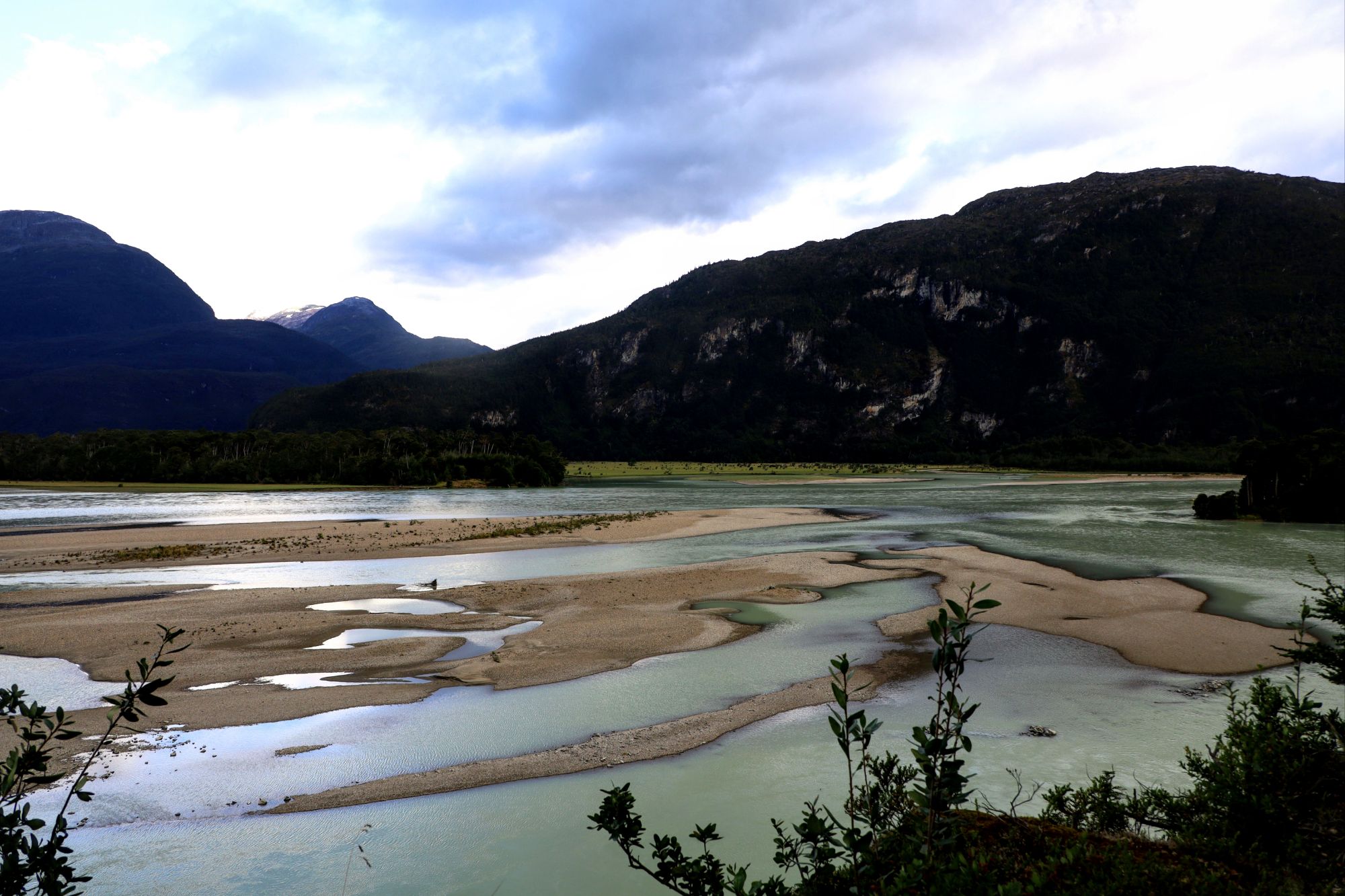
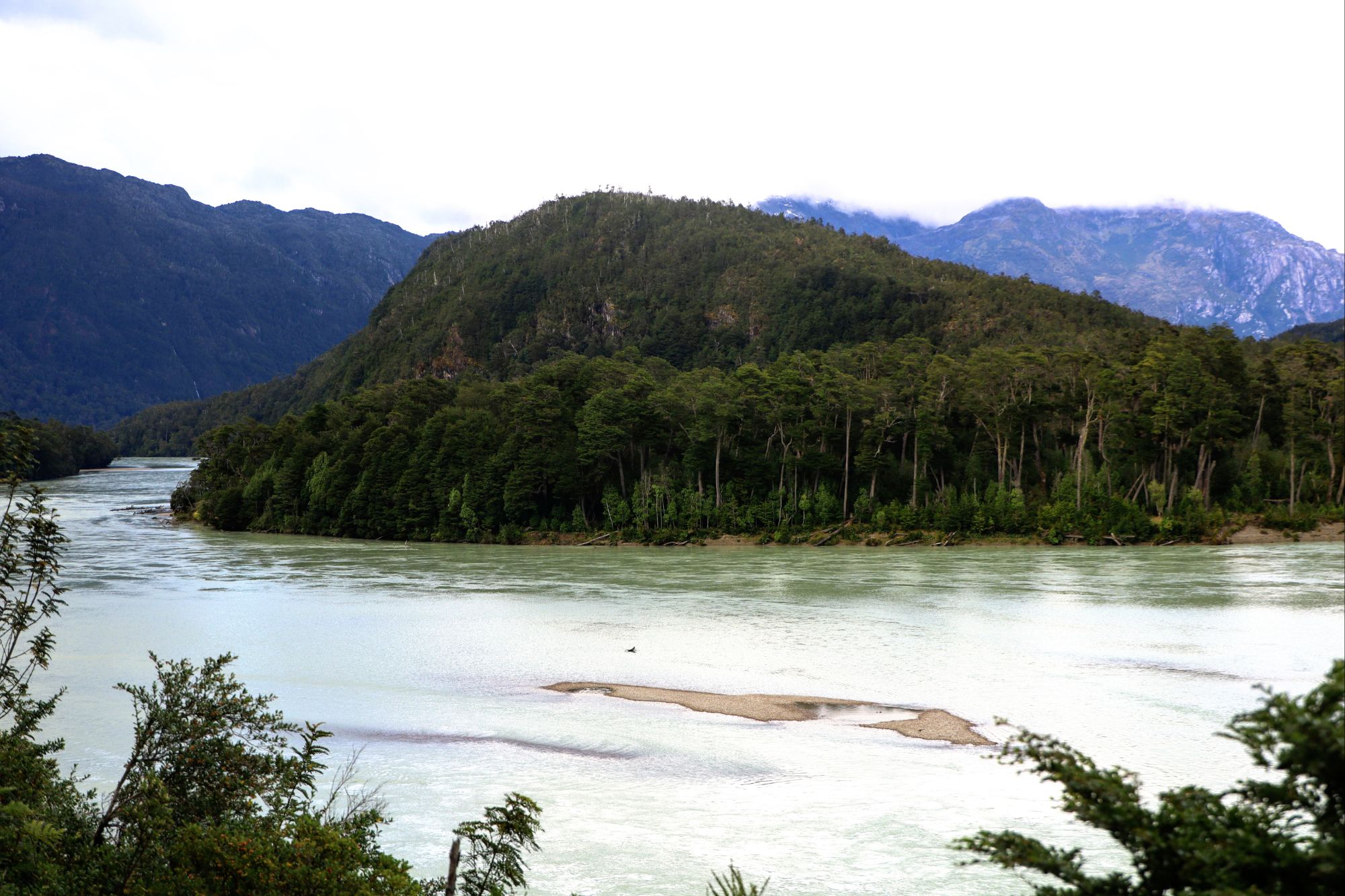
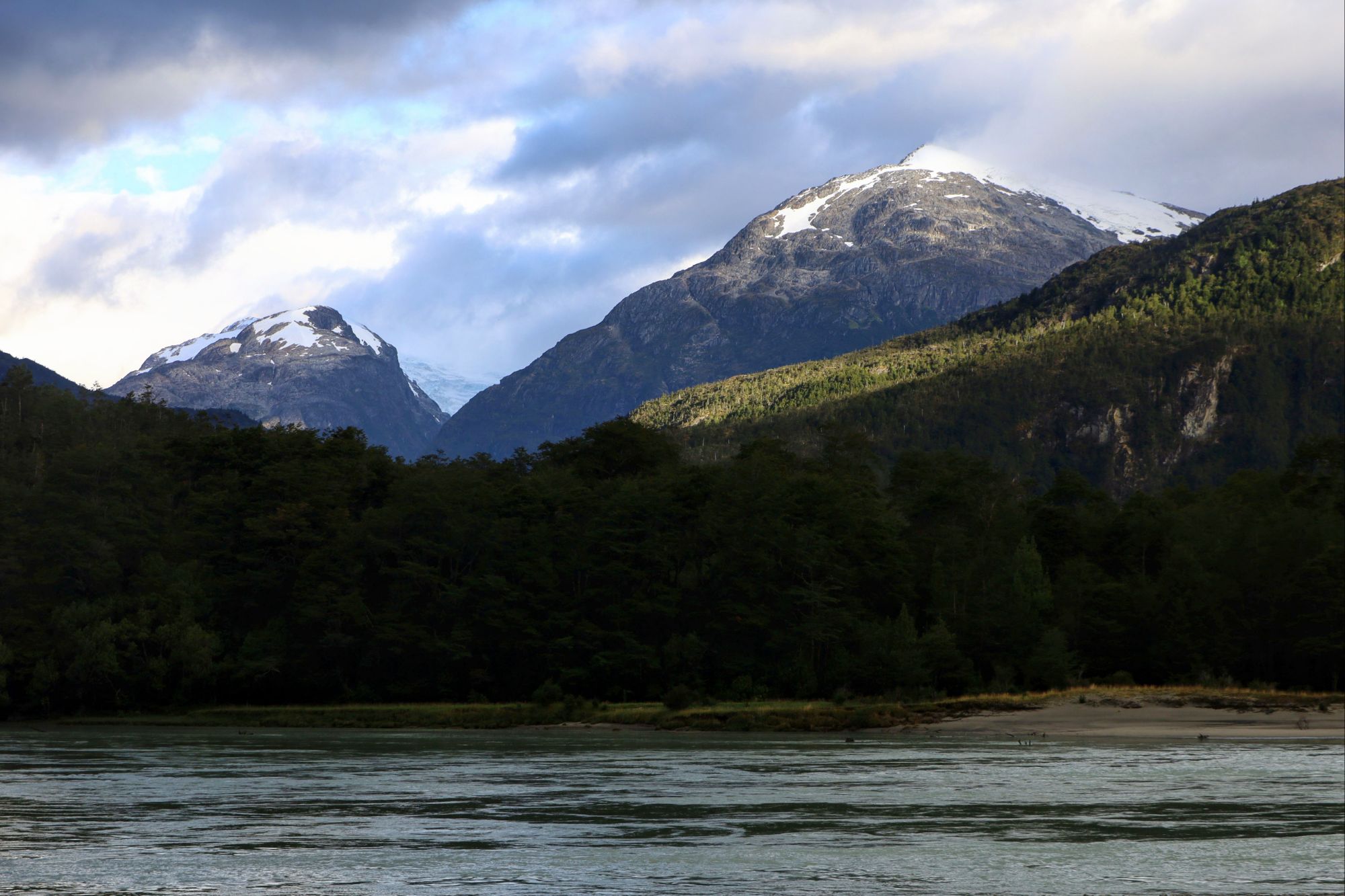
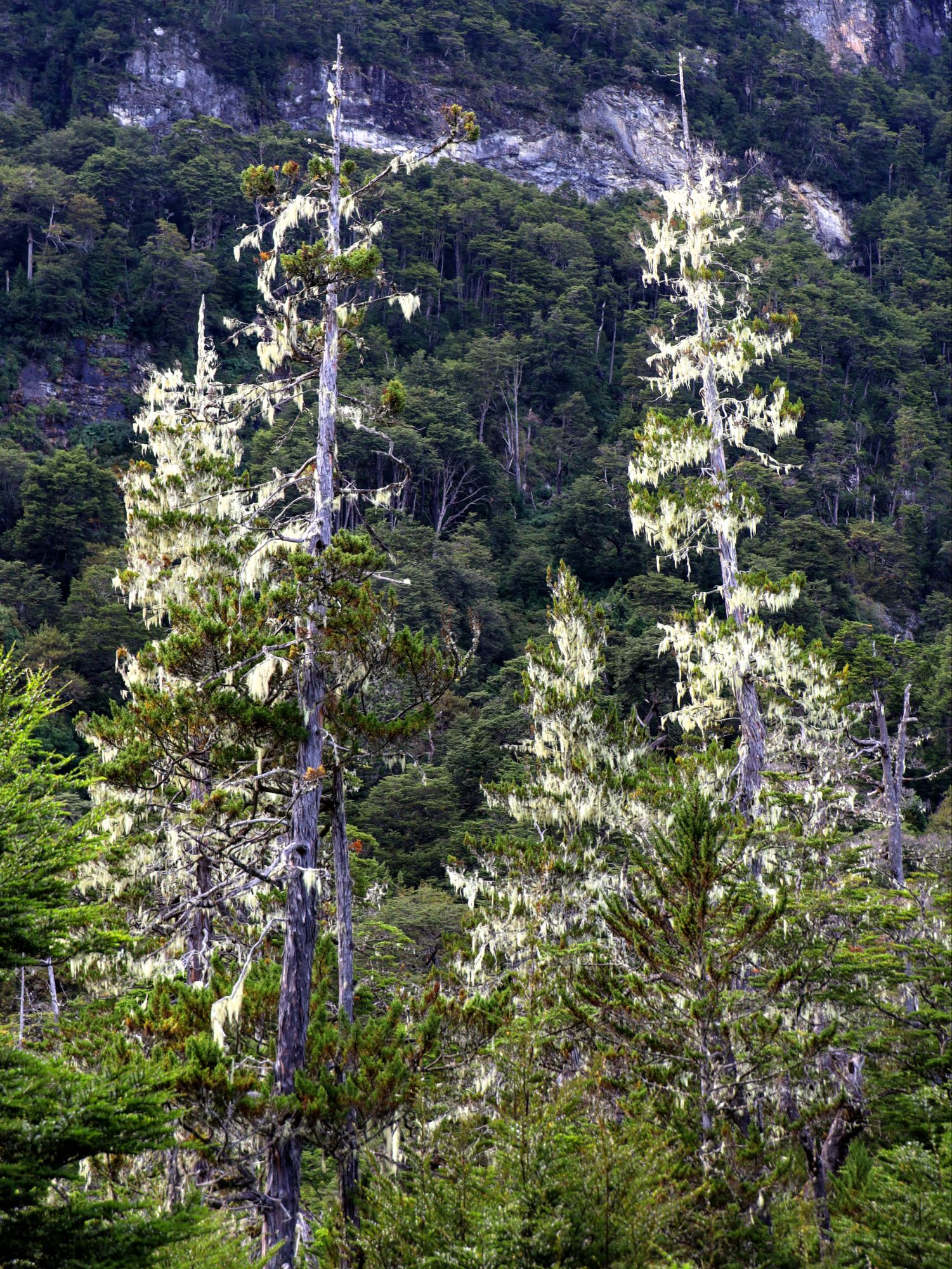
At 14 miles, we again left the Baker River behind (for good this time, as it sought an easy route to the sea at Tortel), and entered Phase 2 of our 3-phase day. We never exceeded 150 feet above sea-level during Phase 1, but Phase 2 would take us up (and then all the way back down) a 1300-foot hill on our much-more-difficult route to the sea. Thankfully the gravel remained good on the way up, though I wasn’t looking forward to the downhill, which Debs and Tom reported as “awful”.
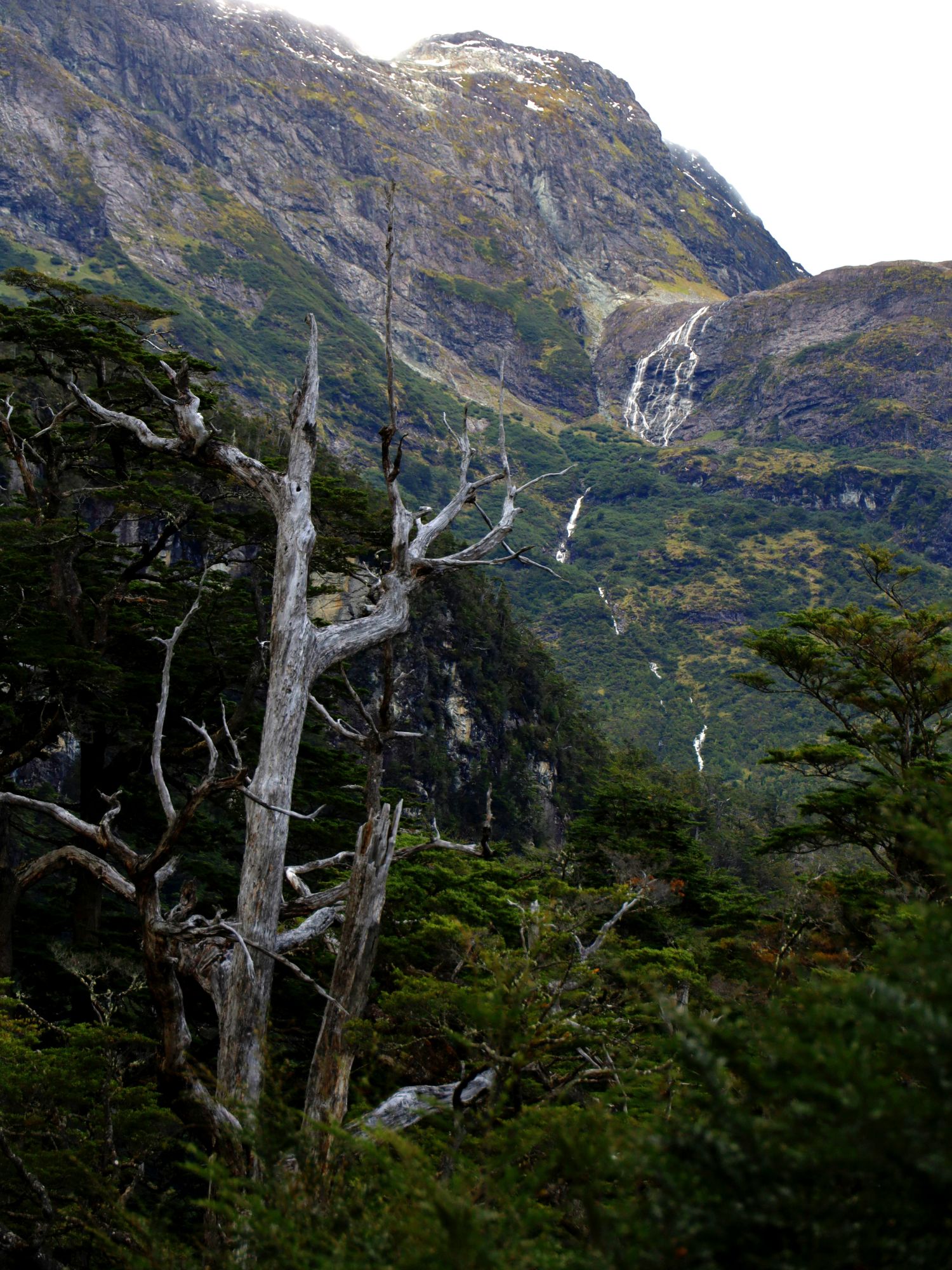
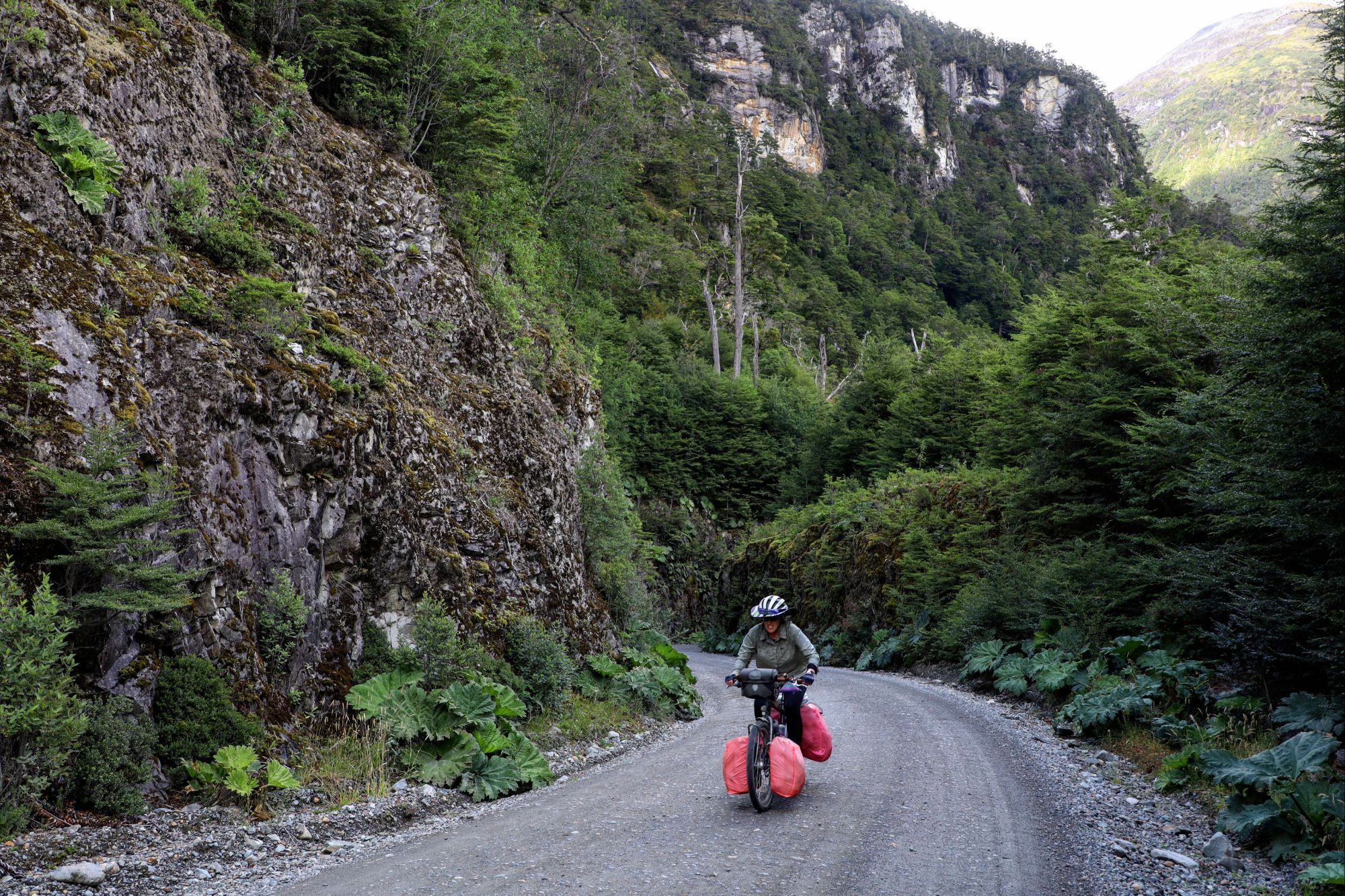
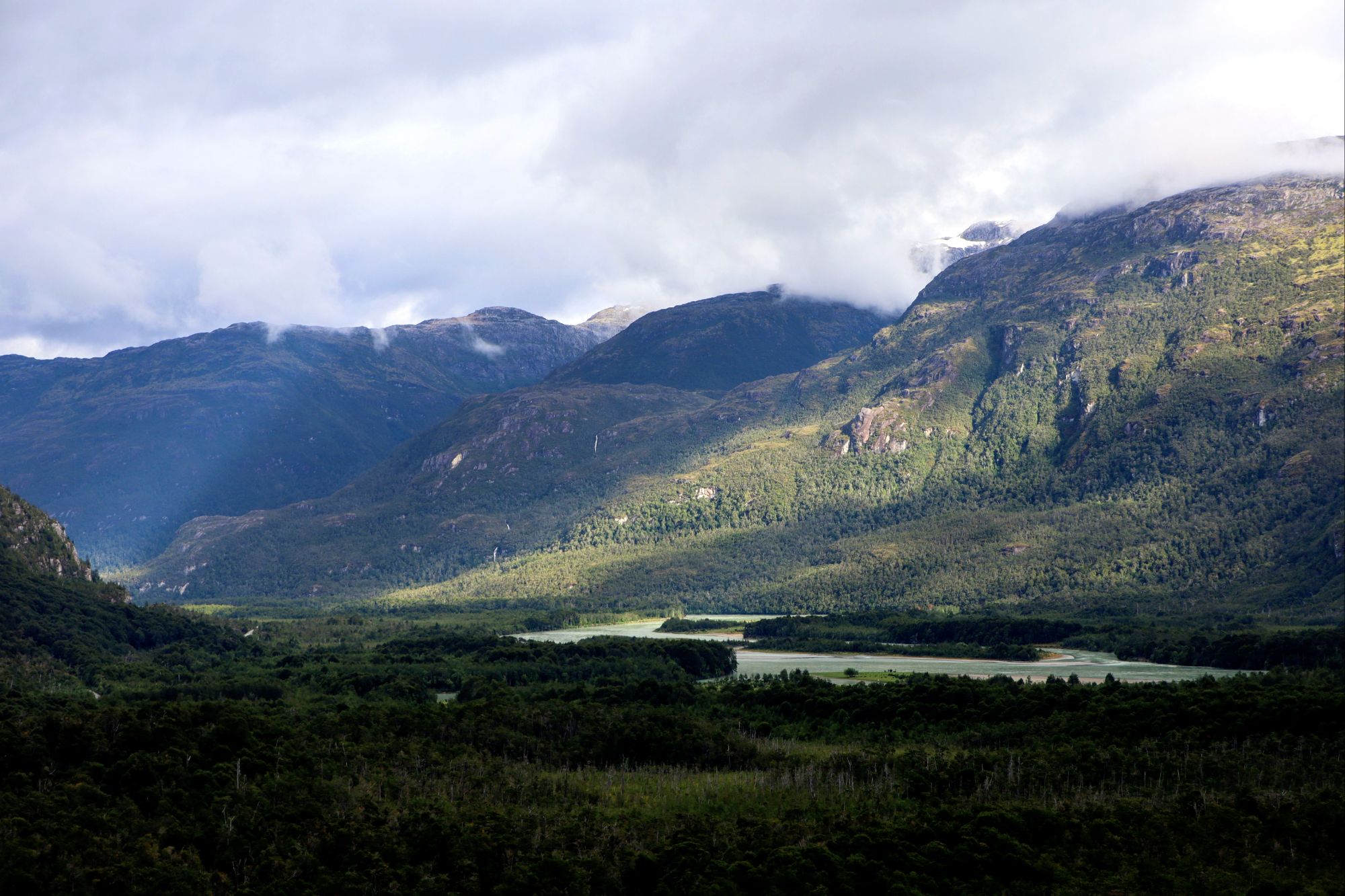
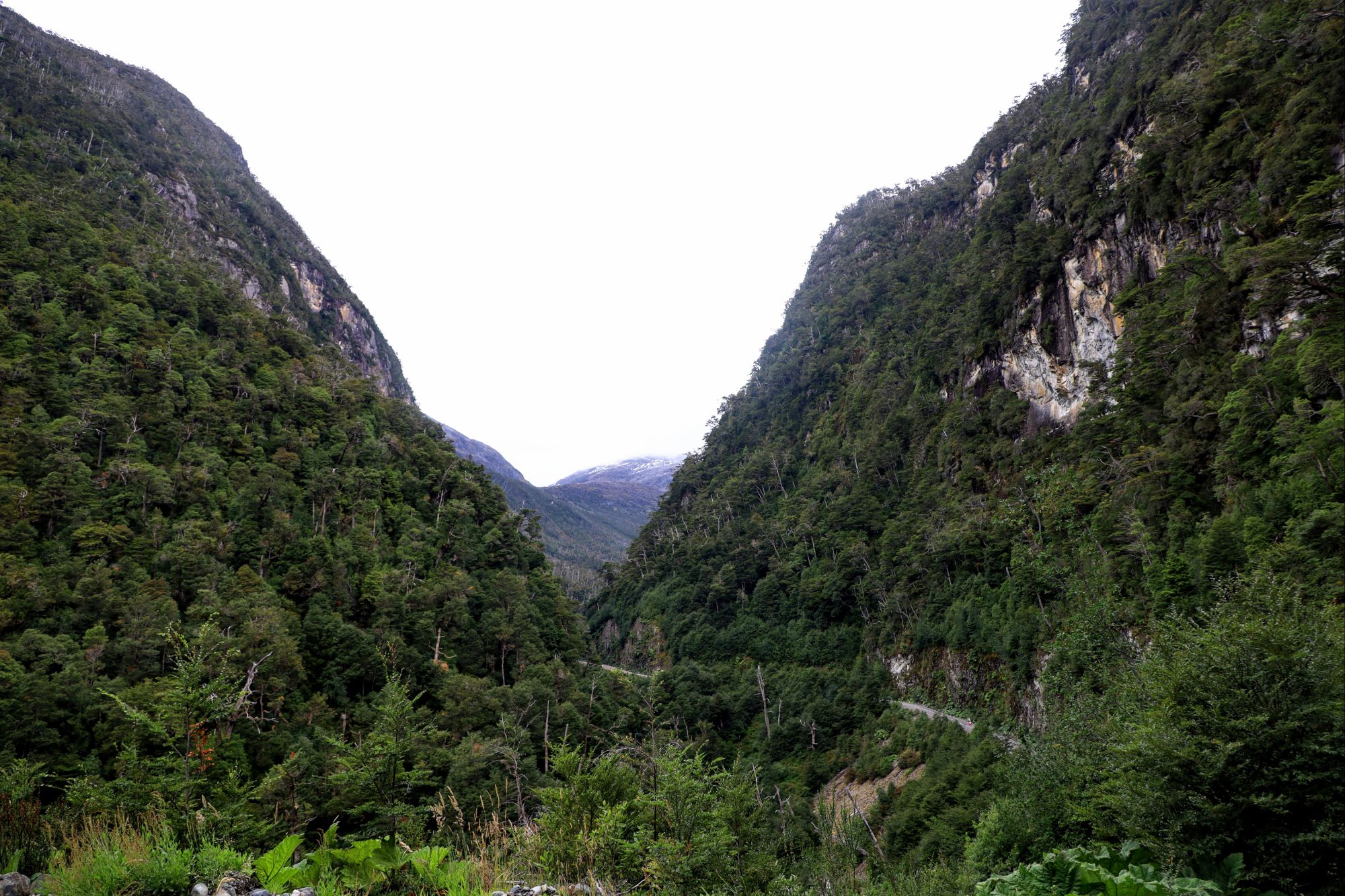
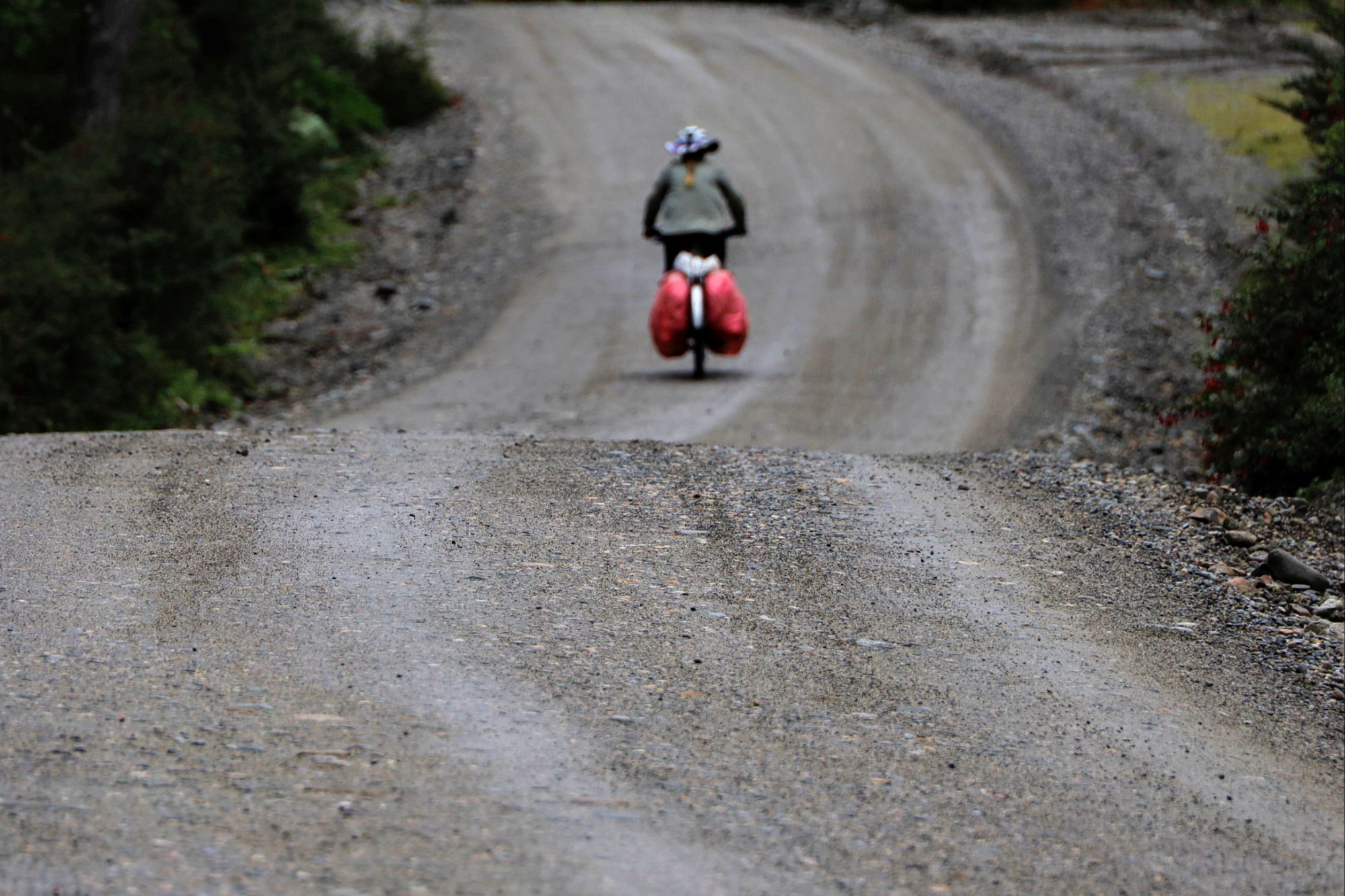
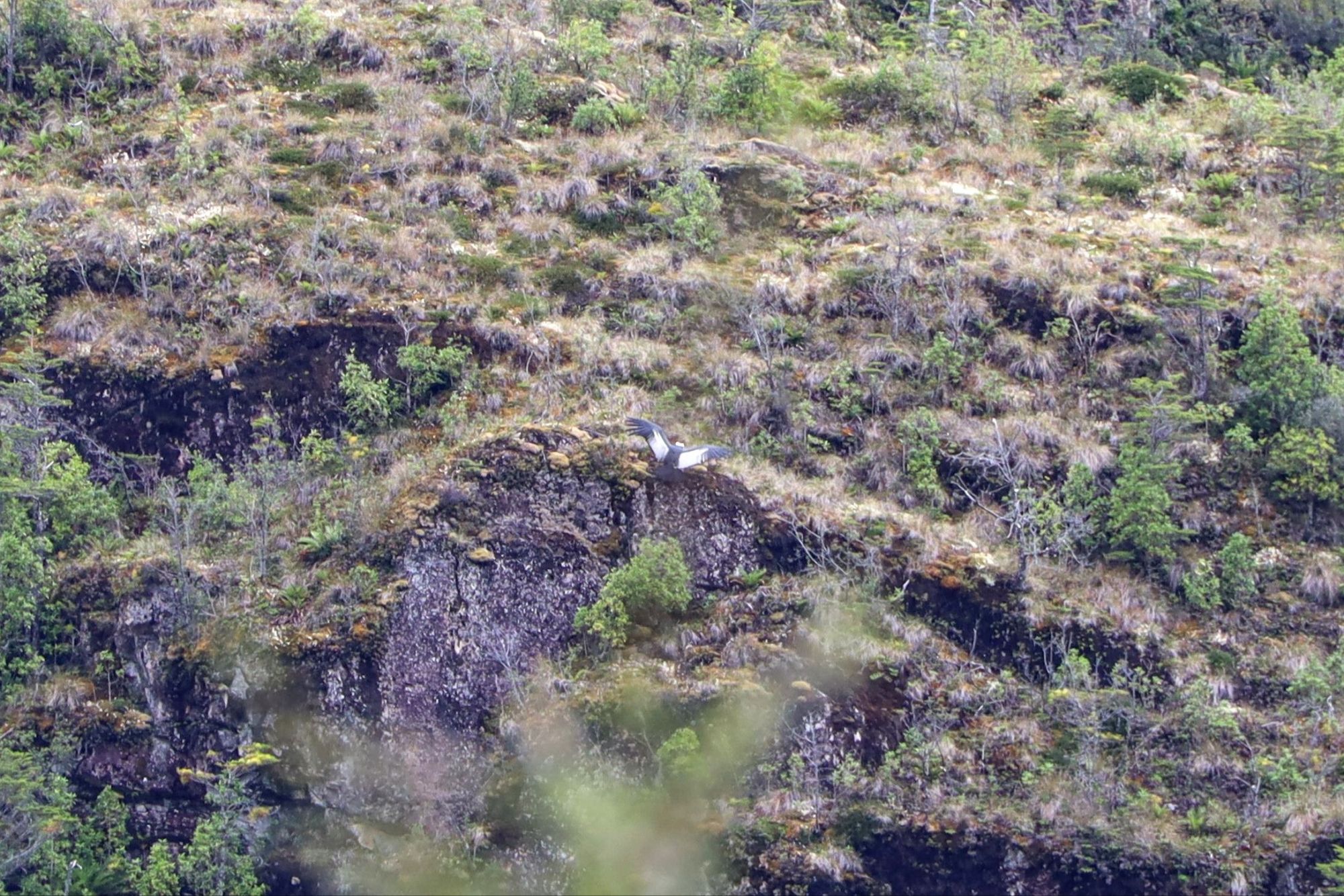
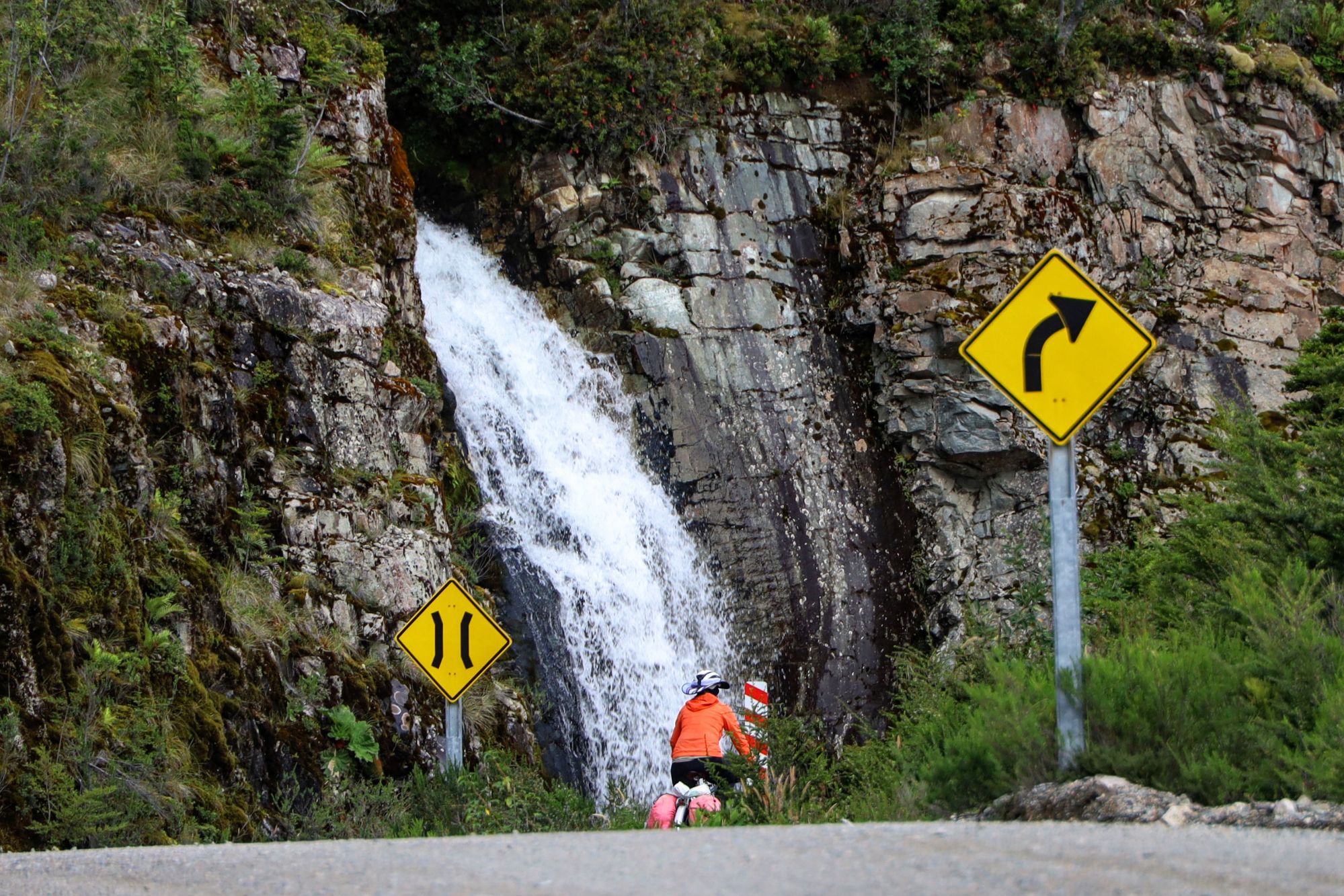
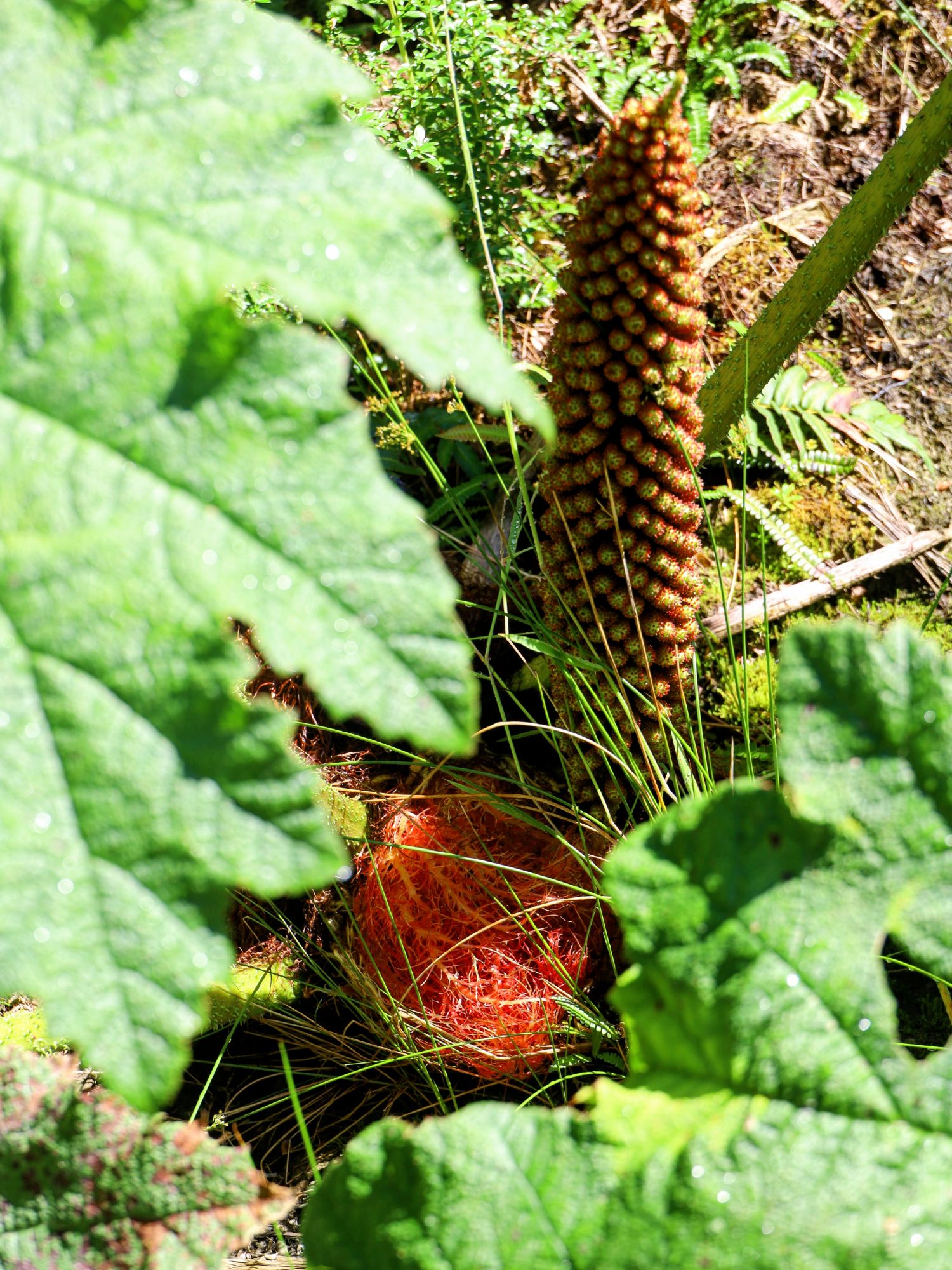
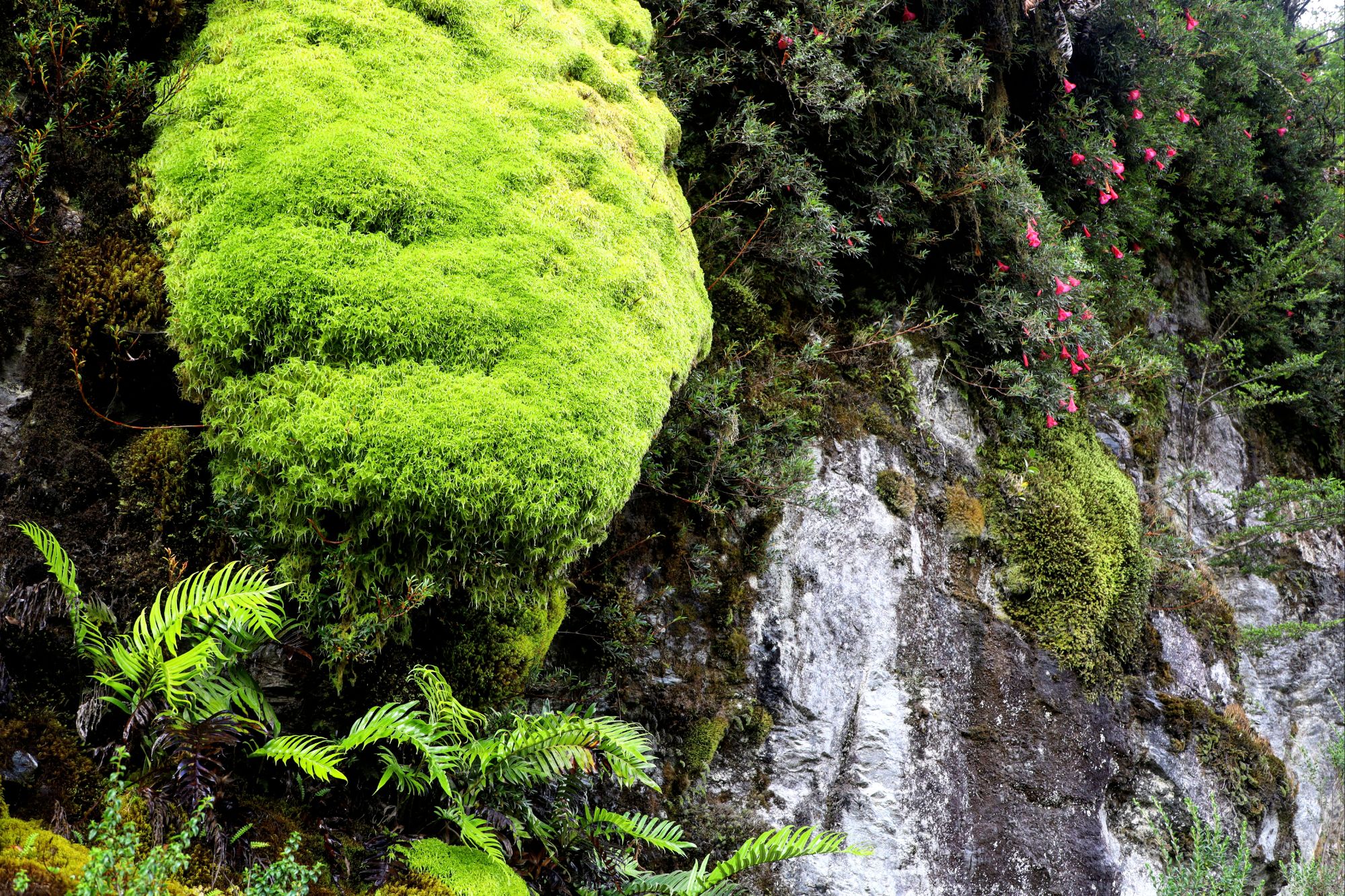
Somehow the awful gravel on the downhill never came. It seems unlikely (though not impossible!) that a road grader would have smoothed it out in the two weeks since Debs and Tom rode it, so mood or tiredness seems a more-likely explanation for the qualitative difference. However, we passed a group of girls near the bottom who were walking up a section that seemed entirely ridable to me (especially if they done any other parts of the Carretera Austral!), so maybe it was our mood that made it seem easy?
We had been targeting the 2pm ferry from Puerto Yungay to Rio Bravo, and the better-than-expected downhill meant that we would easily make it in time. But half a mile away, a line of cars was suddenly coming toward us, which at this “dead end” was only possible if they had just been disgorged from a ferry. It was 12:40pm; maybe the 12pm ferry was running late? I raced ahead to see if we’d be able to get on before it turned around (especially since missing it meant that we might now need to wait until 2:40pm or later for our “2pm” ferry), but could see a small boat already out on the water heading away.
There was a surprisingly-long line of cars waiting, so I really hoped that this ferry was like most car ferries, and could/would take as many bikes as wanted to get on. Because if we needed to wait at the end of the line, we wouldn’t cross before nightfall! We set up our chairs under the cover of a closed shelter building and I assembled our hummus-and-tortilla lunches (Rett soon moved out of the shade to attempt to warm up). And sooner than expected, we could see a second ferry approaching, this one larger than the one I had watched depart. Maybe they were running an auxiliary boat to handle the extra traffic?
Unlike the expensive, booking-required Hornopiren ferry, this one is like the ferry from our first day on the Carretera Austral (and like the ones on the North Carolina coast), free and first-come, first-served, treated just like a floating extension of the public road. The logistics weren’t super-clear, until a worker appeared from somewhere a few minutes before the ferry docked. He recorded our passports, then turned out to be one of the best ferry-communicators we’ve ever had, going out of his way to use Google Translate to explain that we would load first, as soon as the vehicles exited.
Only a fraction of the cars in line were able to board, but we were joined on this mid-afternoon crossing by just one other cyclist, a cool Danish guy who was yet another person trying to end their bike touring life as soon as it started, by riding the Carretera Austral as their first real touring experience. Because where else do you go from here?! Like many others, he was also on a rented bike, but unusually, carrying no camping gear. It turns out that his trip was exceptionally-curated, with the organizer booking accommodations for him along the entire route, and even swapping out the gravel bike he rode to Coyhaique, in favor of a front-suspension mountain bike for the rougher 2nd half of the Carretera Austral! That’s something we can only dream of with our “jack-of-all-trades, but master-of-none” bikes.
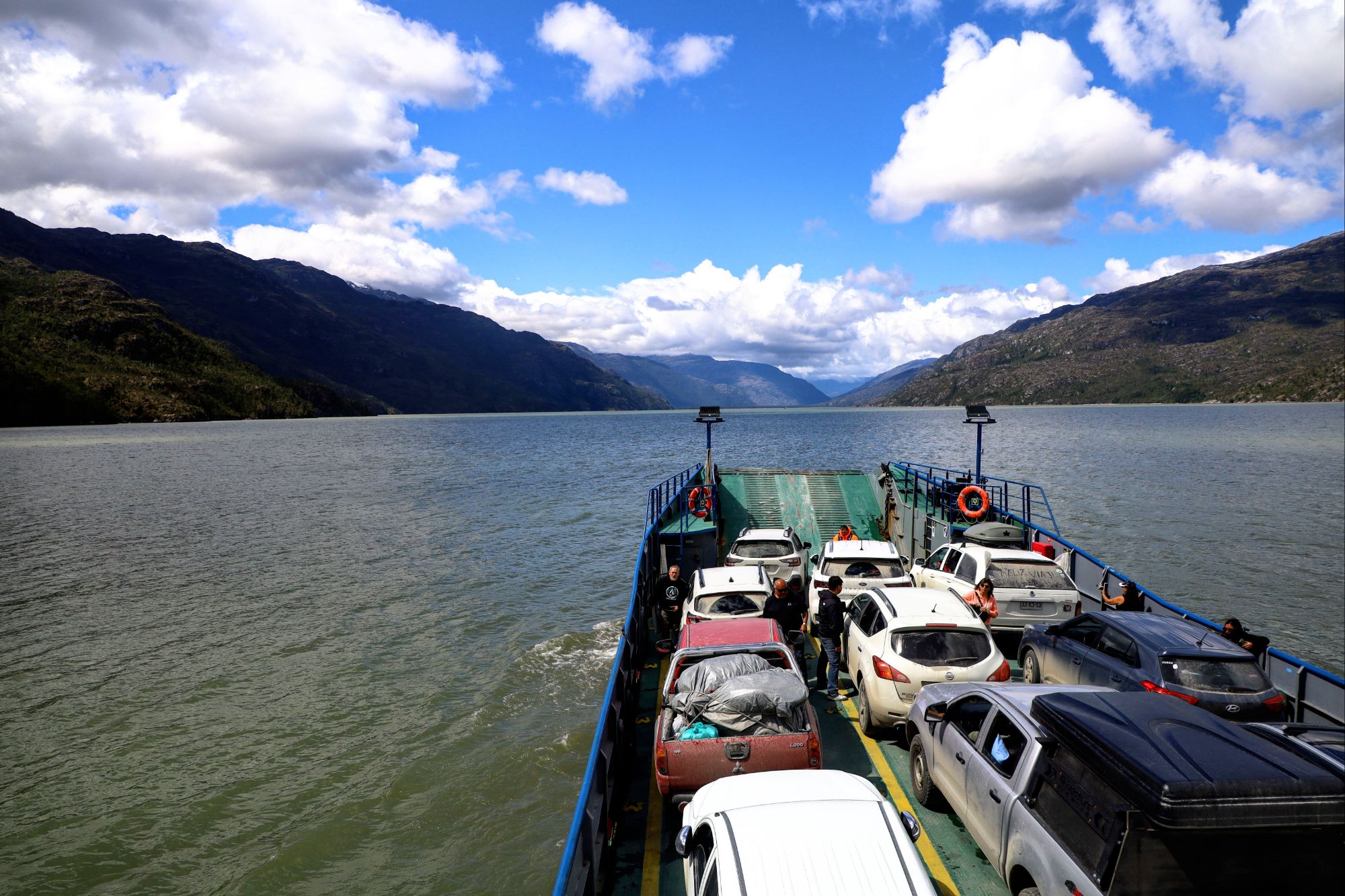
Phase 3 was nearly as flat as the boat ride had been, 8 miles on yet more good gravel. And with the cars driving off ahead of us, the entire road was our own (except for the occasional oncoming vehicle joining the line in the other direction).
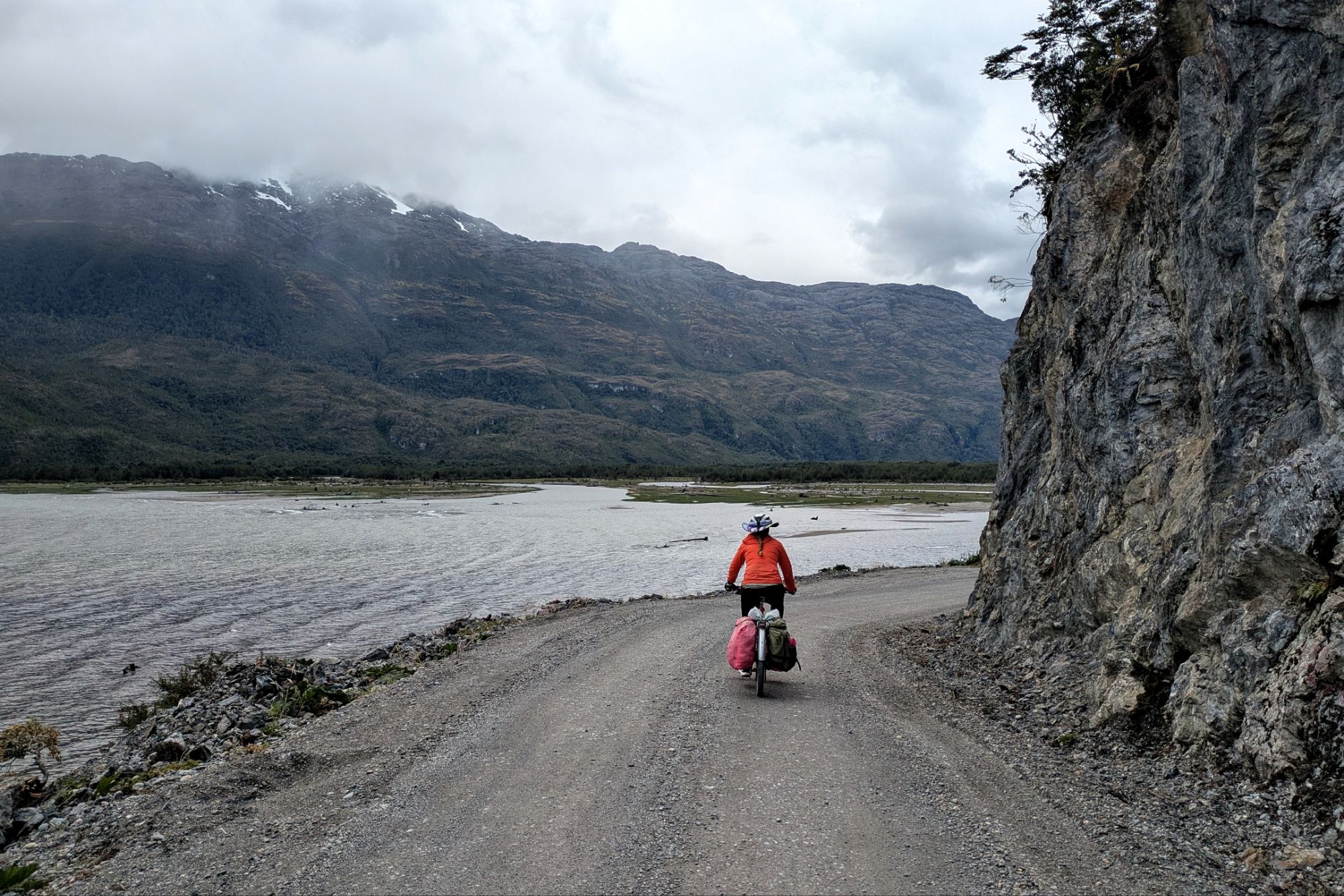
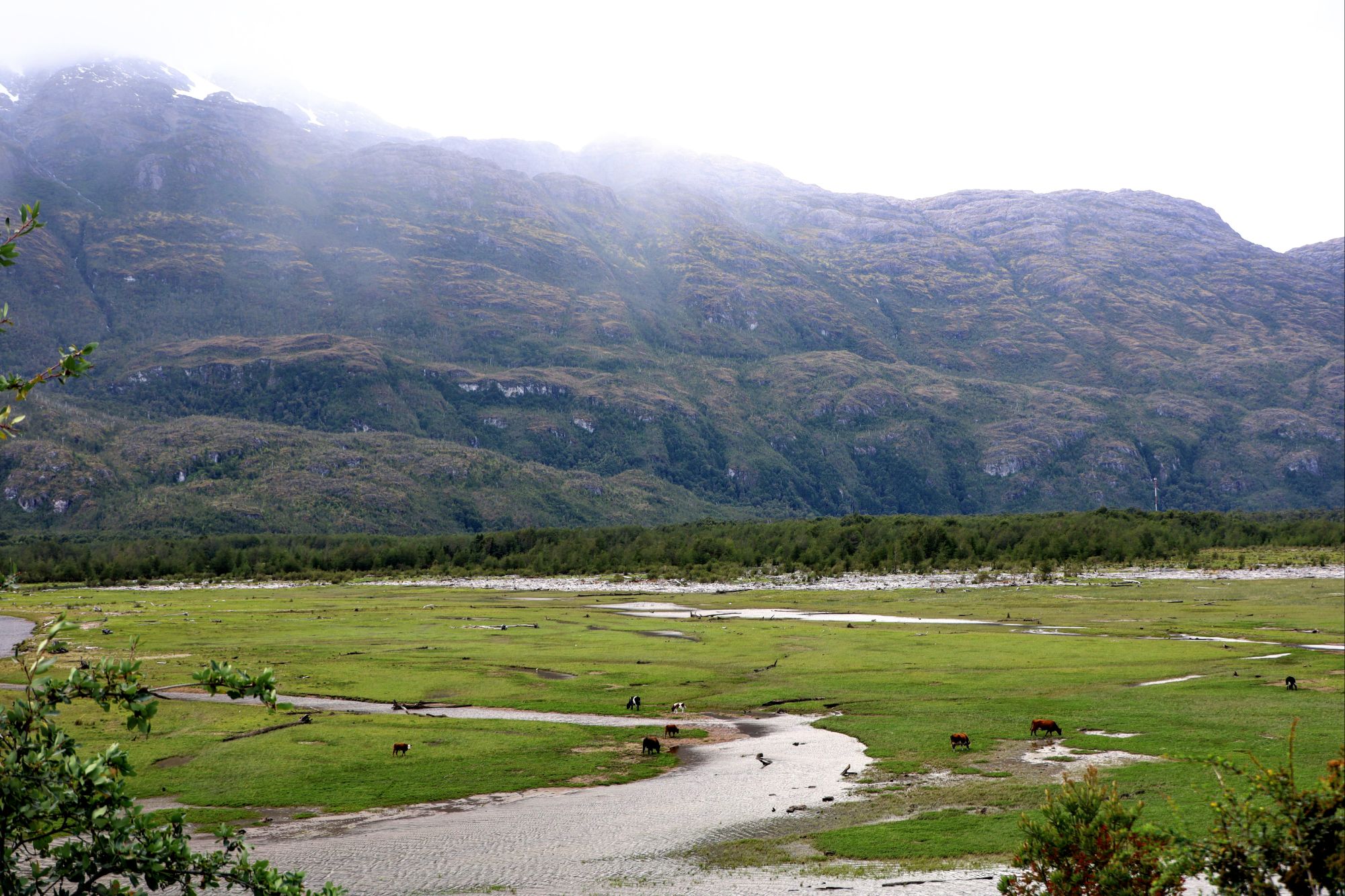
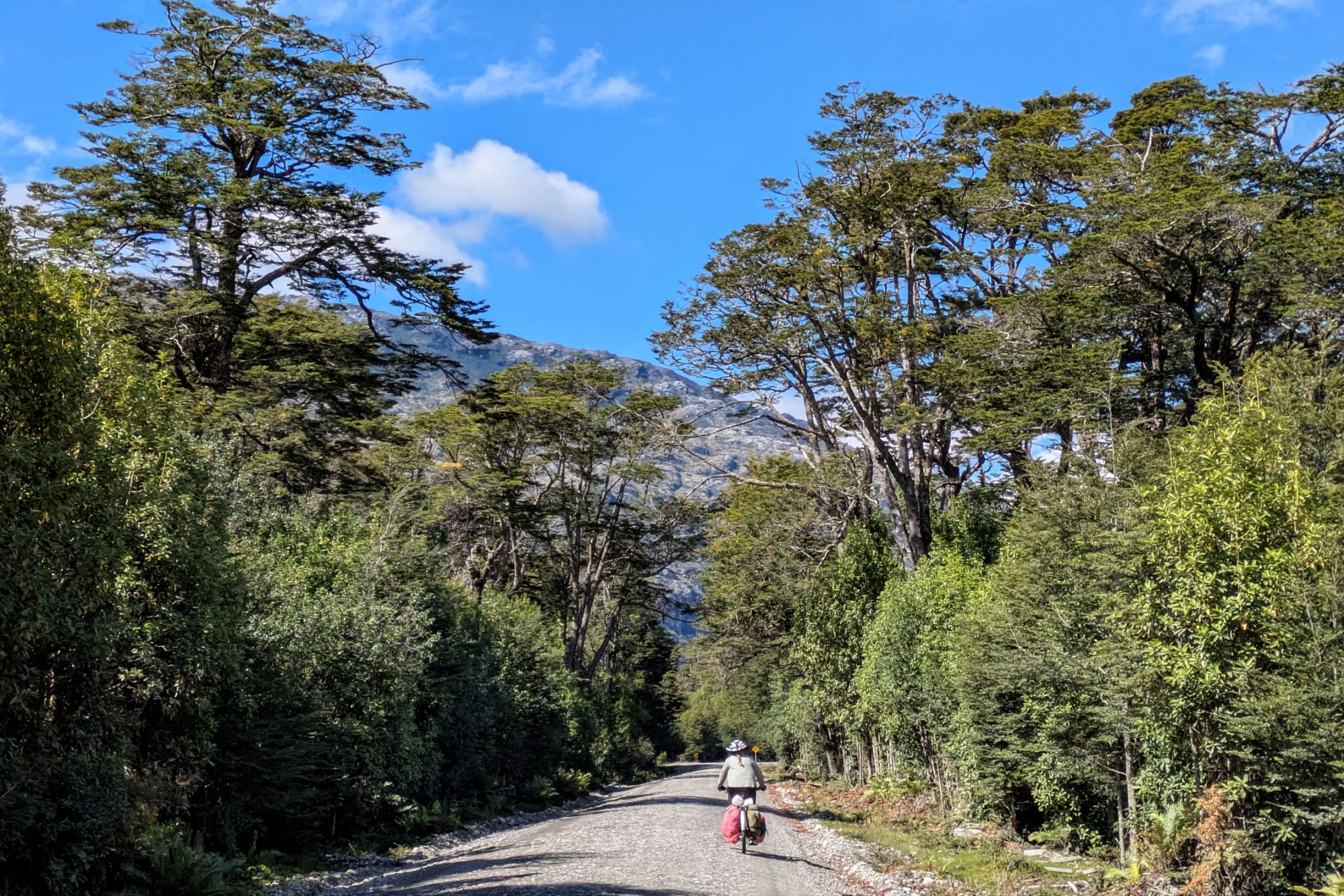
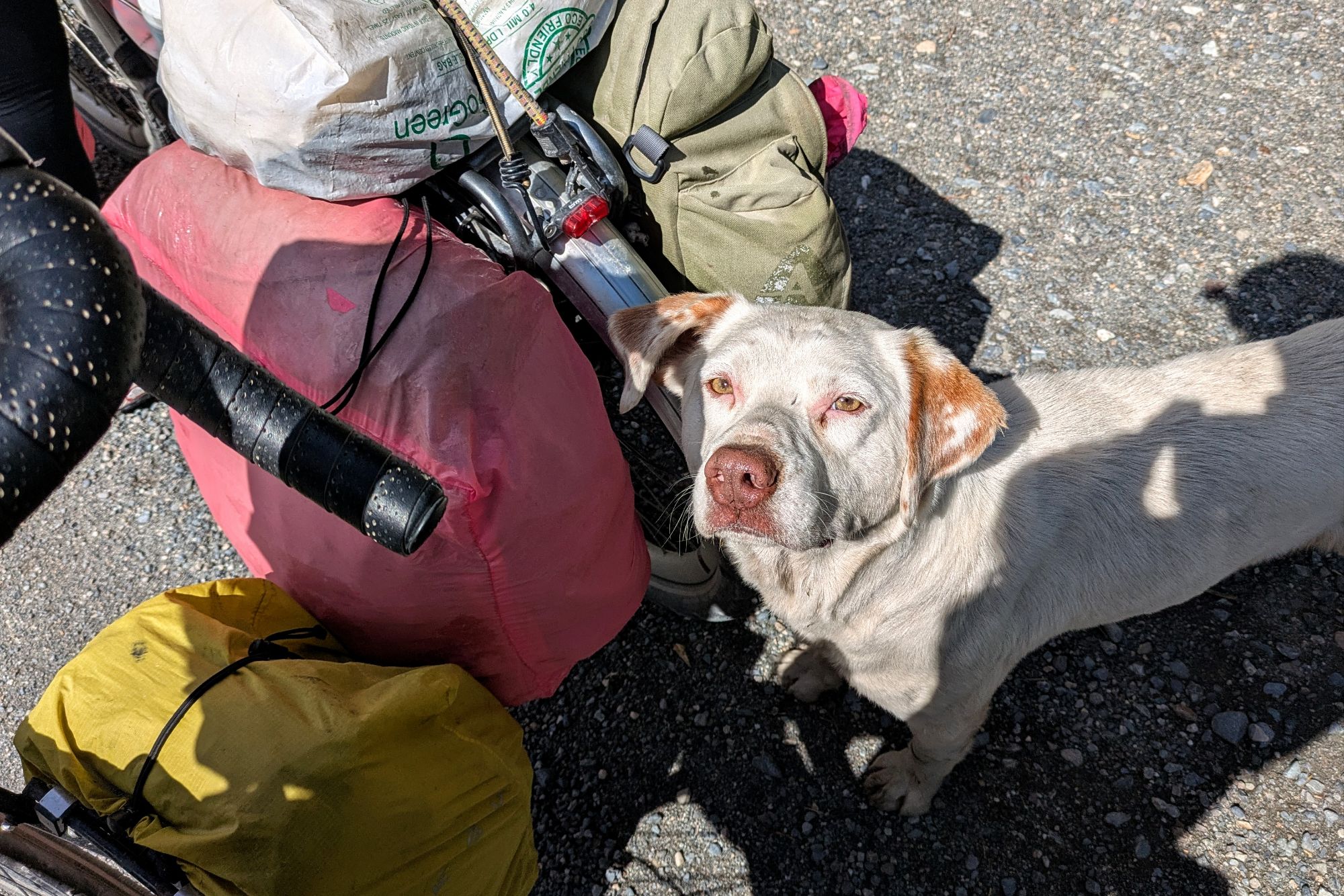
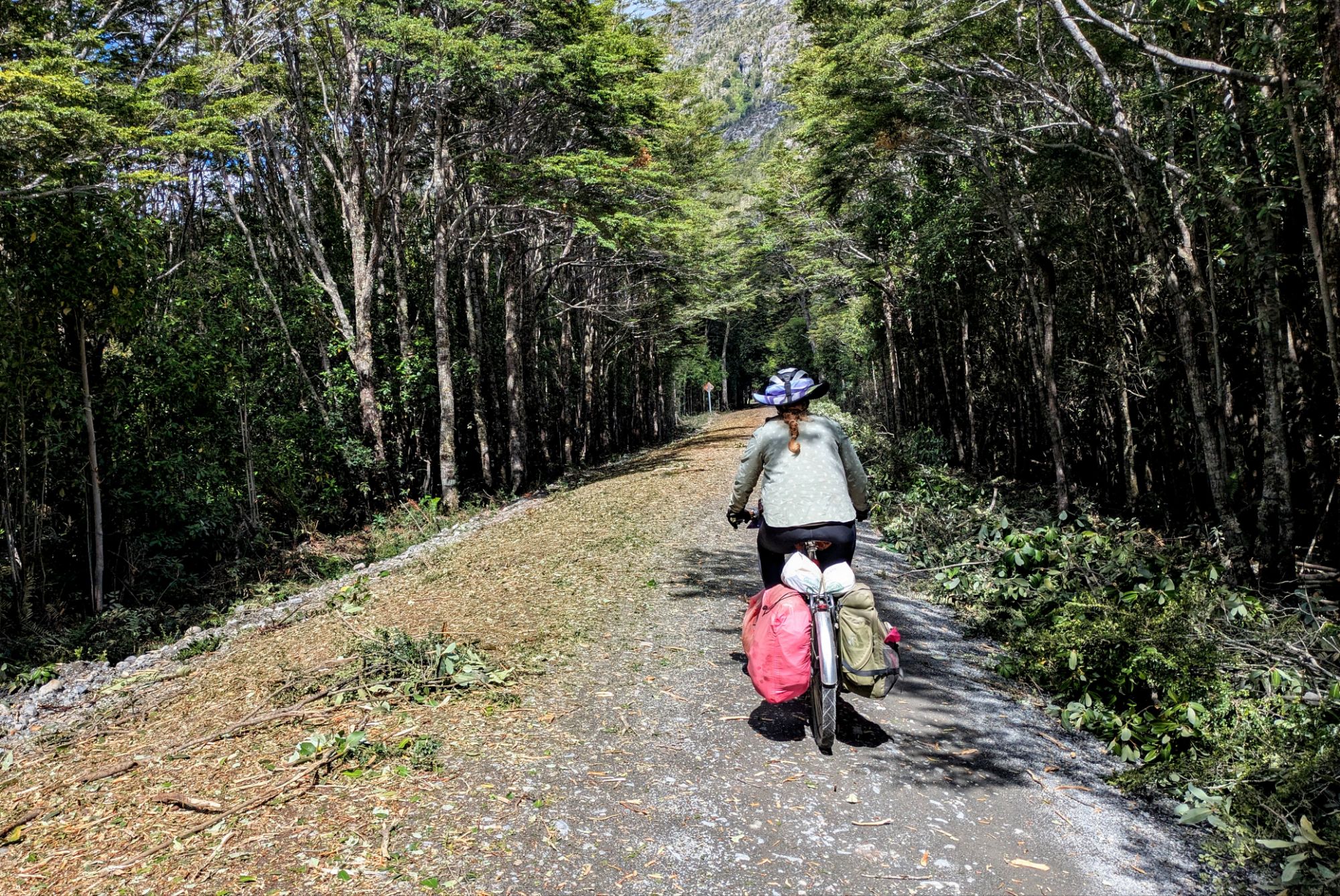
We arrived at “Camping Maria”, a relatively-new “campground” that was really just a family home responding the the needs of travelers. We were free to pitch our tent in the large lawn area, but Maria directed us to one of the two outbuildings that we could set up inside of (for the same ~US$11/person price), protected from the wind rushing up the valley. Excellent! The water is heated by a wood stove, but since that would take time, Rett was welcomed to use the bathroom inside the main house (where our Danish friend was also staying) rather than the small separate bathroom that I used after I completed the laborious process of re-tightening my kickstand (which thankfully waited until the last quarter-mile before coming loose).
Another couple of cyclists turned up around 5pm after crossing on the 4pm ferry, but the big crowd (of perhaps 8 more) didn’t turn up until 7pm. We had set up our tent at one end of the long and narrow outbuilding, but now three more people were joining us, essentially boxing us in. We warned them that we would be getting up very early (insanely early by their idiotic late-to-ride, late-to-bed, late-to-rise habits), but they didn’t seem to much care, so I guess we wouldn’t either. That meant we were trying to go to sleep at the same time a few people were cracking open beers for dinner (a small kitchen with another wood-burning stove was at the opposite end of our building), but thankfully they didn’t turn it into an all-night drinking fest.
Leave a Reply