
130 miles in a shared van
Home: Eduardo’s AirBNB
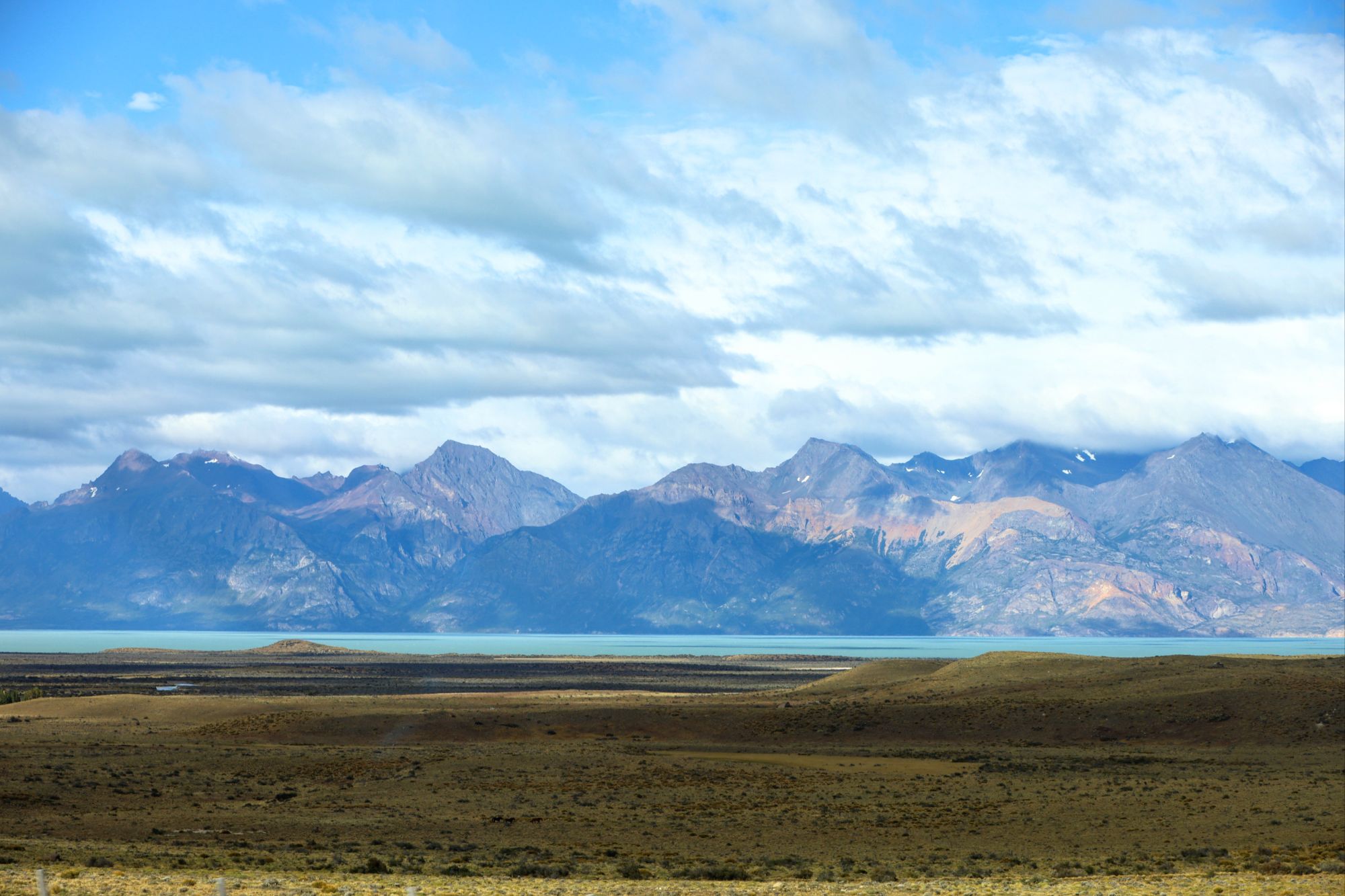
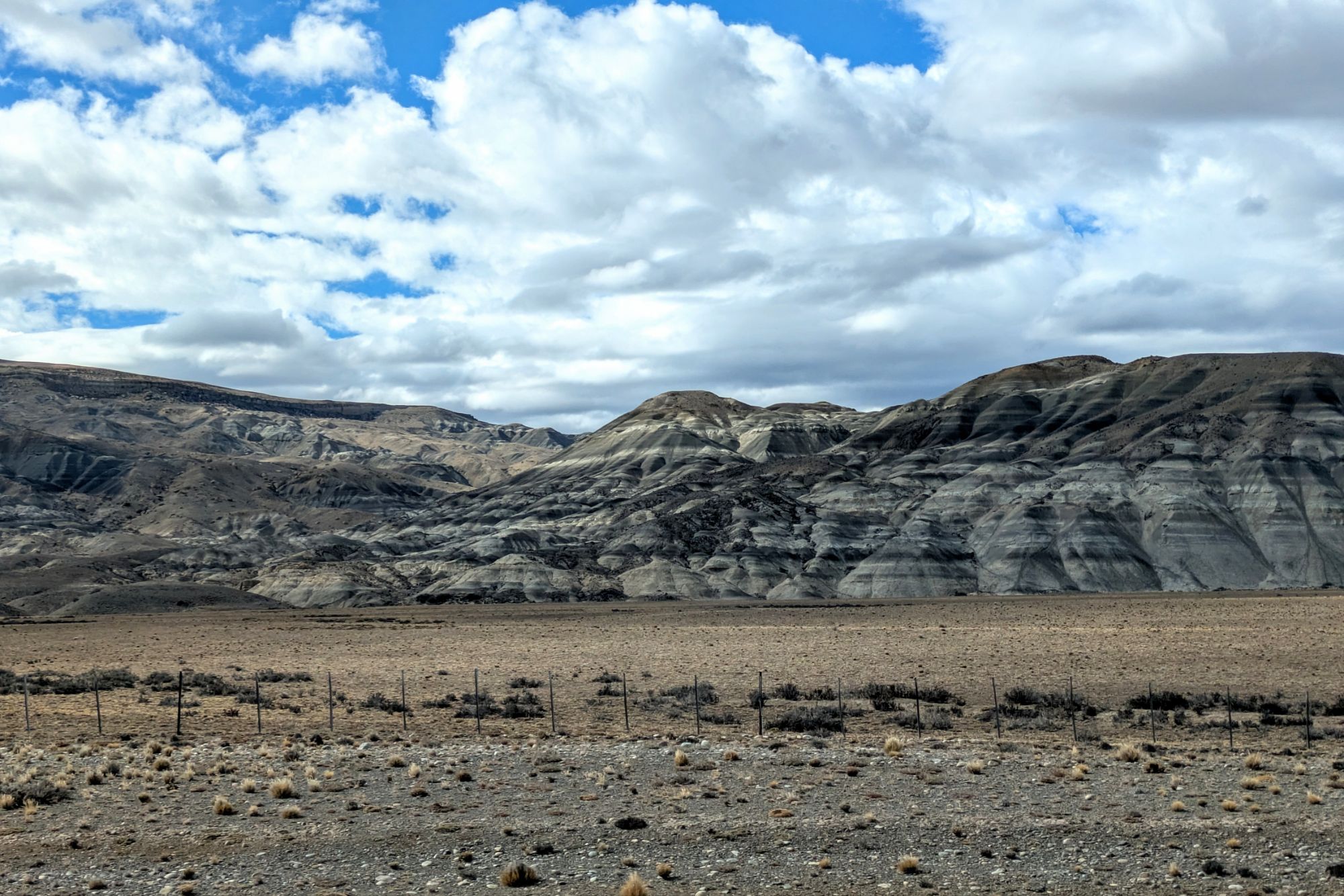
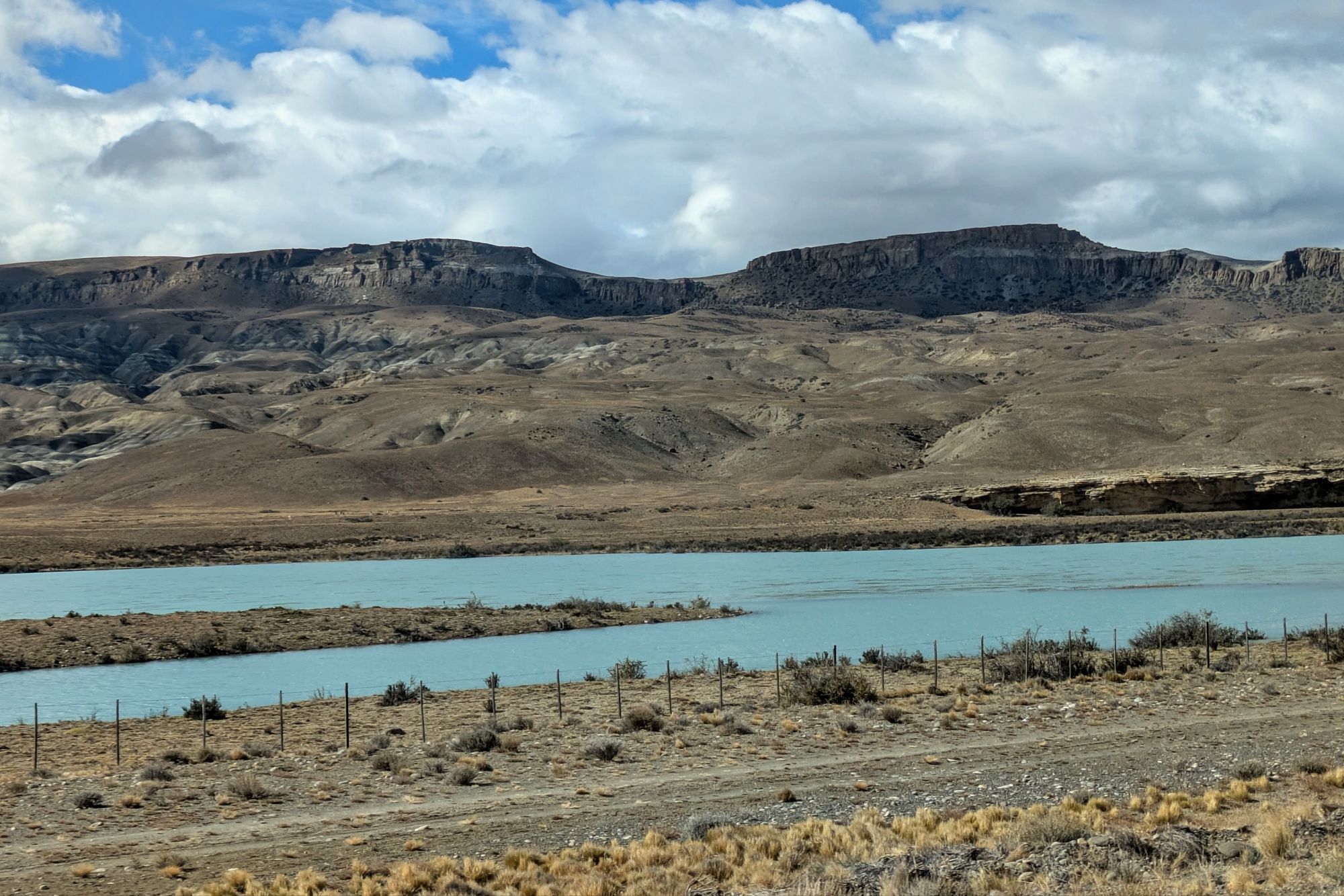
It’s a 4-day ride (for us) from El Chaltén to El Calafate. The road initially heads east, nearly reaching the center of the continent (it’s only 350 miles wide at this point), before returning to a generally-southward route. That means it leaves behind the sheltering mountains of the Carretera Austral, and heads into the desolate windswept plains of Argentina. Weather conditions were actually reasonably-good (not too insanely windy), and I plotted out stops that would get us to El Calafate without too much terror and exhaustion, as long as we were willing to sleep in some pretty rough and rustic conditions, potentially shared with the mass of other cyclists who are still continuing south in this high season. But I told Rett that if it sounded no fun to her, I would be willing to take some form of transport instead, as long as she took care of all the logistics.
I guess it sounded no fun to her, because she quickly jumped down a logistical path that became rather convoluted. Via a random Facebook comment, she contacted a travel agent, who happened to be in Brazil, to find a van that could drive us and our bikes. She quickly found a solution, but then the problem became payment. The travel agent had no online credit-card processing, we can’t do bank transfers with our foreign bank accounts, or use Wise, a PayPal-like service. In the end we did a wire transfer (adding my bank’s US$30 wire transfer fee to our cost), after several hours worth of frustrating dead-ends, and questions about whether this was some sort of scam. The “easy” solution would have been to find whatever local company our travel agent was talking with and just pay them directly, but we’d fallen too far down the rabbit hole to climb back up to that level.
It wasn’t clear until the van pulled up on our morning of departure how our bikes would be transported, but it was towing a small enclosed trailer that we easily rolled our bikes inside, and then stabilized with the rest of our bags on the floor. Perfect! And a good thing, because the 15-person van was basically full.
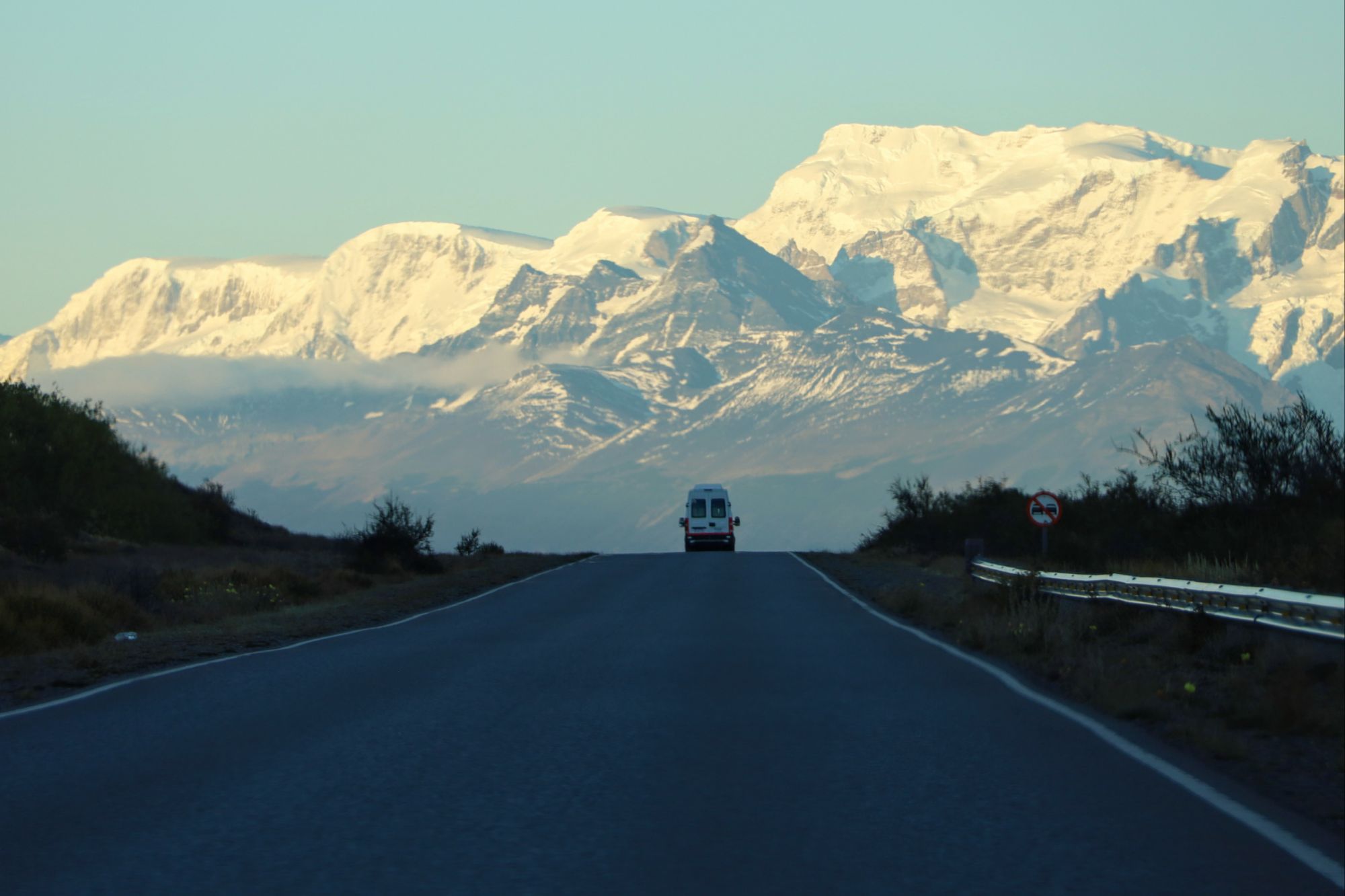
As usual, the drive had plenty of views that we would have preferred to see in their full wide-open presentation from the seats of our bikes. But there are definitely sections where we have regretted trapping ourselves in a vehicle more than this one. The van made a rest stop at the lonely outpost of La Leona, and that’s where we spotted Sharon and Lori, our compatriots from the border crossing, taking a rest stop in the middle of their second day of riding from El Chaltén. I felt more guilty that we couldn’t load them into the van with us than I felt jealous of their adventure, so that was good indication that the van was the right choice for us.
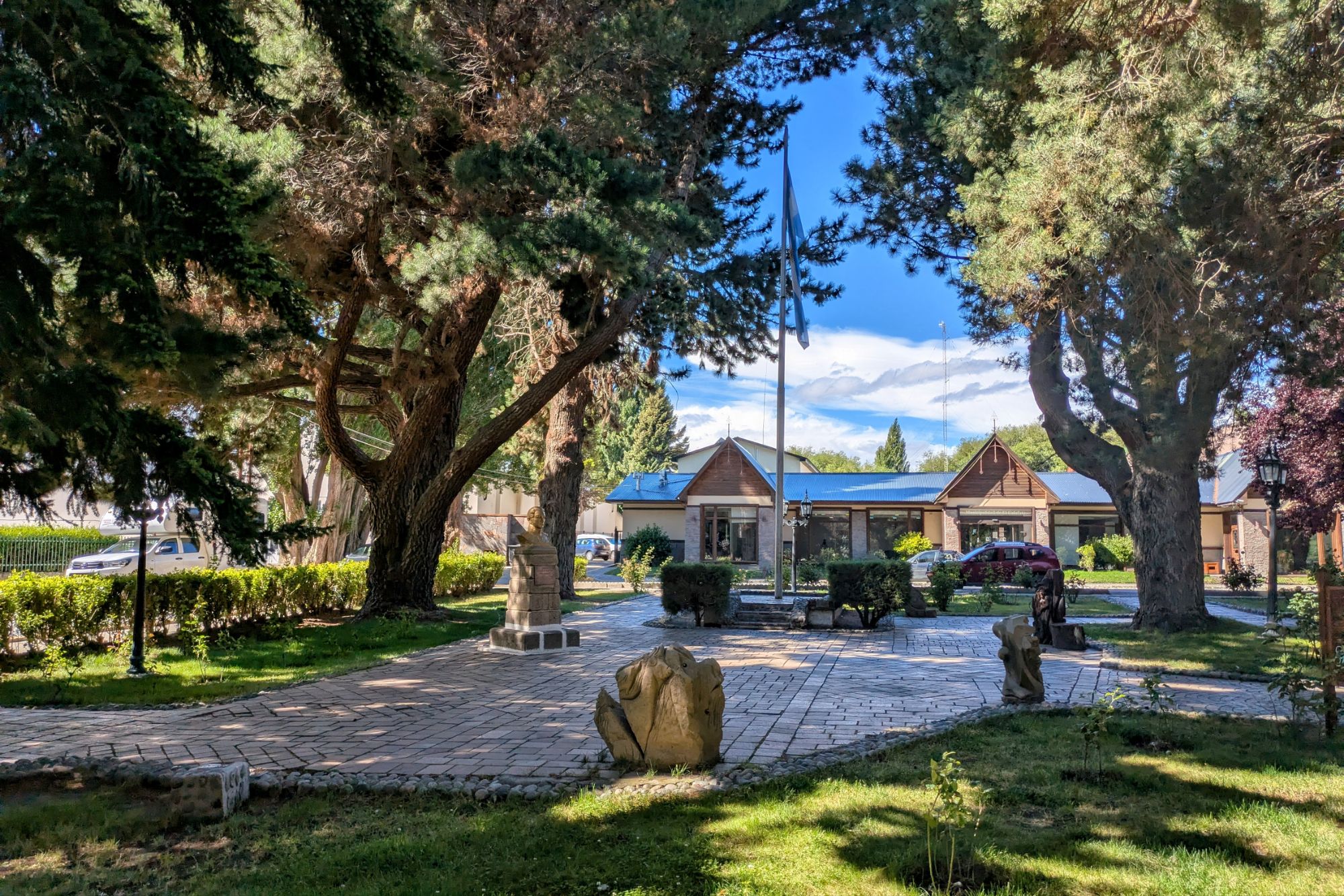
El Calafate is a surprising “oasis”. Someone had the foresight decades ago to plant a lot of trees, and they make the town much more-pleasant than the naturally-treeless environment in which it sits. It’s significantly larger than El Chaltén, which also means that less than 100% of the town is there to serve the needs of tourists. Which makes it significantly cheaper too, and part of the reason we evacuated from El Chaltén relatively-quickly. We settled into a really nice 2-bedroom house close to the center of the otherwise-sprawling town for half the price of our El Chaltén studio apartment.

Day 5: Perito Moreno Glacier
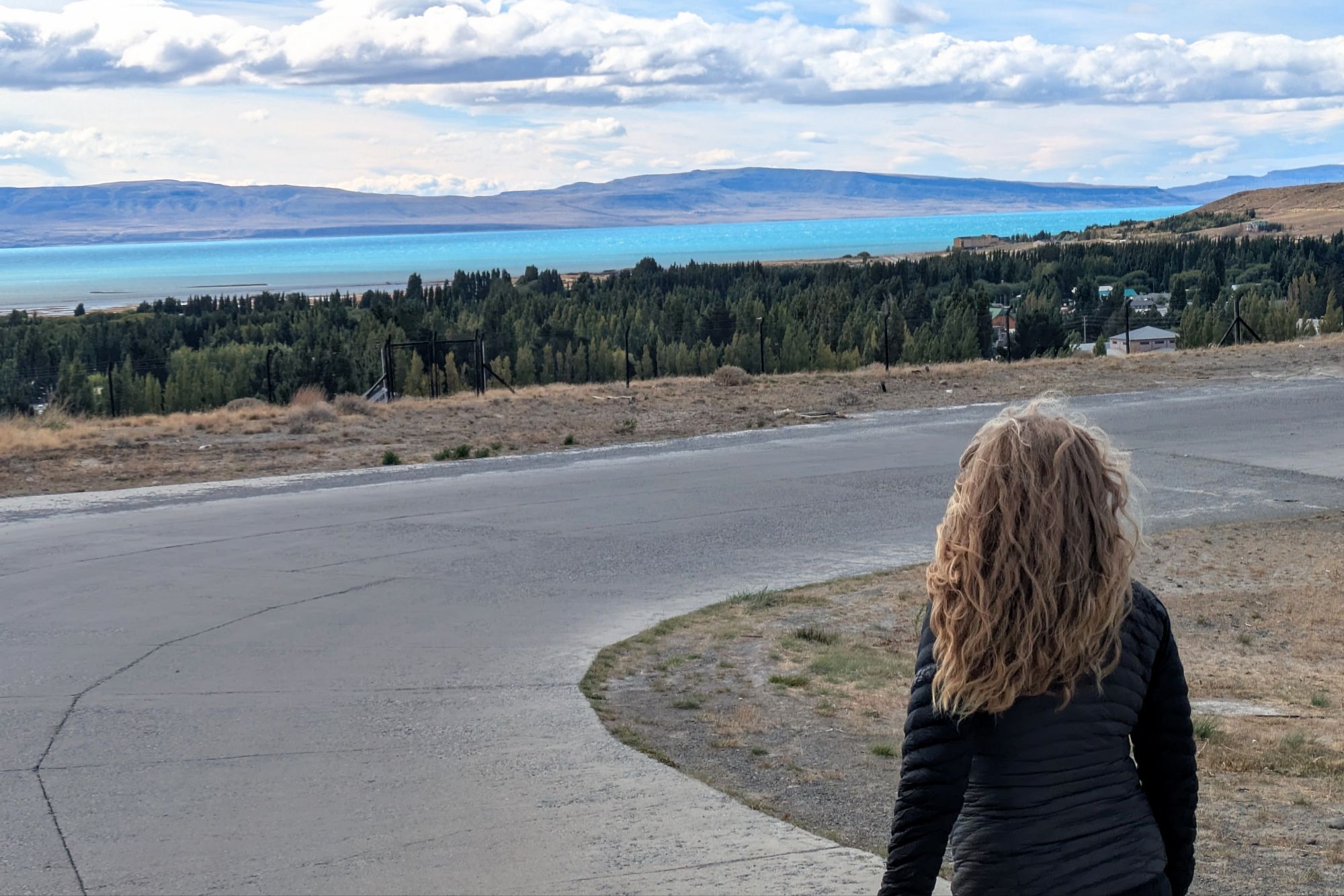
When I tried to solve the mystery of why 23,000 people have gathered to live at this remote and random place along the southern shore of Lago Argentino, the best answer I could find was the Perito Moreno Glacier. Even though the glacier is still a 90-minute drive from town, I saw a claim that 90% of visitors to El Calafate travel to the glacier at some point. By nature, I generally prefer to be in the 10% of anything rather than the 90%, but this is a case where I didn’t mind joining the crowds; if the pull of the glacier is strong enough to have built this town up from just 6400 residents in 2001, who am I to resist?
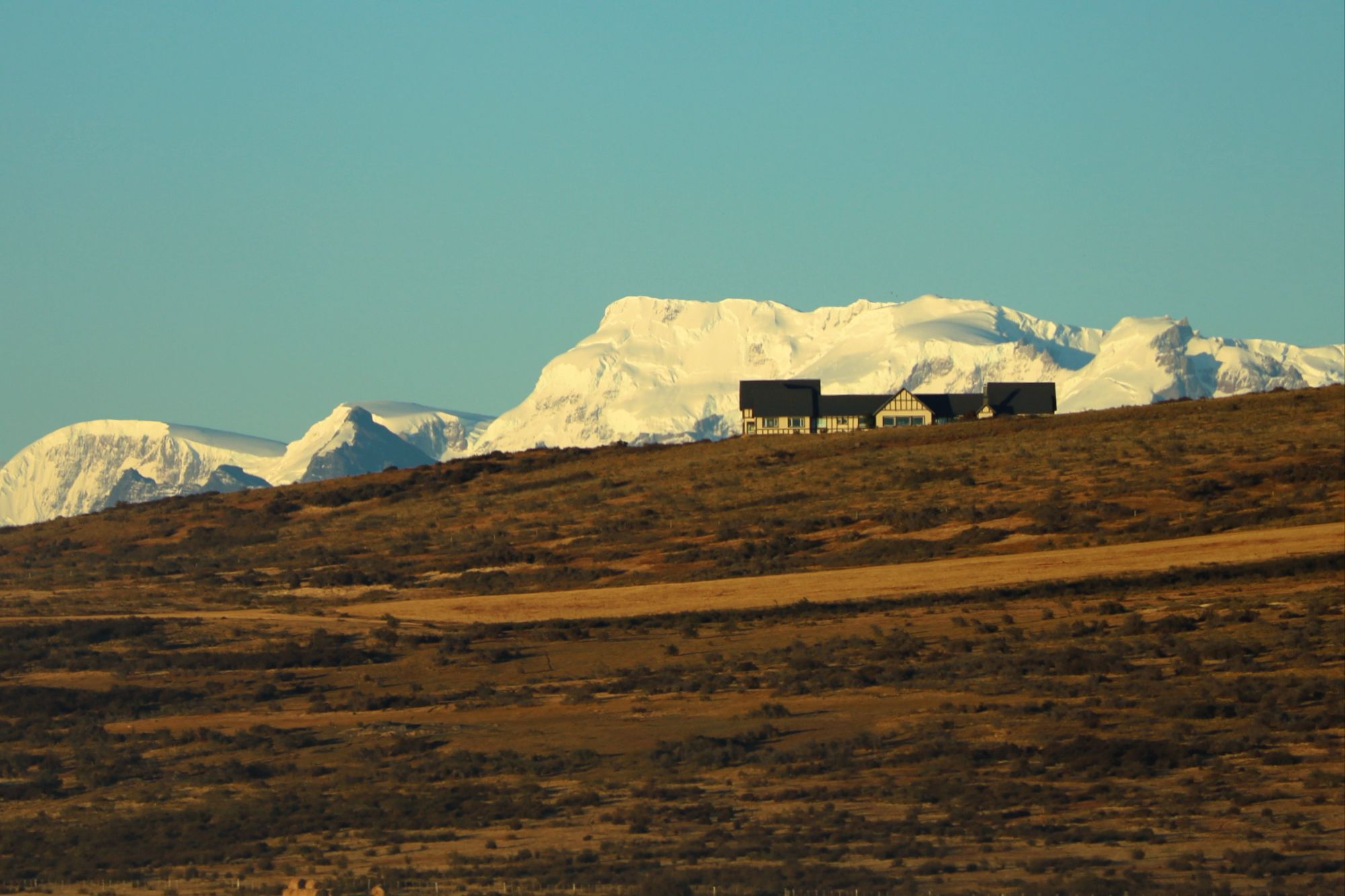
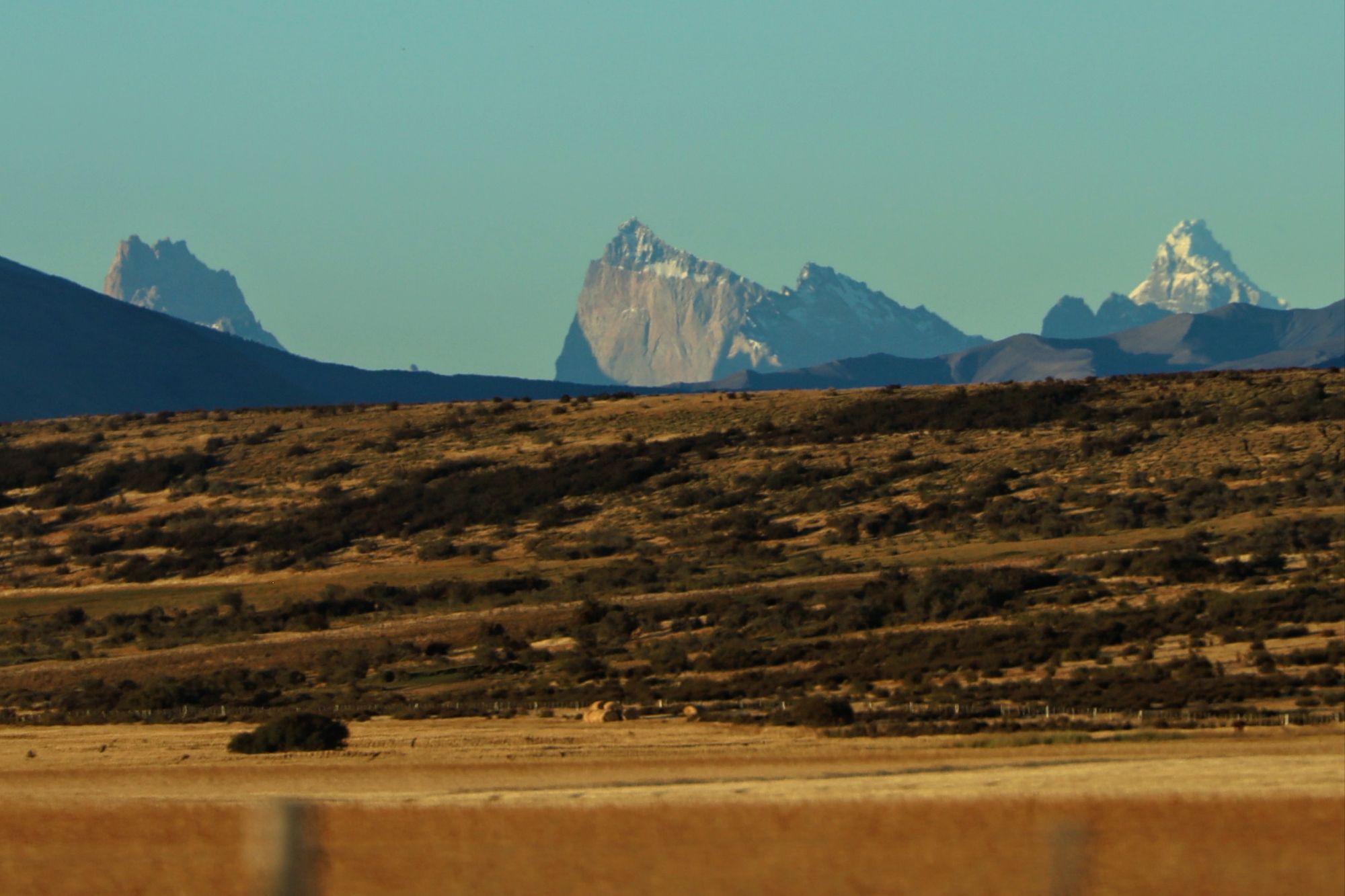
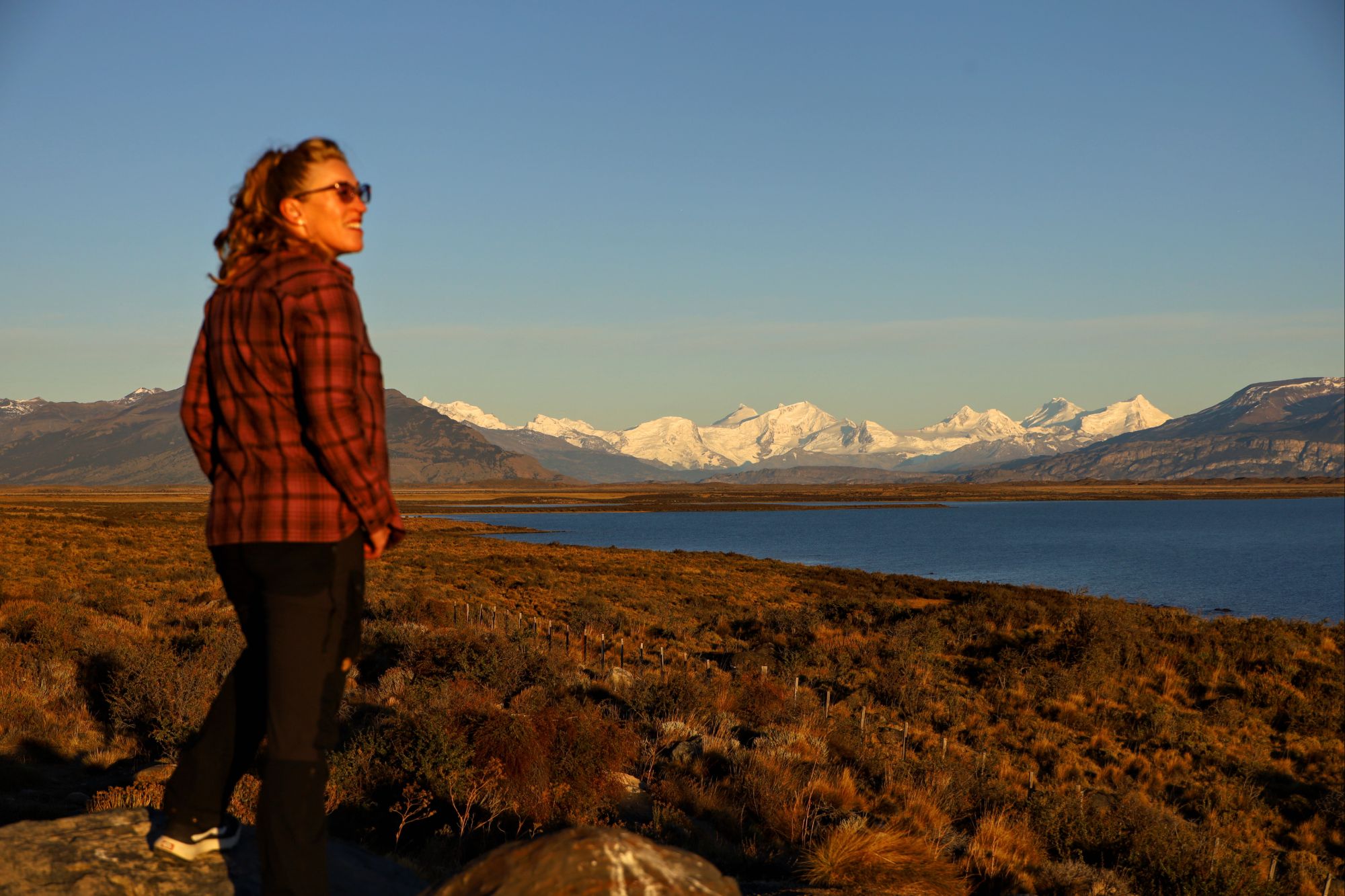
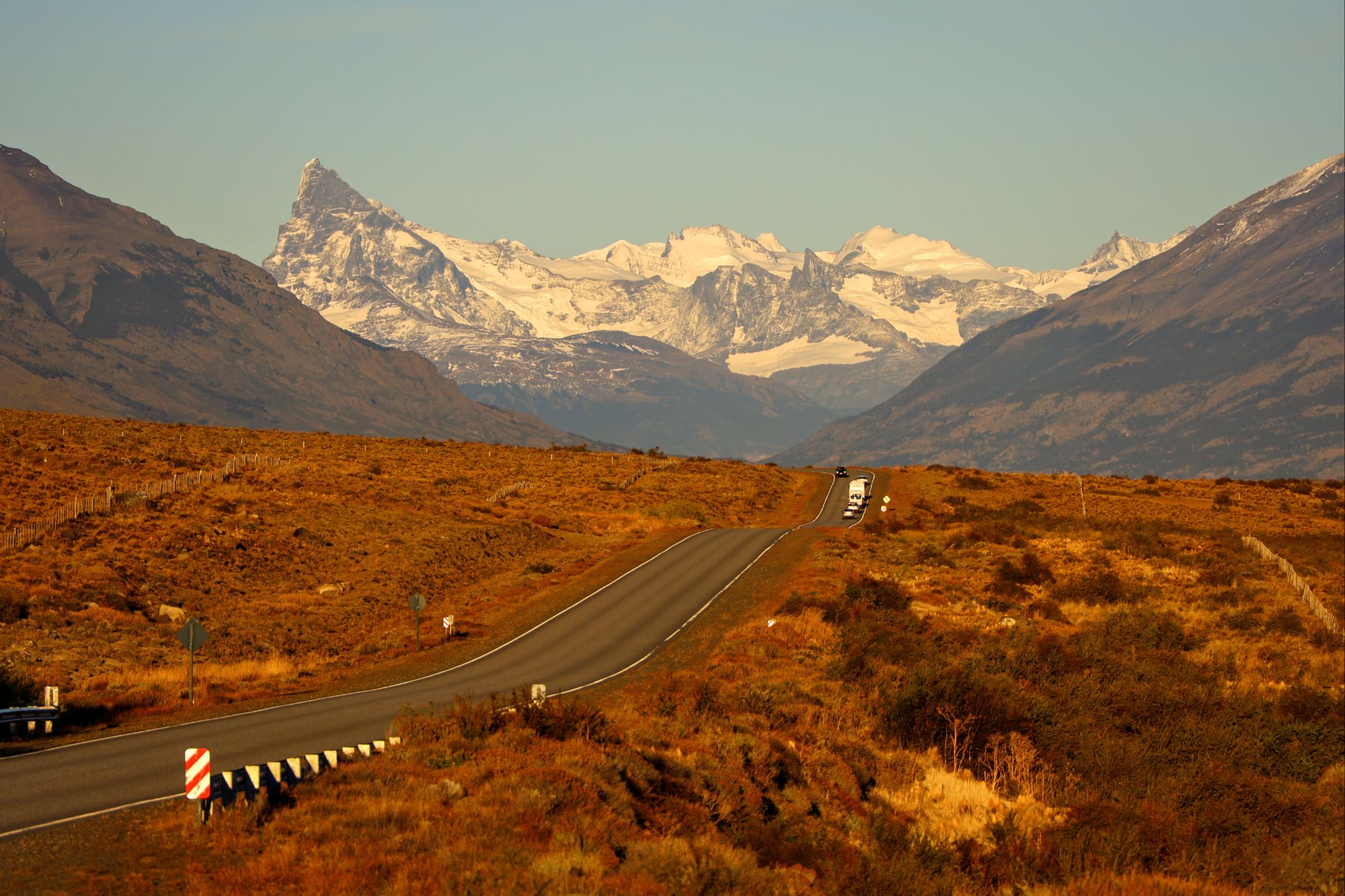
Well, and we’d still be avoiding the crowds a bit. Rett hired us a private taxi that would get us there well before any of the buses, and at ~US$130, it was only 50% more than a bus. As usual, we specifically chose a sunny day, and the drive alone (back west, returning to the spine of the Andes) was worth a significant part of the cost.
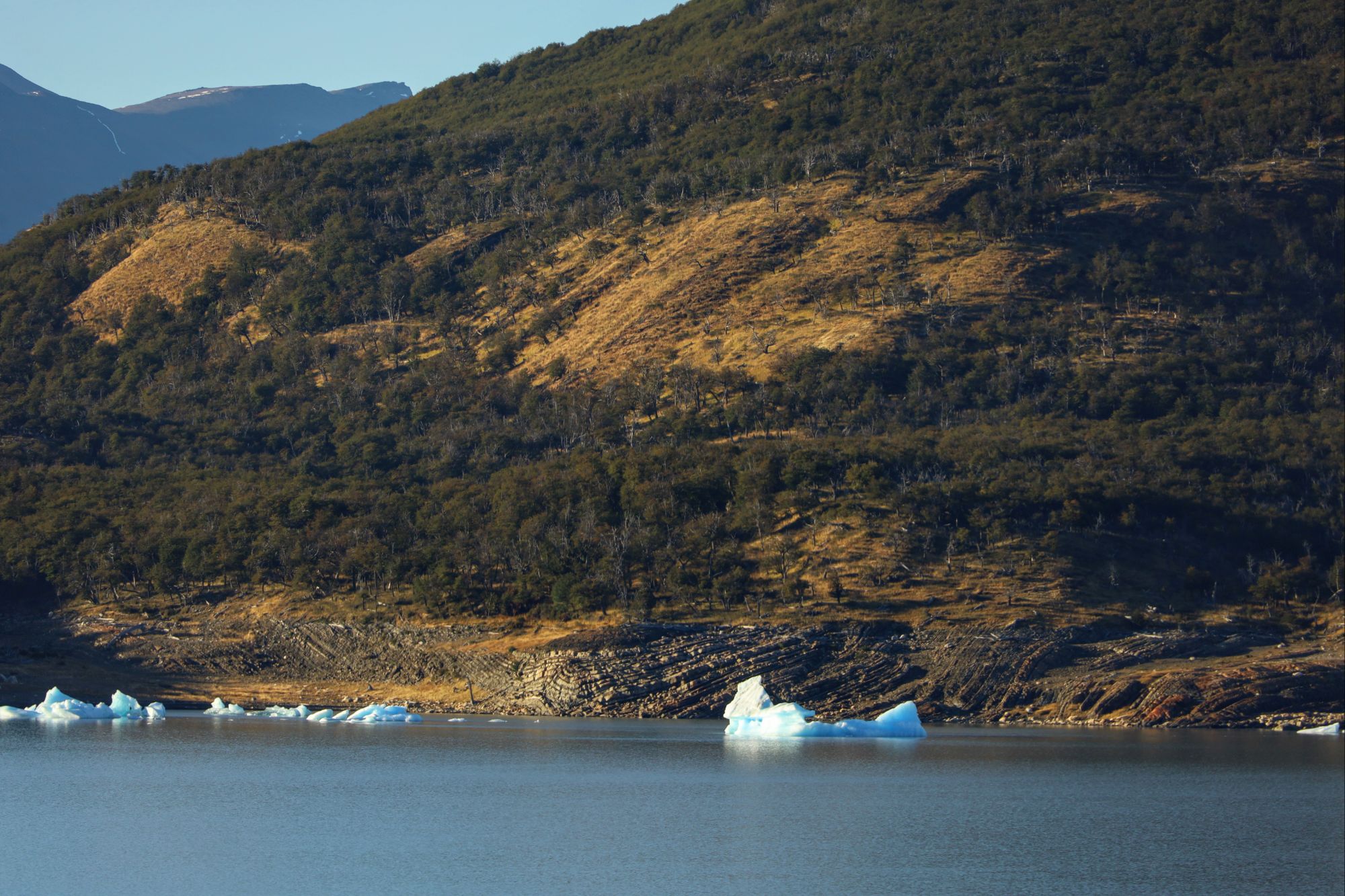
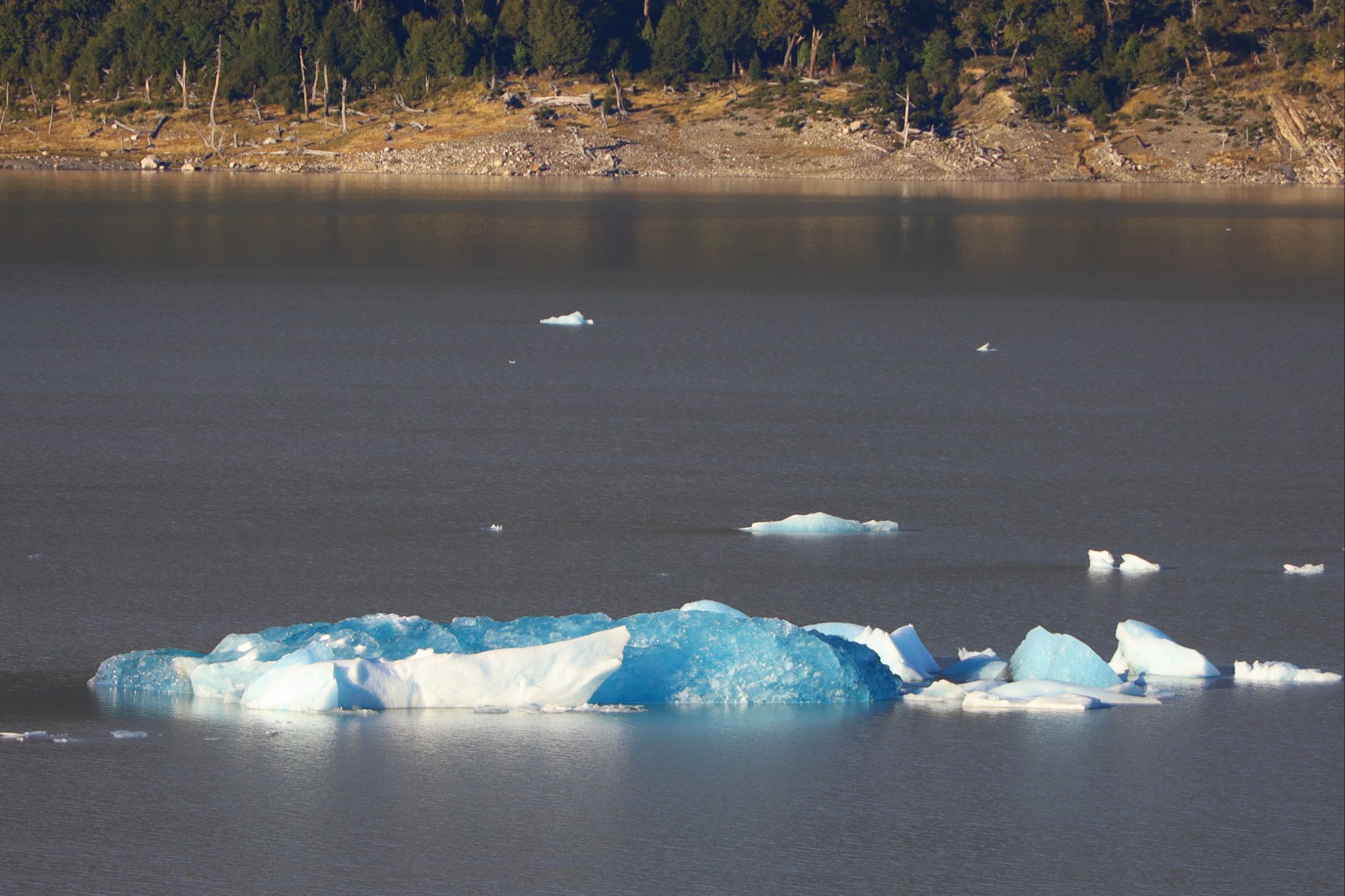
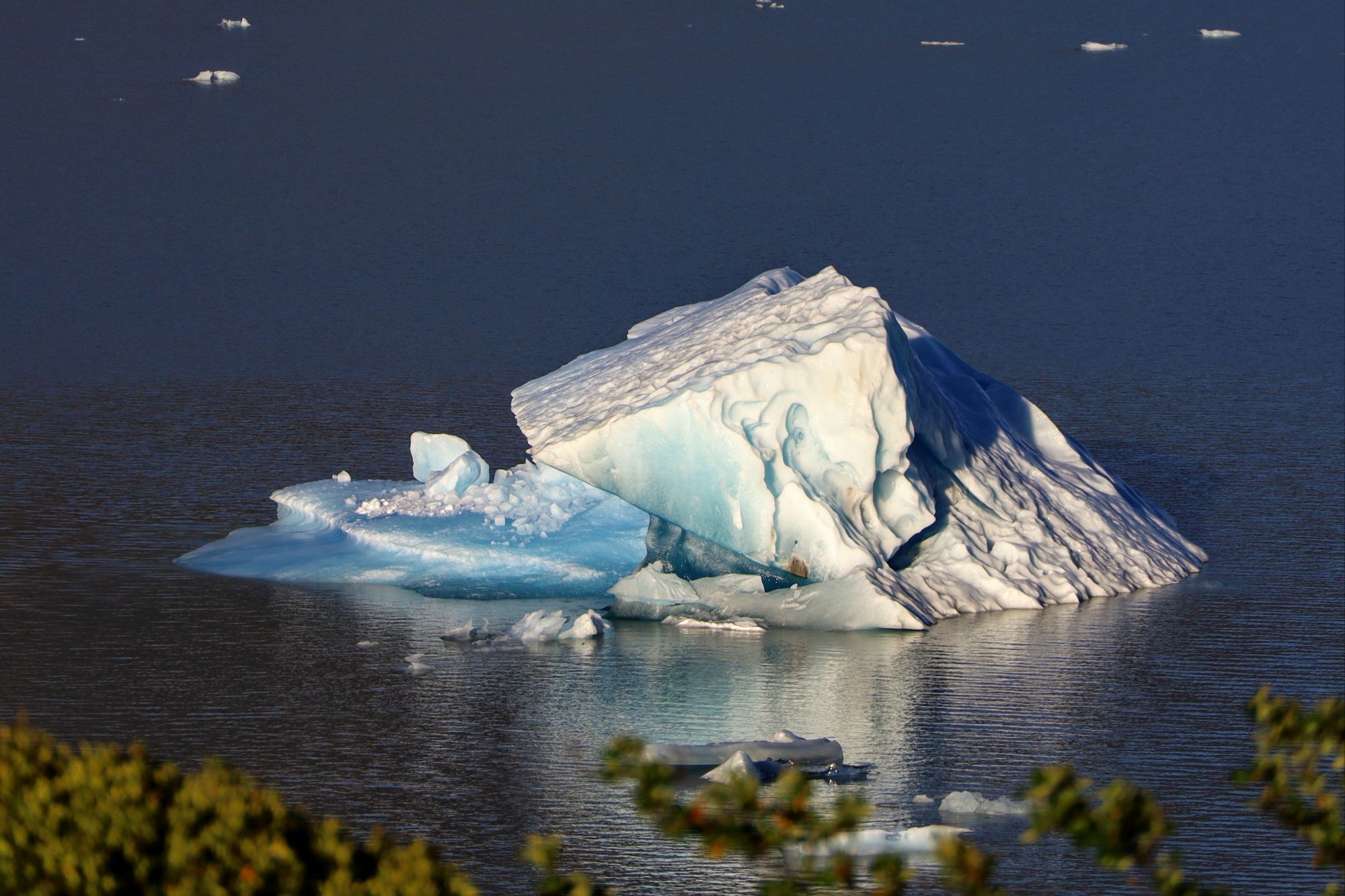
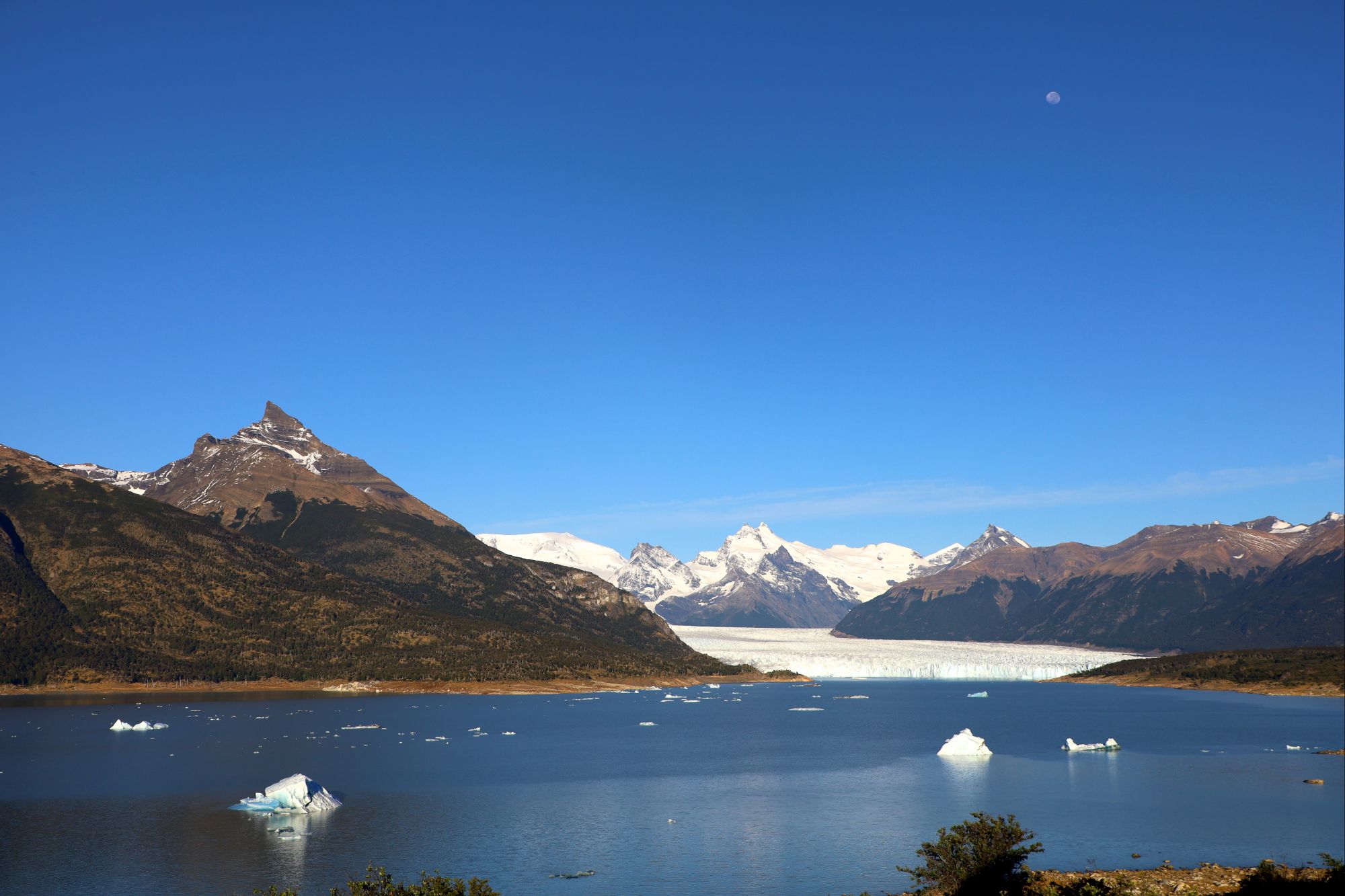
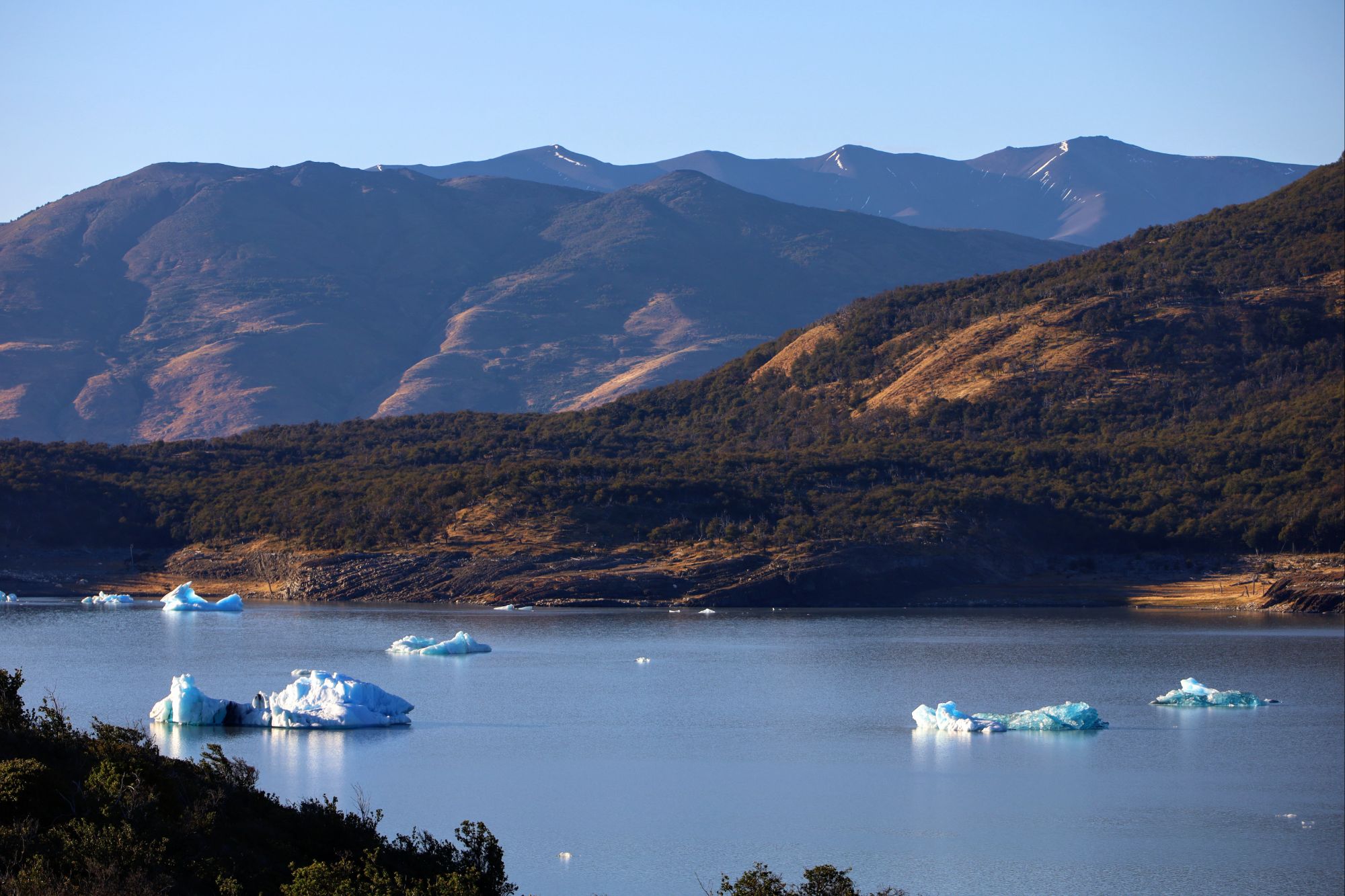
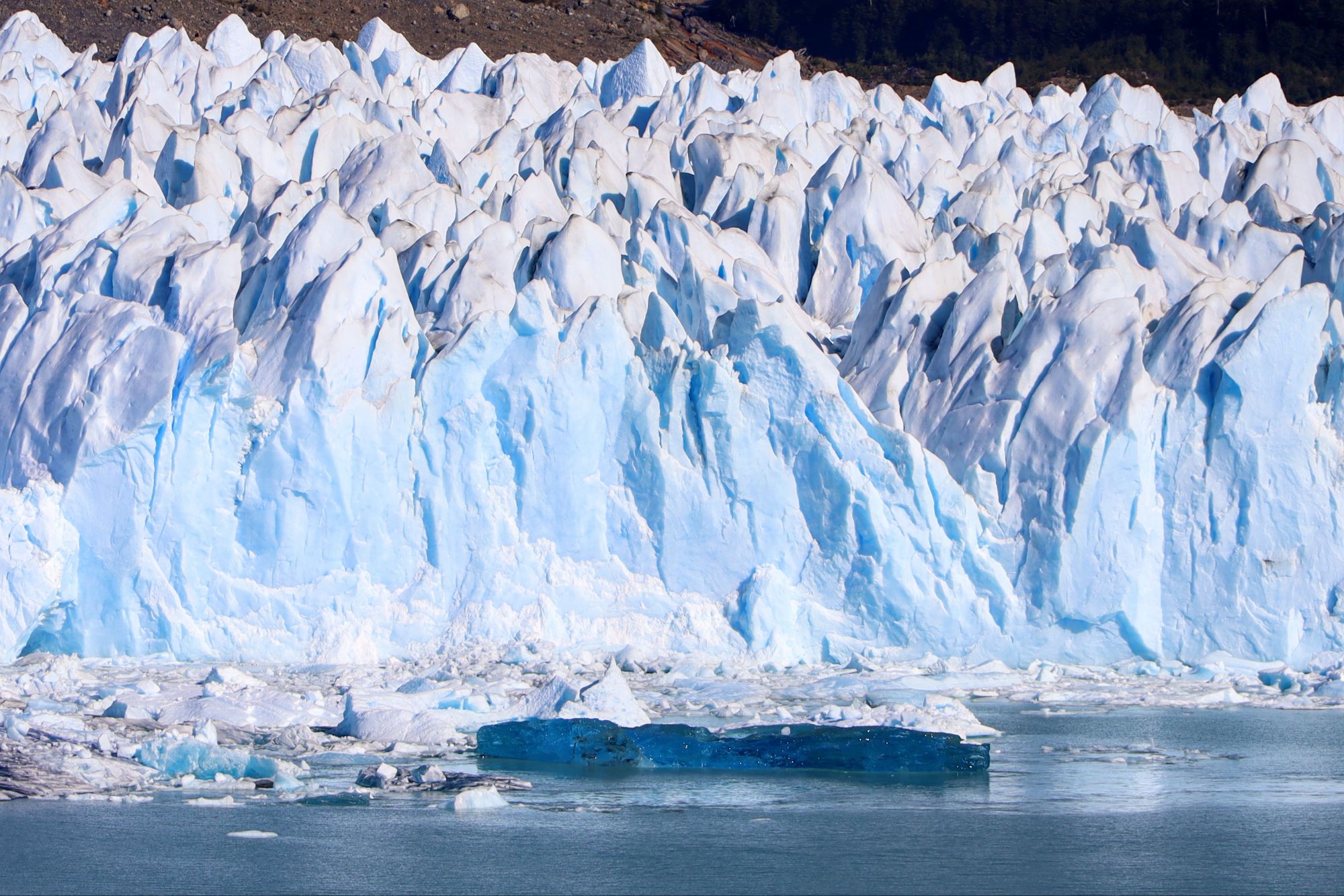
The National Park Service, to whom we had to again pay ~US$34 for entry, has at least put that money to good use building an extensive network of boardwalk/platforms onto the bulge of rock that faces the glacier across the water. Our relatively-early arrival meant that we could wander far down a “trail” and be completely alone to listen to the otherworldly thundering and banging sounds of the ice cracking and collapsing into the lake. There were periods when the echoing sounds were near-constant, though the majority of whatever movements were causing them were hidden from our view.
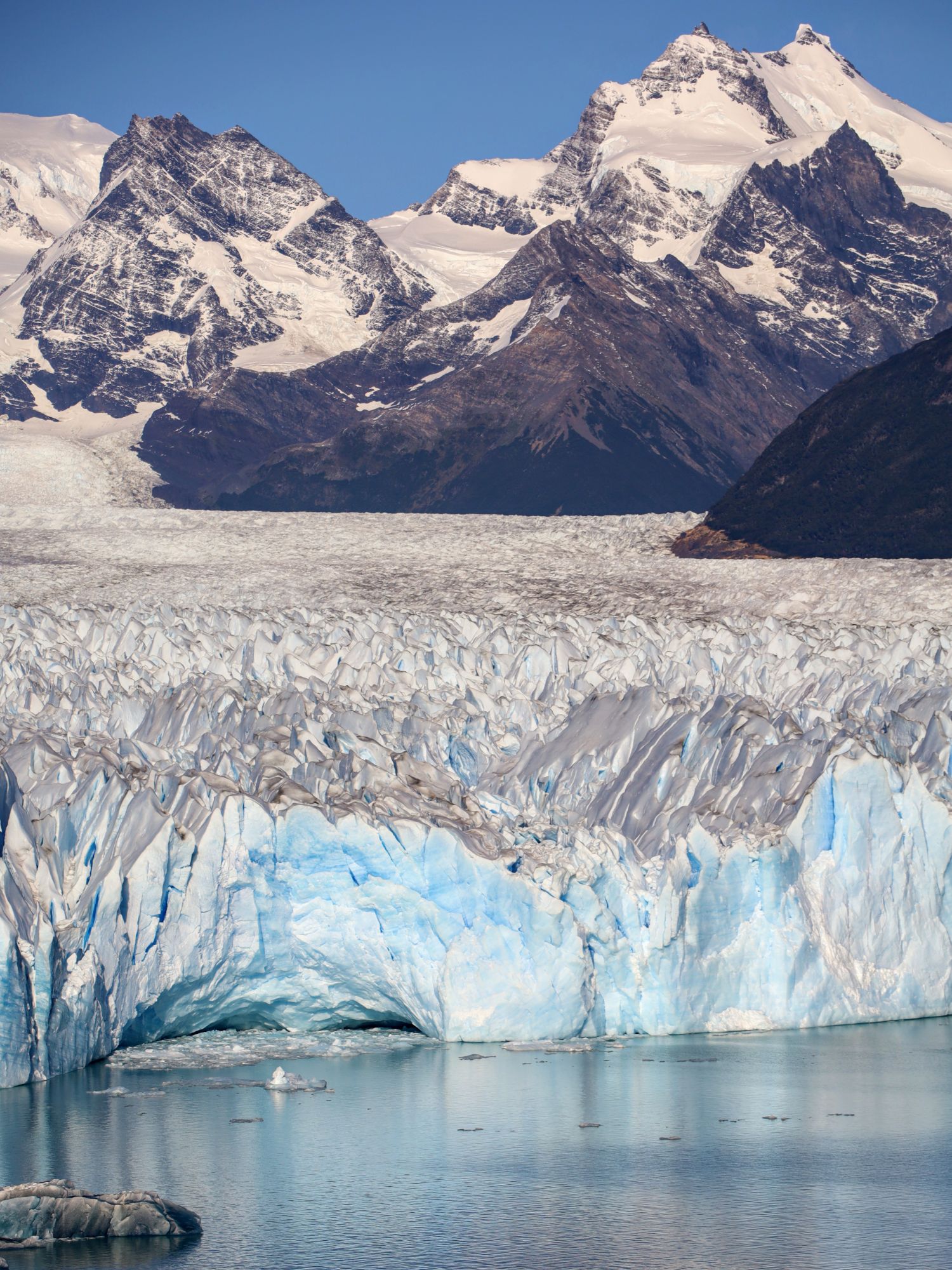
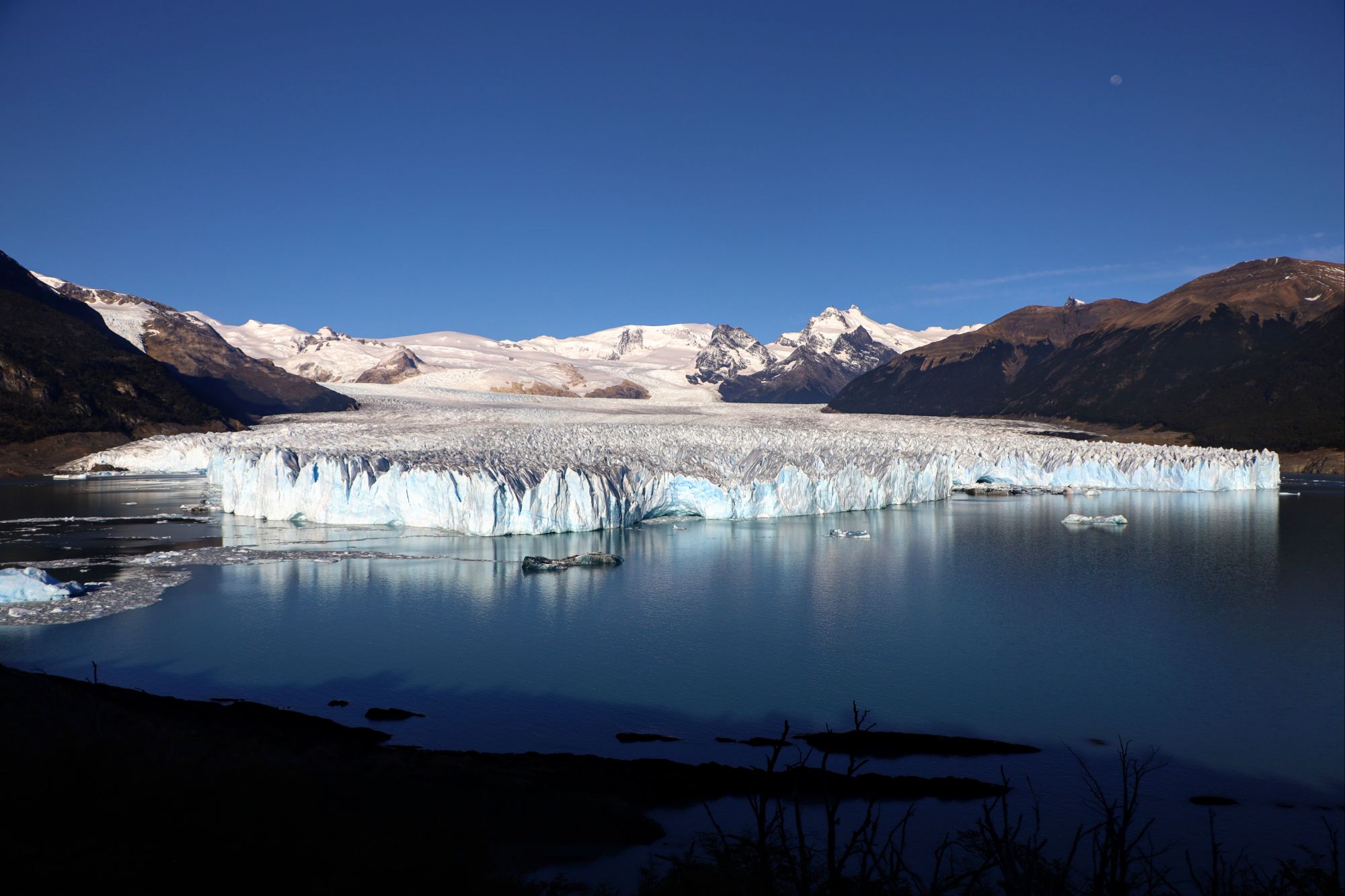
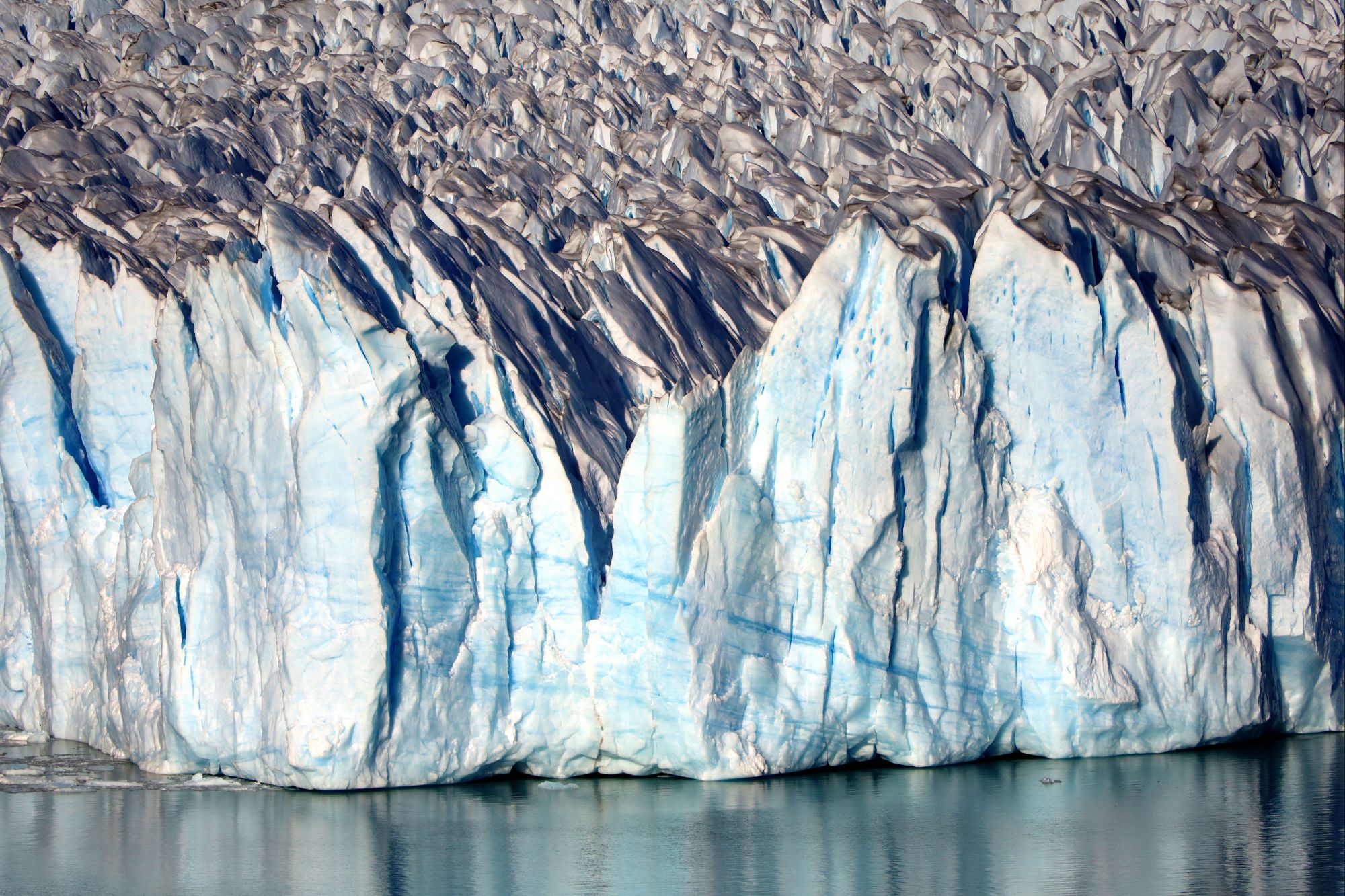
We spent about three hours listening and watching. In that time we walked almost all of the boardwalks, but we also spent a lot of time just looking at the glacier and trying to spot ice falling into the water. Even if we saw nothing, it was a pleasant change-of-pace to spend an hour together “doing nothing”, a rare moment when neither of us had even a phone in our face.
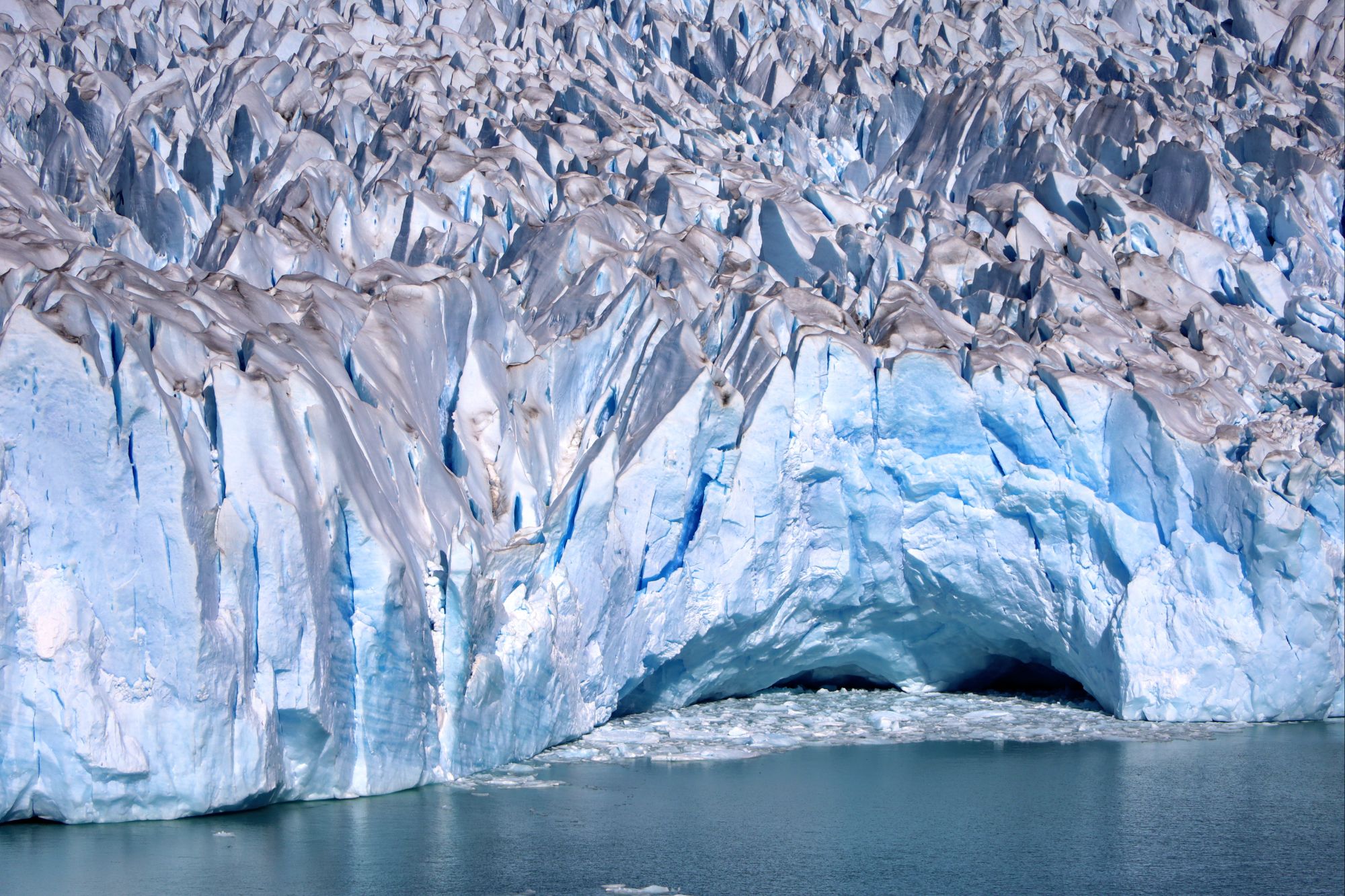
But then, we saw a whole lot! A column the size of a 15-story office tower broke free and smashed into the water, generating the largest circular “ripples on a pond” I’ve ever seen. Multiple times massive chunks broke loose from “eyebrow” caves, with the subsequent aquatic violence often cascading into further disintegration. The distance meant we couldn’t rely on the sounds to pull our attention, because they would only reach our ears 2 to 4 seconds after an iceberg calved. Though the incomprehensibly-massive towers have such inertia that they often appear like they’re falling in slow-motion, so it was still worth turning toward every noise. And the sonic delay also helped to illustrate the scale of what we were looking at (and the volume of what we were hearing!), which otherwise would have been completely impossible to grasp. I’ve never seen a stadium demolition in person, but here it felt like we saw half-a-dozen in one sitting.
There are a handful other other activities you can do, like taking a boat ride to get a bit closer, or more death-defying, paddle a kayak. And you can take a boat to the land next to the glacier and walk onto its surface. But it seemed unlikely that anything would top our experience of helicoptering to hike on Fox Glacier in New Zealand, so just the “free”, basic experience felt more-than-satisfying.
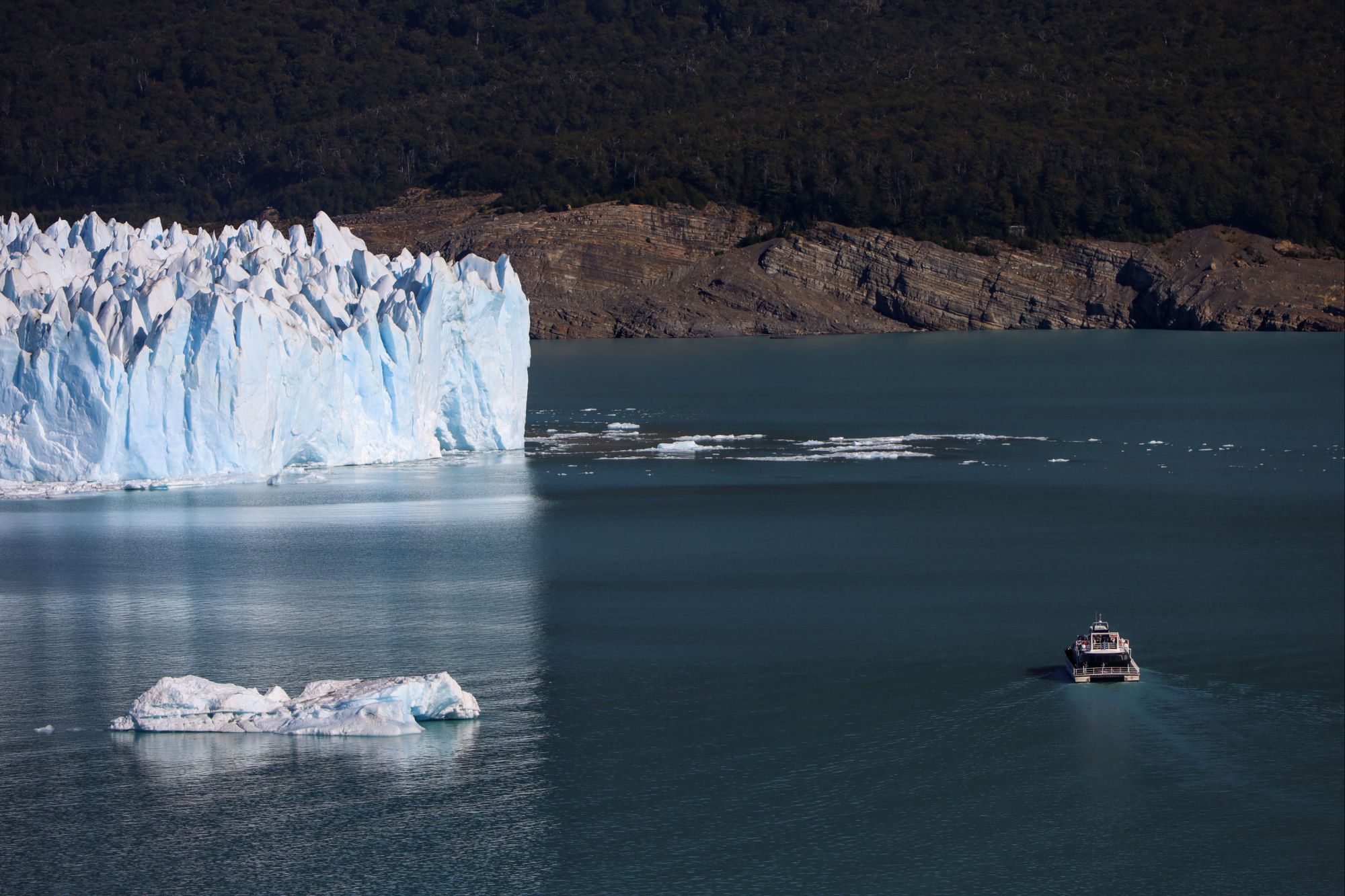
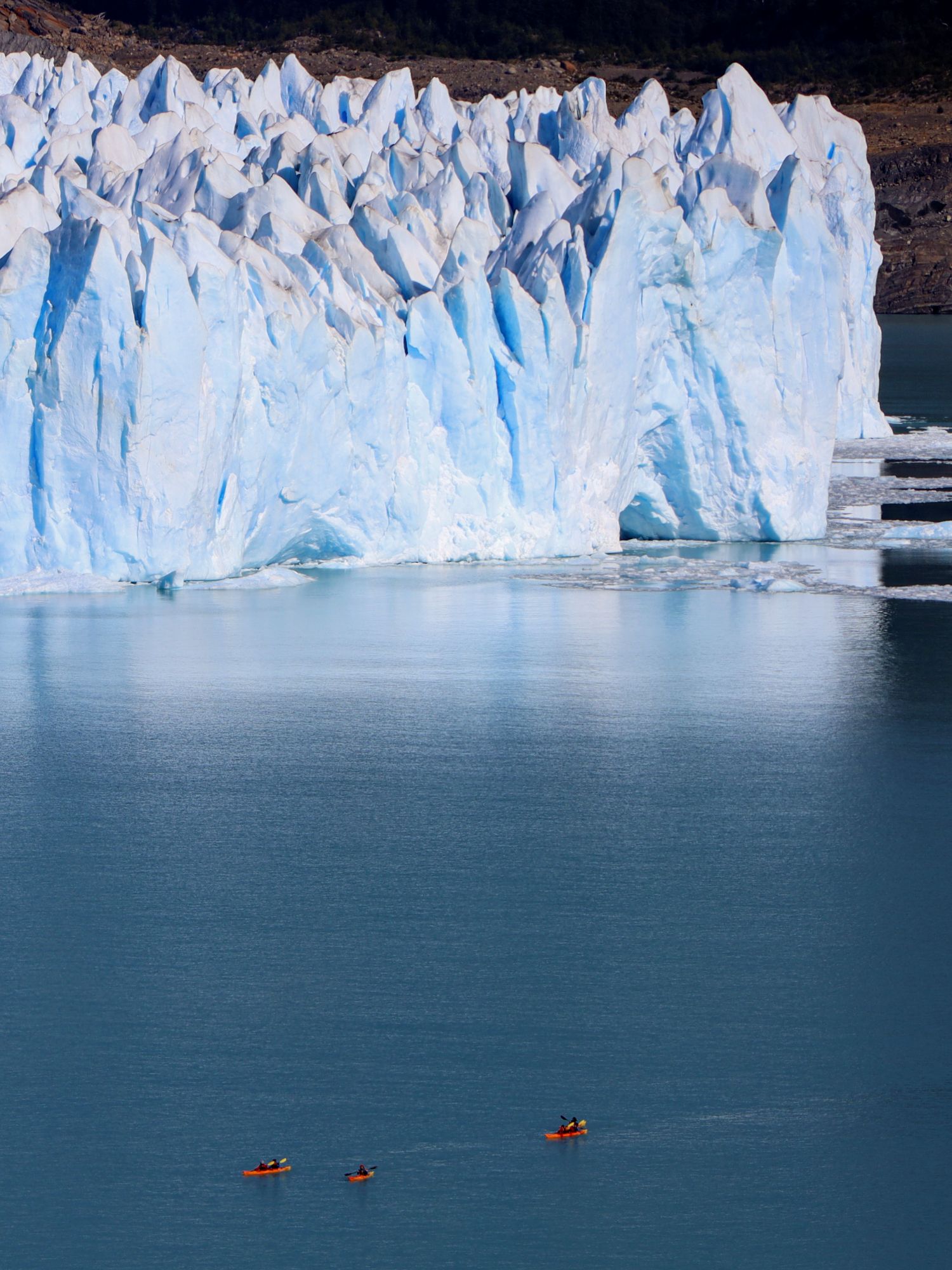
Even well into the 21st century, the Perito Moreno Glacier is known as one of the few “stable” glaciers in the world, while climate change has caused so many others to rapidly retreat. And the thing it’s most-famous for is “The Rupture”, which has happened every 2-5 years, when the massive tongue of ice licks the bulge of rock that the platforms are on, and gets stuck to it, creating a dam in the lake. Eventually the water pressure causes the dam to collapse in an epic cataclysm an order of magnitude more violent than anything we saw. I knew going in that the glacier wasn’t currently in that phase, so I wasn’t disappointed.
What I didn’t know until much later, is that those who saw the last Rupture, in 2019, are likely the last humans who will ever witness that incredible event. After that last gasp, the glacier finally began succumbing to the climate effects it had somehow ignored for so long, rapidly thinning. Still, until less than a year ago, the tongue remained within a couple hundred meters of the viewing platforms, where it had sat for a century. But then it became “unpinned” from the bedrock holding it there, and rapidly disintegrated. When we saw it, its face was nearly four times further away than it had been for decades.
This collapse is so new that it seems few people are even aware of it yet. This distant remote place is not somewhere people regularly return to, so most tourists, like me, assume what they’re seeing is “normal”. Wikipedia still lists the height of the wall as 240 ft., but calculations with maps and my camera show it’s now only 150 feet. 250 acres of its surface have disappeared into the water in just the first three months of this year. I had thought the extensive length of the boardwalks was a bit unnecessary, since walking the half mile from one end to the other didn’t do all that much to change your perspective, but now I realize that when the tongue was slammed right up in your face, the boardwalks were necessary to “get around” the glacier to view other sides of it.
It’s a little scary to think that the town of El Calafate could soon mirror the glacier’s collapse, since a large part of its rapidly-growing economy has been depending on the glacier’s continuing stability. Will anyone still come here when the face is twice as far as it is now (which could easily happen by the end of this year if the current rate of collapse continues)?
Maybe! Because we thought it was an absolutely incredible and unique experience, and until I got to the computer and did some research, I had no idea I was seeing it in a “diminished” form. I suppose at least the boat tours will be happy, since they’ll become a lot more “worth it” vs. just staying on the now-distant land. But I also wonder if, due to its ongoing collapse, we lucked into seeing and hearing a lot more “action” than normal? (that’s why I think the lake was much more iceberg-filled than it usually is). Either way, it seems the destruction that was so thrilling to witness is unlikely be a balanced half of an eternal creation/destruction cycle like I’d been assuming. It was simply destruction, and that knowledge now makes me feel a bit ill.


Leave a Reply