
18.2 mi / 8.5 mph / 913 ft. climbing
Home: Bath Marina & Caravan Park
The main reason we selected a motorway Travelodge as our overnight accommodation was its proximity to Castle Combe. This is a medieval village (which doesn’t actually have a castle) that Rett found in her scan of the region of interesting places for us to visit. Our hotel location would make it easy to pass through on our way into Bath, early in the morning before it became overwhelmed with the day’s tourists. Shortly before leaving New York, we saw a segment on “Today” about “The Hamptons of England”, which referred not to Southampton, but to The Cotswolds, supposedly because Americans are now treating the heavily-CottageCore region as another summer haven to decamp to. Castle Combe is in the southern end of The Cotswolds, so I guess we are doing our patriotic duty.
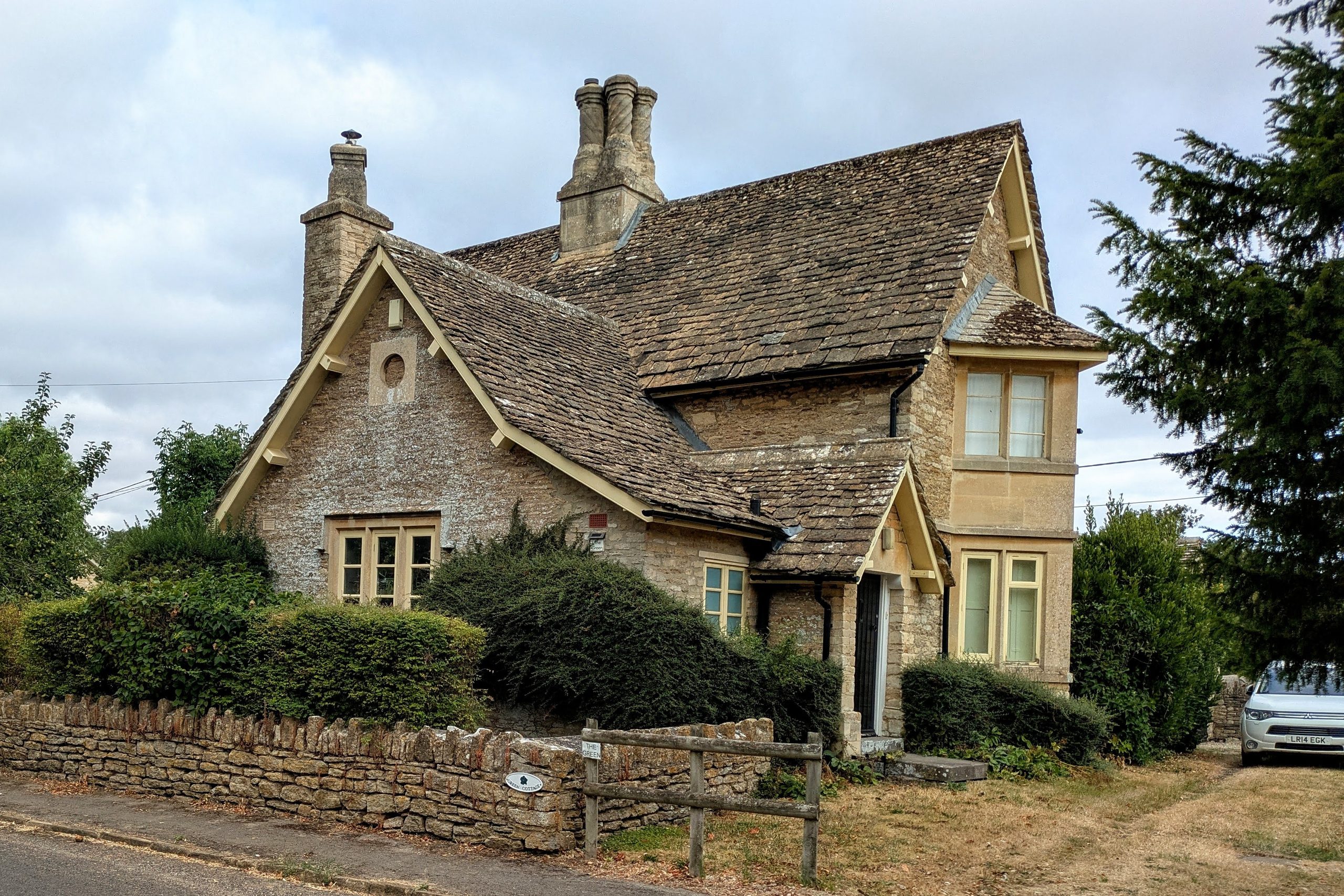
We had put Castle Combe on our list before we even started riding in England, but now after a few days of regularly “discovering” time-traveling rural villages simply as a side-effect of searching out quiet roads for cycling, I was curious whether Castle Combe would feel any more special than the villages we had already seen. Or had it become A Thing solely because some travel blogger made a wrong turn in 2018, wrote about her “discovery” of this village, and that post went viral on Instagram?
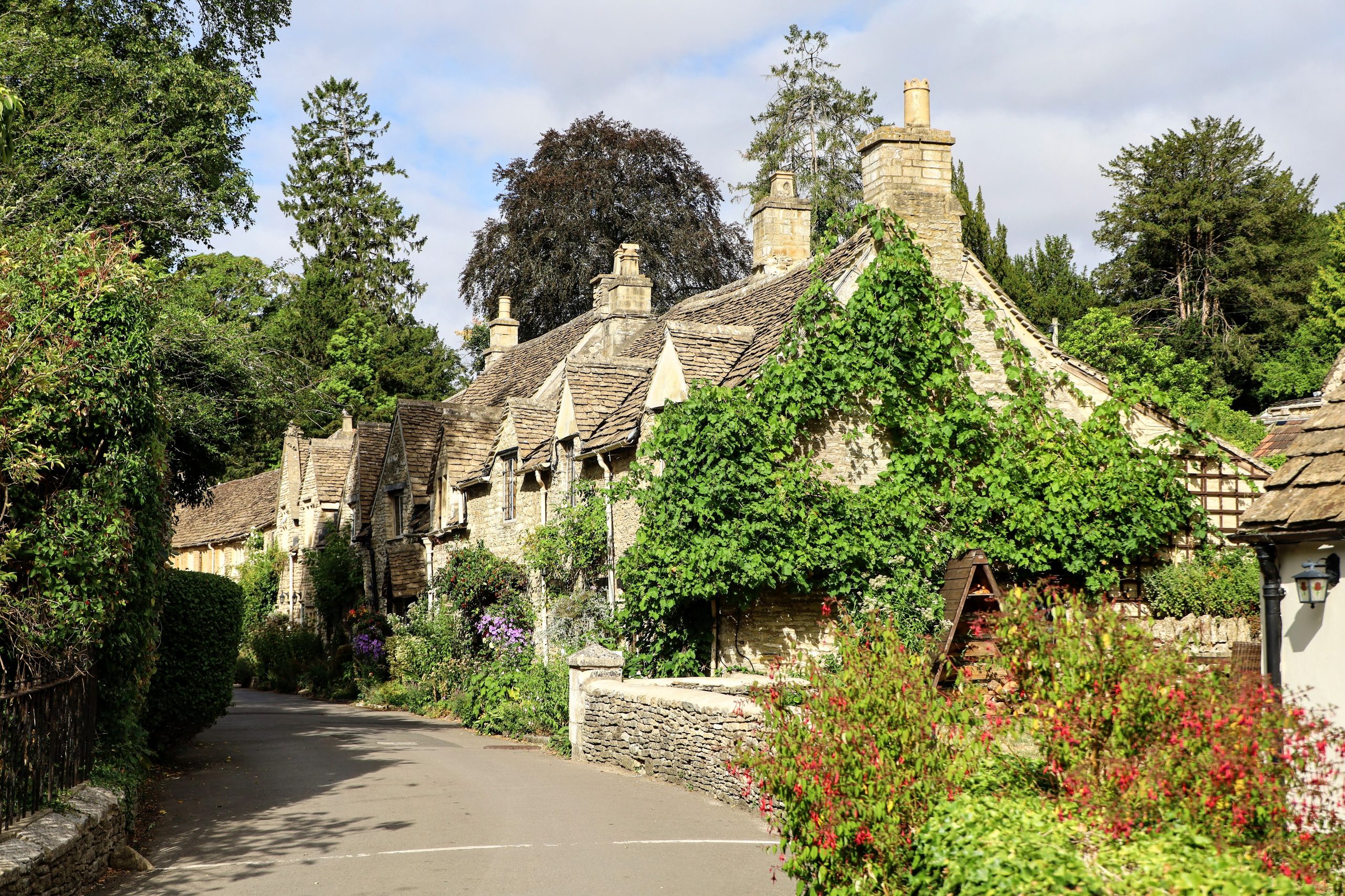
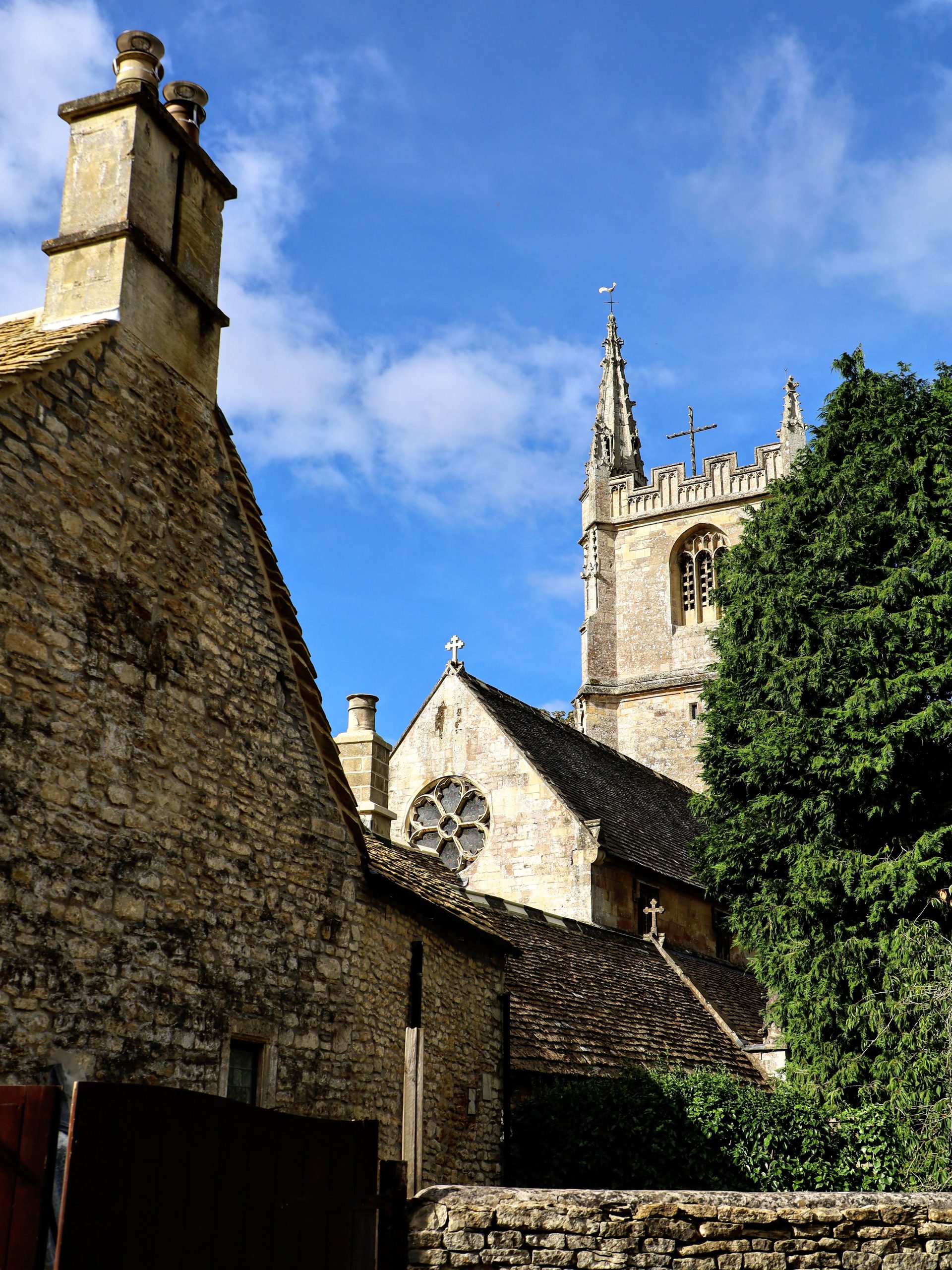
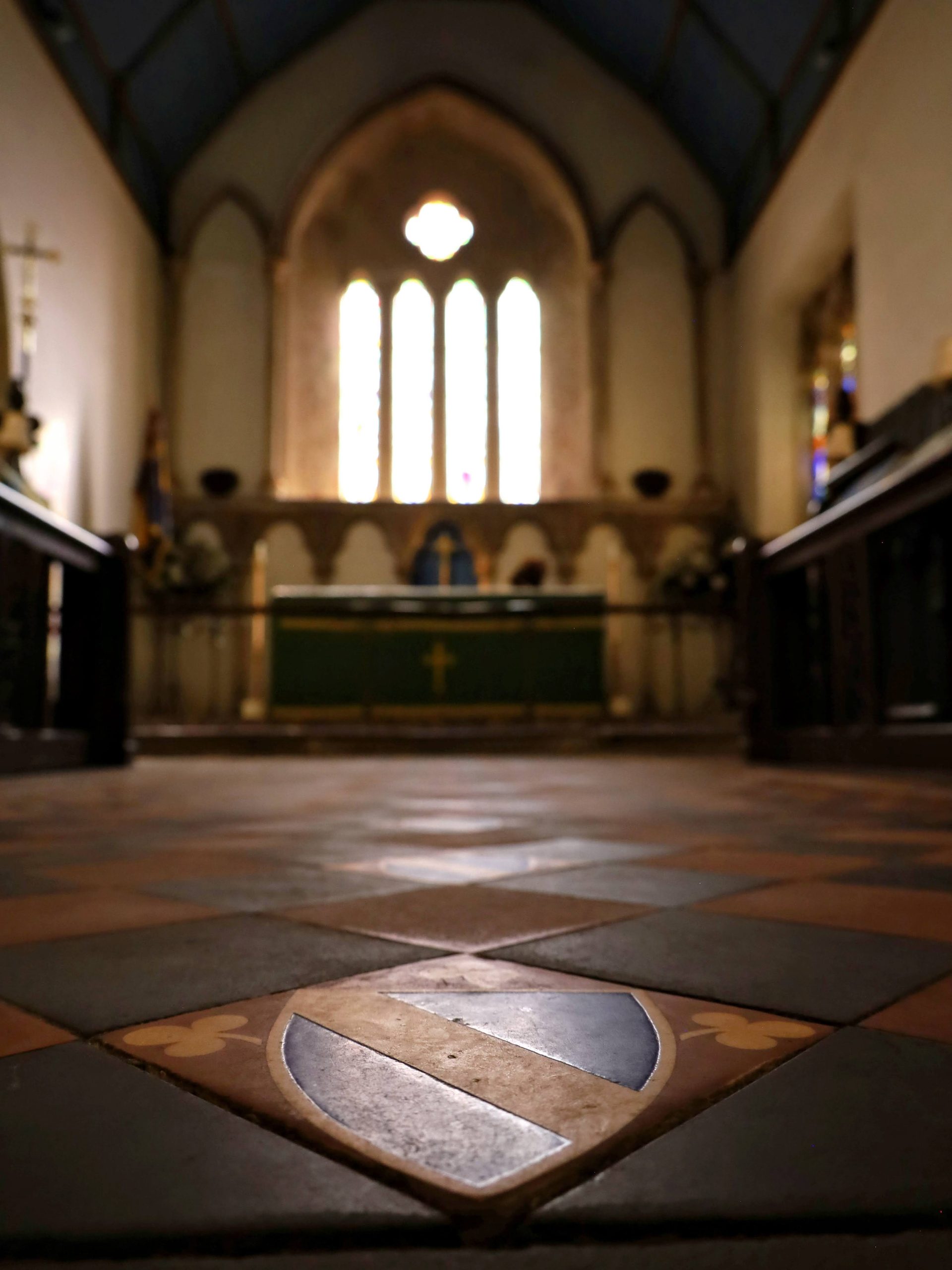
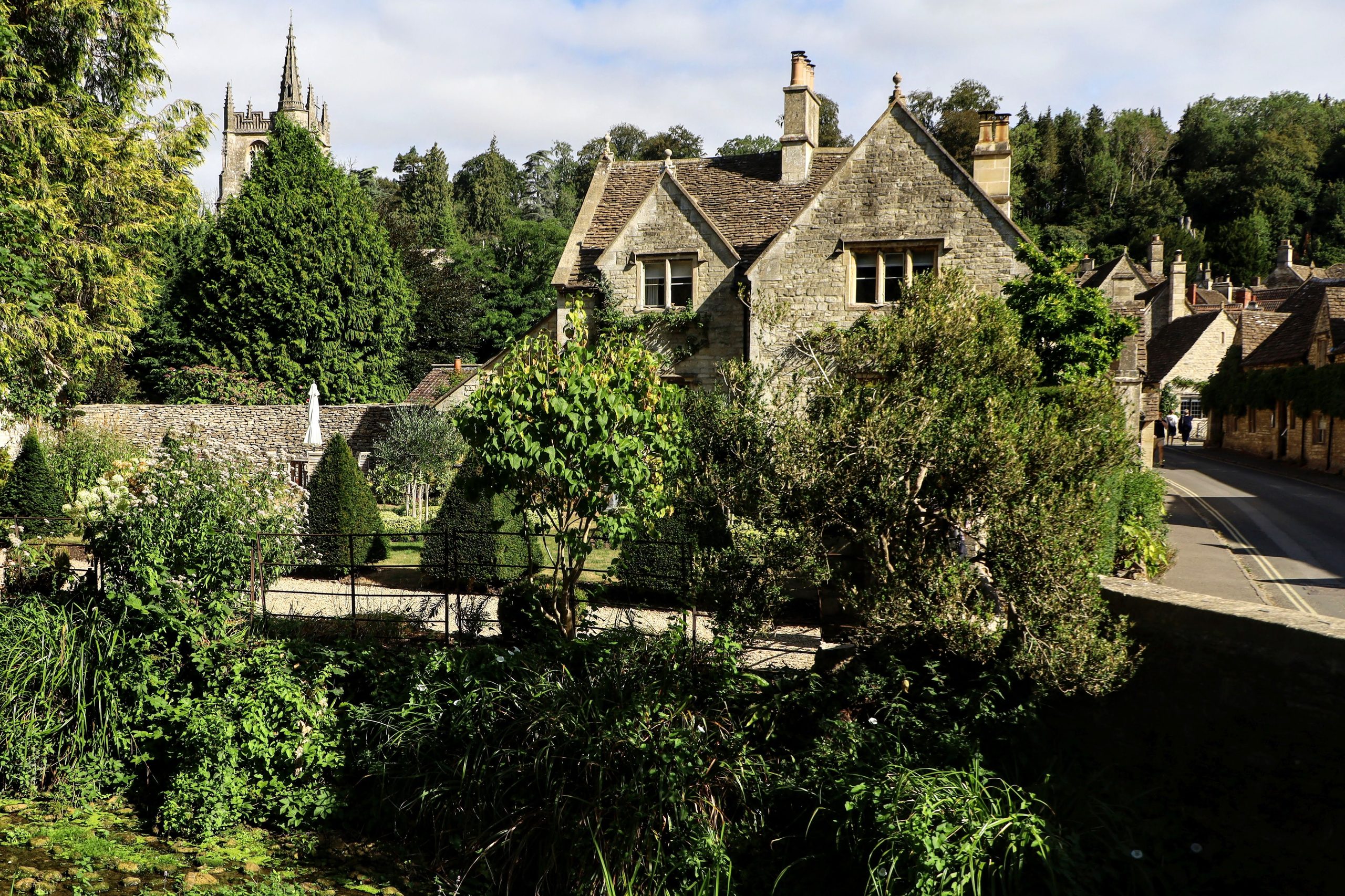
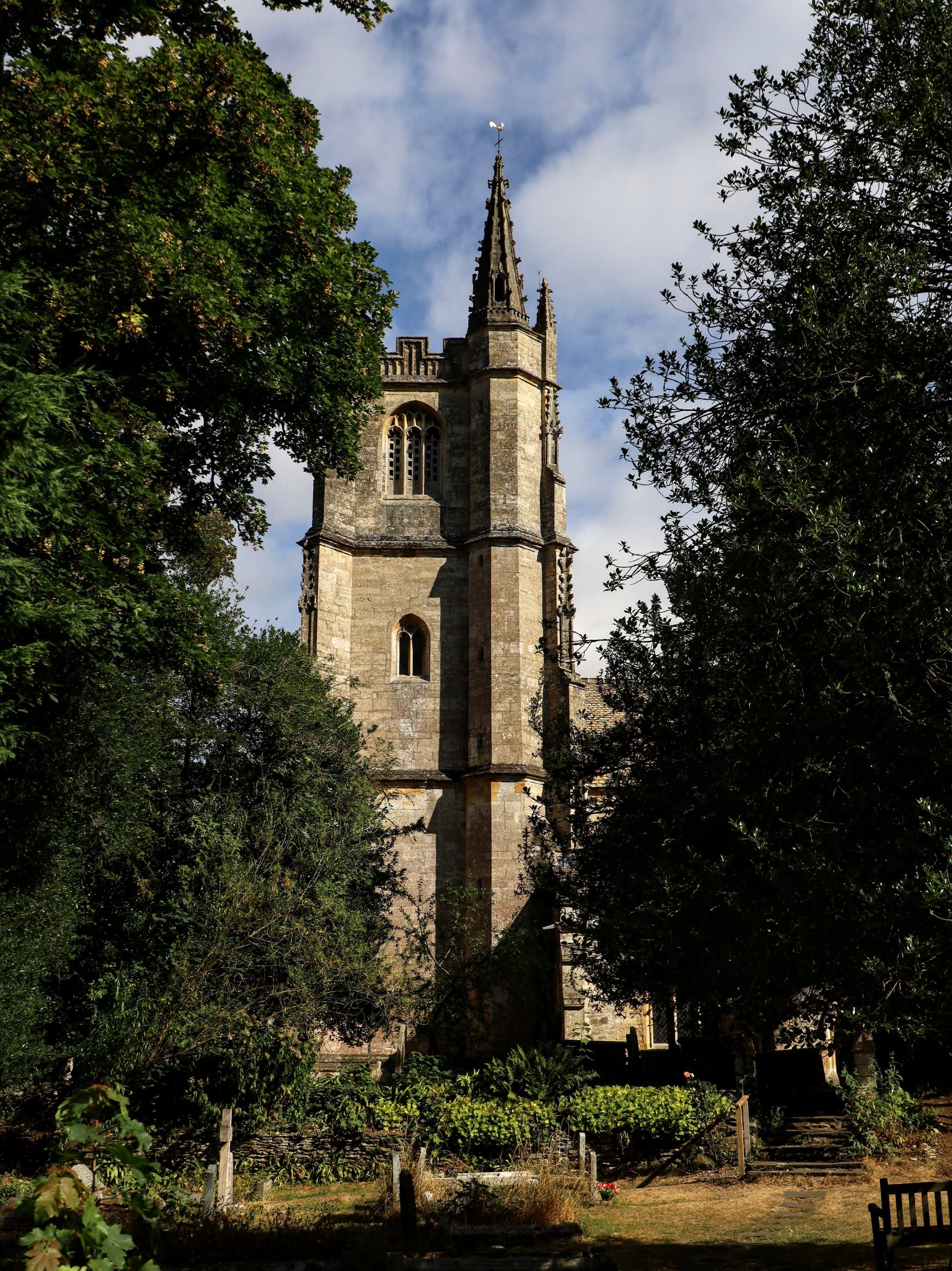
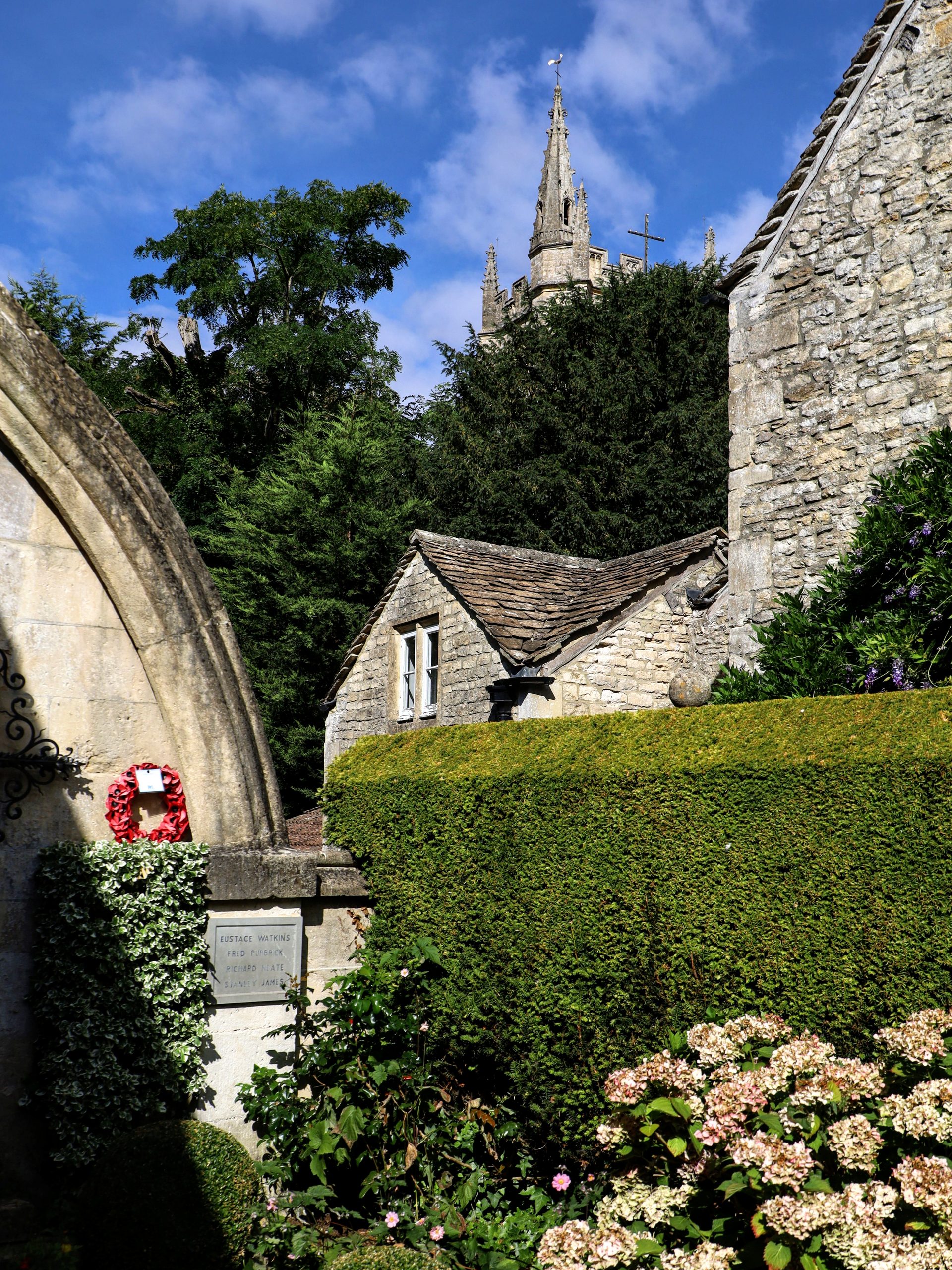
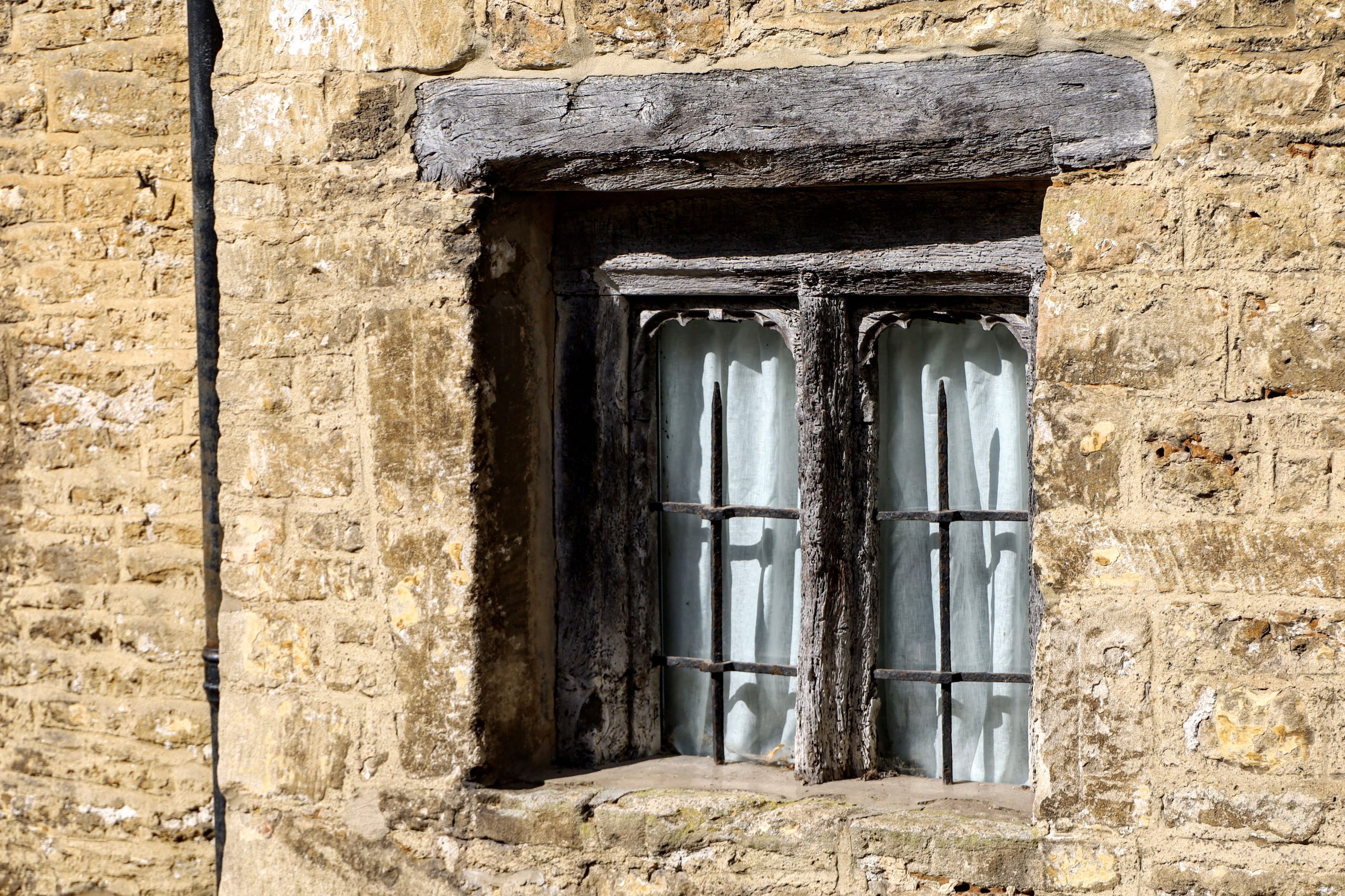
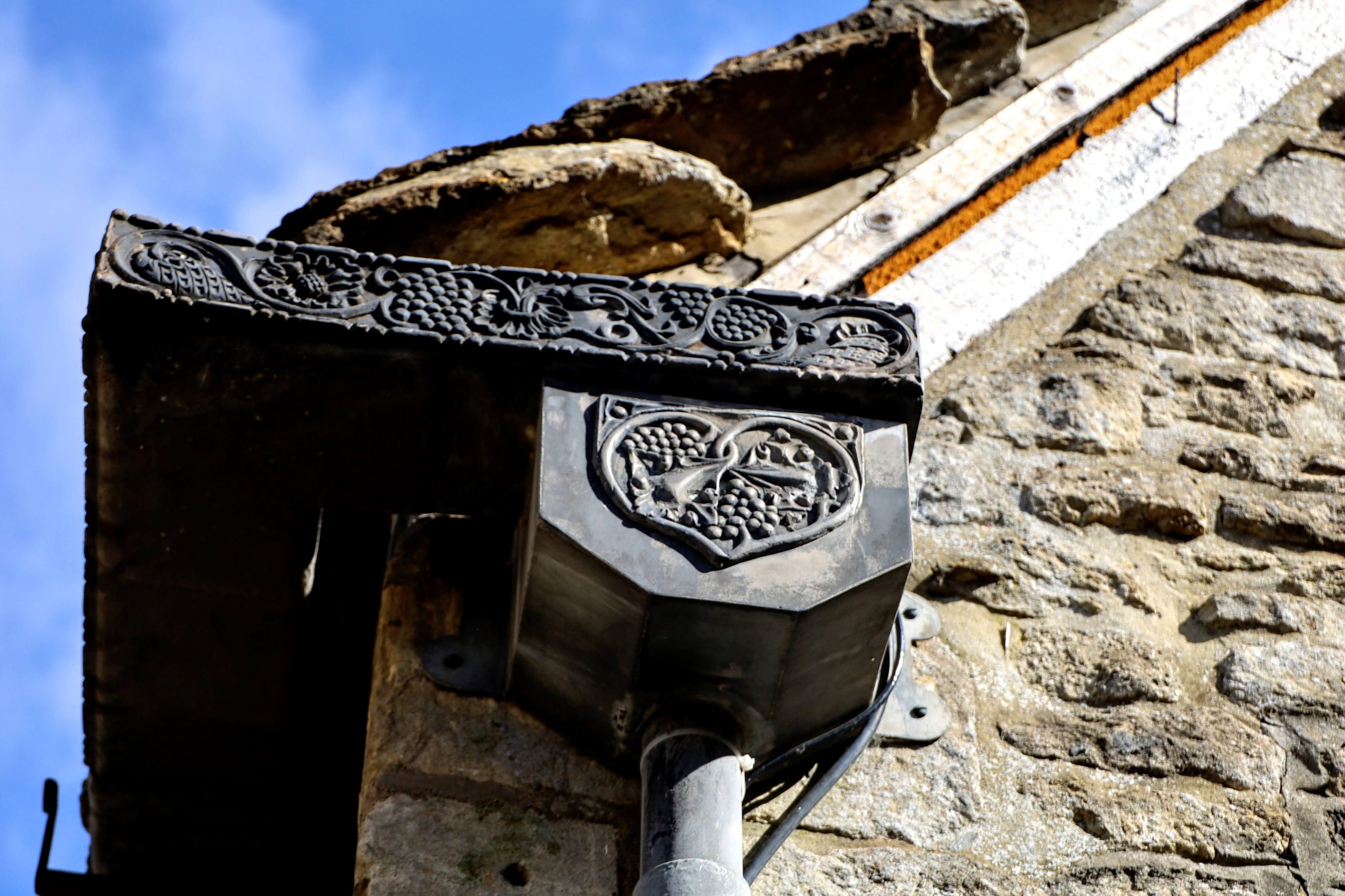
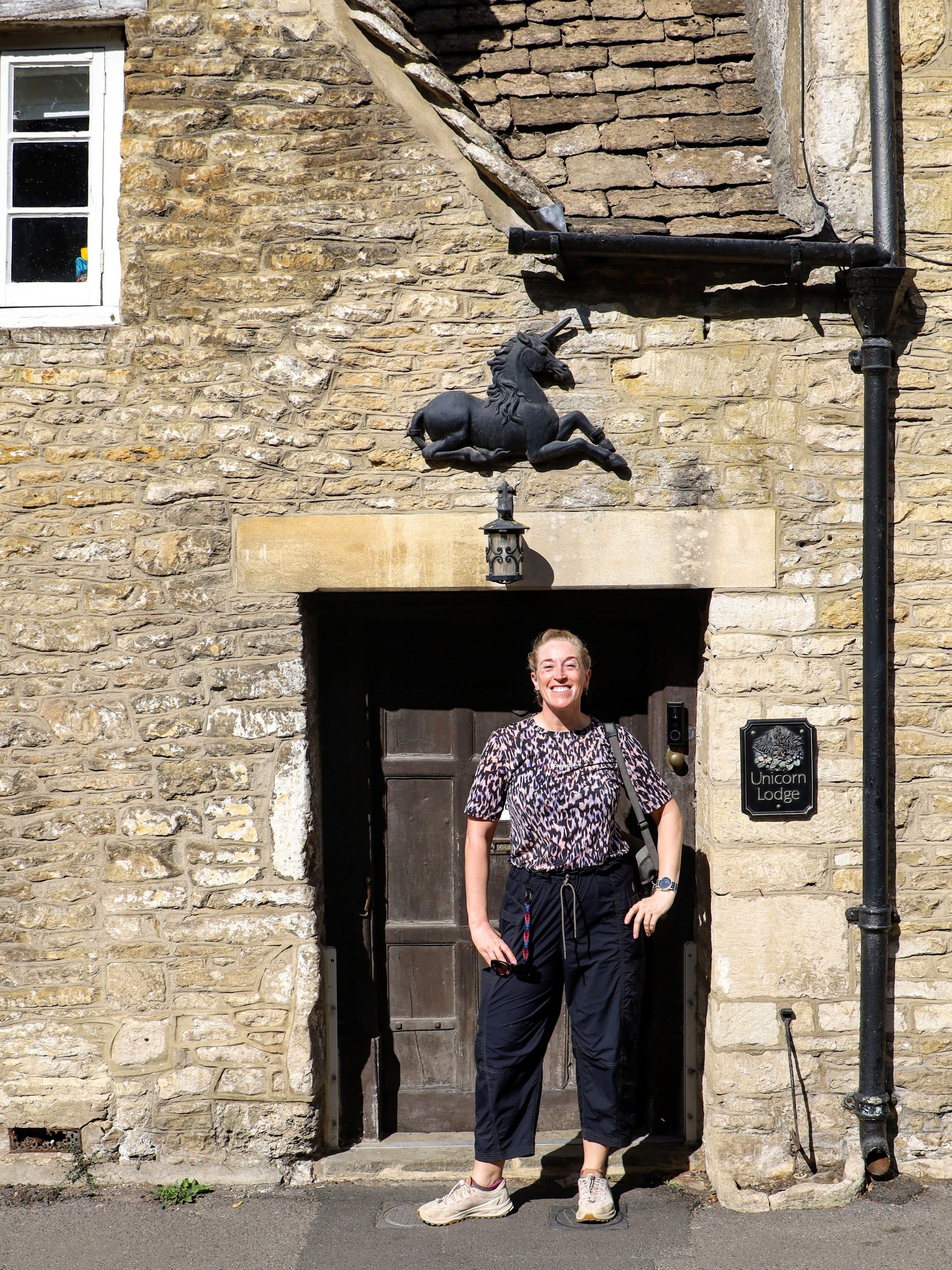
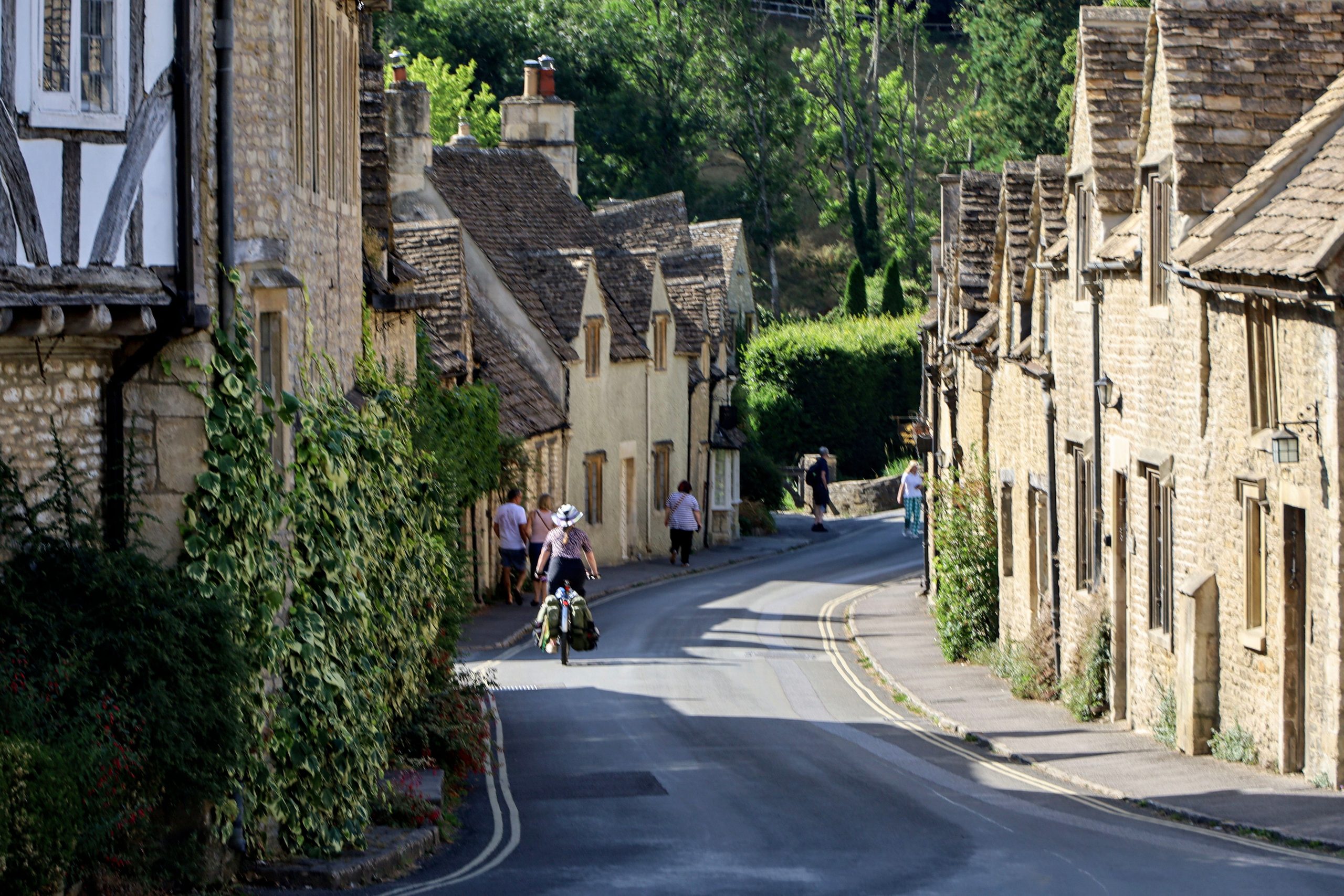
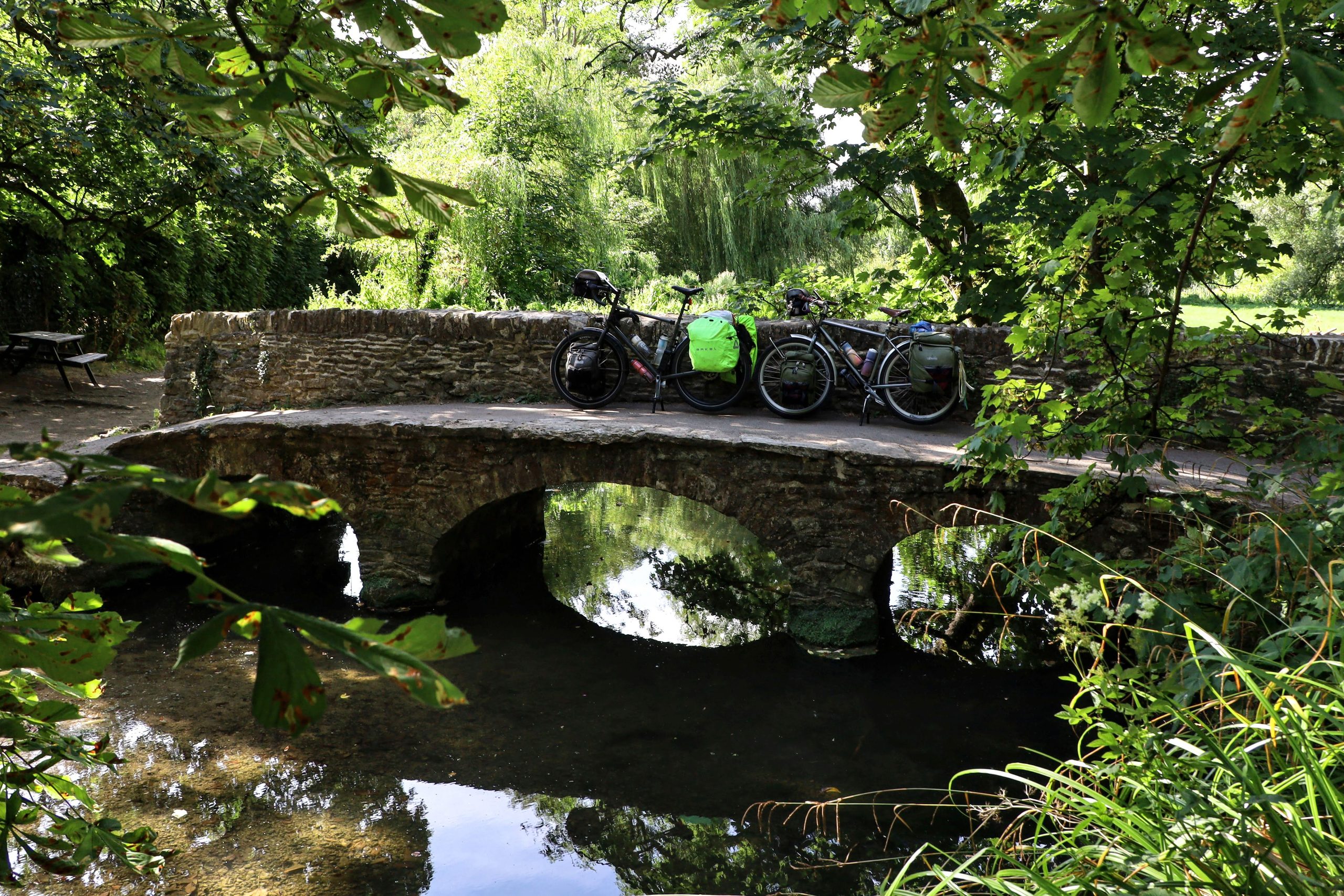
We spent an hour or so wandering around, which is far more than we’ve done in similar villages, so the relative-fame of Castle Combe was worth it simply because it forced/allowed/inspired closer inspection. And overall it was surely the best of the ~10 similar villages we have seen so far, with the buildings spilling down into a meandering brook having a lot to do with that. But, I’d say it was only about 30% better, max. One of our original ideas had been to ride straight to Bath, set up a home base there for a few nights, and then do an unloaded 26-mile out-and-back day-ride to visit Castle Combe. We’re certainly both glad we altered the plan, because then Castle Combe definitely would have been a disappointment. But as an on-the-way stop, it was totally worth it, not least because it confirmed that our unusual method of travel allows us to truly “discover” similar places on our own, rather than being forced to follow the herd.
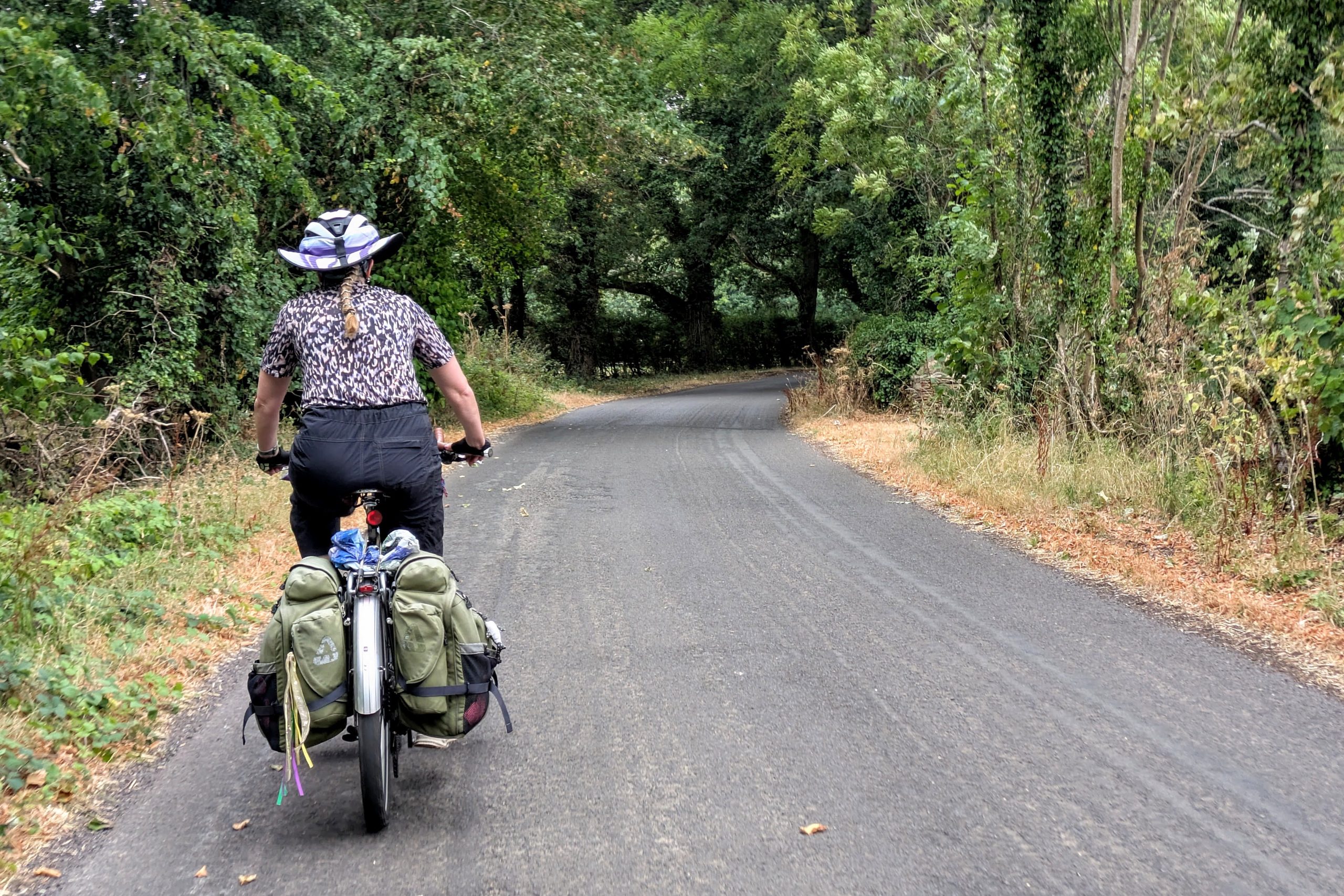
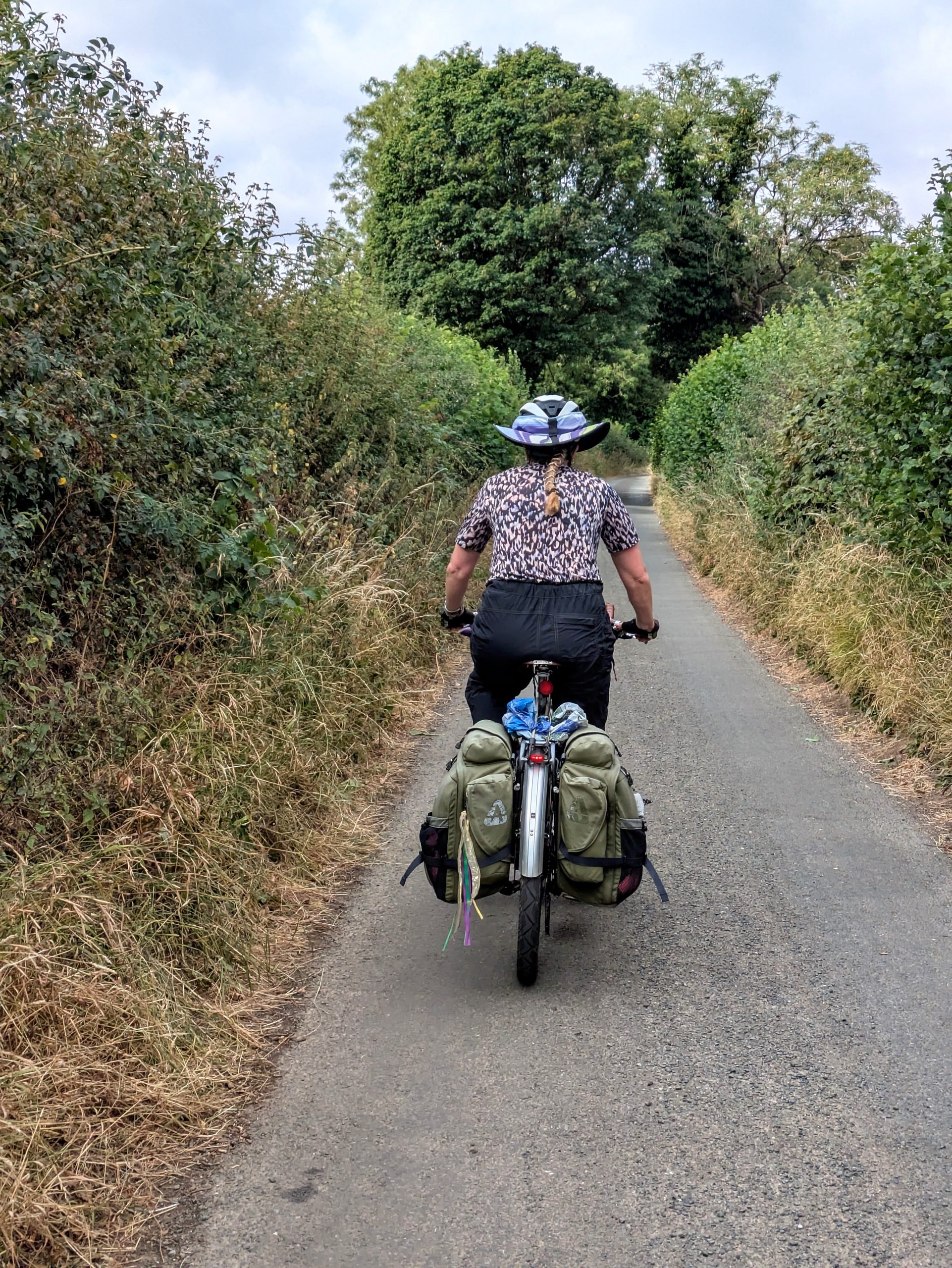
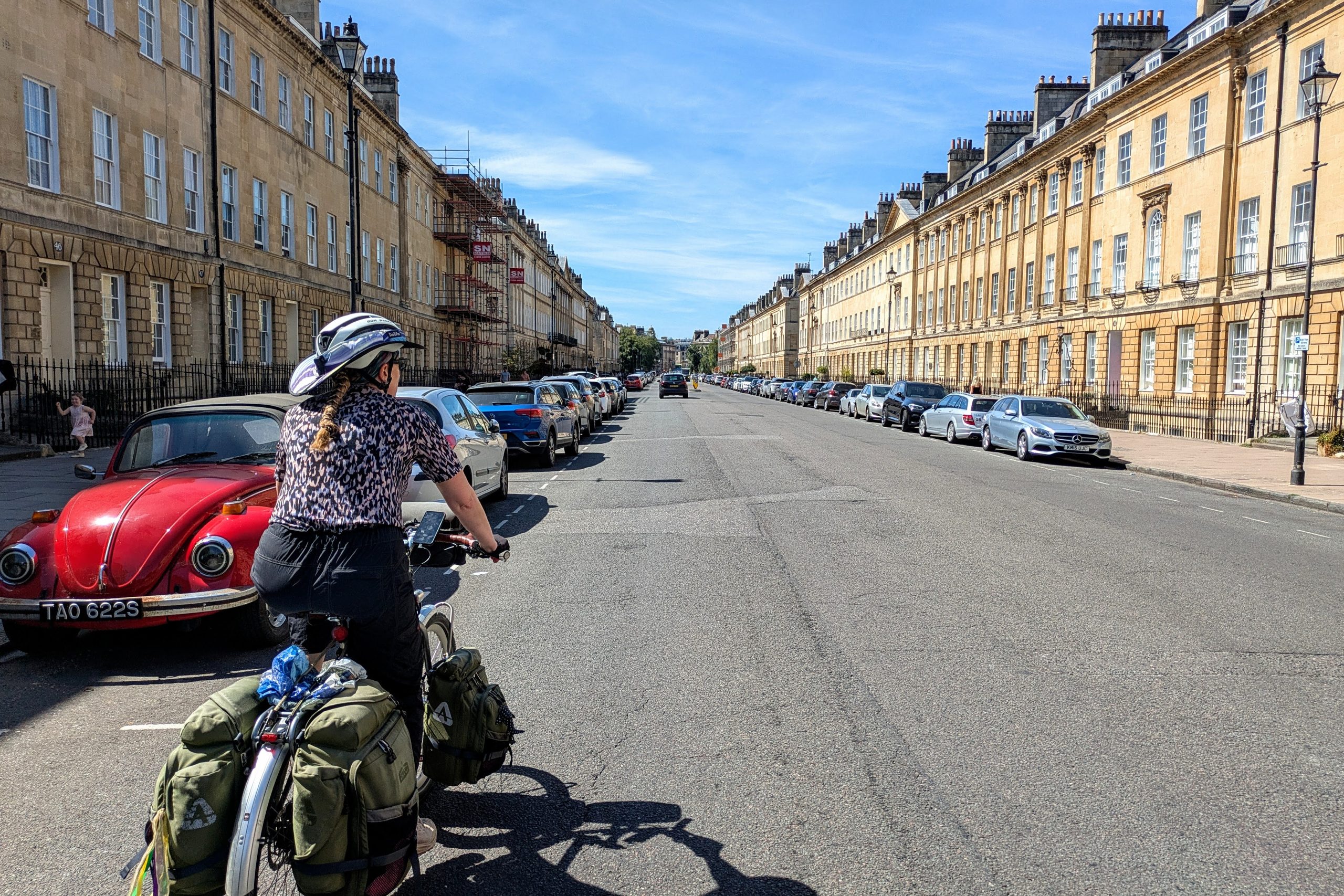
The rest of the ride into Bath remained relaxed, with the pavement thankfully improving just before we started a giant 600-foot downhill, so we didn’t need to squeeze our brakes the whole time down (it would have been nicer if the whole thing remained 7% like the sign at the beginning said, but the 11% section in the middle didn’t last too long). We reached record levels of road-narrowness, which again revealed the patience of British drivers; they sat behind us unconcerned, and gave friendly waves whenever we were able to find a small space to pull over into to allow them to pass. Which, if you’re going to drive down a two-way road hemmed by hedges that is literally no wider than your car, you’d better expect to get stopped up regularly! For us, it’s all part of gathering experiences that slowly inform us how the cycling (and driving) culture works around different conditions.
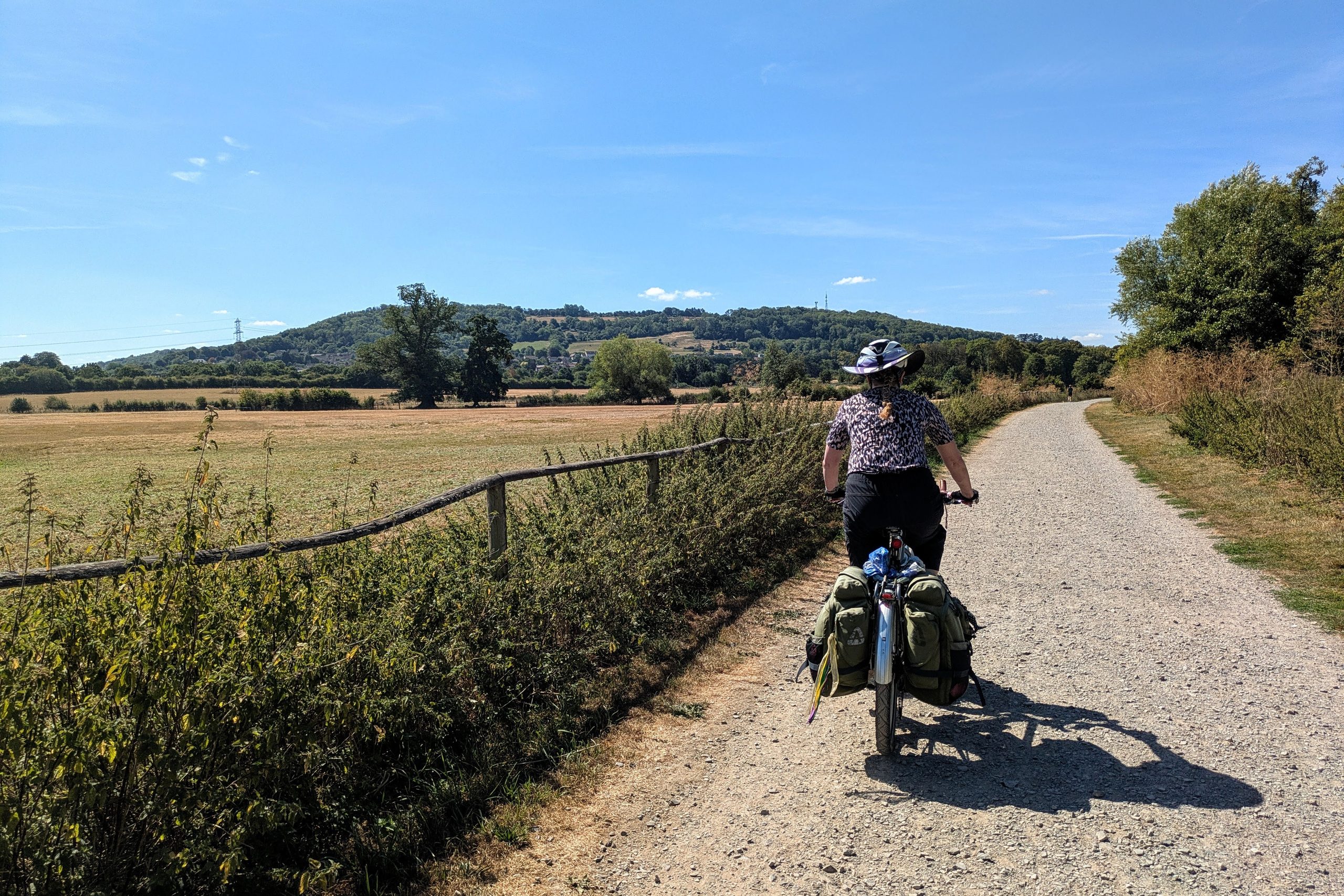
We found a nice park in Batheaston to have our lunch in, and we would need the fuel to help us get through the usual challenges of riding into a city. Though Bath’s challenges may be even greater than average, since it’s built on steep hills (which we tried to avoid). We were able to take some bike paths, but then when I missed a turn, we decided (in annoyance and frustration) to foolishly continue on a parallel road route. Without first checking the elevation profile. So even though our road remained parallel to the river, it climbed up and down 150 feet, while the path just 100 yards north would have stayed flat.
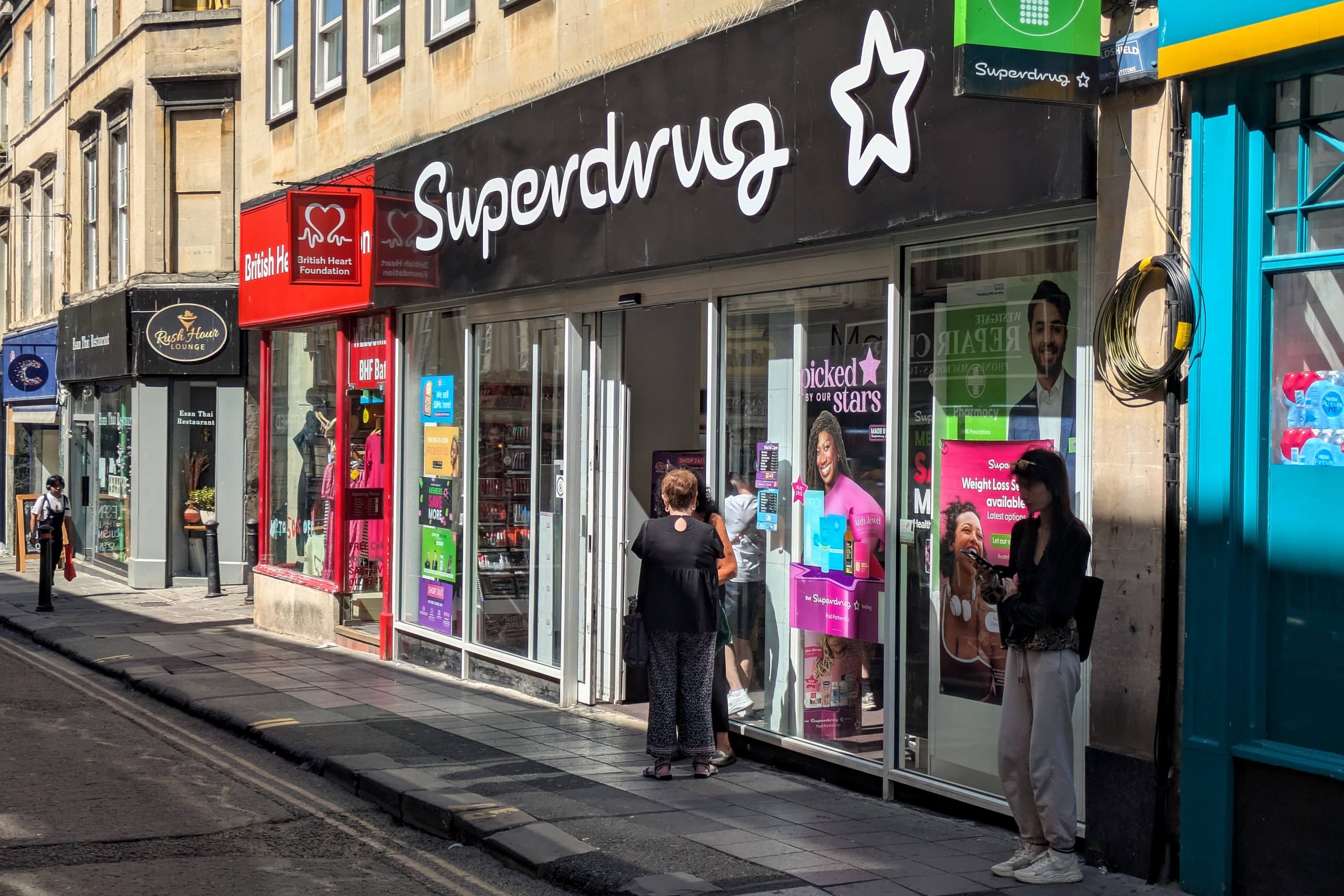
As we got closer to the center of Bath, we crossed one intersection, and the sidewalks went from mostly-empty to suddenly jam-packed with tourists. It was by far the highest density of tourists we’ve seen in England so far, and a bit overwhelming. My route had us riding down a pedestrianized street for a few blocks, but there was no way that was happening; we were forced to walk with everyone else. All on a Monday afternoon too!
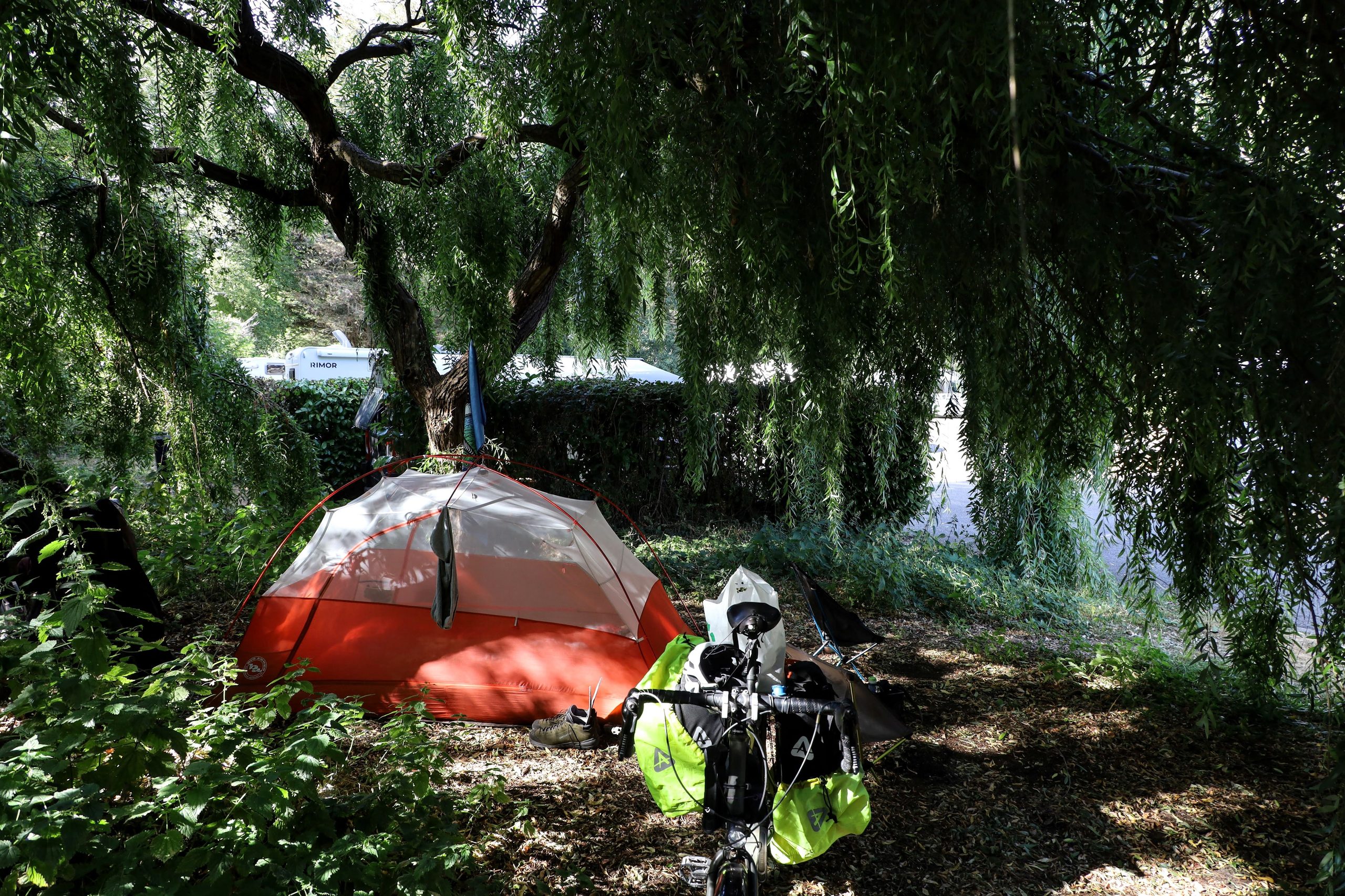
Our campground was on the far (western) side of town, and it was hot enough that, once we had done our grocery shopping at the Lidl on the canal, we abandoned the bike path again in hopes that the road might provide some shade. I knew that this campground should at least have some more shade opportunities than the Stonehenge place, but what I hadn’t known was that by reserving one of their three “tent sites”, we still hadn’t really reserved a “site”, just an opportunity to choose from one of three unused areas in the campground. The first wasn’t great, the second already had a family there in a big tent, and the third was in the sun. But then Rett noticed that the huge willow tree next to the family tent, with its leaves weeping down to the ground, hid a flat and open “cave” inside. We could roll our bikes through the walls of the canopy, fit our small tent, and have 24-hour shade (and privacy). Perfect!
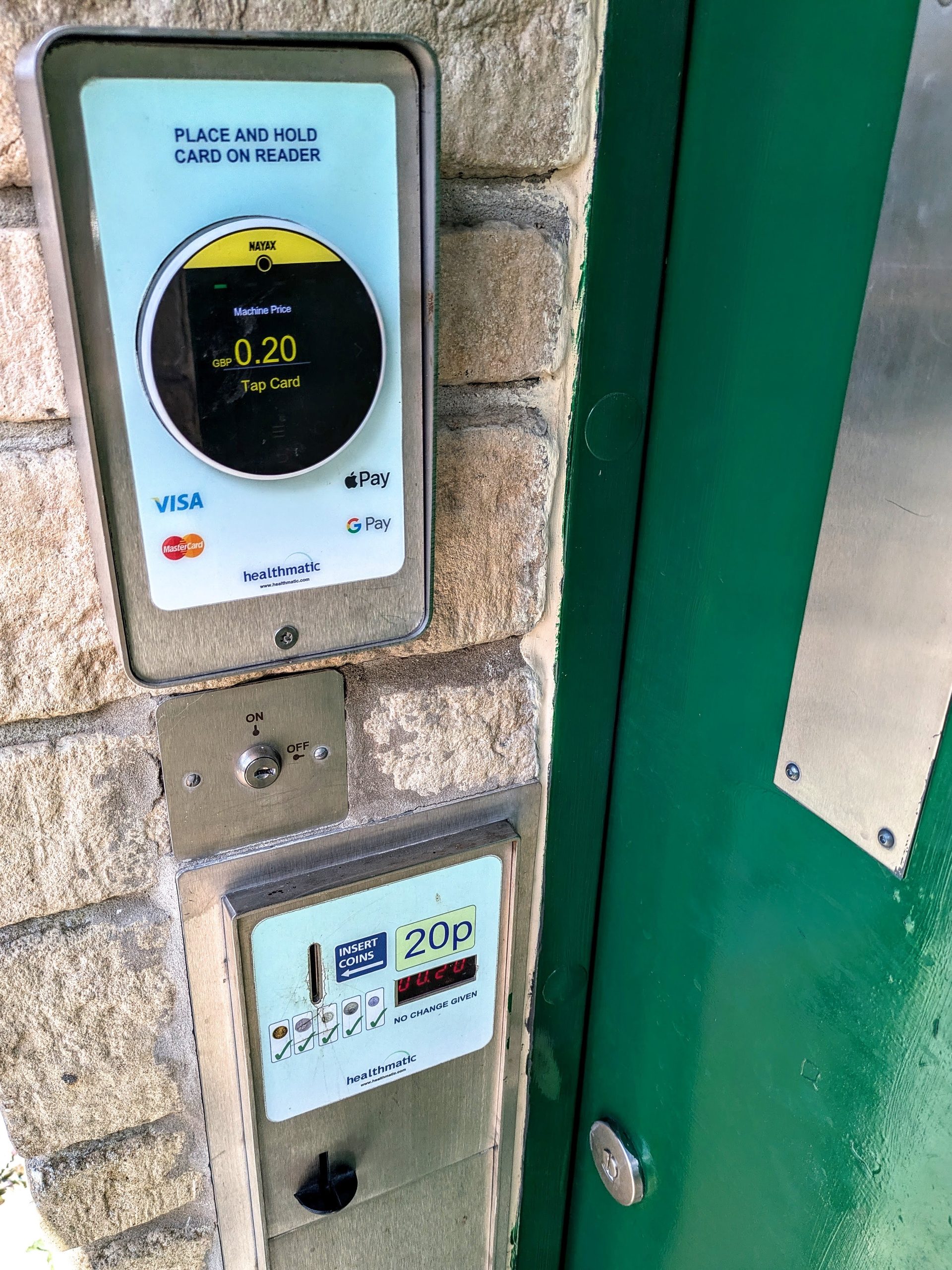
The only downside was that some of the ground was covered in stinging nettles, a plant I was unfamiliar with until now. Except that I’d been reminded of the name when Rett got a beer in Salisbury that used nettles as an ingredient, and when I brushed up against them I was instantly struck with something that “stinging nettles” is a perfect description for. Luckily it’s an instant, short-term reaction, unlike poison ivy’s delayed, long-term reaction, so even if you’re a slow learner, the consequences aren’t too bad. We cooked up some dinner on the ground (not even the real sites have picnic tables) and took showers where you had to repeatedly press a button to make the water come out (but since “hot” was the only temperature, that was ok). But still it was a much nicer camping experience than our first try in the UK!
Day 2
The next day we were up early to do our Bath tourism, hopefully before the masses we saw yesterday afternoon overwhelm the streets. A convenient “park-and-ride” bus departs from a lot close to the campground, and brought us straight to the city center, saving us a two-mile walk (and giving us a chance to sit on the upper level of a British bus, even if it was blue and not red).
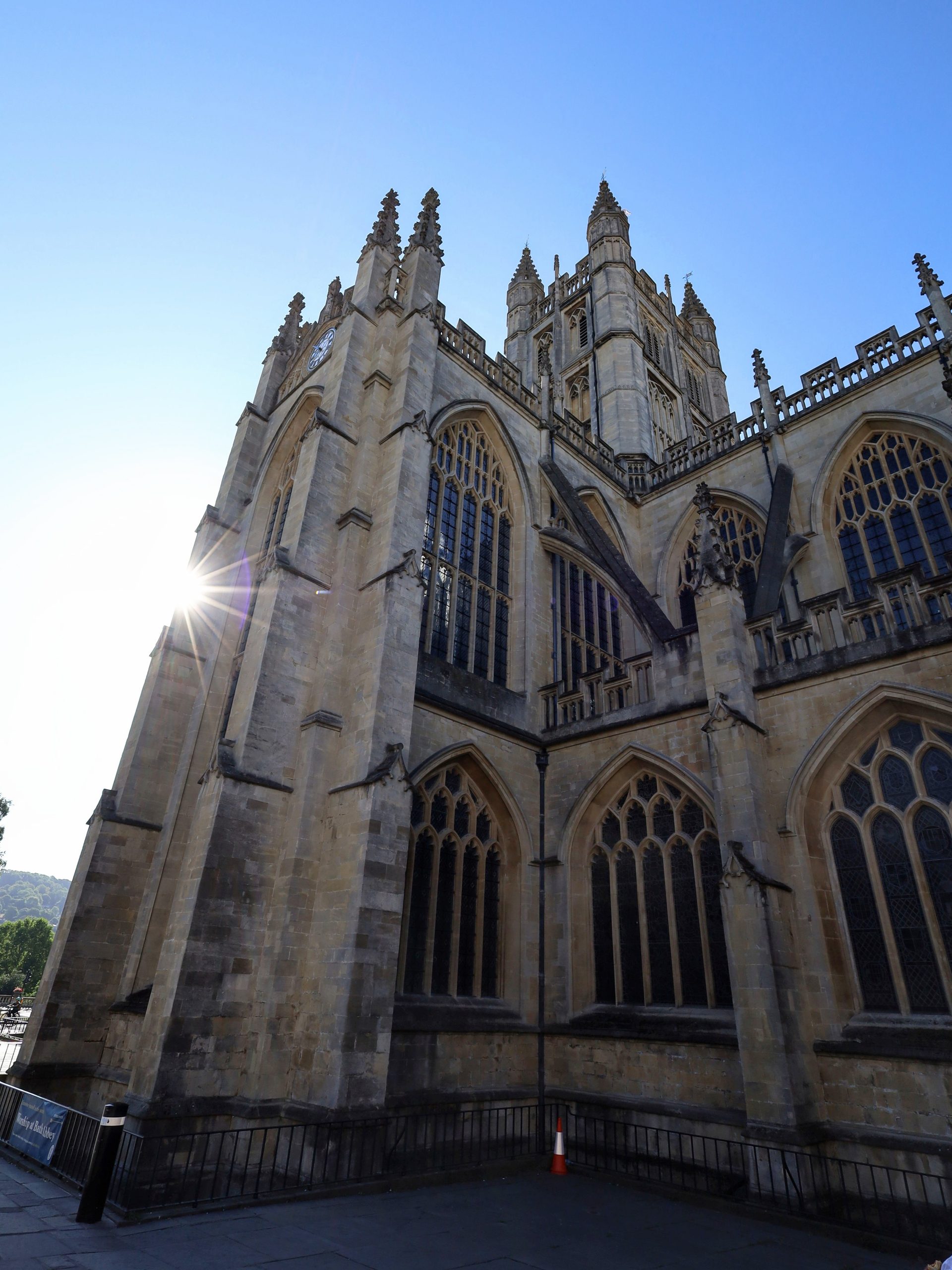
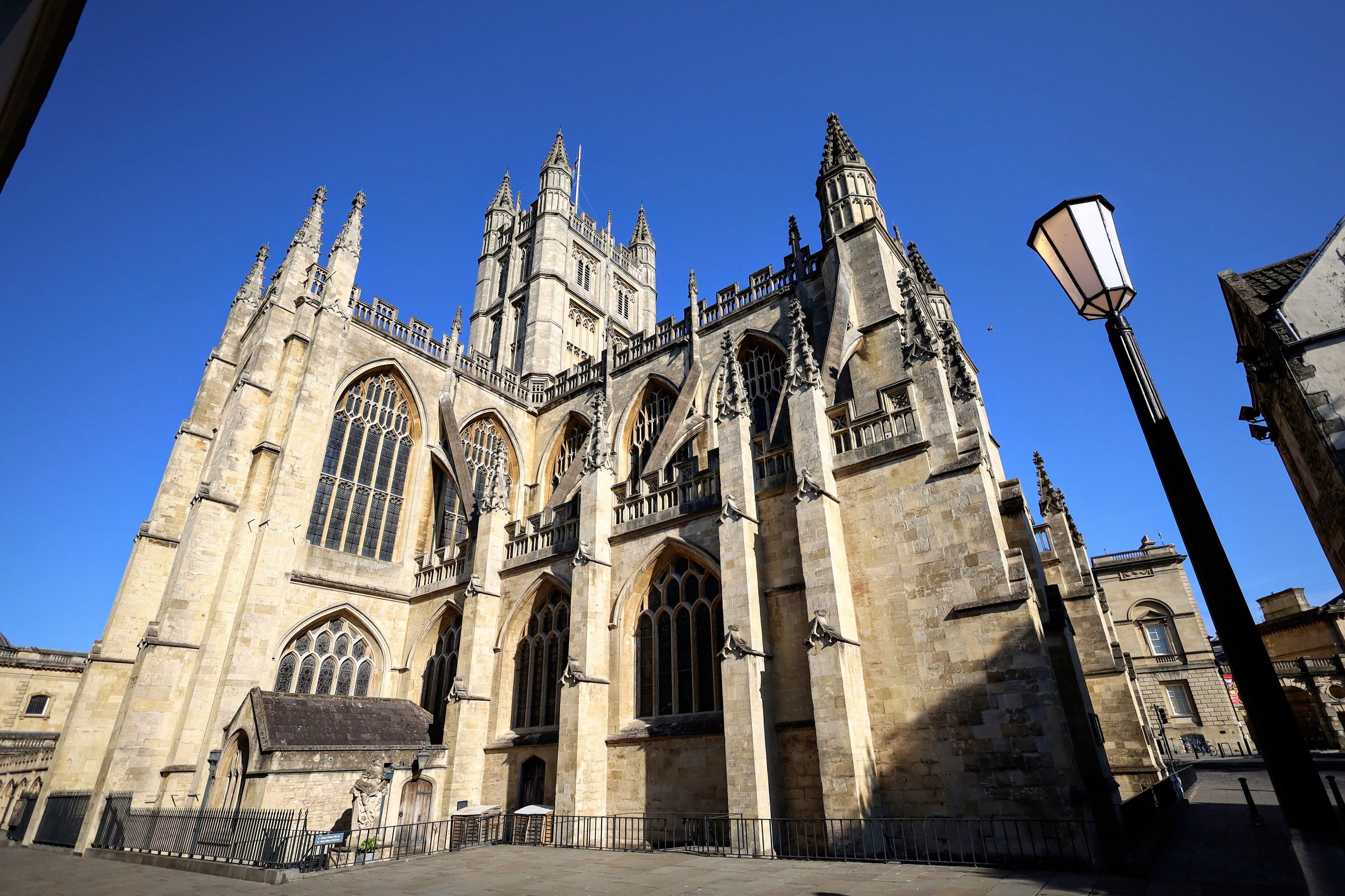
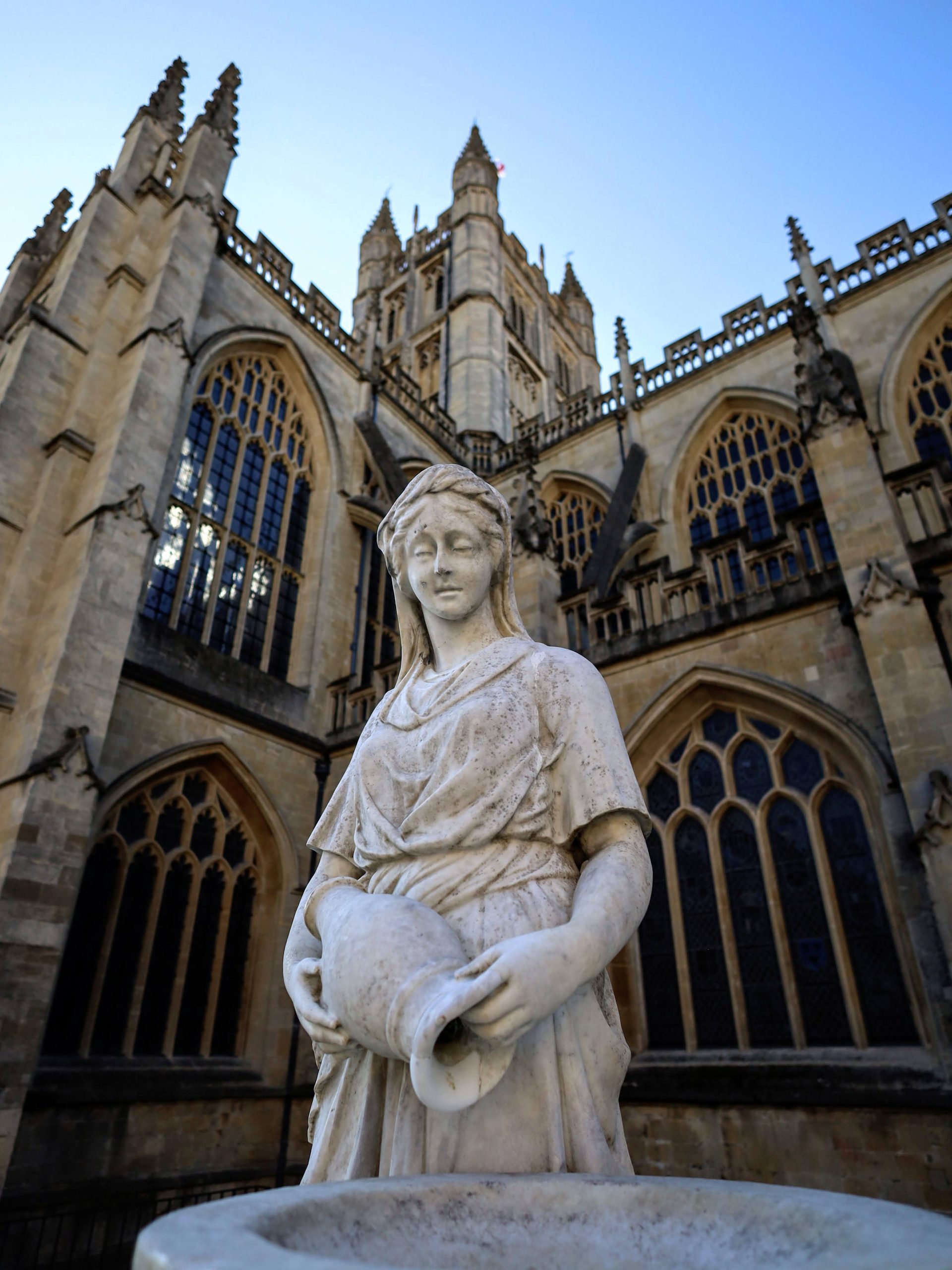
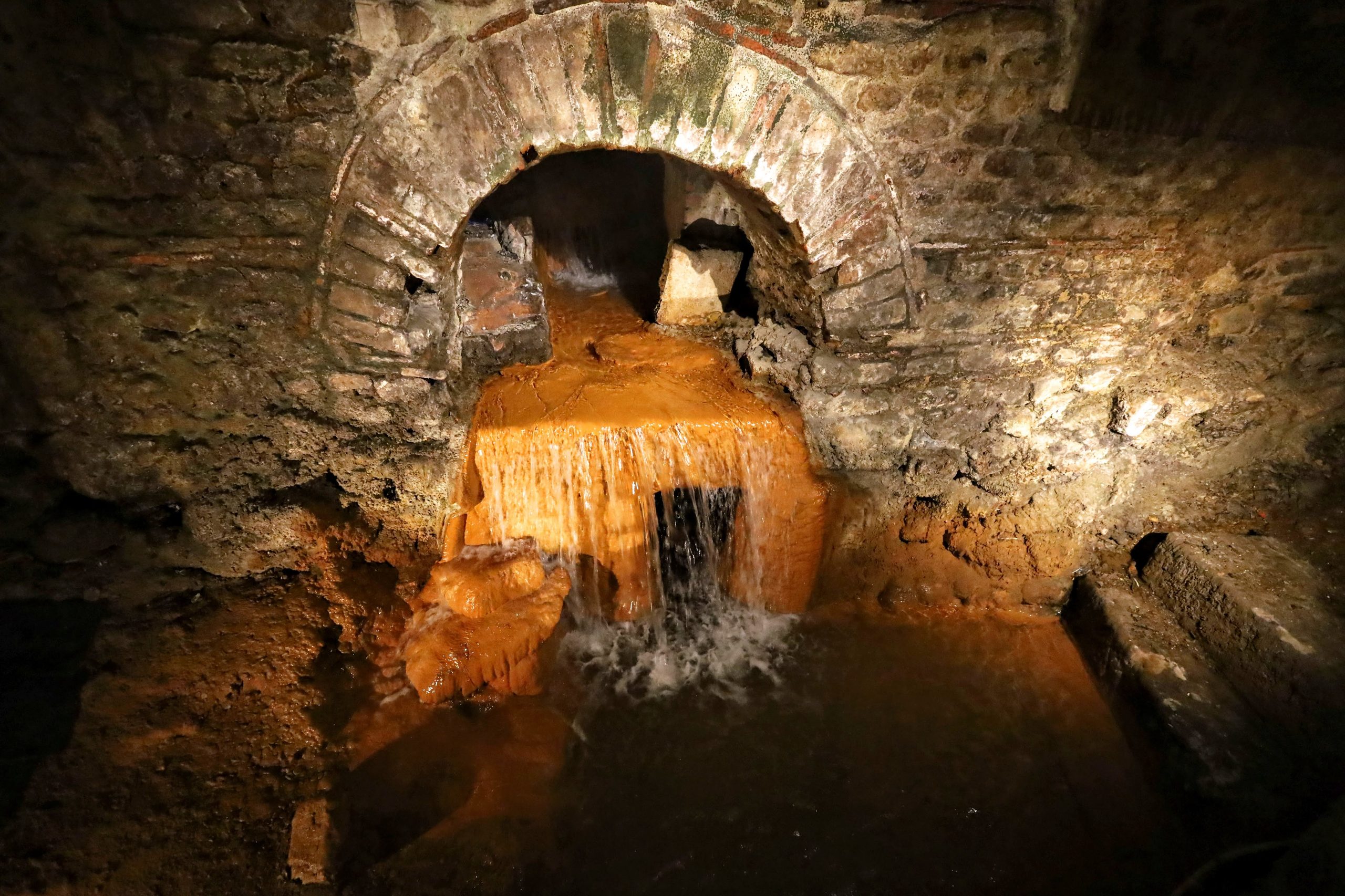
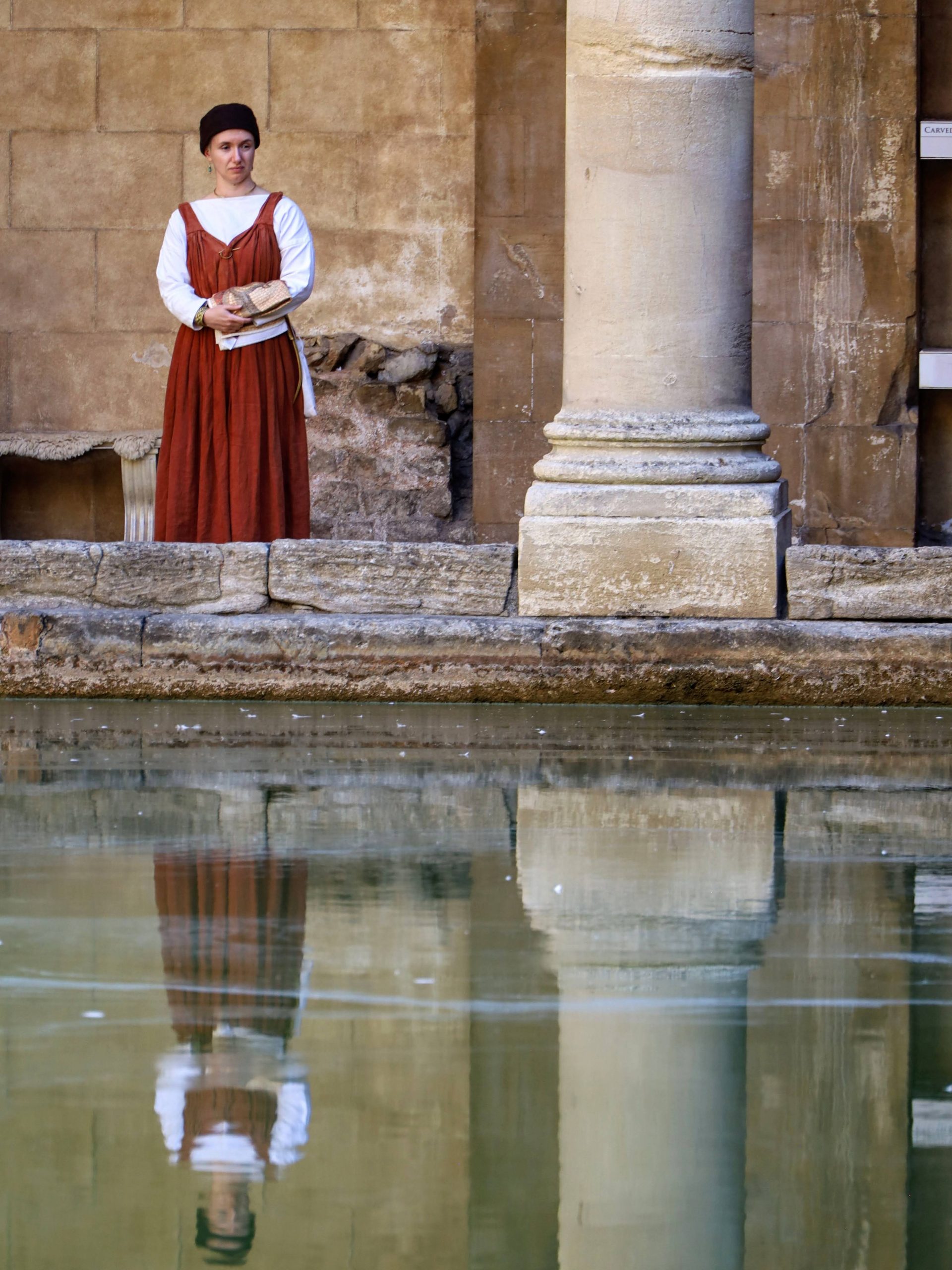
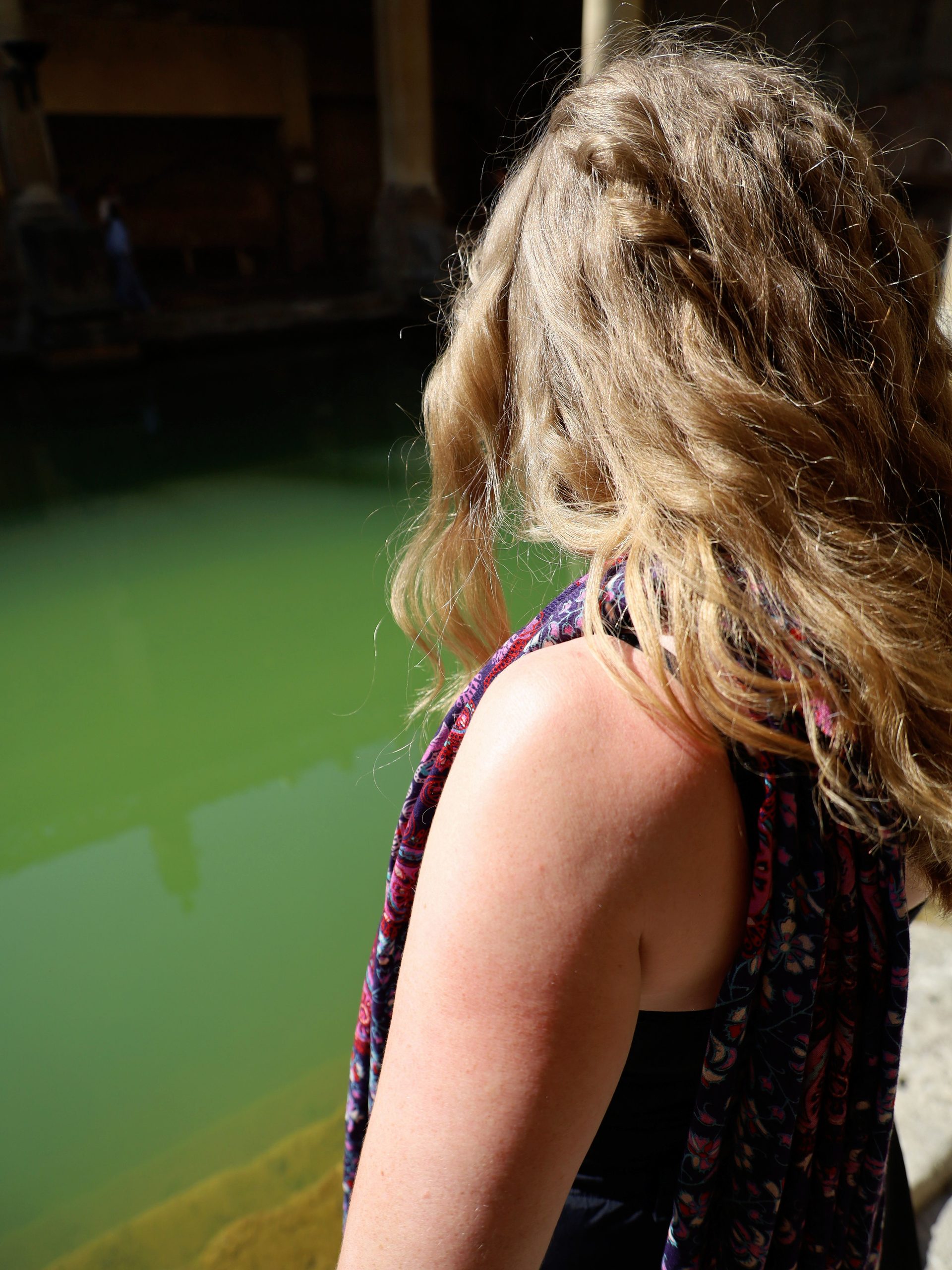
We had 9:15am tickets to tour the Roman Baths, but due to some confusion at the queues, we were directed inside right when they opened the doors at 9am, so we were essentially the first people in the “line” that winds on a self-guided tour around and down into the baths. It’s the only hot spring in Great Britain, though now it’s only a museum, with no bathing allowed. Since the spring is eternal, it has actually had multiple phases of development and decline built around the steaming waters in the two millennia since the Romans first built a pool to collect them, but of course that oldest phase is the most interesting. Water still flows throughout the system via Roman lead pipes. It made me think of the hot spring we visited in Saratoga, Wyoming. In the river there in 2023, visitors built semi-circles of rocks to partly-contain the hot water draining from the spring into the river, a “bath” system far more primitive than the lead-lined pool the Romans constructed around 70AD. How many different forms of hot-water-containment have existed at sites like that in the past, and what will be developed there over the next few thousand years as the hot water just keeps on flowing?
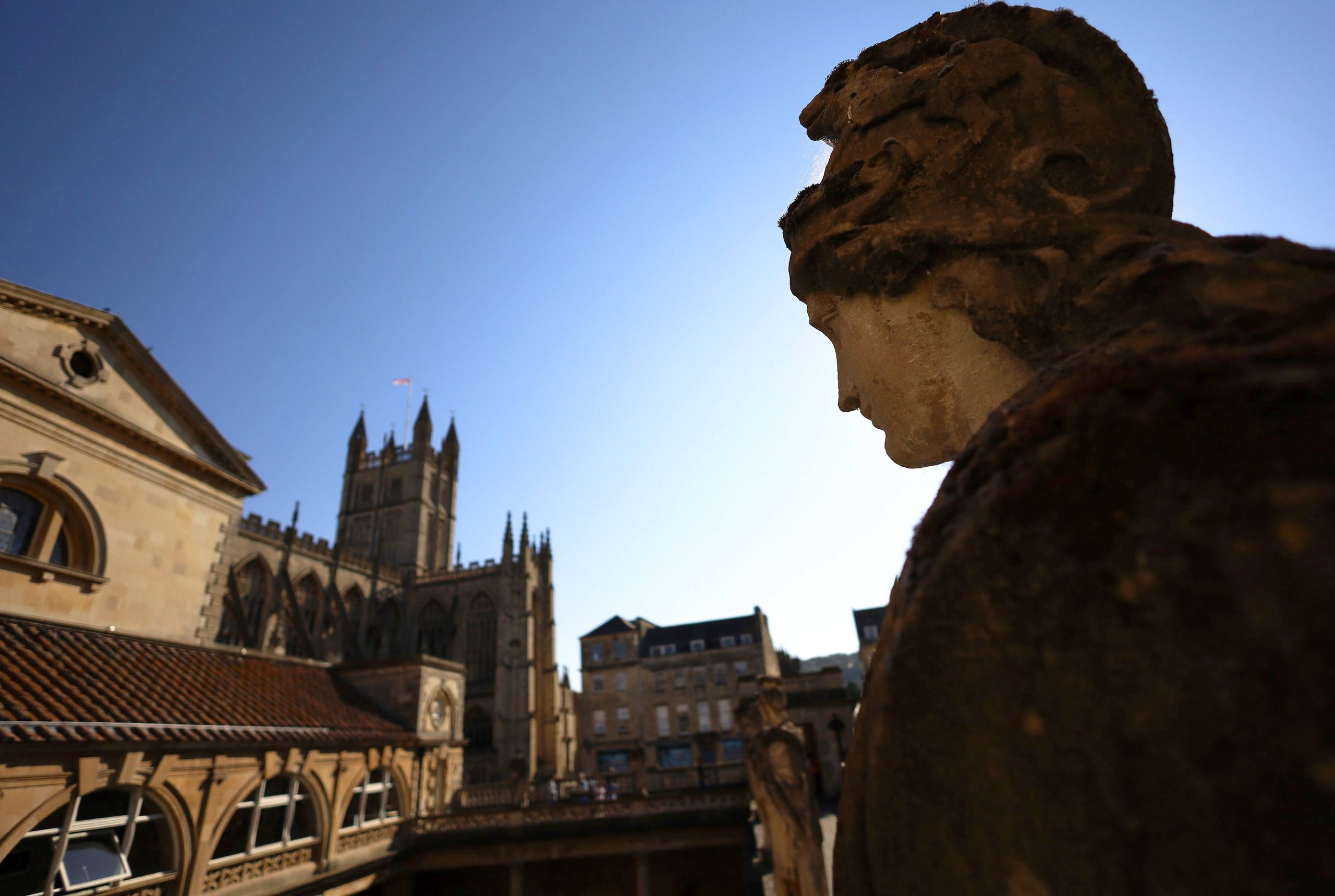
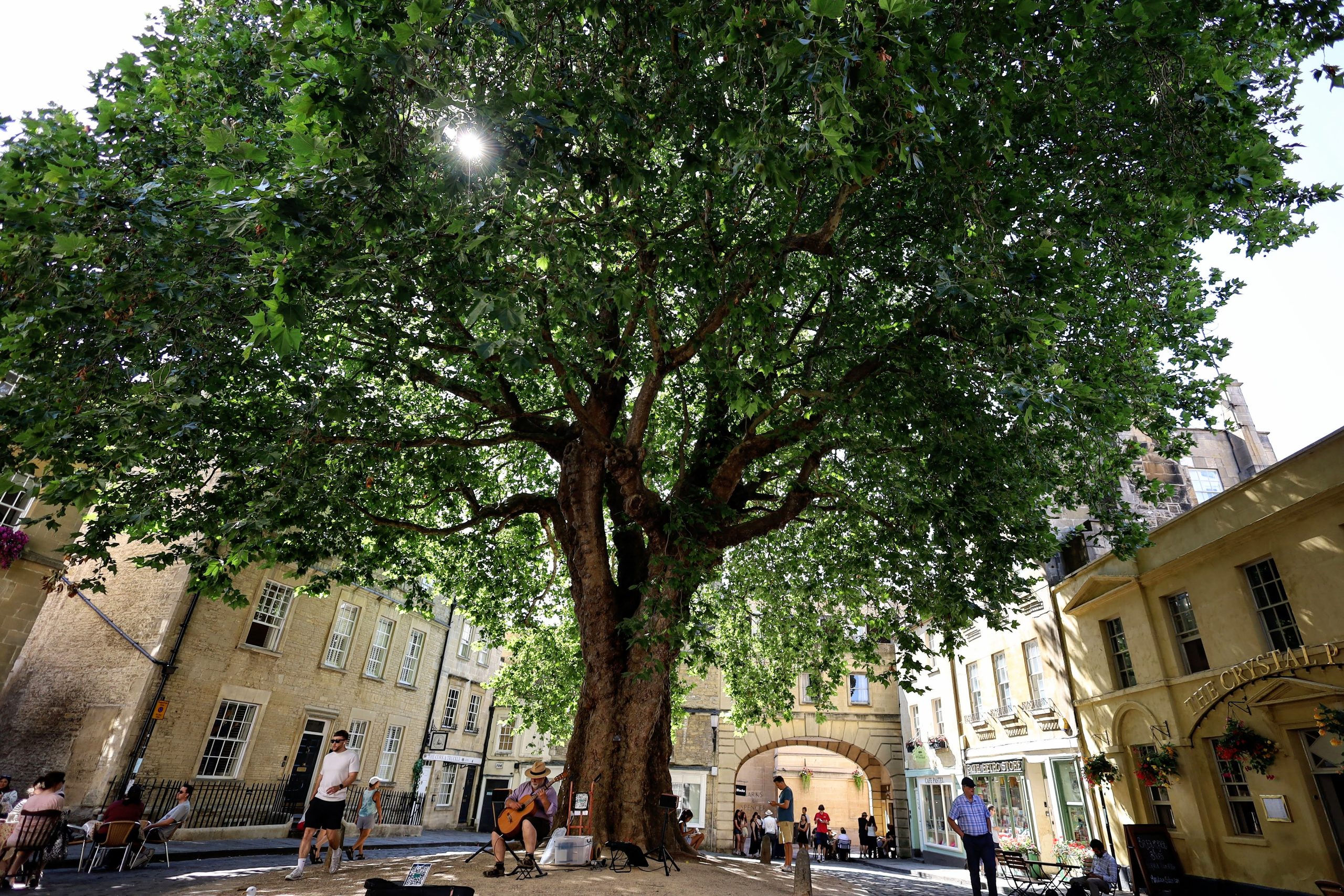
Upon leaving the Baths, we randomly strolled around the historic town center for a bit, where Rett made the brilliant decision to acquire a couple of enormous cookies from a shop displaying them temptingly in their windows, and we sat to eat them on a curb in beautiful square shaded by an enormous tree. A man under the tree was playing some excellent darkly-atmospheric music on his acoustic guitar, and it all felt very much like we were tourists on a proper European vacation.
One of the shops on the square was named after a location in the Netflix series “Bridgerton”, and we soon discovered that wasn’t just clever marketing, it was actually the location used during filming! Which then led Rett to discover that many other places in Bath were used as filming locations, so we were soon off on our own impromptu Bridgerton walking tour of Bath. Letting movie/TV locations guide our targeting is a pretty standard modus operandi (see: New Zealand/Lord of the Rings!), but usually we know about them in advance. Here, discovering the Bridgerton connection on-the-fly worked perfectly, since we didn’t have any particular plan anyway, and now we did!
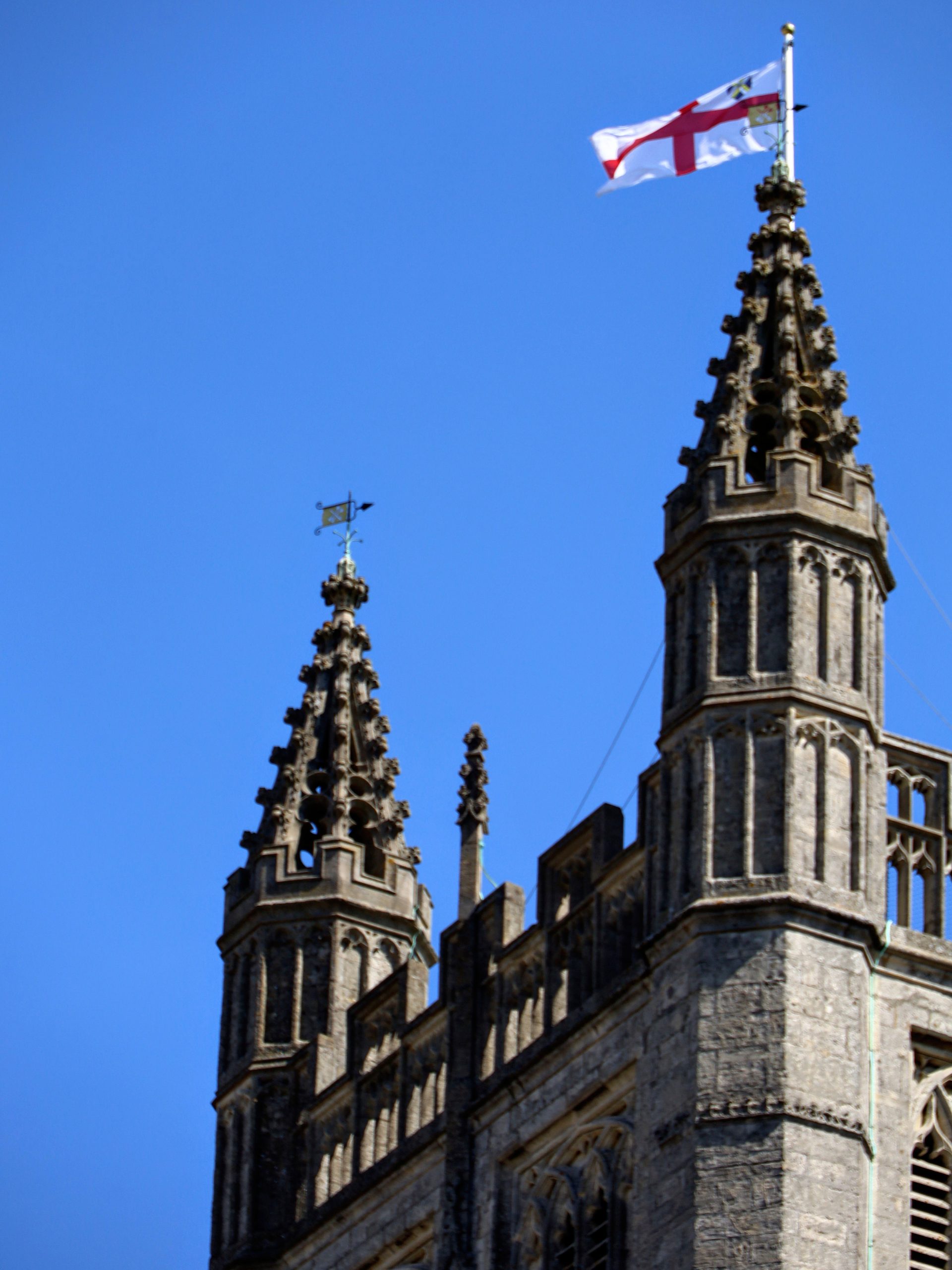
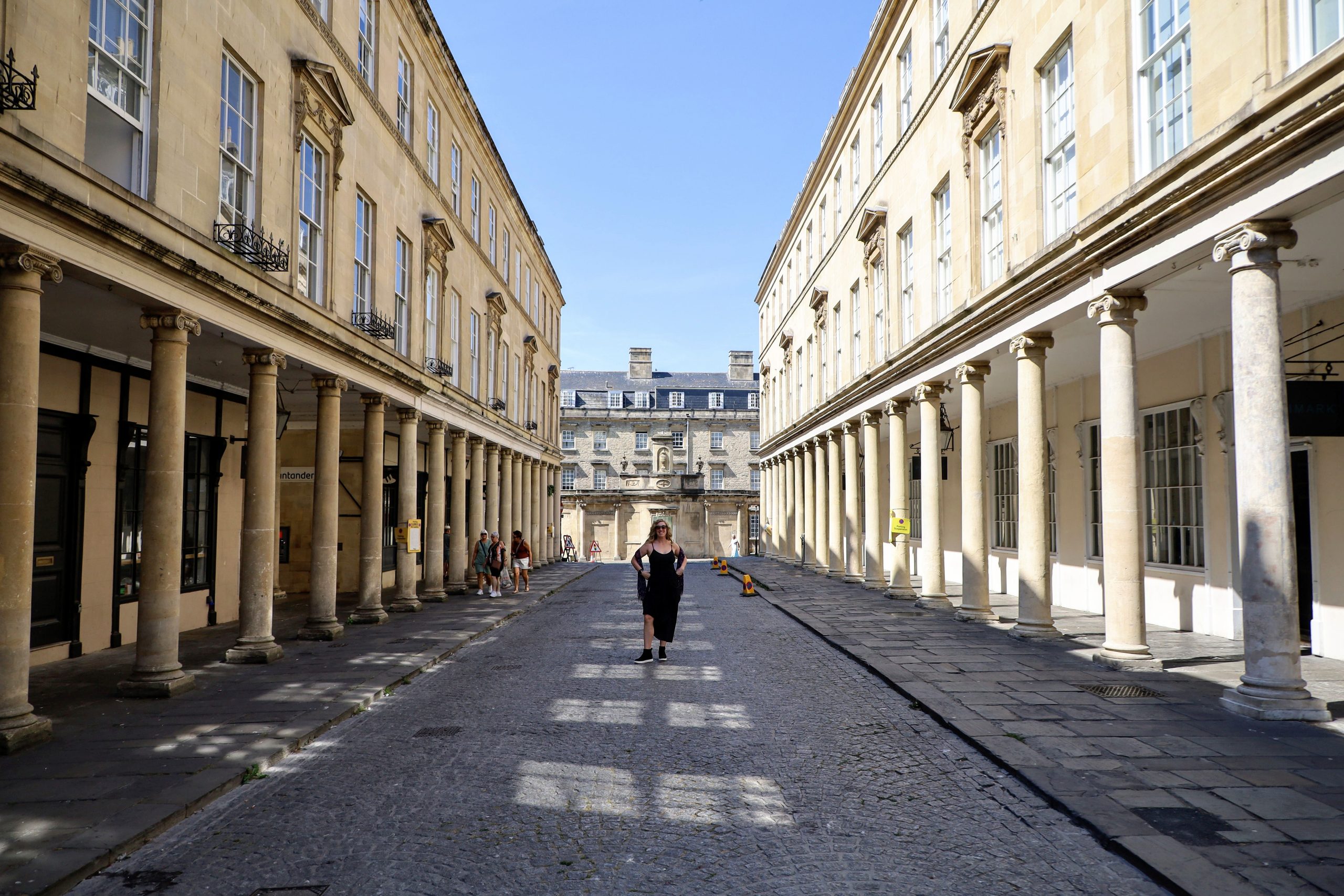
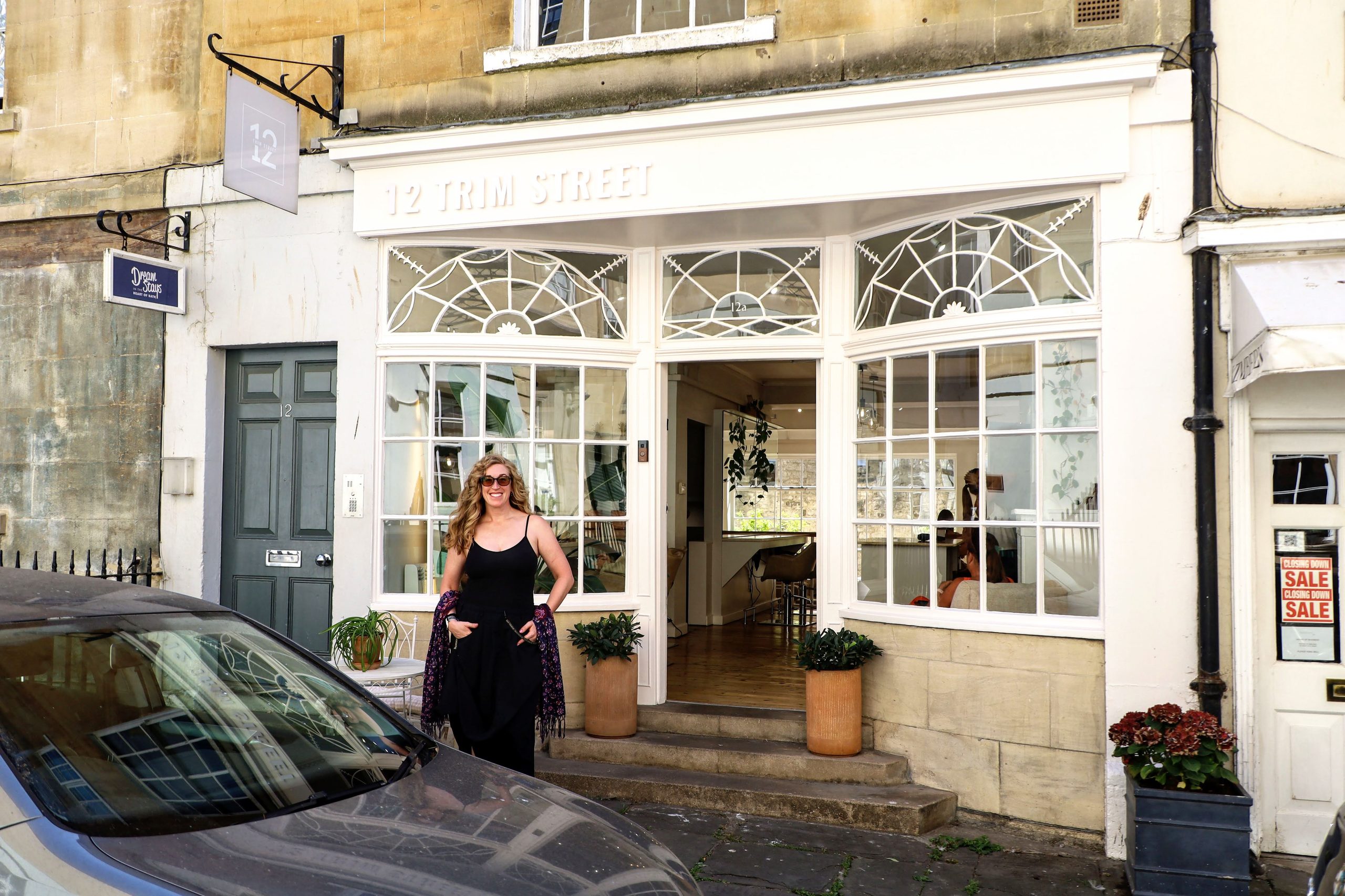
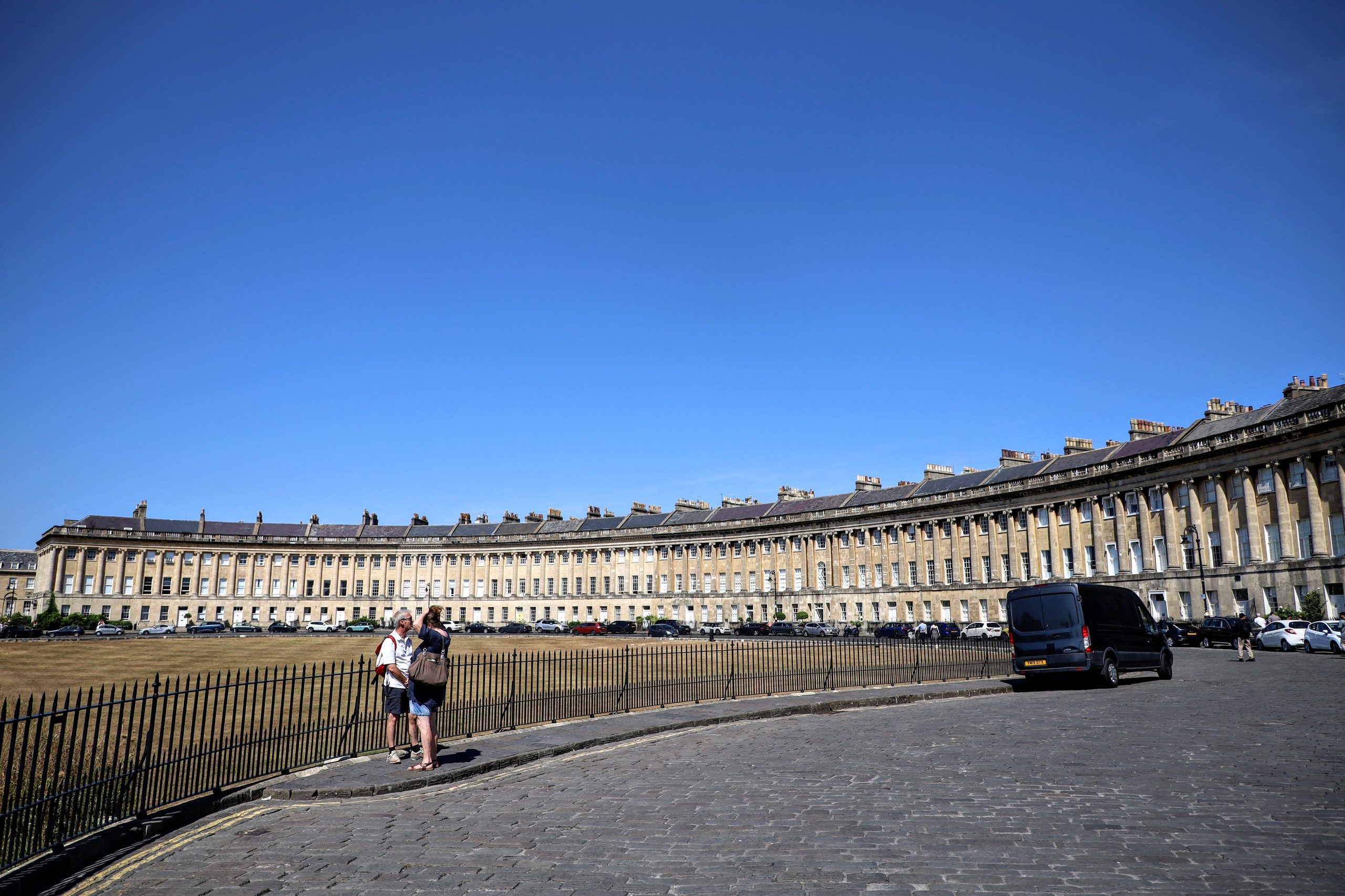
With the heat and hills taking their toll, we found our way to Bath Brew House for lunch. There we tried to do some planning for where we should head next, but the stress that comes with such discussions for us was apparently so obvious that a guy at another table asked if there was anything he could help. It turns out he was from New Zealand, but his ex-wife was from Bath, so he was very familiar with the whole region, particularly as a visitor. He had a whole lot of useful advice, and while I don’t know if he directly helped us figure anything out, we certainly left lunch in a better place than where we had been before he intervened.
Then it was time to walk the ~2 miles back to our campground, with another stop halfway for groceries. The campground seemed quieter on this Tuesday than it had been on Monday, maybe an indication that “long weekends” are a popular form of summer travel here. While cooking up dinner, I realized that I’d forgotten to make a stop to buy alcohol that we use to prime our gasoline-powered MSR Whisperlite Universal stove (up until now I’d been stealing from the alcohol bottle in our first-aid kit). Here it seems that the standard form is “methylated spirits”, dyed purple in another New Zealand similarity, though unlike New Zealand where most grocery stores stock it, it seems like it’s mostly available at hardware stores here. Luckily there was a hardware store nearby, so I quickly popped back out on my bike, where I was surprised to discover that it was an “everything is behind the counter” setup, where you tell the employee what you want and he goes back to fetch it. I guess in a place with such ancient history, it’s not surprising that they still do some things in an old-school way.
Leave a Reply