
A 3-hour flight
Home: Silvina’s AirBNB
For weeks, when people asked how far south we were going, we would say “probably Puerto Natales, where then we’ll catch the (expensive!) ferry back north to Puerto Montt”. Even before we arrived in South America, we were pretty sure we were not going to ride all the way to “the end” at Ushuaia. Partly because getting blown across the cold plains didn’t sound like particularly fun riding, and partly because there was no need to “complete” the PanAmerican route since our route hadn’t begun as an Alaska-to-Argentina or anything else contiguously-epic.
The only real reasons to continue on to Puerto Natales were: 1) to visit Torres del Paine National Park, and 2) because it was a transportation gateway back north. As amazing as Torres del Paine looks in everyone’s Instagrams, I ruled it out because it sounded like fighting for our own Instagram content amongst those hordes could be suffocating, both in terms of actual physical space, and in terms of the hefty prices and reservation requirements put in place by the Chilean park system’s failed effort to filter the tourist onslaught down to manageable numbers. I was wholly satisfied with our Argentine “Torre” (tower) experiences in El Chaltén, especially since we arrived to it from the untrammeled end of the Carretera Austral, so I was mentally and emotionally content with skipping Chile’s louder version.
So without the National Park, the only reason to go south was to get back north.
Even though we had done the Carretera Austral in a very slow and relaxed way, with many days off, I think it had actually been more mentally-taxing on me than it would have been if we just pushed forward day-after-day, regardless of conditions. Because in the latter mode, you don’t have to think, you just go. Our way instead requires constant go/no-go decision-making, and my “must have all the information!” decision-making process means that I was feeling pretty drained. Thus the idea of taking the long-distance Navimag ferry back to Puerto Montt had grown increasingly-attractive, despite the multi-thousand-dollar price. Seven days locked in a boat, with someone else steering us through the fjords and islands of the Patagonian archipelago (some of the most-unseen places in the world), with no Internet, sounded like a wonderful opportunity for decision-free decompression. And then we could hang out in Puerto Montt (maybe even in the same house we loved over the holidays?) for as long as we wanted to, and then ride north through the lakes and volcanoes of southern Chile (since we had been on the Argentina side for that section on the way down) as we waited for spring to arrive in the Northern Hemisphere.
But, the ride to Puerto Natales would be similar to the one we already taken a van for from El Chaltén to El Calafate: four days of fighting winds on the open plains, seeking out the rare bits of shelter to camp near, and generally just “pushing through it” rather than “enjoying it”. And the van that brought us to El Calafate had made a stop at the airport outside of town first, as if it was actively trying to say “you know guys, there’s an airport right here…”
The airport had a few destinations, but the most-regular and cheapest was Buenos Aires. This is somewhere Rett wanted to visit ever since we thought of coming to South America, even though her sole bit of knowledge about the city was “that’s where ‘Evita’ sang from the balcony!” In the flatlands far from the Andes, it’s nowhere that would be a part of our riding route. But I looked at it more, and the idea of mentally-decompressing in the 21st-largest city in the world seemed at least as attractive as a multi-stage return north on the Chilean side would be.
The downside is that we would be immediately bringing an unexpected end to our bicycle-based exploration of South America. Buenos Aires is an island surround by an ocean of water on one side, and an ocean of grass on the other side, so there is nowhere good to ride on to from there. Flying would be the only way to continue onward. But, maybe that’s ok? No matter how we spent our remaining time in South America, our longer-term plan was to get to Chicago around May, and then spend a couple months with family before transitioning to Europe for our next major phase. And we’ve gained enough wisdom to understand that time with family and friends, as wonderful and necessary as it is for our emotional health, does not actually work as decompressing down-time; the amount of interaction and activity means that it surprisingly doesn’t leave much more space day-to-day than our life-in-motion does. The proof is that in 2024, after a similar 2-month family-visiting phase, we realized that we immediately needed to take an additional three weeks off on our own in Connecticut in order to truly feel prepared to begin our next in-motion phase.
So maybe we could insert a “just the two of us (and Lamby!)” decompression phase on the front end this time, before returning the the US and family. And with cost-of-lodging still being a major metric by which we judge the financial sustainability of our lives, the ~US$50/night rate for some pretty nice places in Buenos Aires was much better than anything we would be able to get in the US. It has also been three years since we’ve had more than a month of downtime in one place with just the two of us. So, while our bike travel in South America would come to an end, our life on the continent would not. Eight weeks living in Buenos Aires? Let’s do it!
We had initially booked 5 nights in El Calafate, but immediately liked our large single-family home on the edge of the center so much that, now with no time-pressure, it was a no-brainer to tack on another 4 nights. Figuring out a flight to Buenos Aires and getting the bikes boxed up would require a big chunk of time and work, but it also had given us the time to wait for a perfect day to visit El Calafate’s main attraction (and the main reason for the town’s existence): the Perito Moreno Glacier.
Because of the airport, El Calafate seems to be a fairly popular place for cyclists to exit from, but because of its remote location and lack of a proper bike shop, bike boxes are pretty hard to come by. There is a guy who runs a repair shop out of his house who is known for distributing boxes, but he essentially put me on his waiting list. Another guy sells a bike packing service (not my first choice, since I prefer to know how our bikes are disassembled/packed), but he also said there would be a wait since he didn’t have any boxes either.
So, with plenty of time, and a surprising number of modern hardware/big-box stores dotting the hills above town, I decided just building my own boxes would be the most-reliable option. I spent a couple days scouting a furniture store and a Costco-type store on those hills, and an appliance store down in town. With Rett I ended up picking up a washing machine box (double-wall corrugated like a bike box) that the appliance shop had out for disposal, and some thinner big panels from behind the furniture shop. Again, due to our surplus of time, I was able to buy a big bottle of glue to make much stronger bonds between the cut-to-size sheets than any tape could achieve. Also, unlike the normal situation where I have to size the bike to the box, here I could build the box to match the bike and keep it from bouncing around inside.
Several days after starting the process, I was out walking on another errand, and maybe looking for a bit more cardboard, so I stopped by the appliance store, and there was a big TV box sitting out back, or no, wait, it’s actually a bike box! (The store sold a small amount of bikes). Unbelievable luck! I’m guessing the other guys in town have a deal with every store to collect their bike boxes, so this one might have been set aside for one of them, but I just yoinked the middle-man out of the equation and made my life a lot easier.
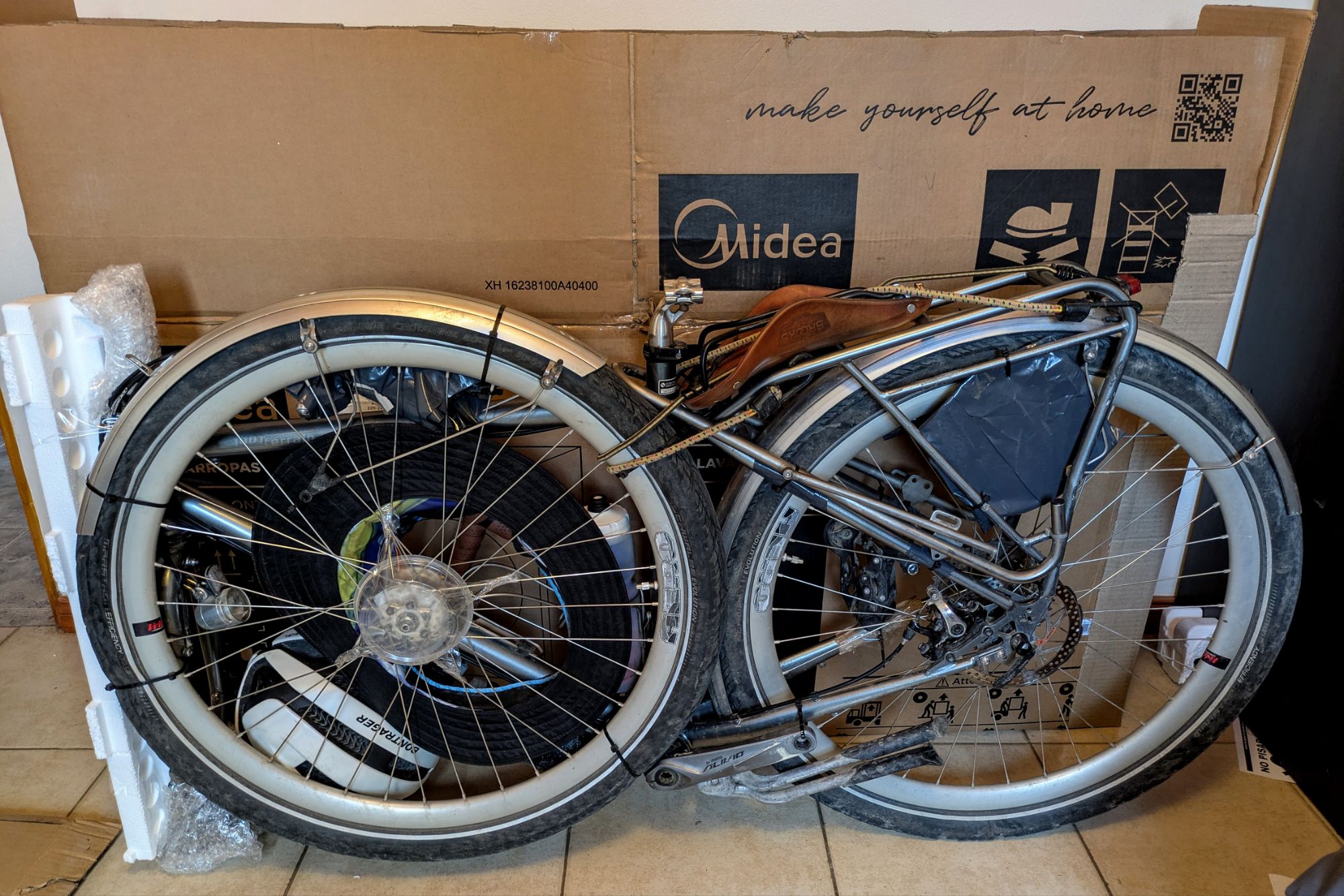
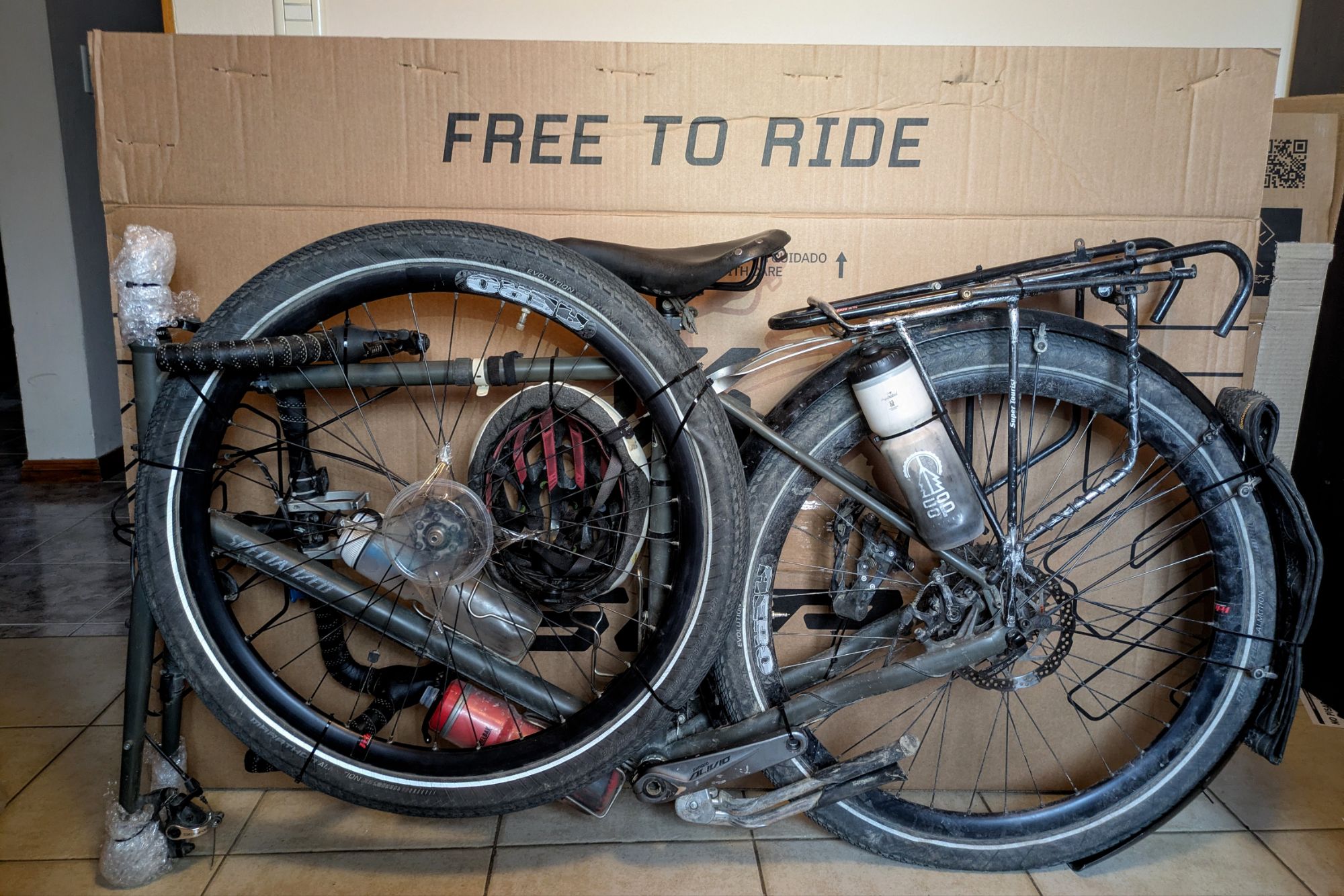
Despite the small airport, Aerolíneas files 737s to Buenos Aires, and has generous baggage policies, so I threw a 3rd checked bag on top of our usual 2 (including the bikes) for just $15 to make our lives easier. We’ve previously used Ikea Frakta bags to consolidate our panniers for flights, but Ikea is one store that doesn’t exist here, and I couldn’t find anything similar, so I just built more cardboard boxes.
One day outside our front window we saw a van with a trailer dropping off other guests, and found their website and booked a transfer for ourselves to the airport. So except for finding bike boxes, El Calafate turns out to be a really easy place to fly out of with bikes.
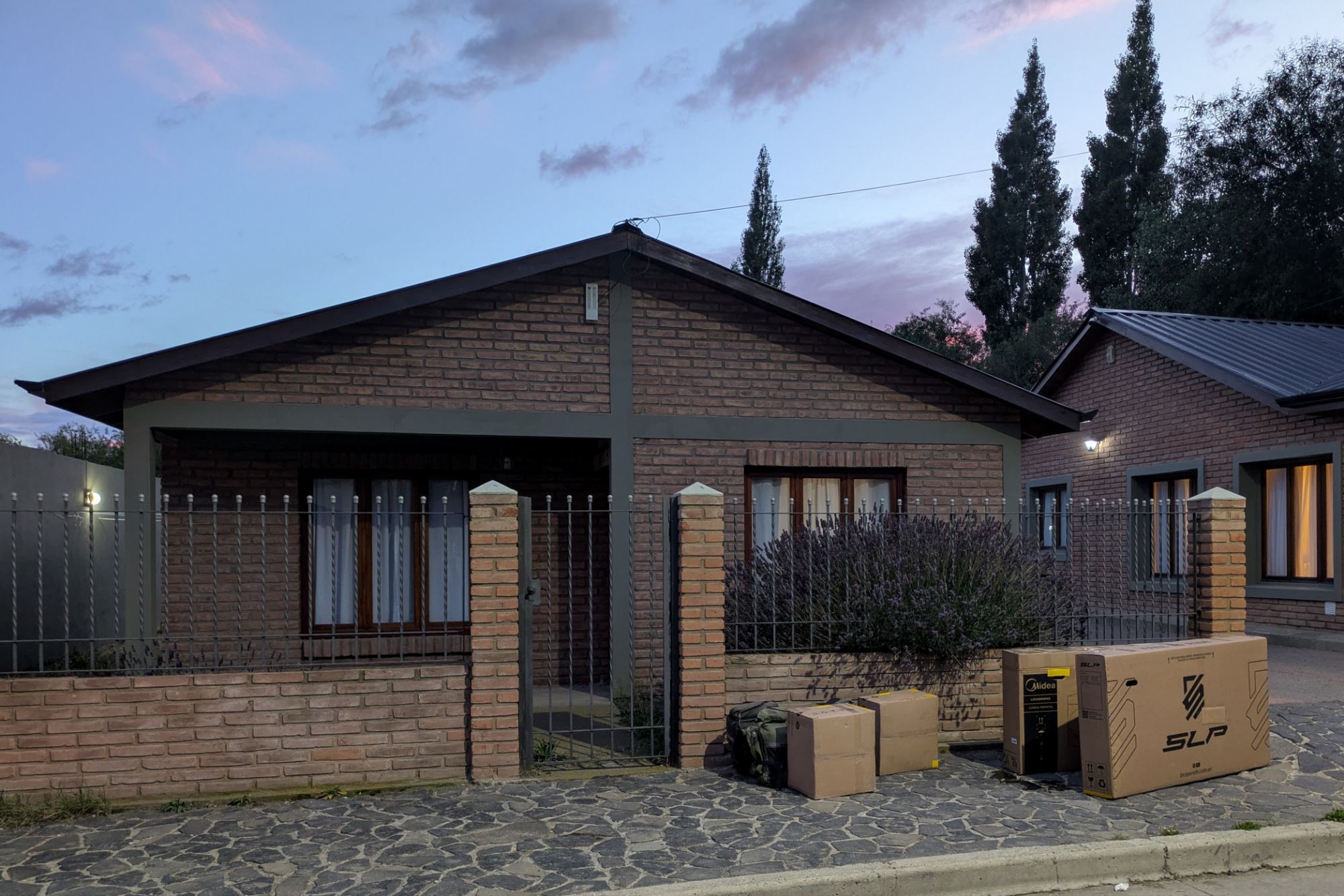
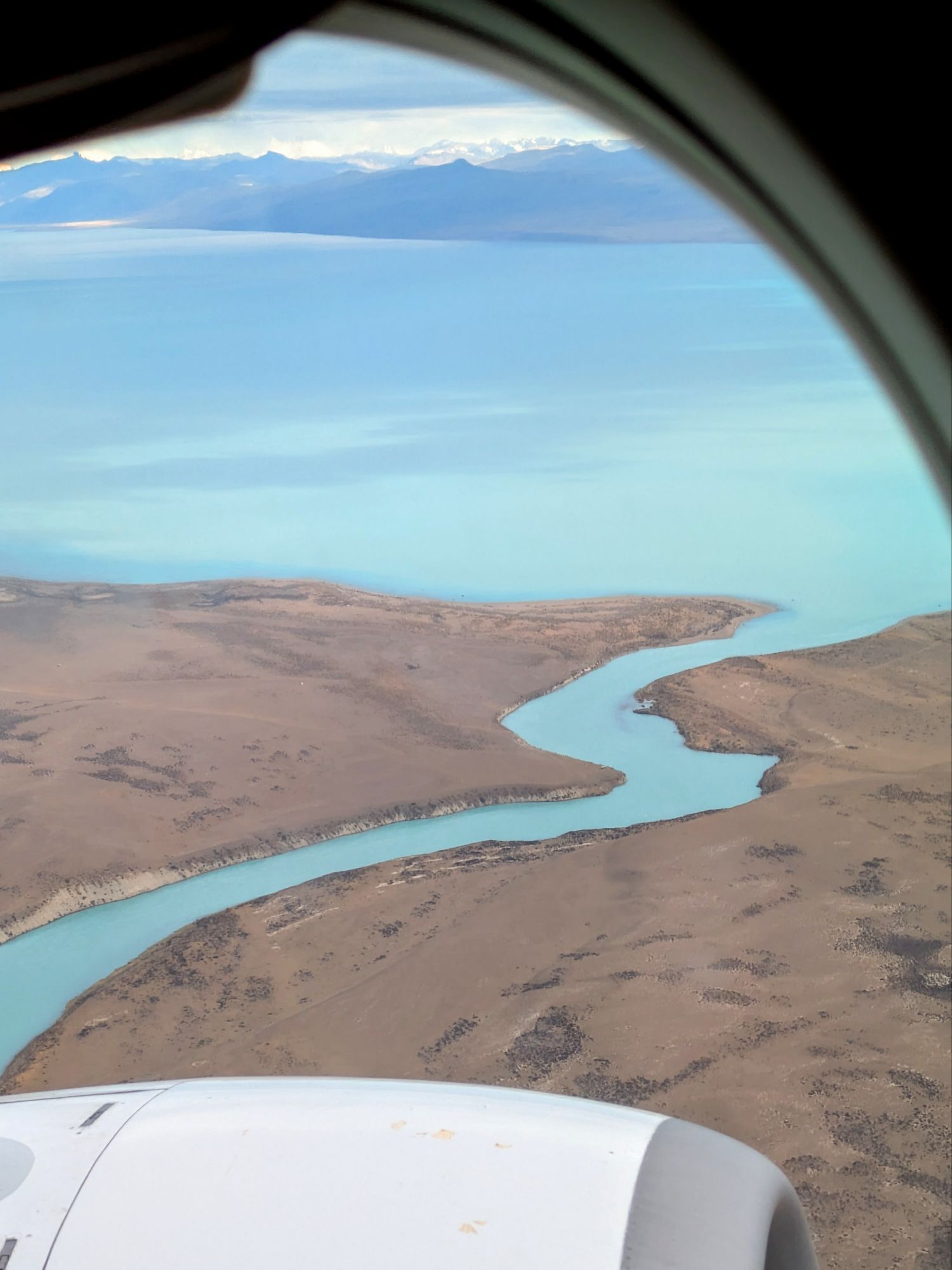
We had a lot less luck arranging a transfer out of the Buenos Aires airport (even though I’d intentionally picked the closer, downtown domestic airport), so thankfully after asking our AirBNB host for advice, she eventually offered to pick us up herself in her SUV (for ~US$60).
Despite dropping our load off the luggage cart when we hit a bump entering the El Calafate airport and putting a good dent in Rett’s (constructed) bike box, they held up well through all the transport, with the only weak points being the hole-handles I had cut into them; a couple ripped out during handling.
Finally with the transportation logistics behind us, we could breathe deep and fully relax: we had a full two months ahead of us to just live in Buenos Aires, with nowhere to go!
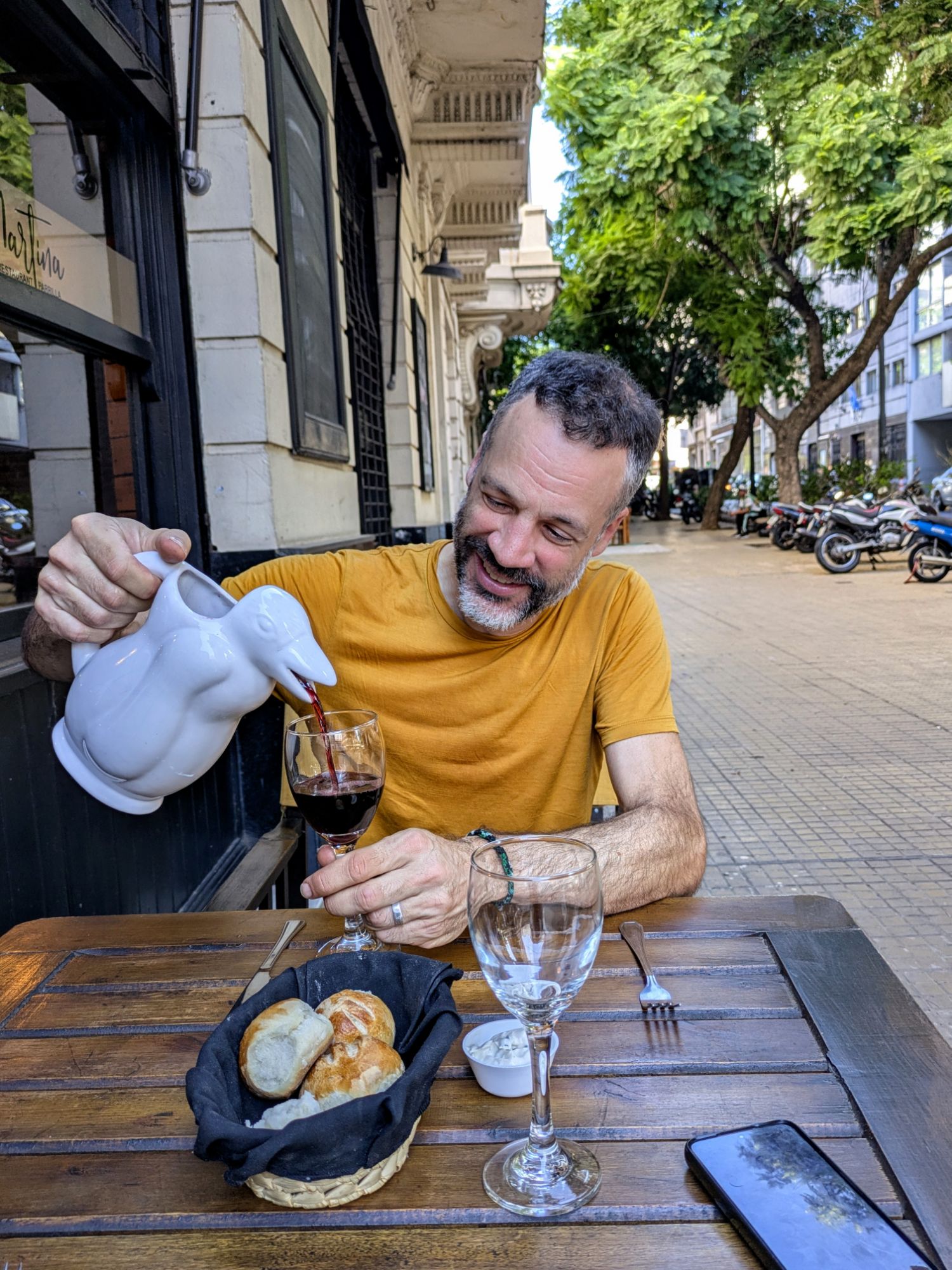
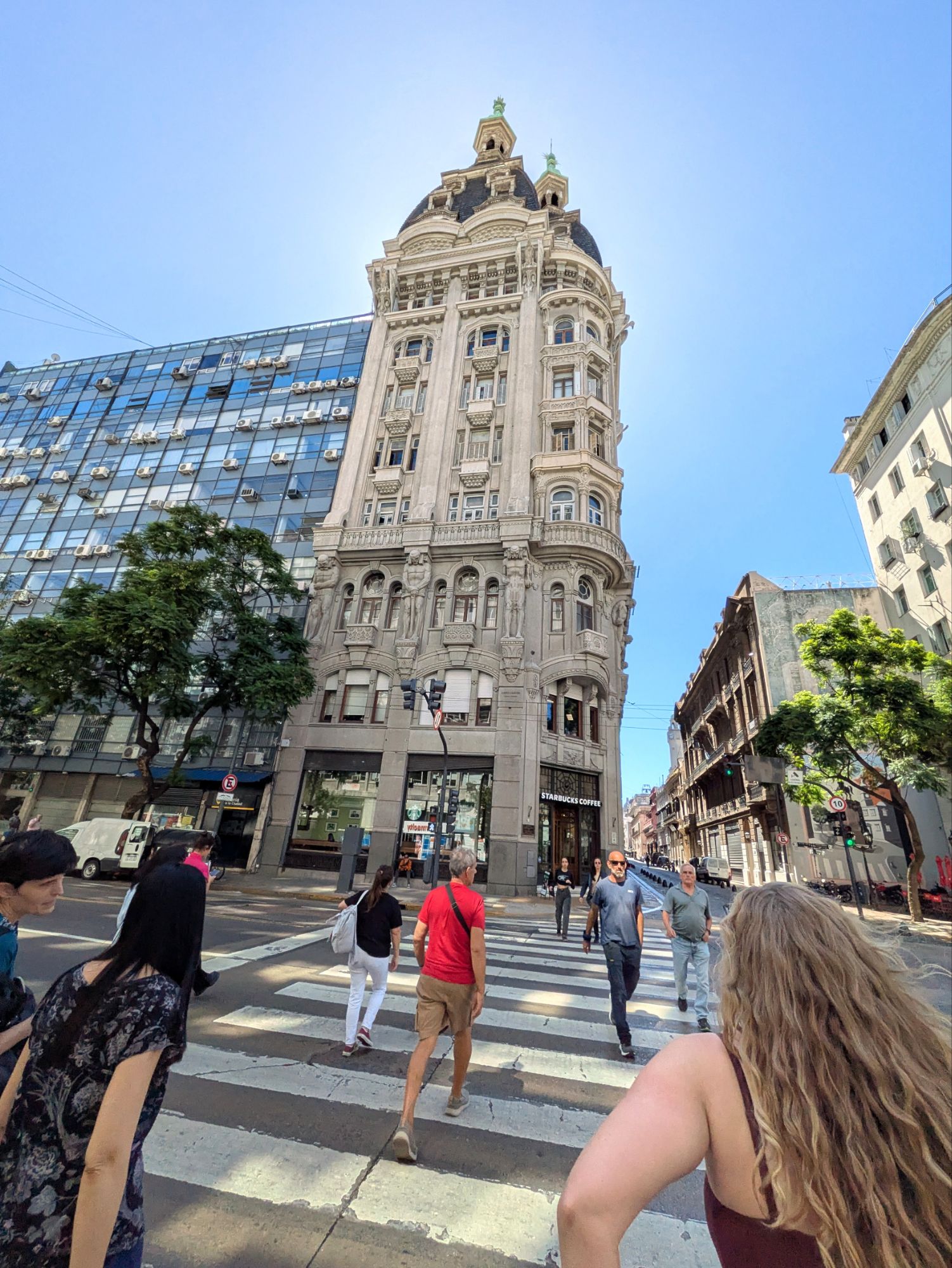
Our AirBNB was on a cobblestone street in the San Telmo neighborhood, just a bit south of the center, on the first floor of a classic old building. The 15-foot ceilings made it feel like a place that I imagine to exist in Paris, but I doubt any such place in Paris could be had for less than US$50 a night.
A couple days after arriving, the toilet stopped flushing, so a plumber had to come over to fix the mechanism inside the in-wall tank (an excellent but risky design!) Soon after, the washing machine broke (my examination of the rusty motor suggested it was due long-time leaking from a once-repaired drum), but our host was quick about replacing it with a brand-new one. After that, we lived happily with no issues, though a stretch of humid days in the mid-90s sure made us wish that she’d had time to install the mini-split air conditioner that sat boxed in the hallway. Thankfully the building design (high ceilings, cold tile floors, and good airflow with wind being sucked through the street-facing window and up the rear “chimney”) kept the indoor temperature air survivable.
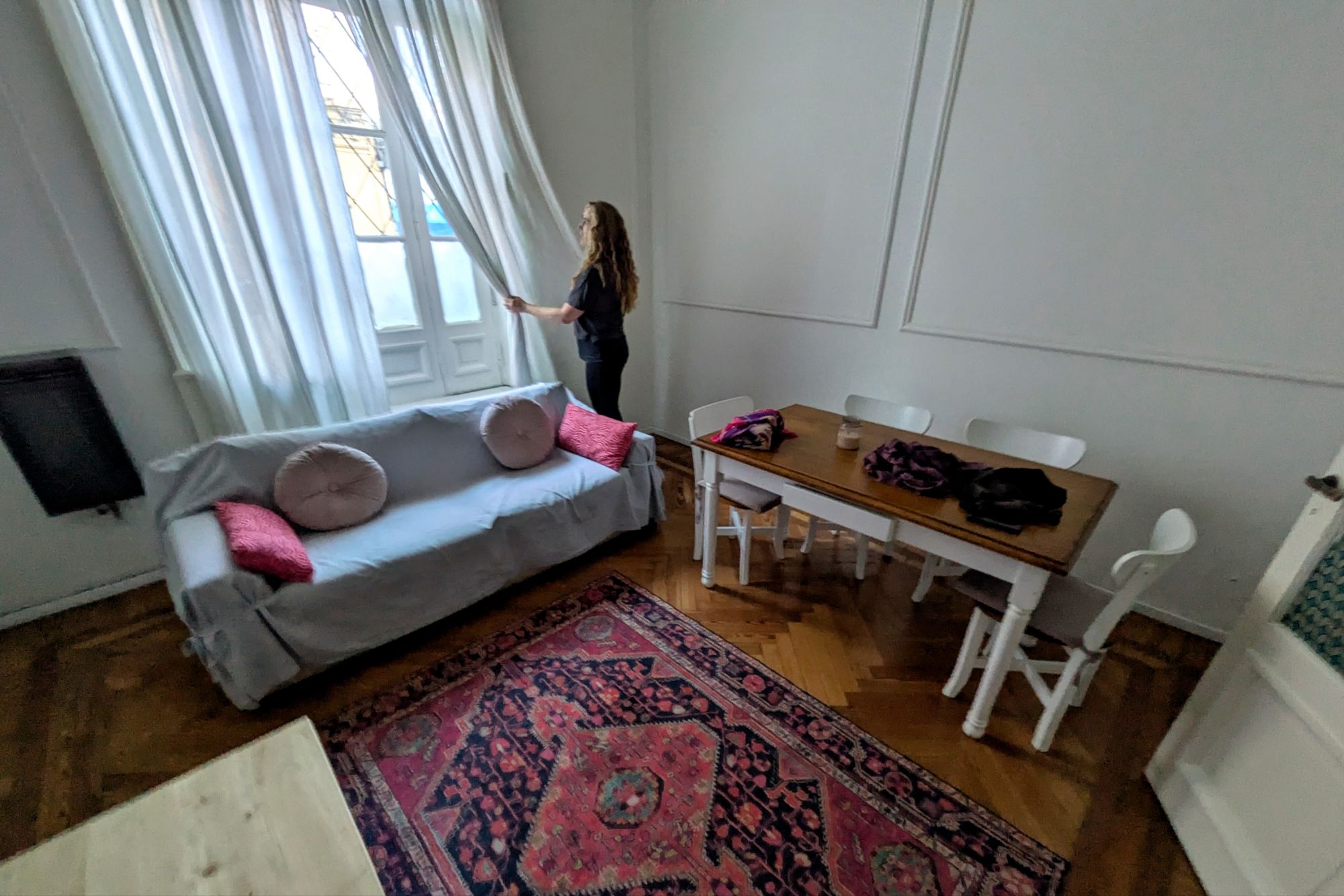
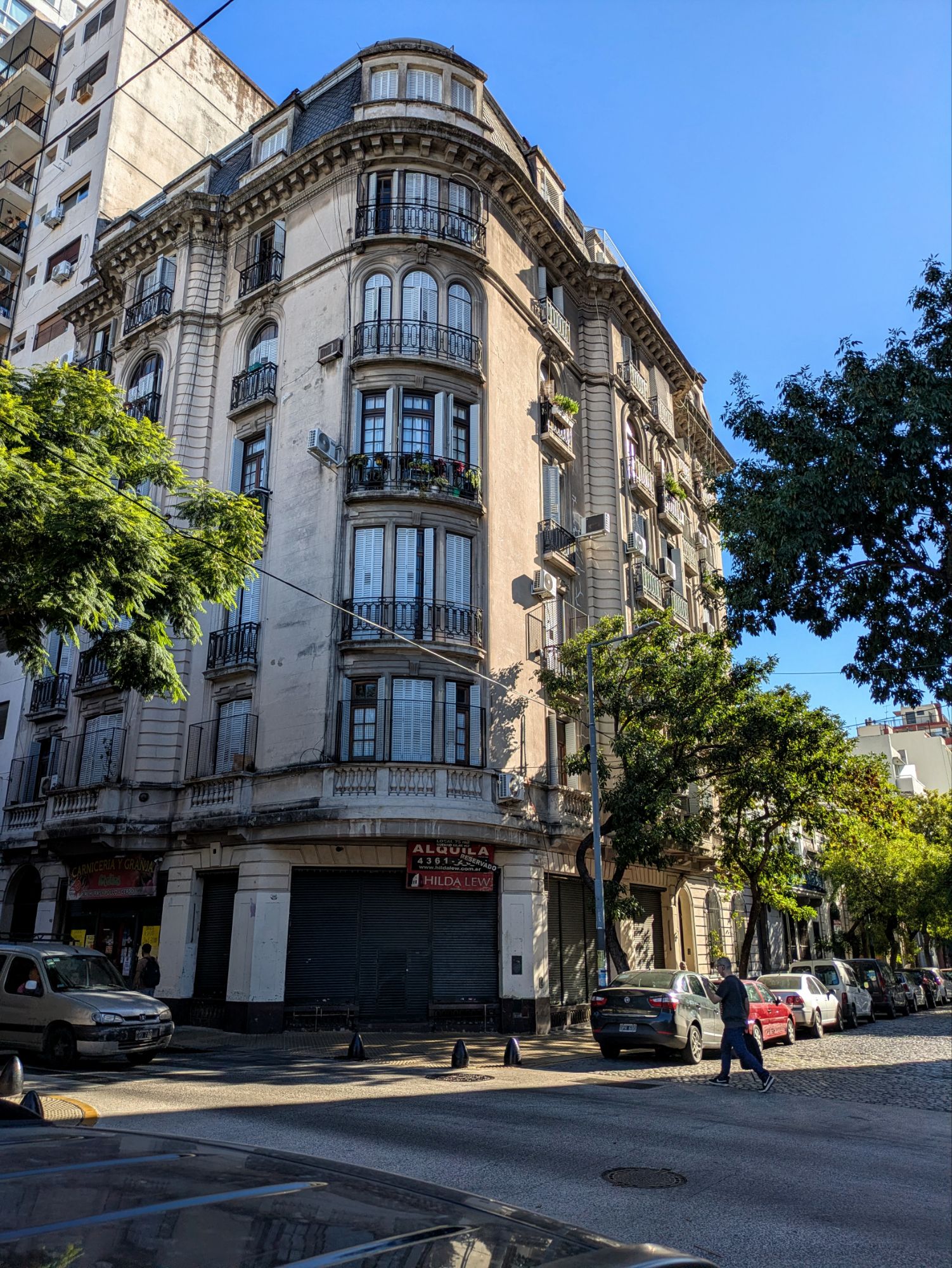
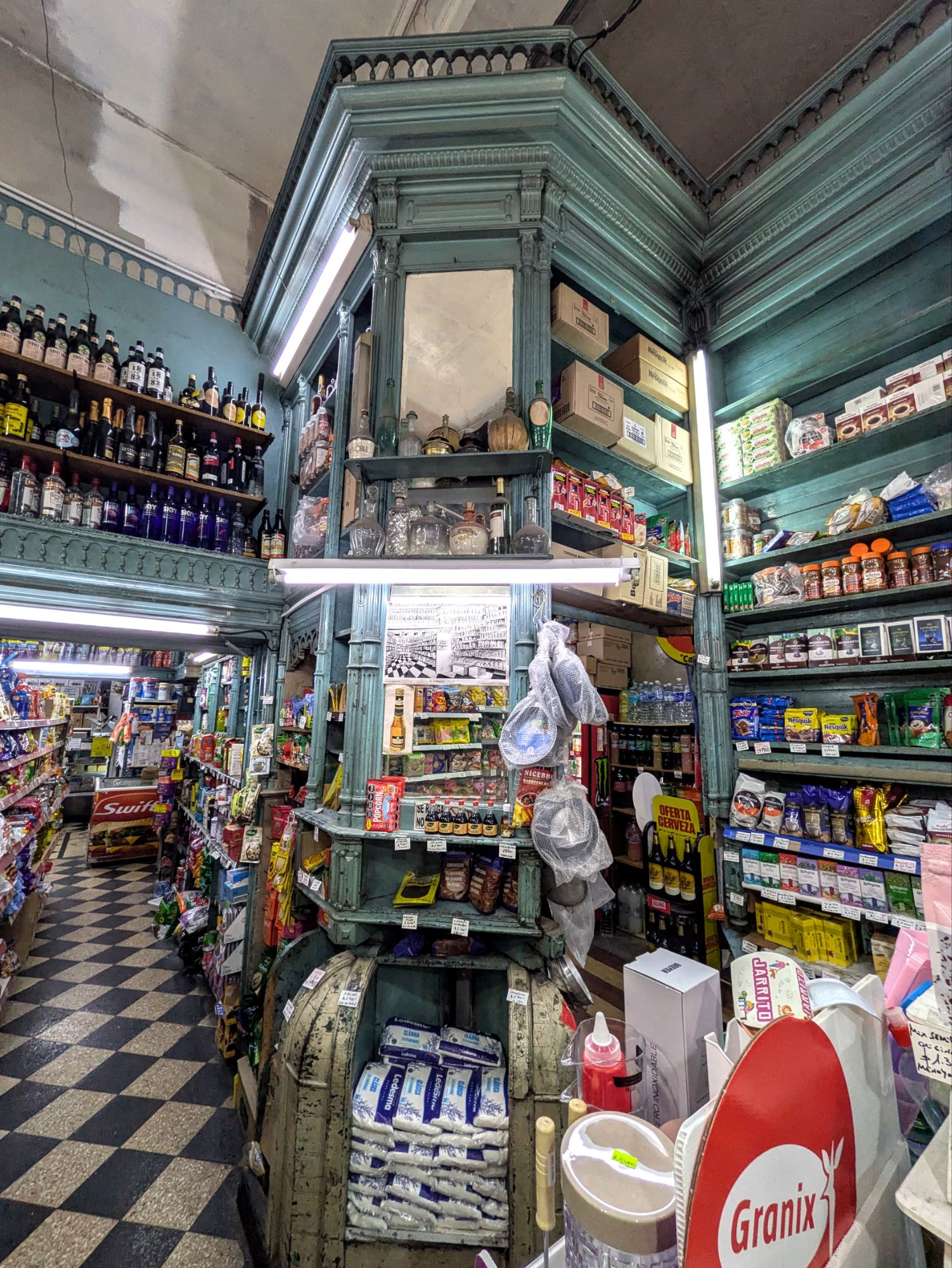
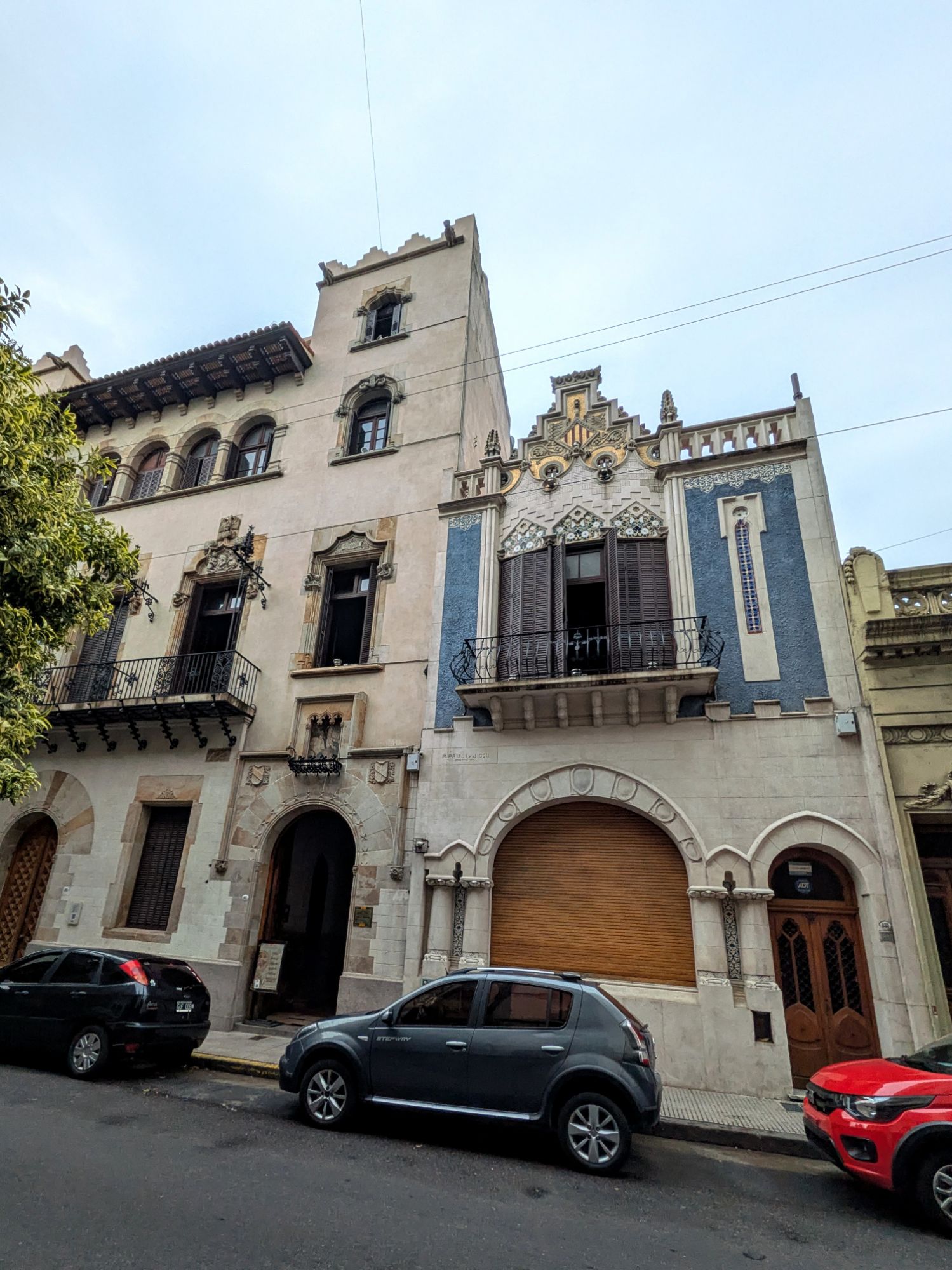
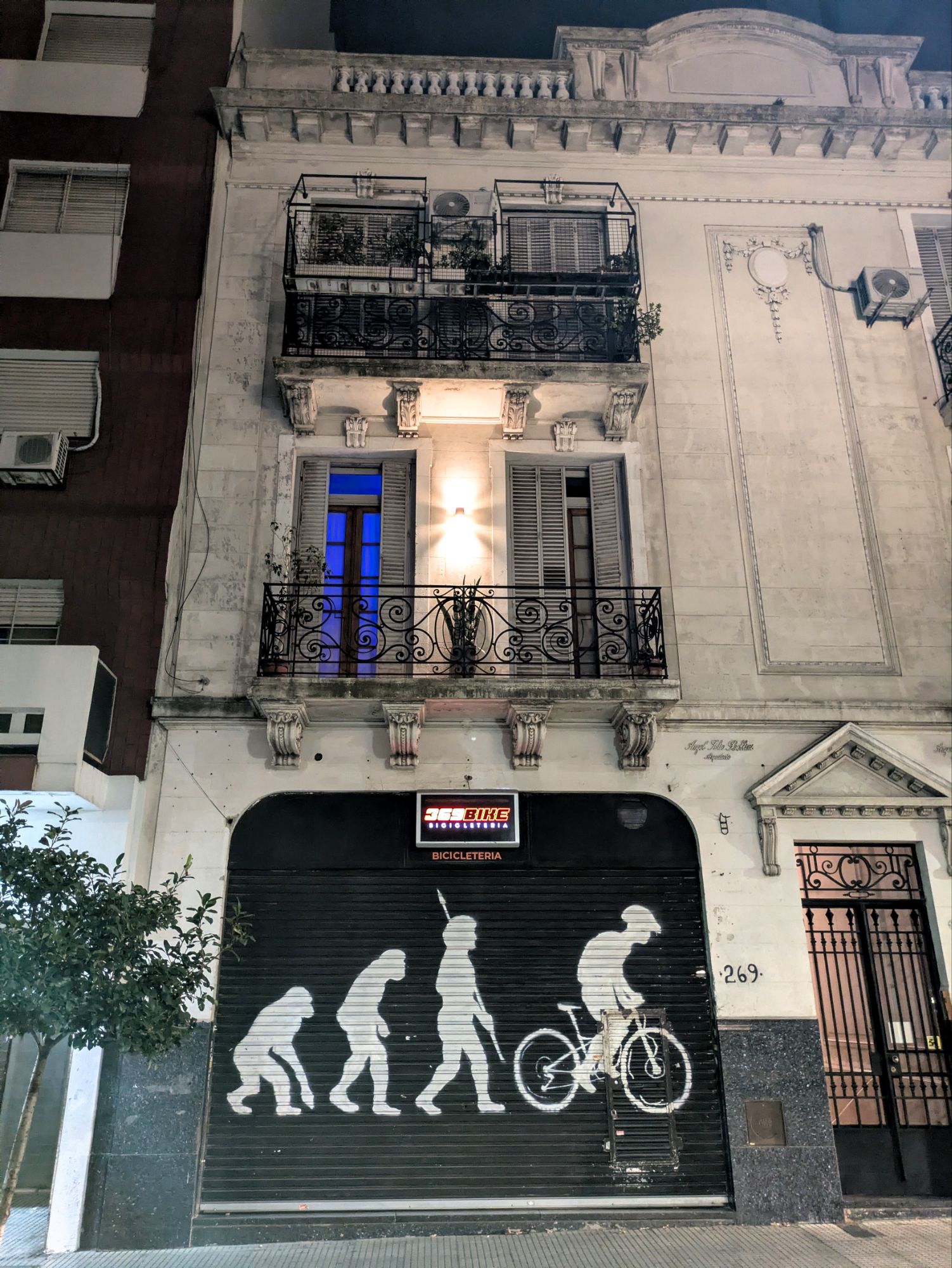
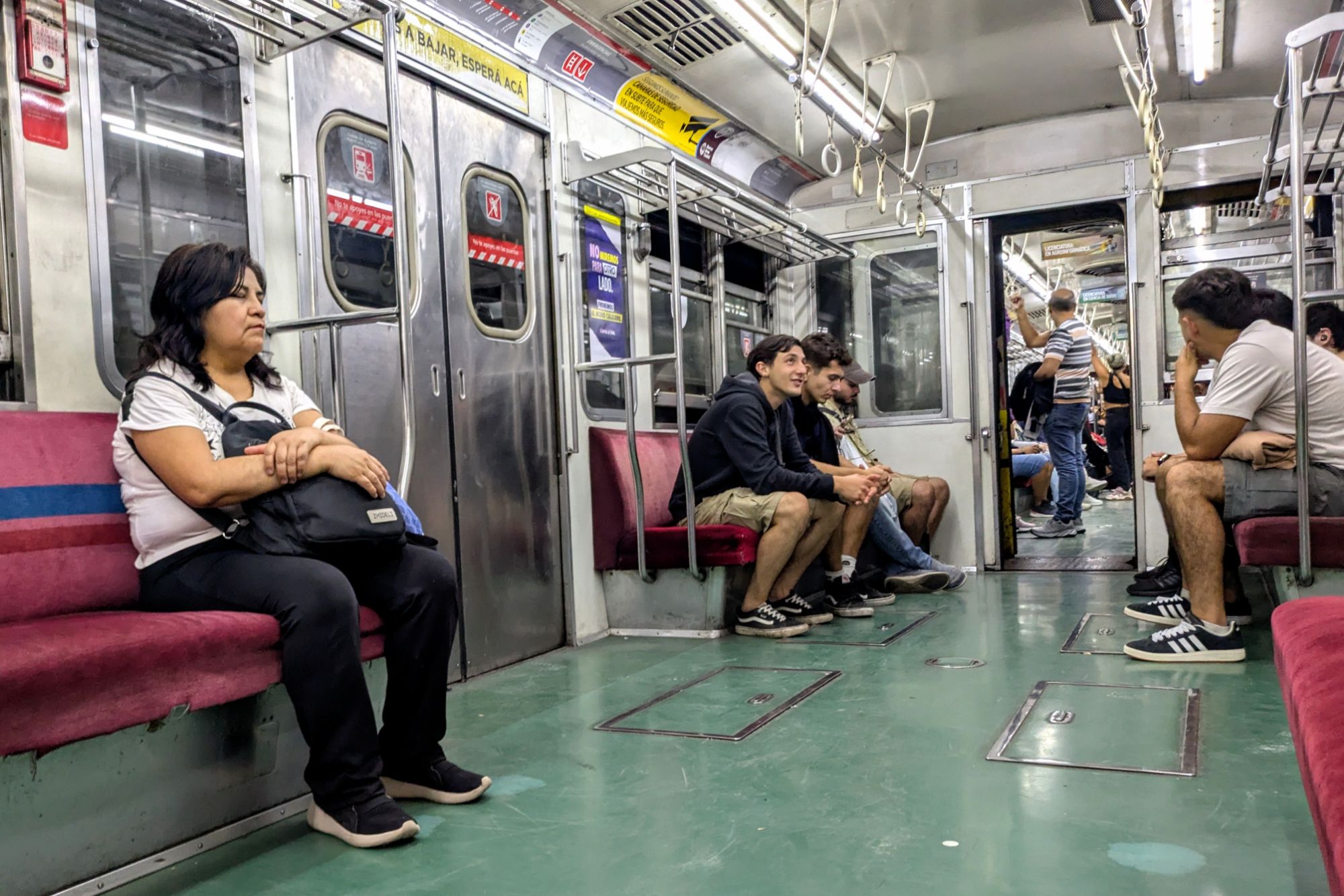
Early days were spent doing little but finding the best grocery stores (nothing fantastic, and nowhere in Buenos Aires sells chocolate chips, or much good chocolate at all!), and cooking at home for ourselves. Buenos Aires is very walkable and bikeable, but we never got around to unpacking the bikes, even after two months. Instead, to reach places beyond easy walking distance, we regularly used the excellent, high-frequency subway system. There are tons of buses too, including dedicated BRT routes, but those required payment more difficult than tapping our phones (credit cards) at the turnstile.
Our first big excursion was to listen to an outdoor performance by the symphony orchestra at the planetarium, but I definitely underestimated the number of native Porteños who would be drawn to such a “boring” cultural event.
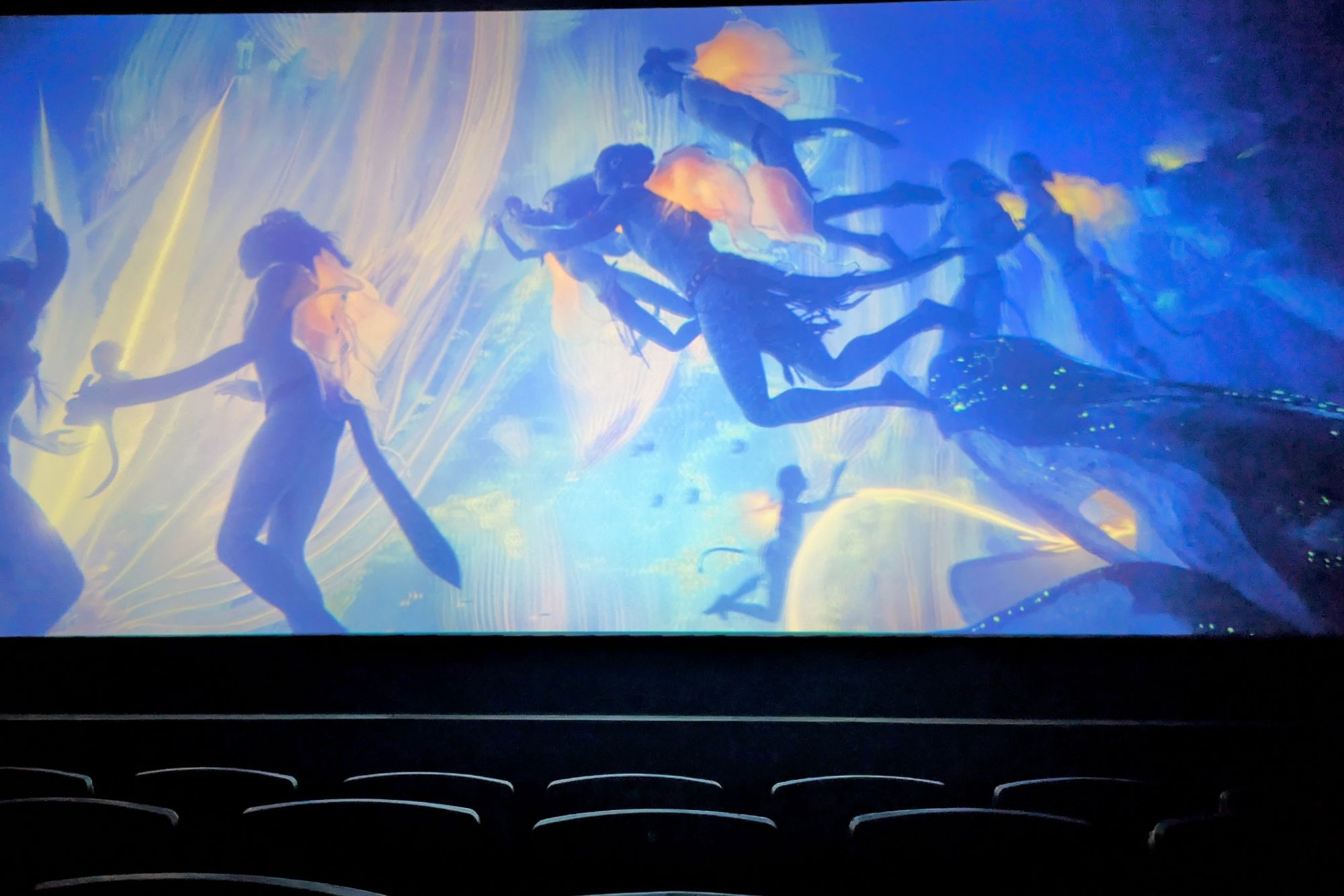
We also took the opportunity to see some movies, first “One Battle After Another” showing at a nice small art-house place, then another shot at the 3rd “Avatar” movie, which we’d first seen in Chile in English but 2D, so here we caught a version in 3D, but dubbed in Spanish. Nowhere in the city was showing a 3D+English version, but luckily, especially after seeing it once, the Avatar franchise is something that our still-poor Spanish skill is “good enough” for.
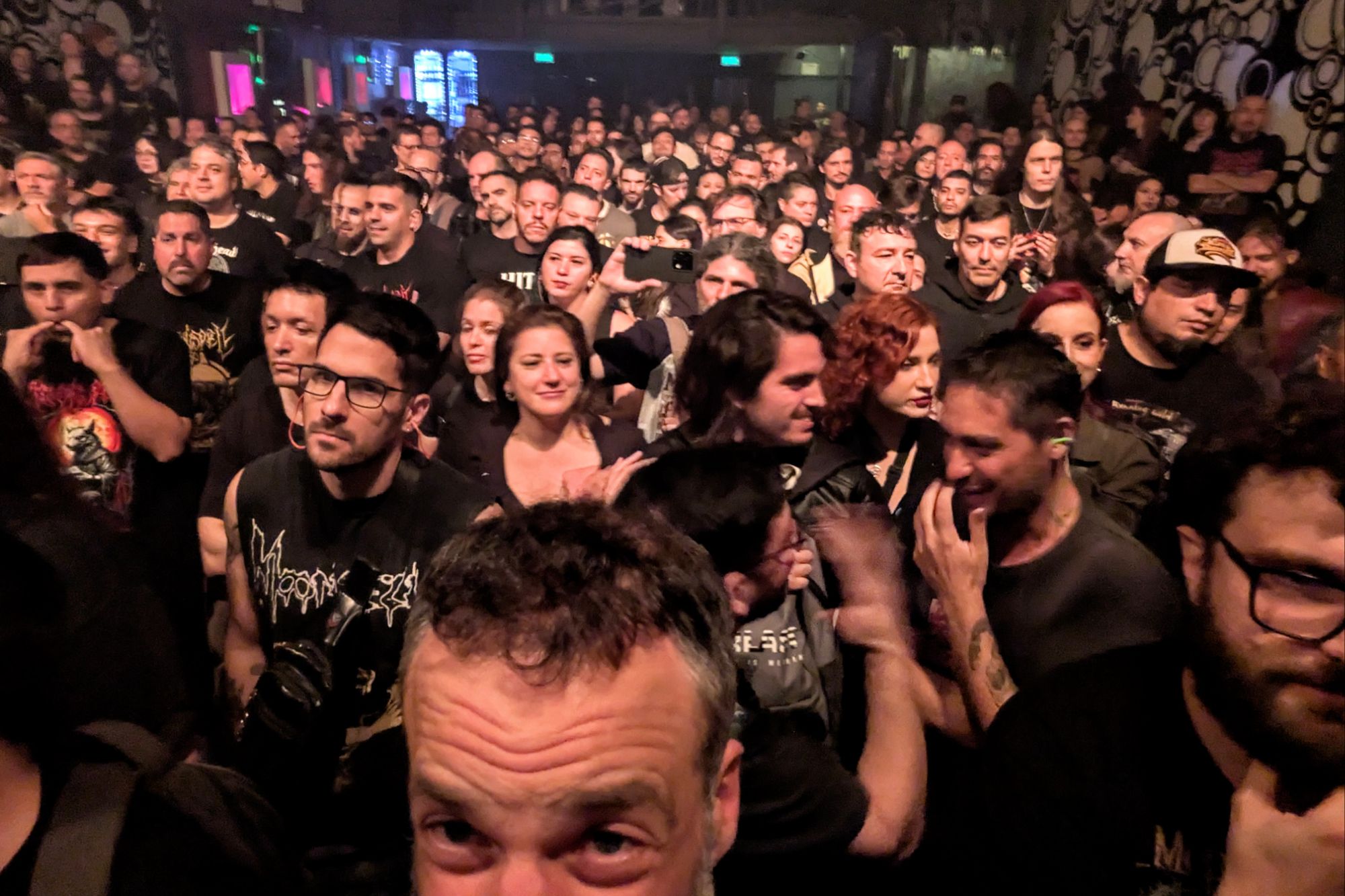
Buenos Aires is the ~20th largest metro in the world, and if the good movie options didn’t enforce that fact (somewhat unexpected to me), it was definitely driven home when I thought to look for concerts. Portugal’s Moonspell, a gothic metal band I’ve been listening to for 30 years, was coming to play their debut album “Wolfheart” in its entirety. Wow! But then, Germany’s Rage, my all-time favorite band, would be coming too! They’ve only been to the US once in their 40-year career, so this was a case where being in a more metal-loving country was a clear advantage! Unfortunately Rage made a late cancellation of their South America tour (due to Peavey’s health), but the Moonspell show was better than I thought even the deep nostalgia would make it.


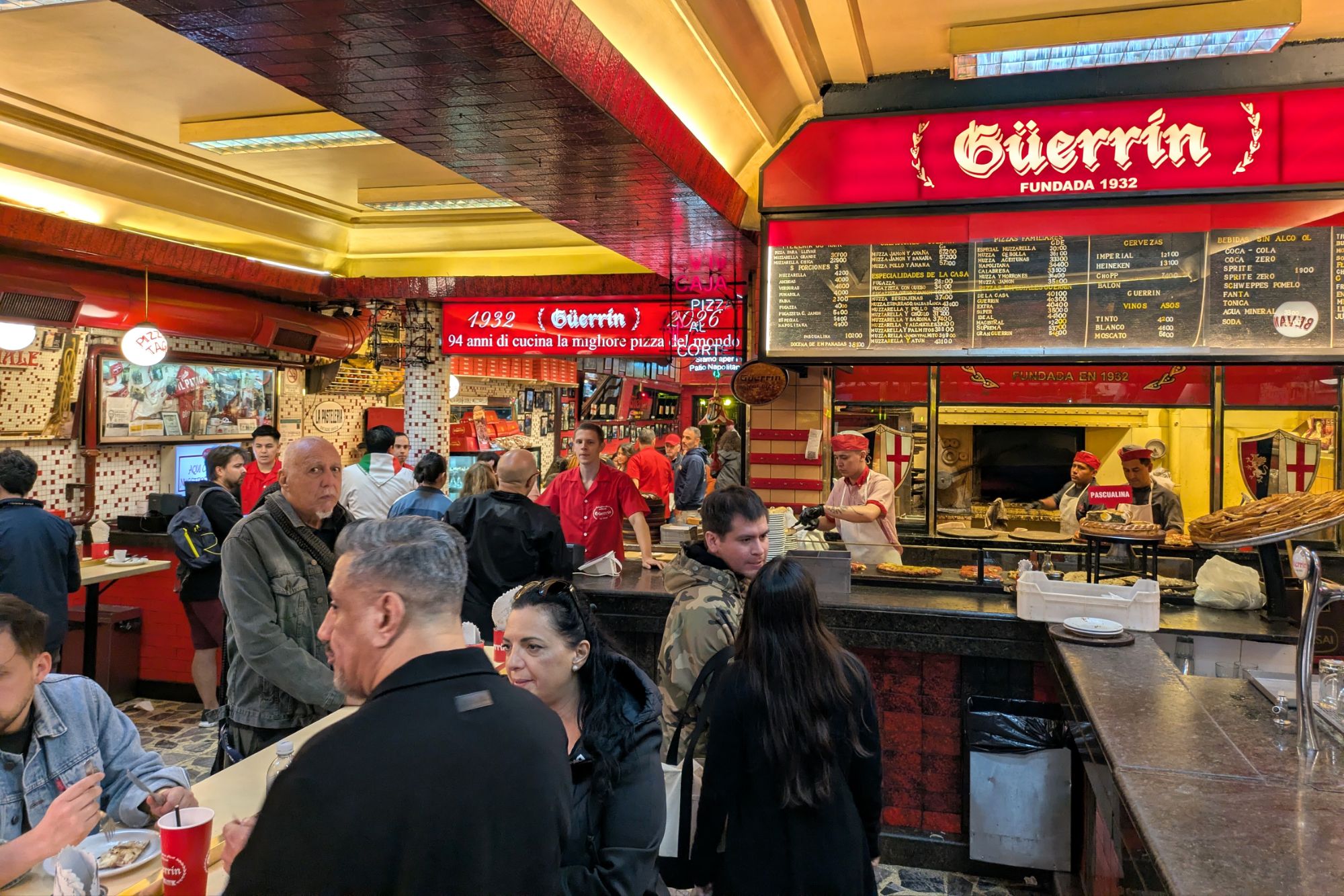
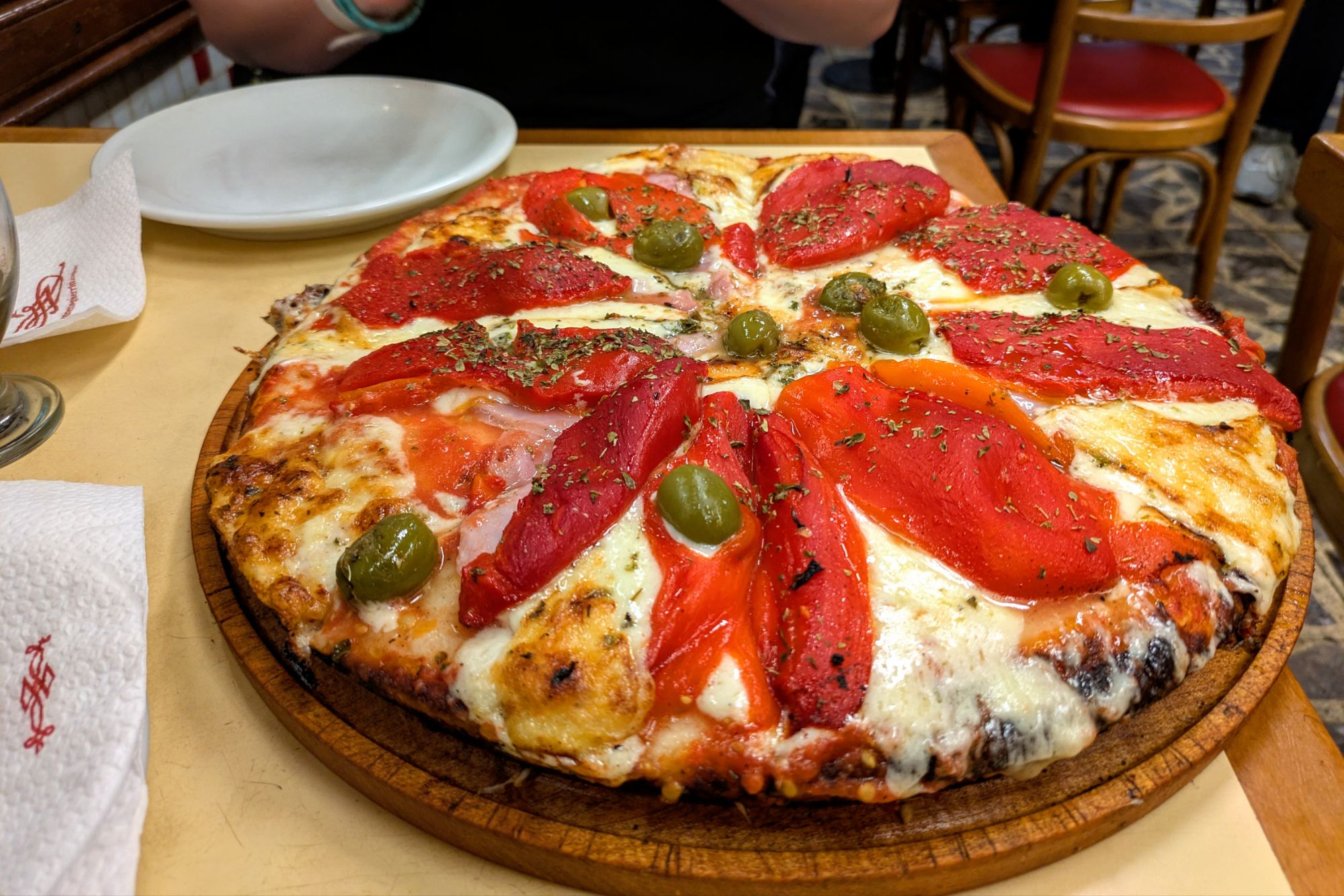
I learned that Buenos Aires has a unique pizza tradition, even older and much more widespread than Chicago’s deep dish tradition. It seems that several places started up in the early 1930s, a decade before Pizzería Uno in Chicago (and multiple decades before any deep dish followers). The BA style is a thick, doughy crust, with plenty of cheese, actually somewhat close to my mom’s homemade style.
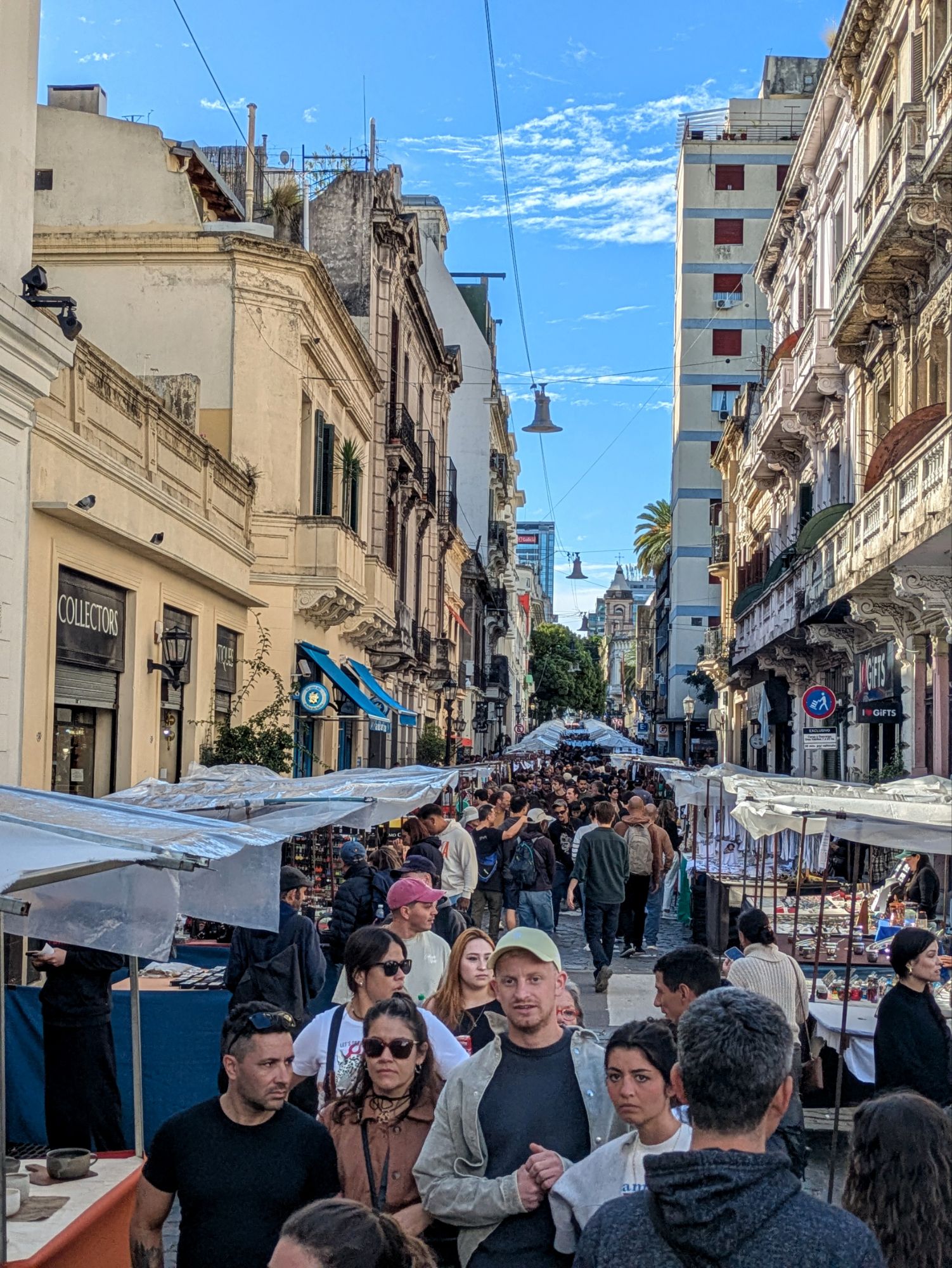
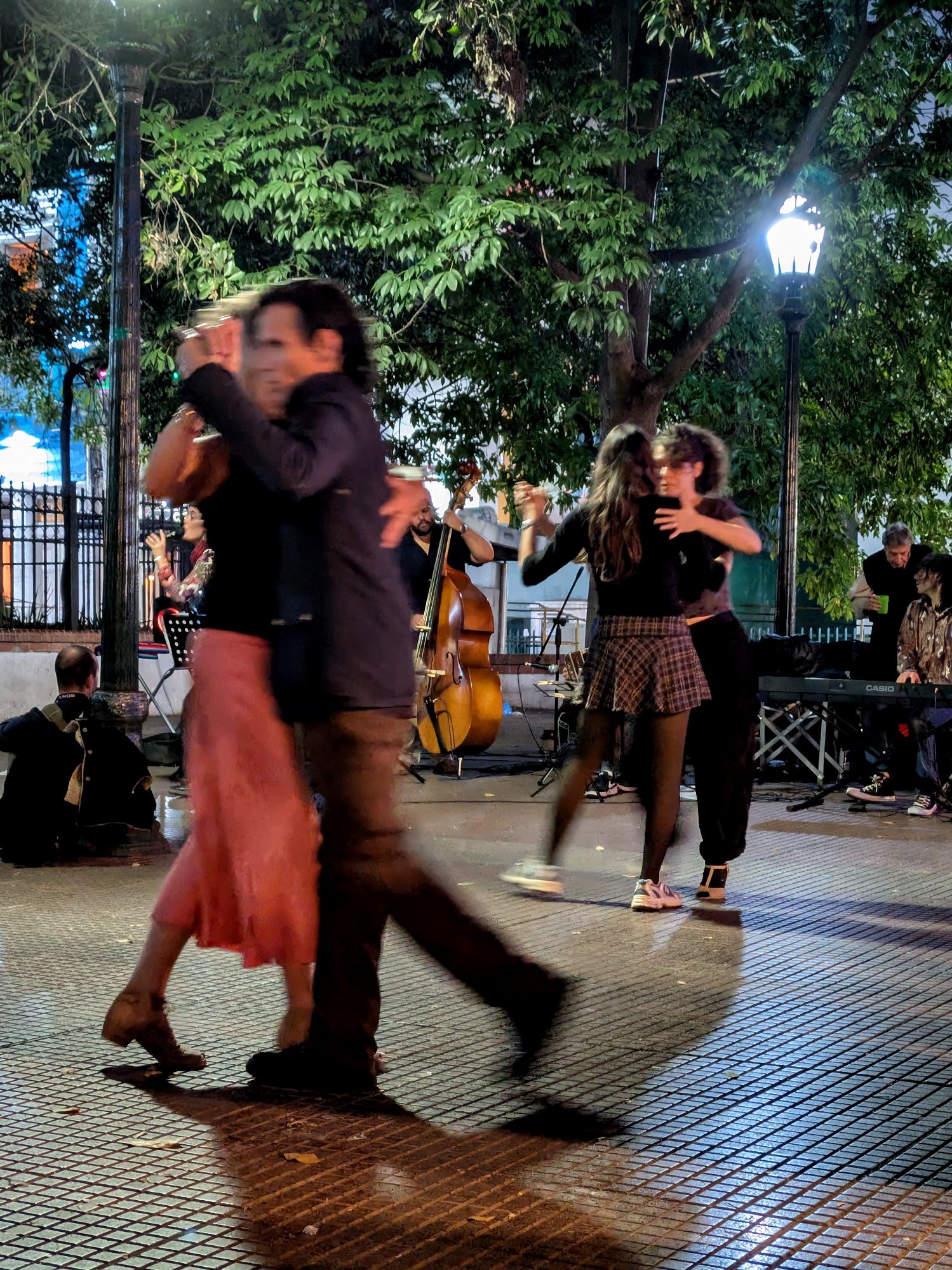
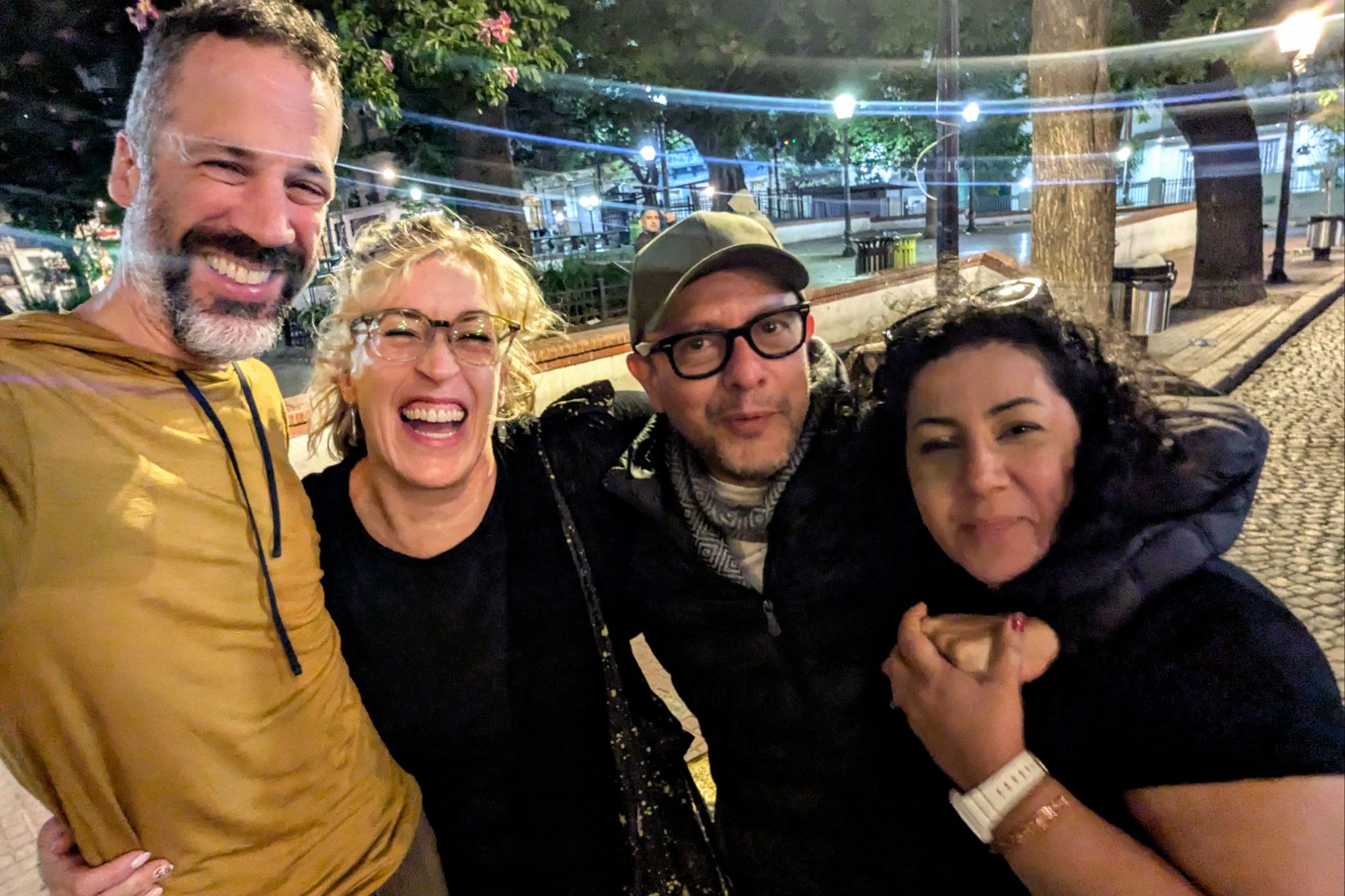
Rett was of course interested in going to a tango show, but they’re very expensive, and to me feel like “well, tourists come here expecting this, so I guess we should give them what they want”, rather than an organic part of Buenos Aires’s 21st-century culture. Still, I probably would have gone, if not for the fact that we lived just two blocks away from perhaps the only organic tango experience in the city. Every Sunday night, after the closing of the expansive San Telmo open-air market, regular people gather in the square to dance (and the night we went at least, the music was from a live band). The skills of the dancers ranged the gamut, and though even the best were surely nowhere near the professionals we would have seen at a show, it was much more satisfying to me to just be outside on a beautiful Buenos Aires evening. Plus, it allowed us to meet a fun couple vacationing from Colombia, and we enjoyed drinks and dancing with them that went well beyond the tango session.
Leave a Reply